| Author |
 Replies: 21 / Views: 5,745 Replies: 21 / Views: 5,745 |
|
Pillar of the Community
United States
1156 Posts |
Hello all,
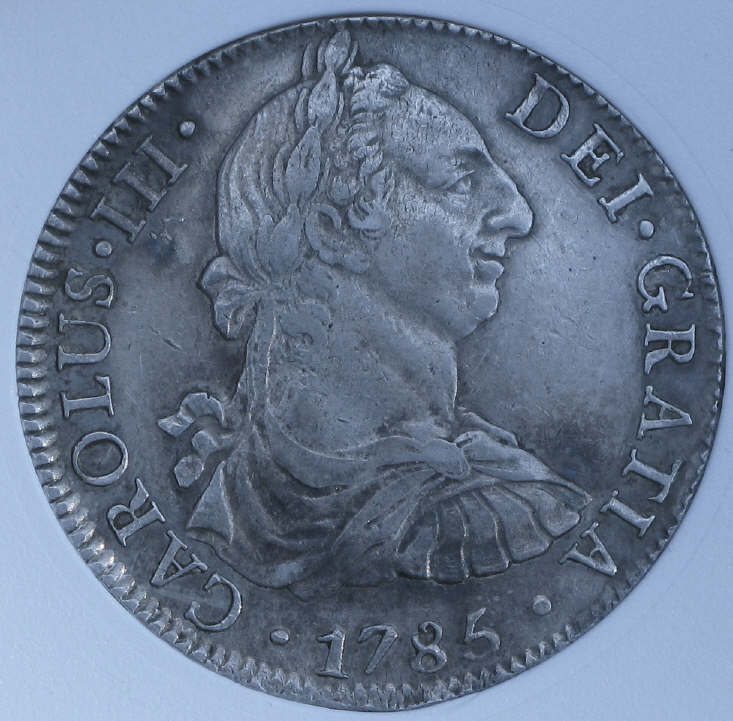
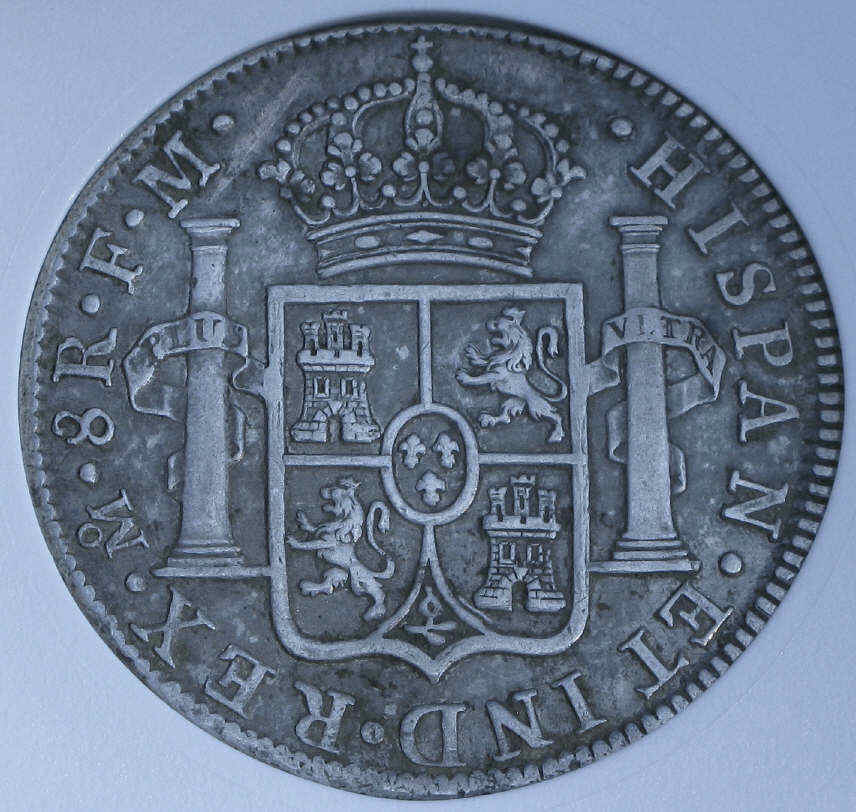
I've become fascinated with the portrait dollars of the new world 1772-1790 featuring the bust of Charles III of Spain. I'm also concerned about the proliferation of counterfeits and have avidly read other posts here regarding them. Since I intend to be a serious collector, it follows that I must learn how to spot the fakes.
Before I post details about the two 1785 Mo FM 8 Reales that I've collected, I have a question about the milling process and the coin dies used. Is it true that a mint will go through several dies during the course of generating a given year's coinage? And if so, are the dies truly identical or will there be slight variations in details? This seems to be an important point in using a coin's details to spot a counterfeit.
|
|
|
|
Pillar of the Community
United States
3499 Posts |
jgenn- Yes, there would be multiple dies used throughout the year since they do wear out and crack. And yes, there somtimes would be slight variation of, say the placement of the lettering around the king's bust or the placement of the dot on the right side of the reverse near the base of the right pillar. So, yes, you should expect some slight variation, but the weight, specific gravity, composition, surface texture, THE EDGES, and a few other elements are the keys to knowing whether a coin is fake or not. Often with just a little exposure to many 8's the weight, surface texture, and edge will be enough to detect the vast majority of fakes.
|
|
Pillar of the Community
 United States
1156 Posts |
Thanks Archraz. I initially focused on slight variations in the aligment of letters to pillar tops but it sounds like that might be legitmate die differences.
I'll start looking closely at the edges. I found this great description from Swamperbob in another post.
"When you check the edge design on a Spanish colonial 8R you need to know how it was done. The edge was added BEFORE the coin was struck. It was applied using a parallel edging mill with TWO FLAT BAR dies. The blank was squeezed between the two dies and then one die was moved along parallel to the first (fixed die). As the coin blank rolled along between the dies the design was applied to EXACTLY opposite sides at the SAME time. Therefore all real 8Rs will have two IDENTICAL areas of overlap EXACTLY opposite one another. You would be shocked at how many fakes get that wrong. An edge with ONE OVERLAP is a fake. Period.
Another fact to watch for is the priority of edging. If the edge design causes distortion in the dentils near the rim (say from pressure of application) then you have a fake. The pressure of the final strike should distort the edge design but not the dentils.
These clues are in addition to the search for a casting seam, sprue and vent. You don't absolutely need to know how a fake was made just that a coin was not made the way the mint did. That proves the fraud."
|
|
Pillar of the Community
United States
1801 Posts |
What a wonderful series of coins to collect. I wish you the best of luck. There is much to learn and you are off to a good start by reading the postings here (especially from Swamperbob when he is teaching how to detect fakes). One thing I recommend is that you try and visit many coin shops and coin shows and just look at and hold lots of 8 reales so you get a feel for what they should look and feel like. A large number of fakes just don't "look" right and you can spot them right away (beware of the grinning Charles III). Surface texture is also very important, does the coin look sharp and struck (signs of metal flow) or does it look cast and blurred. And like Archraz said, there are many slight die variations on the same year because much of the design was hand stamped into the die.
|
|
Pillar of the Community
United States
1156 Posts |
Thanks for the encouragement, jfransch! I've been studying my coin edges and think I can spot the overlap. It would help greatly to see some examples of proper edges as well as the clues that indicate a fake. Can anyone point me to some online examples of edges for the portrait 8Rs? I'd especially like to see examples of casting seams, sprues and vents. Also legitimate filing marks. And distortion of the dentils near the rim.
Edited by jgenn
02/23/2010 11:04 pm
|
|
Pillar of the Community
United States
1801 Posts |
I can scan some coins for you if you are interested but I have no access to a digital camera to take pictures of the edges. I have every date/assayer (but not all overdates) except 1778MoFM (virtually unobtainable)and 1783MoFM. I will see if I can borrow and learn how to use a friends camera for some edge shots.
|
|
Pillar of the Community
United States
1156 Posts |
jfransch - Wow that sounds like some impressive collection. Have you also collected counterfeits, because I'm mainly interested in photos of those especially where they highlight the clues indicating their problems? I'll be posting some photos of edges with questions, but I'll have to wait until the weekend.
|
|
Pillar of the Community
United States
1156 Posts |
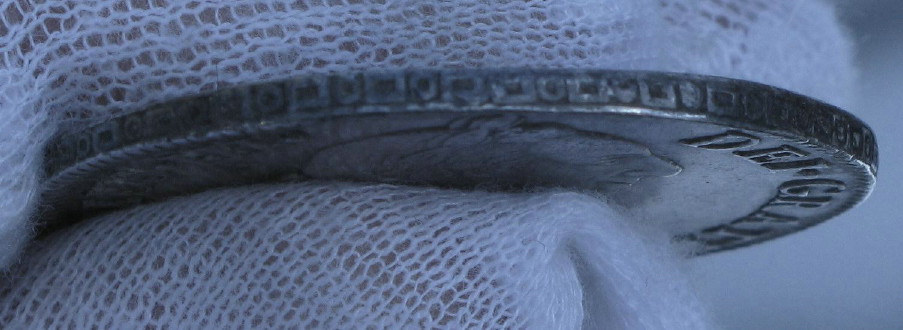
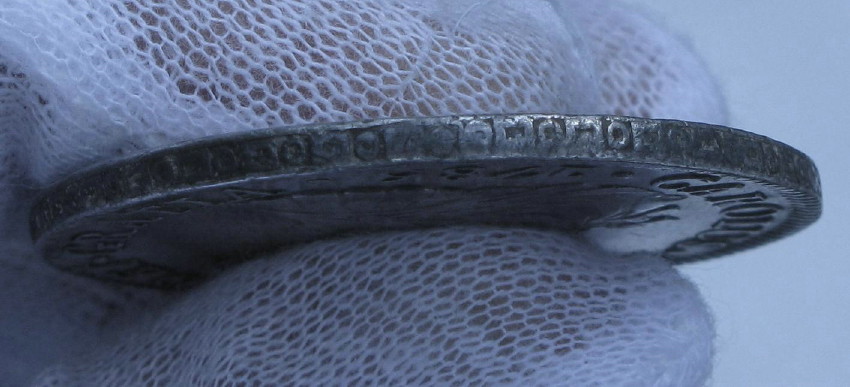
I think I've been able to spot the overlap on the edge on opposite sides. Here are the best shots I could get. 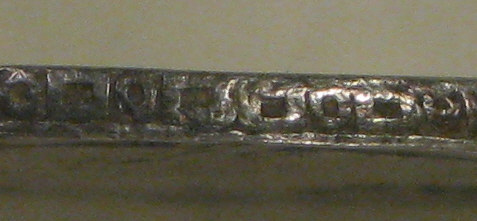 -- two rectangles butt against each other 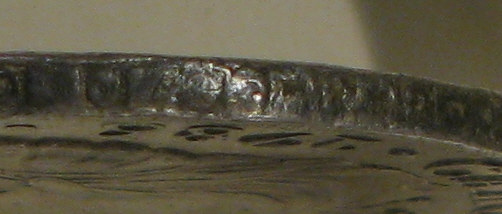 -- at the opposite side, two circles are adjacent and the one on the left seems to be enclosed within the hint of a rectangle Edited by jgenn
02/24/2010 11:02 pm
|
|
Pillar of the Community
United States
3499 Posts |
jgenn- Nice pics of the edges. I must say the edging is the proper type and it does have the "wobble" that one wants to see, but there is just something about the edging seen on the bottom pic that does not look quite right- it's a bit too blurry. Is this coin sea-salvaged or is it damaged on this part of the edge from some other way? Or is it just that the lighting is not the best in this pic?
|
|
Pillar of the Community
United States
1156 Posts |
Hi Archraz. Thanks for your response. I think the main problem is the lighting -- I took them indoors. This weekend I'll try some natural lighting to see if I can get them to come out better. This point on the edge is somewhat disfigured (from the overlap, maybe?). The coin is not sea-salvage, you can make out some of the obverse details in the bottom picture and they appear pretty sharp.
|
|
Pillar of the Community
United States
5362 Posts |
jgenn - Nice to have another 8R collector around. You are off to a good start by checking out the subject first.
Edges are my favorite part of a coin. They are the least observed part and the one most forgers get wrong. So learn your edge types and you will not be caught as often.
You did spot the edge laps correctly - and they seem ok from what I can see. Just be sure there are only two and that they are exactly opposite one another.
On the subject of multiple dies - there were not just a few but literally hundreds of pairs per year. The Mexico City operation did a remarkable job with spacing given the production numbers involed. The later issues by Republican Mexico get much more variable with many more errors.
If you have any specific questions just write to me.
|
|
Pillar of the Community
United States
1156 Posts |
|
|
Pillar of the Community
United States
5362 Posts |
jgenn I think you have the overlaps propery identified and to my eye they appear 180 degrees apart and they are the same length.
Nice coin - original and not too bad off for such an old item.
|
|
Pillar of the Community
Mexico
1304 Posts |
WoW, I just learned something that could have saved me a lot of headache a while back. Great job guys!
|
|
Pillar of the Community
United States
3499 Posts |
jgenn- Very nice 8! I agree that this guy appears to be real. Congrats!
|
|
Pillar of the Community
Australia
585 Posts |
|
| |
Replies: 21 / Views: 5,745 |










 Posted 02/22/2010 6:15 pm