| Author |
 Replies: 25 / Views: 13,118 Replies: 25 / Views: 13,118 |
|
New Member
United States
38 Posts |
Forgive the camera work here, I'm fairly new and have no tools or ability with my camera. This looks like a 1989D DDO, but since I can't see it too well it could be MD. Any guesses? 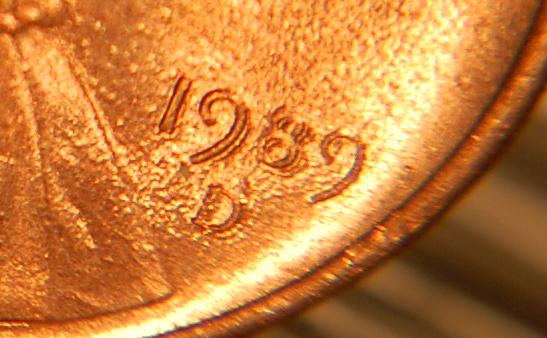 |
|
|
|
Pillar of the Community
United States
4000 Posts |
Sorry, MD. Notice how the doubling has a step-down look to it.
|
|
Rest in Peace
United States
1943 Posts |
I think this is doubling caused by the plating. It's a common occurrence on zincolns.
|
|
Moderator
 United States
56855 Posts |
Die deterioration? John1  |
|
New Member
United States
31 Posts |
|
|
Pillar of the Community
United States
2600 Posts |
This looks like plate flow or cold flow. I have had it explained that there is a slight crowning of the die (higher in the center) this tends to cause a flowing of material outwards. This is why it generally manifests itself on the rim side of devises. It is stopped when it reaches a devise and starts again on the rim side. At that point it will be at it's thinnest. If it is severe enough the plating will crack next to the devise. You see this quite often above the "T"s in Trust. That wavy effect on the "8" makes me think there is some over pressure issues that Chuck talked about in a post recently. How I understand it, anyway.
Jim
|
|
Pillar of the Community
United States
1882 Posts |
die deterioration...and you did fine with the camera.
|
|
Pillar of the Community
United States
7629 Posts |
One of the most important things to assess when looking at a coin for characteristics of doubling is to be aware of the area around the doubling. In this case, the mottling (speckles) all around the date area in the field are a clear indication that there's something going on with the surface of the die or the coin. This particular coin shows a lot of die wear/fatigue which caused the "ghost image" around the digits of the date and the mintmark. You will probably notice lettering in other parts of the deisgn that does not have this mottling around it, nor does it show the same style of "doubling"
Bottom line, this is a completely normal coin, and a common occurrence on many earlier zinc Lincoln cents.
|
|
Pillar of the Community
United States
2600 Posts |
And still learning. Thx, Chuck
|
|
Pillar of the Community
United States
1882 Posts |
Quote:
You will probably notice lettering in other parts of the deisgn that does not have this mottling around it, nor does it show the same style of "doubling" But it could have the same effect (doubling) around the letters...can you explain why you said that? Did the date/mm area tend to go before the lettering near the rim? |
|
Pillar of the Community
United States
7629 Posts |
Umm, what you said is incorrect. What I said - the reason - is because the mottling is a part of the cause of the apparant doubling, thus it will be present around the lettering that shows the shadow doubling. If the mottling isn't there, the apparent doubling will not be there either. This is not Machine Doubling. This is a change in the appearance of the die. If you took the die off the press right after Machine Doubling, it would look normal. If you took the die off right after this 1989D cent was struck, you could see the effect caused on the coin on the surface of the die. There's your difference. |
|
Pillar of the Community
United States
4000 Posts |
Interesting.
So you would see the mottling on the die, but what about the shadow doubling? Would you see that on the die also, or is the shadow doubling an effect of the mottling?
|
|
Pillar of the Community
United States
1882 Posts |
Thanks Chuck, after I understand what you mean now...the connection between the mottling and the doubling effect.
Edited by steve199
04/22/2010 2:29 pm
|
|
Pillar of the Community
United States
7629 Posts |
The mottling and the shadow doubling are one in the same. The simple mottling is in the field, the shadow doubling happens outside the devices (letters and numbers). It would all show on the die - the coin is an exact copy of its die.
|
|
New Member
 United States
38 Posts |
Interesting stuff here. I was all ready to get all huffy and say that it had to be a DD. But after I started thinking about it I realized the difference. A true DD shows a double of the raised image, whereas MD or ghosting or whatever you call it is at a different level or flat etc. But that made me think: why does a real DD look the way it does? My understanding is that the planchets are struck twice. So why doesn't the second strike not flatten out the first image? If the dies are correctly aligned then you get a stronger image on the second strike, but if the dies are misaligned then the second strike should flatten out part of the first strike where they do not align. Why is this not the case?
BTW, there is a similar effect on TRUST and a little on IBE.
Edited by DMT740
04/22/2010 9:59 pm
|
|
Pillar of the Community
United States
7629 Posts |
Doubled dies occur from hub doubling - meaning that the hub impresses the design into the die in such a fashion as to leave doubling. It has nothing to do with how the die strikes the coin because the design is already doubled on the die. All it takes is one hit and you have a doubled die.
|
| |
Replies: 25 / Views: 13,118 |







 Posted 04/22/2010 06:05 am





