| Author |
 Replies: 9 / Views: 1,614 Replies: 9 / Views: 1,614 |
|
|
Pillar of the Community
United States
1415 Posts |
I get soooo lost in the sauce with trying VAM it. Thought is was a 63, but all marking not present. Coin is in a NCG holder - it has all the markings as PL so would some of the identifiers be missing?    |
|
|
|
Pillar of the Community
 United States
1551 Posts |
Try VAM 28 Doubled 1 and 9 The (1) looks dead on and I think the 9 also (left outer loop of the 9) |
|
Pillar of the Community
United States
1551 Posts |
As far as proof like if the coin has cartwheels it will not grade as a PL by any of the 3 major TPG's |
|
Pillar of the Community
United States
1551 Posts |
 Here is one of 4 what I hope grade in at DMPL or now PL+ On every PL that I have seen you do not have metal flow on the main fields, this is not from the coin blank but rather from the die it's self. As the die wares it becomes less smooth and the coin no longer has or holds the mirror. It is said that a normal PL die lasted only 500 to 1000 strikes before this happened, hence why they are coveted 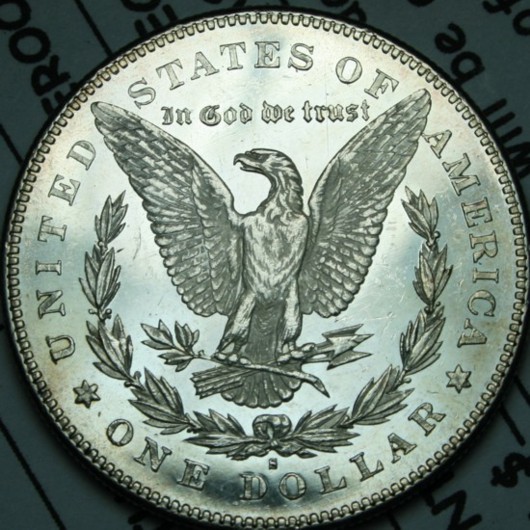 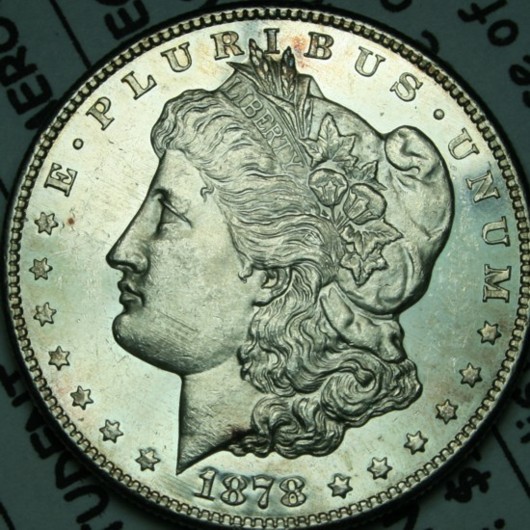 |
|
Bedrock of the Community
United States
14454 Posts |
the first one is PL and the last one is DMPL 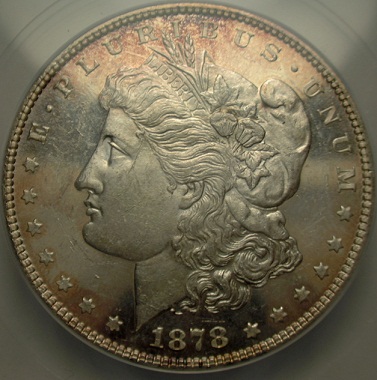 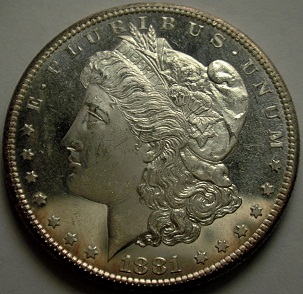 |
|
Pillar of the Community
3660 Posts |
'Metal flow', or actually 'displacement' of the planchet's metal is caused by two die fields slamming together with the planchet between them. The field is where the most displacement or metal flow occurs.
'Polishing' is a highly over-generalized term used to encompass a very wide variety of treatments applied to the dies. 'Polishing' included scraping, filing, and grinding of the die fields, and the main purpose was to remove blemishes from those die fields, both from hubbing and (more often) from extended use. Tools used to 'polish' these dies included chisels, files, emery cloth, and a wide selection of engraving tools. 'Polishing' was accomplished in several steps ideally, with each subsequent step using a lighter grit or less coarse tool until the final step arrived which actually served to polish the die. The blemish is not only removed, but the die is in a sharper state than it was before it's first strike. This is what makes die state progression such a risky business to claim. PL surfaces on a coin could occur during the first hundred strikes of a die, or it can occur after the die has struck 50,000 coins. Much depends on when the die was 'polished', and to what extent it had been polished.
Consider this: both extended wear and hubbing will leave a slightly rounded drop off edge from the field into the devices, but 'polishing' actually sharpens these drop off edges, thereby acheiving a sharper strike. The main point here is that PL does not necessarily indicate EDS.
|
|
Pillar of the Community
United States
1551 Posts |
Thanks Zeewool,
Very nicely put.
|
|
Pillar of the Community
United States
3076 Posts |
I had never thought of those points! But your point is very informative, Vams often have PL or DMPL surfaces, and as we know they are not always the first strikes, Often many other means are used to remove blemishes and rather unsuccessful, resulting in gouges, file lines and many more small details we use for VAM conformation. Perhaps an entire resurfacing(a complete polishing) may be rather time consuming due to the dies hardness and the mints need to produce the coin....... |
|
Pillar of the Community
3660 Posts |
Yeah Gene, that is why I said "ideally". Often, time constraints or lack of proper work ethic may have led to a die being only "polished" to a half hearted degree.
I would imagine that an 'entire resurfacing' would have been a fairly quick and easy job to accomplish, but care must be taken not to over-'polish' lest the die lose it's innate concave profile thereby ruining the die. I would also think that the most time consuming aspect of polishing would be the pre-step of tempering the die to soften it in order to effectively work on it. (As you point out), polishing a hardened steel die would be a most time-inefficient endeavor, nearly to the point of futility.
|
|
Pillar of the Community
United States
3076 Posts |
So rightly put Zeewool. as a finish guy. that's what I do, thats why I thought about the minting process, and your comments, they are very much inline with the procedure to make a quick fix, as we see in VAM's rather than to RESTORE a die to its MINT state.(a perfect die)......That was already attained within the hubbing process.....Therefore as all of us who love VAM's and clashed coins and such..can understand how these error's happen....those imperfections get scrubbed, by files, sandpaper and who knows what to fix the minor errors we see.......and when its far out of hand they bring out the buffer to resurface the entire die and polish it to as new.......many a minting from the first strike... Thanks my friend, for putting it in a simple view of how the process can happen..... Byu the way this coin is not Proof like by any means |
| |
Replies: 9 / Views: 1,614 |
|







 Posted 05/10/2010 6:19 pm





