| Author |
 Replies: 354 / Views: 19,601 Replies: 354 / Views: 19,601 |
|
|
|
Pillar of the Community
United States
3076 Posts |
and I am not at odds! rather that this is a very interesting subject seldom looked at!!and it should be examined far more that it has been!!
|
|
Pillar of the Community
 3660 Posts |
Okay, I understand you now Gene. Actually it 'does' need to go through several steps as the mint was not producing just "anything", they were annealing high grade, high density steel. Annealing causes molecular shifts and changes in the steel, the molecules crystallize, brittleness ensues. Punching through with one strike would cause internal fractures in the steel, the collar would become unserviceable at a far, far greater rate than would be other wise. Same exact principle with hubbing of the dies. Morgan argued two strikes per day for five days, Barber argued one strike per day for ten days. (Nobody argued for hubbing with one strike). Morgan may have been a better engraver than Barber, but Barber understood the processes of annealing far better than Morgan. Even going with Barber's technique, the annealing of individual dies did not produce like results for each die. Some were inherently harder, some were softer, some more brittle, some lasted 50K strikes, some only a few. I would imagine that the same results were achieved with collars. Some cracked, while most just wore down.
|
|
Pillar of the Community
3660 Posts |
The thickness of the collar, if you reread carefully one more time, is about 1/4", but the thickness is irrelevant, annealing of the steel which is a highly ferrous material, was not a one step process.
How are the dimensions to be finalized without annealing? Are we singing off of the same sheet of music when it comes to what annealing actually does?
|
|
Pillar of the Community
3660 Posts |
Quote:
and I am not at odds! rather that this is a very interesting subject seldom looked at!and it should be examined far more that it has been! I'm with you buddy  , and we are going to get into something that will really interest you (probably tomorrow). Trust me, the one strike hole punch just didn't happen, we aren't talking about sheet aluminum here. I've something to share, but I am too tired to get into it now. I wish that Russ would jump on board, because it would definitely interest him. |
|
Pillar of the Community
United States
1285 Posts |
The Big wheel - Is it turned to make the strike? and if so does the strike depend on how fast or slow you turn the wheel?
Thanks
Good info but most of it is wayyyy over my head.
Peace
|
|
Pillar of the Community
United States
2797 Posts |
Ceylon, It was steam powered, no manual turning required. You may be thinking of our first coining presses which were screw-types. (see pic) The steam press was introduced in 1836 and quickly replaced the manual screw presses. 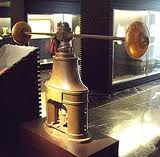 |
|
Pillar of the Community
3660 Posts |
Sorry Ceylon, a serious attempt 'was' made to keep the jargon to an understandable level, but I am not a very good communicator, so a lot of this stuff probably doesn't make much sense (not because it is over your head, but because I cannot transform thought to words very well). Again, my apologies.
The big wheel is called the 'flywheel'. Liken it to the flywheel on an old sewing machine. As the flywheel turns, the needle raises and then lowers. Same basic principle, but not exactly.
The press was steam powered, and later, modified for electricity as it was made available. Anyway, the press is a highly synchronized piece of machinery. Rather than using many gears as a clock, the press incorporated several different engineering principles such as linkages, gears, tension pressure, etc, that were all powered simultaneously by the flywheel as it turned.
The actual strike was achieved by pressure applied to a 'toggle joint' which in turn bent a flat rod with ever increasing horizontal tension until a point where this rod would 'snap' back straight with great pressure causing the toggle joint to now apply severe downward pressure on linkages attached to the upper die.
Also attached to the flywheel was a gear which caused upward and downward movement of the lower die to set it to both receive planchets and eject them as coins.
As the coin is ejected, another planchet is needed to replace it for the next strike. This is accomplished by another gearing mechanism attached to the flywheel. A series of 'feeder fingers' is assembled as the numerals on the face of a clock. Instead of the hour and minute hands moving though, the face moves synchronized so that finger set # 1 will accept a planchet from the feed tube at 12 o'clock as finger set #7 feeds one into the collar at six o'clock.
If, (for several different reasons), finger set # 3 fails to accept a planchet from the feed tube, that particular finger set will have no planchet to place over the collar, subsequently, a clash will occur, although both finger set #2 and #4 supplied planchets to be be struck as normal, but the planchet supplied by finger set # 2 will be coined with no trace of the clash that occurred after it was struck, but the planchet supplied by finger set #4 may show telltale signs of the clash that immediately preceded its striking.
Clashes were not uncommon events, and in many cases did not harm the dies, but each individual die is of a unique hardness. When two dies clash, if one is significantly harder than the other, clash marks or even cracks may result.
These are but a few of the more significant events that all happen with synchronized accuracy at what appears to be simultaneity, but these events are all just a chain reaction caused by the rotation of the flywheel. Now consider this: this all happened at the rate of about 90 times per minute. Mind boggling 'eh?
|
|
Pillar of the Community
3660 Posts |
Sorry Dave, I didn't see your post, it could have saved me some wasted words if I had. I guess that I am a pretty slow typist. Glad I don't need a job doing that.
|
|
Pillar of the Community
United States
2797 Posts |
Hey Z ... I have to ask ... what time is it? |
|
Pillar of the Community
3660 Posts |
At the risk of answering a loaded question with the implication that I don't know the time of day, I will answer anyway: exactly 8:25 by my watch.
|
|
Pillar of the Community
3660 Posts |
|
|
Pillar of the Community
3660 Posts |
Or was it the feeder finger thing that I likened to a clock? 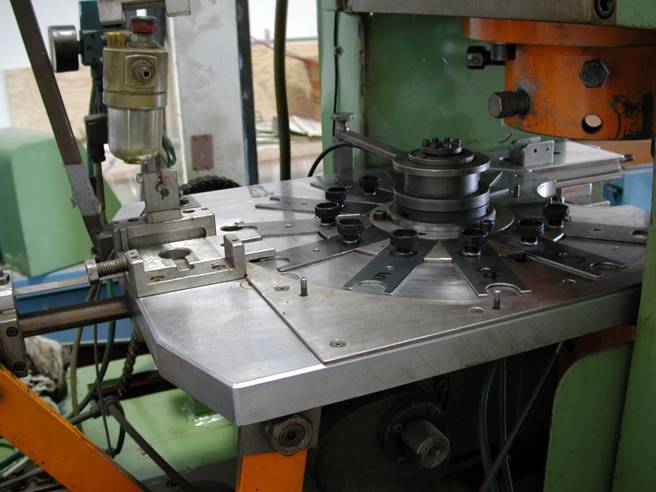 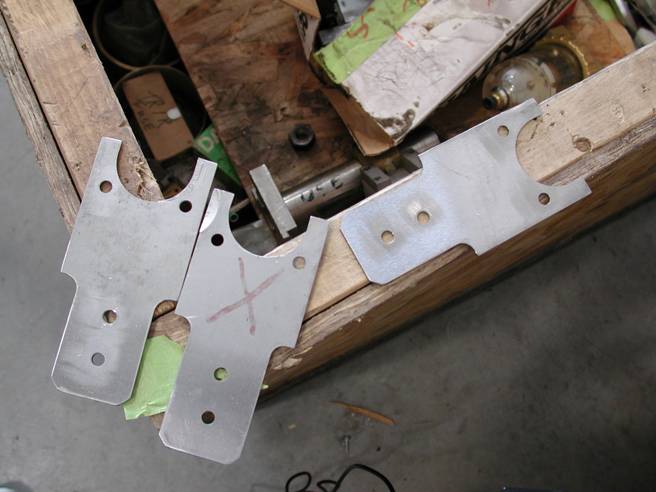 |
|
Pillar of the Community
3660 Posts |
Now see what you've made me do? I am all disoriented and confused again. I wanted to discuss the edges of coins as being PUPs or revisions to known vams, and now all I have on my mind is time, clocks, sundials, kitty cats, tacos, etc.  |
|
Pillar of the Community
United States
2797 Posts |
No, it was in reference to the old adage ... ask what time it is and they'll tell you how the watch is built. And look what you did. Just to make it clear ... I do appreciate your posts and gain great knowledge from your input. And ... I marvel in your thoroughness! |
|
Pillar of the Community
United States
3076 Posts |
well it is certainly important to really see the press and how it works if one is to fully understand the mechanic's by which errors other than the Hub or die errors can occur...getting a visual on the process does help considerably, much easier to follow than a narative, though at times that's all we have.....Great thread!
|
| |
Replies: 354 / Views: 19,601 |








 First Page


 Posted 07/22/2010 01:24 am


