You know Conder, you are exactly correct. I never read Thurman's book, so I don't know the official definition. To me, it is like so many other things with coins; a matter of perception. So many words and terms appear to be just made up on the spot to cover something that is not understood (lamination, ovaloid, polishing, etc).
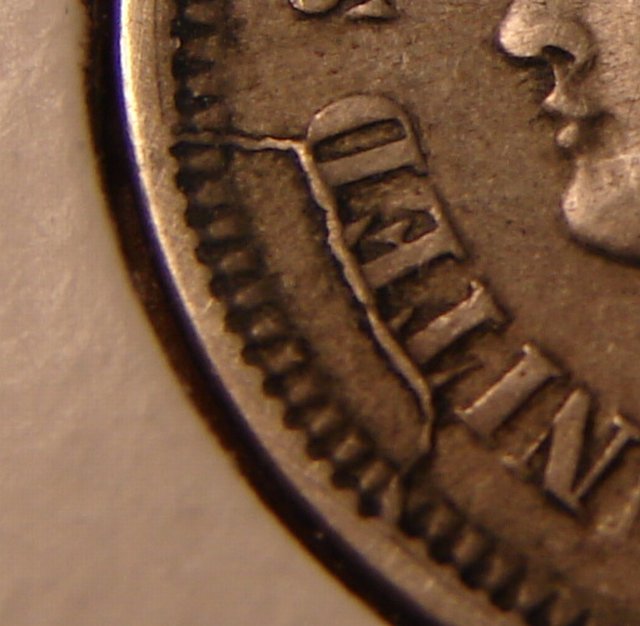
I consider a break from rim to rim as the one pictured to be an early state of a
Retained Cud, as it is fairly obvious that it will eventually evolve into a
Retained Cud, and a
Retained Cud will eventually turn into a
Cud. The only thing that will suspend the procession is the retirement of the die. I view them all as of the same nomenclature, differing only in die state progression.
Most
Retained Cuds that I can think of do display the displacement of metal over the
Cud area, but unless the coin is of high grade,
Retained Cuds can be easily mistaken for
Cuds due to wear. There was a recent thread on CU where the big time
Cud experts were viewing several examples of
Retained Cuds, but thought that they were looking at
Cuds because the coins were heavily worn.
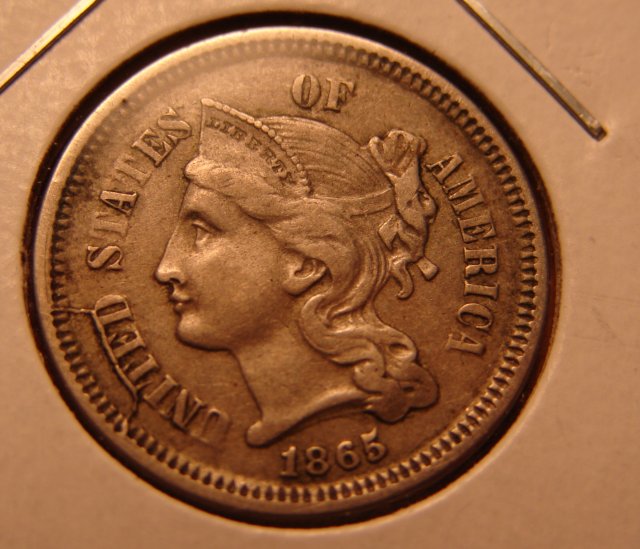
I know that you already know all of this Conder, but in case someone doesn't, here are examples of each stage:
First, the OP's coin in the earliest stage of a
Cud:
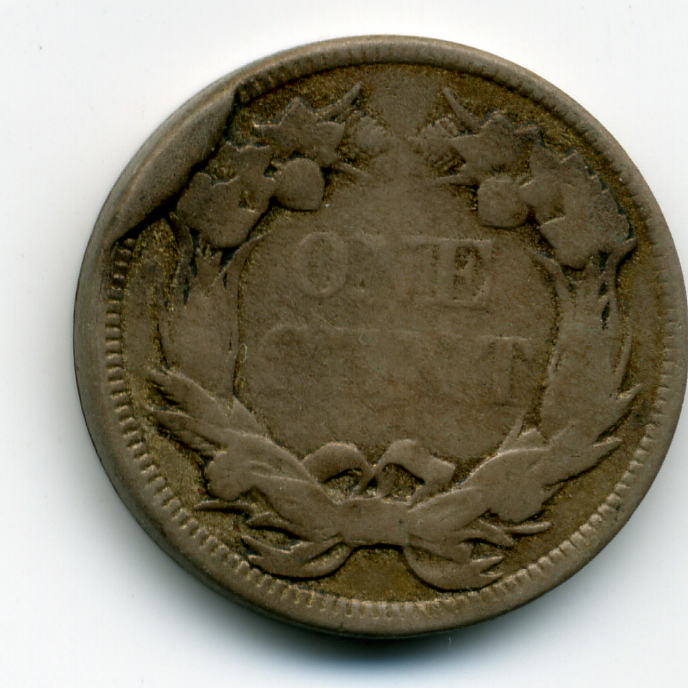
Next, a
Retained Cud, showing the metal displacement over the broken die piece that you mentioned is still partially in place:

Now, a full
Cud, displaying uninhibited metal displacement where the broken die piece is actually gone.
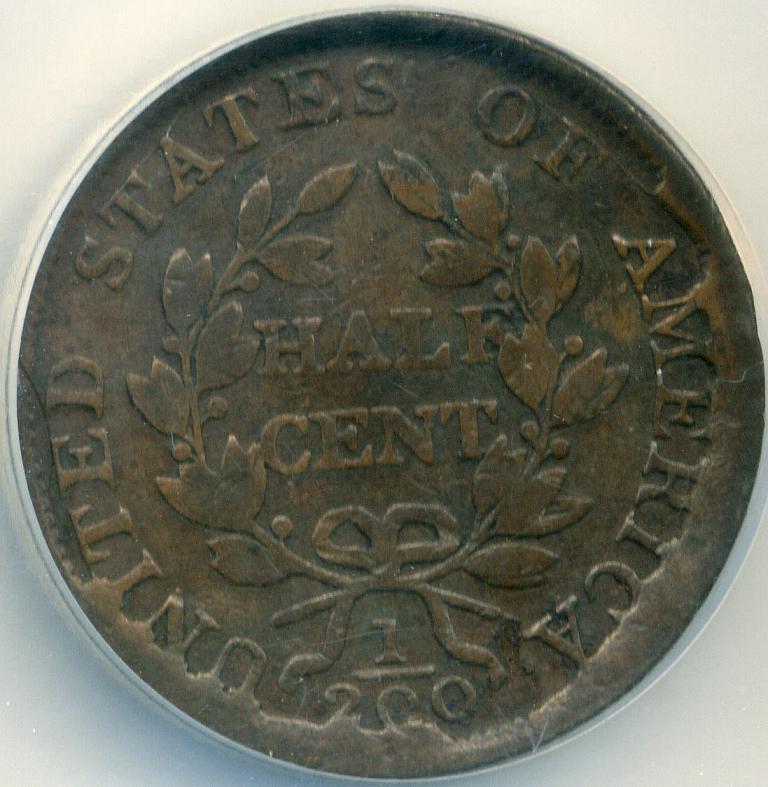
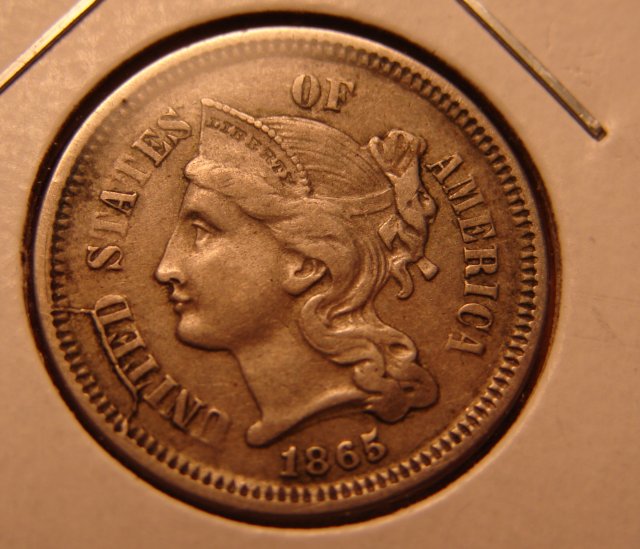
Here is a coin that displays early to late stages:











 Posted 08/14/2010 2:57 pm


