| Author |
 Replies: 27 / Views: 13,504 Replies: 27 / Views: 13,504 |
|
|
|
Bedrock of the Community
United States
62064 Posts |
Annealing is heating the metal and letting it cool on it own. To temper you heat the metal and watch the metal for the blue line that flows toward an end. When it reaches that point it is quenched to harden the metal. If you've seen it done once you will know what I mean. Quenching at the wrong time will make the metal brittle and can shatter when used. The blue line on the hot metal will tell you when it is ready.
|
|
Pillar of the Community
 United States
2448 Posts |
Coop, I watched a smithy perform that once in his shop and then again on the "Woodwright's Shop" because they were making and sharpening chisels. Still haven't a clue how he read that blue line.
So the consensus is in the annealing process?
|
|
Bedrock of the Community
United States
62064 Posts |
It would be done after the tool have been soften, shaped and then tempered to make the tool strong. We would heat the metal hot and with a wire brush we would rough the area to remove smoke and slag and then you would see the blue line transfer to the end of the tool and quench it when it was at the end.
Annealing=soften (The stock would be left to cool naturally.)
Temper=harden. (Quenched in water or another liquid when the desired hardness was present to cool quickly.)
|
|
Valued Member
 United States
476 Posts |
Great stuff coop & Condor...thanks.
|
|
Pillar of the Community
United States
3592 Posts |
Alright, I got back my holdered nickel from ANACS. It is graded as MS63 "Improper Alloy Mix". Does that mean it is a black beauty or not ? I will post pics when I get set up with imageshack but you'll have to take my word that it is black and lustrous for now.
|
|
Pillar of the Community
United States
1551 Posts |
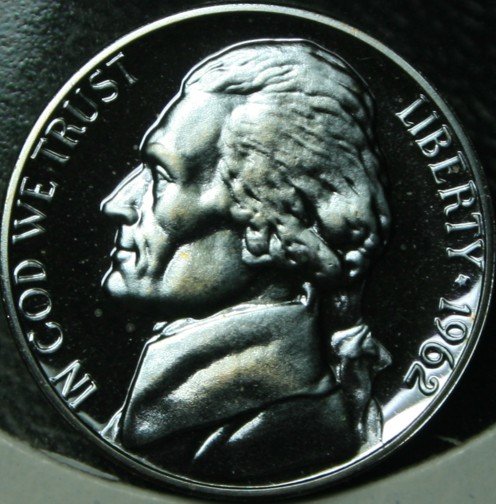
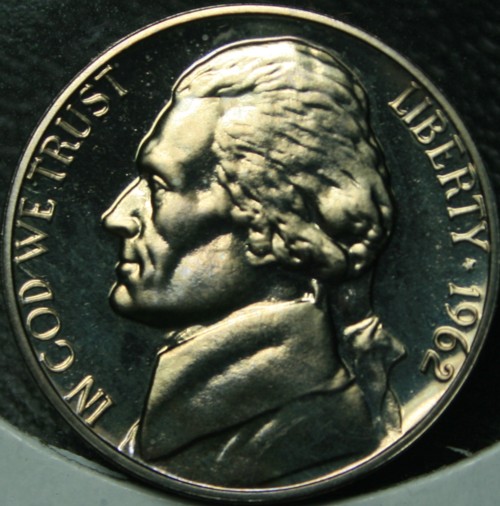
Coop, I have seen a lot of deep purple type nickles in early proof sets 1955 to 1964. Is this the same thing, ie: poor metal mix or annealing problems?  Thanks Russ Edited by twohawks
09/17/2010 02:25 am
|
|
Bedrock of the Community
United States
62064 Posts |
I would think that is toning and not an annealing problem.
|
|
Bedrock of the Community
United States
10284 Posts |
I think a lot of people expect these "Black Beauties" to be black in color, when actually they are more of a dark gun metal in color. Certain dates seem to be more common to find these nickels. Probably because during those years the quality control in the annealing process was overlooked or maybe the persons in charge of the annealing just had habits that just produced a lot of these darker planchets. Some people mistake the black fields we sometimes see on old Shield and Liberty nickels which is nothing more than some oxidation. Black Beauties do have an attractive appearance. I find these dates are by far the most common and probably in this general order. It also seems to be that these are for the most part, the era for when this was common. 1958 and 1959 top the list, 1954 and 1955 are probably second. 1960, 1961, 1962, 1963 and 1964. I think that these are probably most often Philadelphia minted nickels. |
|
Pillar of the Community
United States
1551 Posts |
|
|
Bedrock of the Community
United States
10284 Posts |
Nice proofs but the Black Beauties are regular issues intended for circulation.
|
|
Pillar of the Community
United States
1551 Posts |
I just talked to NGC and ANACS they list both the standard business strike and proof strike like the first one as Annealing error. I am not out to sell any of mine so it's 6 / 1 / half or another anyway. They are pretty!
|
|
Bedrock of the Community
United States
10284 Posts |
Quote:
I just talked to NGC and ANACS they list both the standard business strike and proof strike like the first one as Annealing error. I did not know that, I learned something new. Thanks. |
| |
Replies: 27 / Views: 13,504 |








 First Page


 Posted 09/15/2010 3:08 pm


 The darker plancett is with out a question a much nice looking coin IMO I am surprised at how many I have in different years and all proofs. Here is a 1962 proof dark and a lighter 1962