The theory regarding 1890's forgeries is the official line from
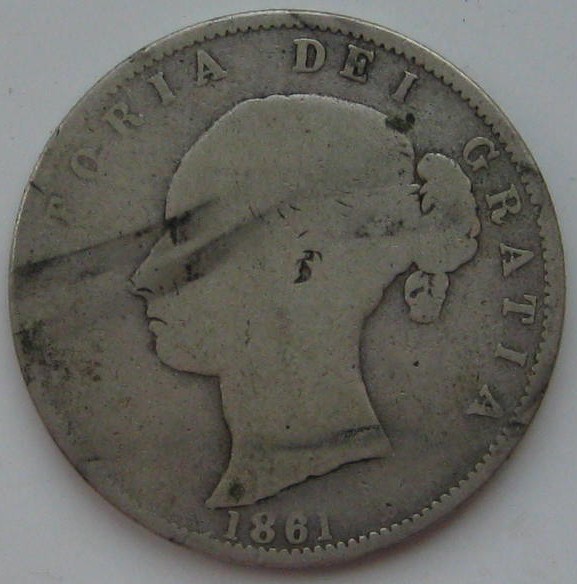
The Royal Mint. They are apparently only 0.915 fineness instead of 0.925 and weigh slightly light (mine is just under 13gms). Other 1861 examples have surfaced and been sold (one at £600 in a London auction). All are the same low grade.
Other dates that do not exist according to
Royal Mint records have turned up over the years (1862, 66, 68 and 71).
I am sending mine away for authentication and will be interested to see what the silver content is.
The purpose of forging seems a bit unclear to me. To use 0.915 fineness and skim 1.2gms from the weight would seem a pointless exercise i.e. you would have to produce almost 13 forgeries to make a halfcrown profit. In a modern largescale counterfeiting operation that would be no problem but back in the late Victorian period?
The other thing that is puzzling is why are so few in existence? To make it worthwile cutting dies the forger would have to have produced thousands of coins. Where are they and why is there no record of their removal from circulation if they entered it?
Intriguing episode in Victorain coinage history!










 Posted 10/01/2010 8:51 pm


