| Author |
 Replies: 44 / Views: 5,807 Replies: 44 / Views: 5,807 |
|
|
|
Pillar of the Community
 Canada
576 Posts |
Dan, interesting post! The Vickie series does offer so many possible collection choices. I should choose one or two to pursue. For the time being I'll just keep my eye out for all the varieties listed at the back of the new Charlton's. I like to collect Vickies in general, trying hard to hone in on those rich chocolate examples that seem to offer such great eye appeal in VF to EF. There's something about that particular coin condition that makes the search worthwhile. I'd love to see a trends circa 2020 to see how all the work and effort of people like you and others that visit here has worked out. Most veteran collectors if they stay in the hobby end up in varieties. It's a natural evolution.
|
|
Valued Member
Canada
153 Posts |
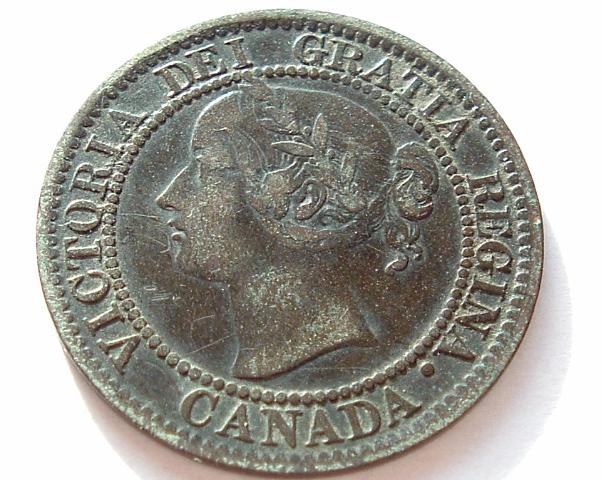
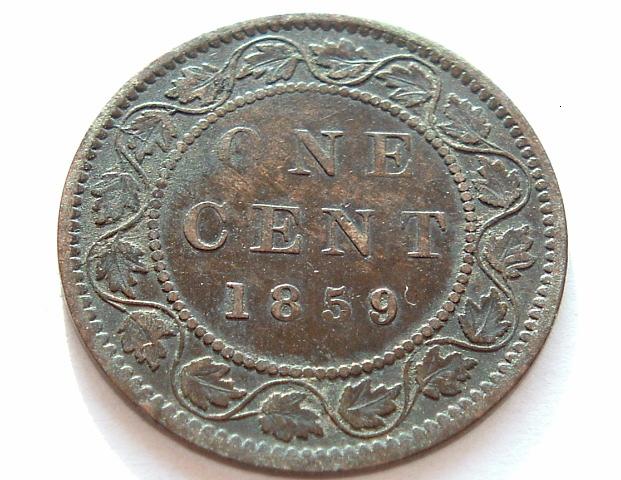
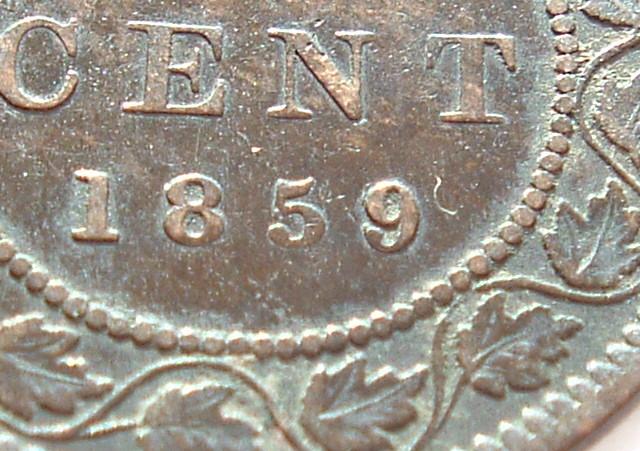
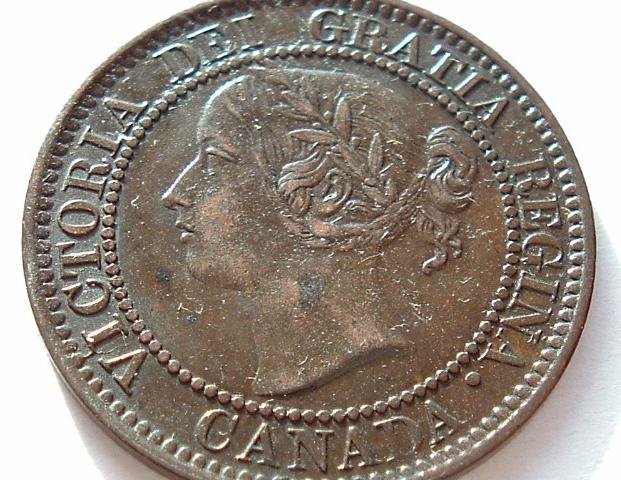
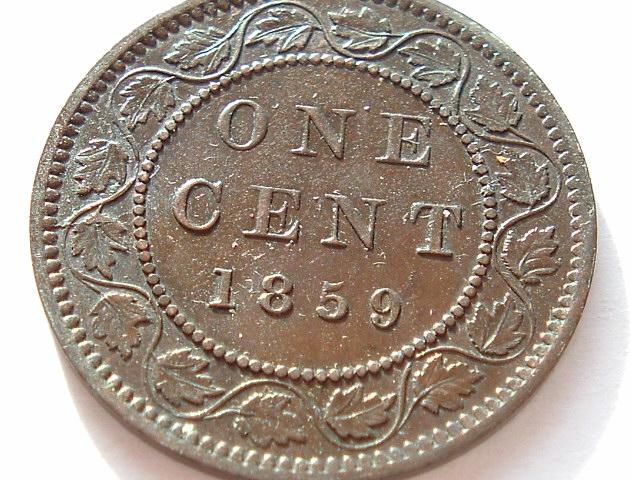
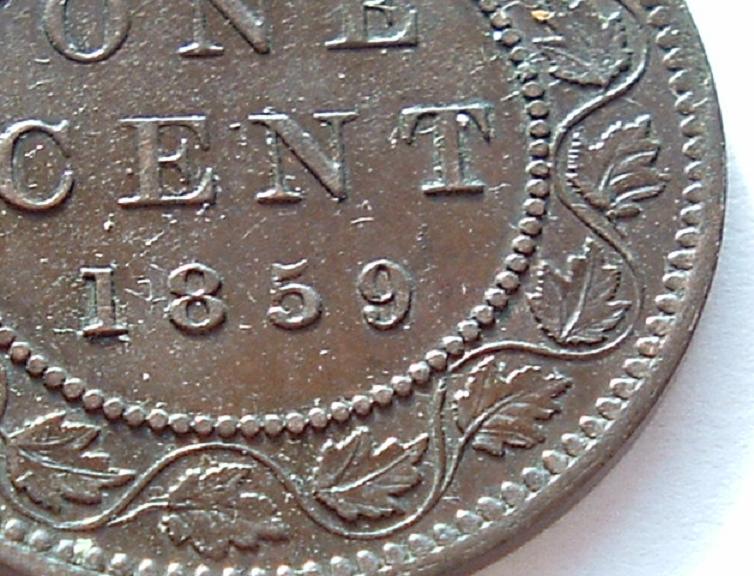
Similar to what Dan said, there are so many that it's hard top single out individual varieties on a "list". I am partial to the 81's, 87's, 93's & 99's because there are so many nicely offset. But I guess my heart belongs with the wide offset 1859's. The portrait, the strikes, the fragility of the thin planchet all are to my liking. I guess the R2b (I have about maybe 5), the 9/6 (3)and any well-offset 9 make it for me. I started collecting scarcer Zoell varieties after finding a copy of the 4th edition in an old book store in the late 70's. Then, when I got ahold of Griffin's 1992 book, I started looked for all the rarity 7 and above in the book. I now have multiples of all the rarity 8's in the book (there are less than 10) and went back to rarity 6 & above a few years ago (DP#1's are R6). Now I just look for things the stir my interest.
|
|
Pillar of the Community
Canada
576 Posts |
R2bR2c, I agree that the young, idealized Victoria does offer a striking portrait for the 1859 issue mentioned. I have a nice doubled 5 here for the date I should take a picture of and post. I'll have to look for the Griffin book mentioned but if I remember correctly something similar is to be out soon. I have one early Zoell book (2nd edition) here and it's a decent start. The search for more Victorias never ends but they are getting harder to find in the places I frequent. Never stops me going. I'd love to find a hoard that's been unsearched. Surely, they're still out there.
|
|
Valued Member
United States
493 Posts |
Based on nybird's success, there is still lots of unsearched places. tamarin, are you near oshawa? if so send me an email at dan.in.crystal.lake at comcast.net
|
|
Pillar of the Community
Canada
576 Posts |
Have done. I'll see if I can post some pics of recent finds in my searches out and about. We all need reinforcement and photos do their part.
|
|
Pillar of the Community
Canada
576 Posts |
|
|
Pillar of the Community
Canada
576 Posts |
|
|
Valued Member
United States
493 Posts |
Nice eye you have there. I was thinking about your original question about when dealers will take notice. I'm not sure if they will or not. R2bR2c has mentioned before that some of the great varieties in this years Charlton are actually quite a bit more scarce than the 1859 DP1's and DP2's that have come to be well recognized as "desirable". Most of the dealers in the general area where I where I live, (greater Chicago area) that deal in world coins (Canadian) use Krause as their guide. The couple that do pay more attention will have a Charlton for reference. I guess that being the case for me, it will be a long time before they spend the time in their stock pulling out the varieties. How about in Canada? Is it Trends or Charlton that governs price?
|
|
Pillar of the Community
Canada
576 Posts |
Dan, in my experience, dealers at shows almost always use trends. That's partly why they're skittish about many varieties if they're not listed in CCN. If I go to an auction, fellow bidders will almost always have a copy of trends with them. But if I go to a flea market or antique show most who have coins will have an old copy of Charlton's. I continue to find my share mainly because varieties really aren't on the screen of most of those offering coins. Interestingly, I was at a coin booth at a major flea market here yesterday and I looked through his large cents. He asked me if I was looking for anything special. This is a guy in the hobby for decades. I mentioned just one variety - the punch around the clock for 1881. He looked at me as if I was from Mars. "Never heard of it," he said.
|
|
Valued Member
United States
211 Posts |
I love that Charlton's included the varieties in their last edition. Suddenly it made my large cent collection exciting after sitting in a shoebox for so many years. Not sure if I care if the dealers don't see the value, but looking at my coins through a microscope in s whole new light was priceless!
|
|
Valued Member
United States
459 Posts |
To answer your question up above -- about a favorite variety here are two entries. These are discussed on page 308 of the Charltons 2011 guide. The first photo is an early state die clash and the second is late state. I found these two several weeks apart but I think it is cool to have both to study. They are both from 1881 vickies. 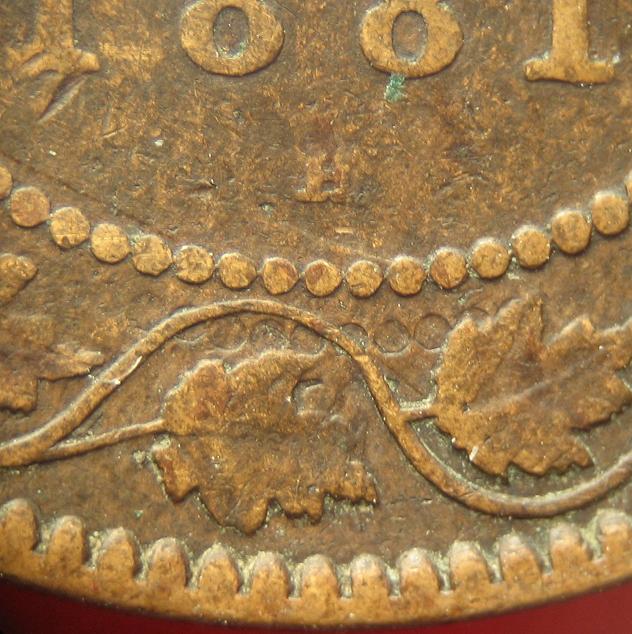 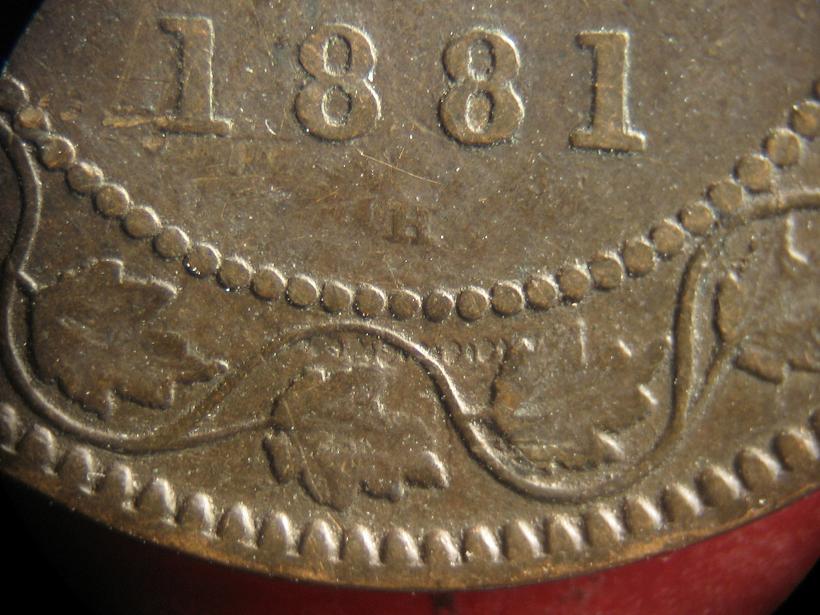 |
|
Pillar of the Community
Canada
576 Posts |
Nybird, well done! That is a variety I haven't located yet. I'm looking! The nice thing about that variety too is that it should be visible to the naked eye and that will make it more popular if and when trends decides to list it. I was out again yesterday, going here and there and I came up with an 1859 in EF with a recut 8 and a recut 5 on the same coin. But, unlike your 1881, you need a glass to clearly see it. I also found an 1882 in EF with a strongly repunched N in CANADA. Always something. Keep up the good work!
|
|
Valued Member
Canada
153 Posts |
birdy ... What you have in a Griffin Gr-91, rarity 8 in his book (there are less than 10 R-8's in the hundreds that he has listed. They are actually clashes from the Obverse and what you see mostly are the beads from there. On well struck coins, you can also see some of the letters from the Obv as well, so you can tell what segment the clash came from. The "later state" that you have is really the same clash that has another clash on top of it. If you take a single bead clash and overlay it on top of and slighly offset, you will get the oval-shaped wedges from the clash (really now a double clash. It is one of the neatest of all the Victoria varieties because the clashes are so deep onto the die. Try overlaying circles on a piece of paper and you will get the same visual effect.
|
|
Valued Member
Canada
183 Posts |
I am still looking for 1888 Newfoundland large cent ef grade or better at a good price then I will have the complete set.
|
| |
Replies: 44 / Views: 5,807 |





 First Page
 Previous Page

 Posted 10/21/2010 5:05 pm