| Author |
 Replies: 33 / Views: 3,921 Replies: 33 / Views: 3,921 |
|
Pillar of the Community
3660 Posts |
It is finally here Gene....Autumn......and you know what that means, out with the old, but first, a little something that I thought that might interest someone like you... Have you noticed crack patterns to the extent that you have wondered what the root cause was of that crack? Yes, I am sure that you have. If you explore even deeper though, you will find something that will cause you to think even more and think in a whole new direction. Frequencies and patterns will begin to jump out at you that you will recognize and will be able to explain (to yourself anyway). I am talking about the extensive peripheral cracks of the 1921 Morgans, the deep breaks in certain years of Peace dollars that appear as splits in Liberty's hair with no corresponding cracks extending to the field or rim, the prevalence of radial cracks over peripheral (on certain other denominations and years). Don't you think that there might be different reasons for peripheral, rather than radial cracks, rather than stab like breaks in the center? Yes, I have explored this....very interesting, not for everyone, but it may be for you buddy. There are definite answers, and I'll check with you in the Winter or Spring. Edited by zeewool
10/19/2010 5:19 pm
|
|
|
|
Pillar of the Community
United States
3076 Posts |
yes I have wondered about them, and I believe even the Morgan series is plagued with perifial breaks as well, and even some with radial cracks as well. more when I get home tonight. and a great idea to explore!
|
|
Valued Member
United States
380 Posts |
Lou, I too have wondered about the similarities between the die failures of certain dates. For instance the "Y" crack/break of the 1922-D Peace dollars, as well as the crack that runs around the whole obverse in circular manner. There are so many so similar that I too questioned "WHY?" I am interested in what you have to say on the subject. |
|
Pillar of the Community
United States
4212 Posts |
|
|
Pillar of the Community
 3660 Posts |
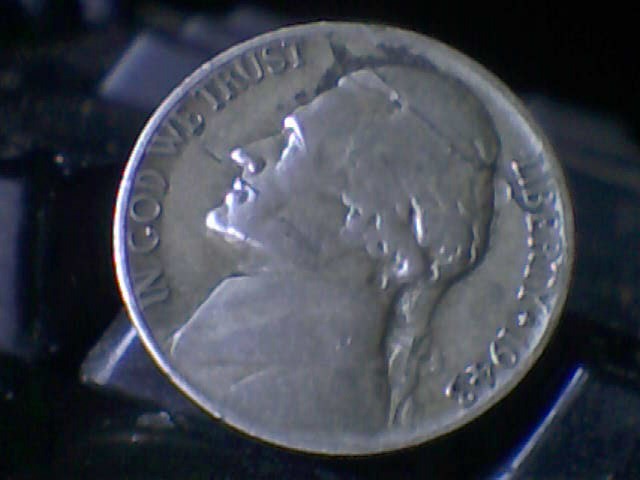
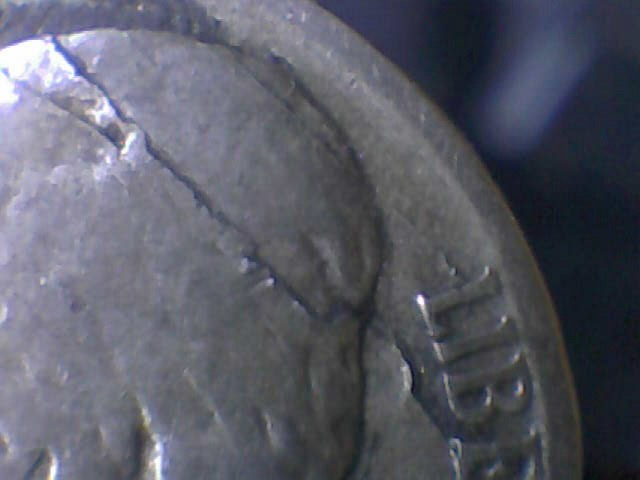
Right you are fioti, that one looks like a crack at the top with what appears (from the photo) to me to be a planchet flaw under it.
I think that nearly all coin dies will show cracks here and there. What I was referring to though was the types of cracks that seem to surface in certain years or on specific denominations. I believe that when a crack appears on a die, there was a reason for it and that reason is metal fatigue. The specific reason for the metal fatigue depends on a good many factors, including the fineness, specific composition, and processing of the ore grain used to make the steel, the temperature at which the steel is annealed, the length of time that temperature is maintained, the manner and duration of cooling, the number of times the die was annealed, the final hardening of the die, etc, etc. Radial cracks are a fingerprint of one of the many factors that may contribute to improper annealing, peripheral cracks are an indicator of yet another thing that went wrong in annealing. Sunken dies, bubbles in the dies, surface oxidation, premature central die breaks, are all specific indicators, symptomatic of improper annealing procedures, methods, or materials.
For those who feel that cracks are caused by clashes, excessive strike pressure, extended die wear, or any number of other causes, I really have nothing to say about all of that stuff; those beliefs are long held by collectors, dealers and other 'experts', so I see no sense in arguing those points.
|
|
Pillar of the Community
United States
5700 Posts |
Lou, I am very pulled into your logic and thought process on this topic, I personally have been doing some focused studies on the annealing process and the effects the process can have on the coin dies,(Working Hubs). Mints, some being treated NOT like the rest have an interesting sort of predictable die failure along the way in that if this process is altered by just the heat temperature for even a short time, different than say another Mints time and process's the results IMO, are going to be compromised, in the way of early die failure, the need to re-treat the working Hubs, re-polish, basining etc, not to mention the results a 150 ton press would have on a clashed die, and the difference the die would experience in taking a clash of that magnitude, with dies of varying degrees of heating treatments, and strengths if properly produced.
I would also add this process is NOT the only link in the chain of producing working hubs that I believe could compromise the possible early die failure, among other things the metal used for the making of the Hubs and dies had to be of an exact fineness and uniform texture to expect any quality consistent production of coins while NOT causing early die fatigue/failure.
I would like to address a statement you had made , I believe in the "Die is the Die" topic, I would like to agree to dis-agree with a statement you had made about something like no matter how many dies are made from a master hub, they will more or less be identical, I believe those are not your words, but hope you get my point, I totally believe ANY die made from the same master hub, to make a working hub would NOT be the same, I believe the nuances and small little subtle PUP'S, I E gouges, strike uniformity and other details would NOT be the same, in fact I believe that no two working hubs or dies, made from the same master hub, would produce any totally exact, perfectly identical dies, this is based on a multitude of varying components all coming together at the exact time, every time and believe there are to many segments that could alter the ultimate outcome to produce any two exactly, perfectly identical working hubs.......Nice topic......
|
|
Pillar of the Community
3660 Posts |
Quote:
Do I think that there are dies that so closely resemble other dies that differentiation is impossible? I don't think it, I fervently believe it. Many dies made from the same working hub will share the same characteristics to the point that subtle differences will be invisible. That is what I said, and what I meant, Mike. I, like you, do not believe that all dies made from a working hub will be identical, but I do believe that there will be some, (perhaps many) that will be so close, that one cannot be told apart from another. I will say this though, if you can imagine the impact of 150 tons of unrestricted pressure upon two dies, it would be ratherextremely naive to think that either die would remain in fewer than ten pieces (much less ever strike another coin). Clashes were no more than very light touches, (kisses) of the dies. The travel of the lower die is fixed at zero. The travel of the upper die is purposefully adjusted to bring up the strike in a planchet, not to obliterate the opposing die. Edited by zeewool
10/19/2010 10:39 pm
|
|
Pillar of the Community
United States
5700 Posts |
I stand to believe you to said, "Do I think that there are dies that so closely resemble other dies that differentiation is impossible? I don't think it, I fervently believe it. Many dies made from the same working hub will share the same characteristics to the point that subtle differences will be invisible".........
This is my point exactly, I believe that you could most always, if not always, find some differences in any two dies, made from the same master die/working die.....I like you too, ....No two dies are going to be exactly the same from any working die. It makes very good sense that this would stand the test of any 10x microscope, or some good eyes, just not mine, LOL....
|
|
Pillar of the Community
3660 Posts |
Quote:
you could most always, if not always, find some differences in any two dies You may be right Mike, but, unless you know how many die pairs were actually used, how would you know if you had identified them all or not? On the other hand, if you knew that there were 233 die pairs used for the 1921P Morgans, yet you were only able to identify 156 pairs, might this not suggest that there may be dies that so closely resembled one another that they appeared as the same? |
|
Bedrock of the Community
Australia
21789 Posts |
Some deep numismatic thought going on here.
Looks like poor old Tommie has been prepared for brain surgery!
Or maybe I am wrong, and he is masquerading as a 16 th century Franciscan monk!
|
|
Moderator
 United States
23522 Posts |
I just blew half an hour composing a post which the network ate because Comcast picked the wrong moment, yet again, to lose DNS service. I am beside myself with rage.
I won't try again tonight.
|
|
Pillar of the Community
United States
3076 Posts |
WELL!  another great thread....Originally about cracks, yet...the fact is the cracks are the end product of the hubbing, or reproduction of the master die......in that we all can agree that even though the master hub captures the essence of the image of the coin to produce.. the master is created to replicate this image into a "DIE" which will "coin" or its image....and that due to volume of required numbers will require more than one "DIE".....in fact it will require "MANY", in my idea its not 10 or 20 dies......in the die replication we know that the dies did not all come out exactly the same as the hub, as it was intended..due to the processes of annealing and heating process to make the die... in this process we KNOW they had differences, so in the process we know there were some differences.. which result in what we know of today as different dies or die pairs "FROM THE HUBBING PROCESS" there are differences also in the die use or polishing or maintainence of the dies as they were used...Best seen in a die progression study.. SO lets get down to the die cracks..... the whys,, and where fores... As I am limited, in metalurgury..withing my own occupation...you beat on something somethings going to give, usually something spreads. my meaning is when one pressure is applied greater than, and onto another the weaker "METAL" will yield..;. In the case of dies......they are made to be of consistant high grade metal to withstand.. the applied pressures....Now in as I have come to learn...... The metal must be "ANNEALED" or softend....to work the metal...as needed for its application... in this case to make a die.......do the dies are annealed to accept the "image" they are to reproduce...within this process...its not EXACT and very minor imperfections are absorbed into its process..thats why we have doubling of certain features and "NOT" the whole die.. SO without going through the whole precess here.. lets get to DIE BREAKS.. and the reason for breaks in the die....... Breaks (my guess) is they establish them selves in mid or later die state, never in the beginning..Die breaks establish themselves in the late life of the die before die erosion is seen.... Bring clashes in for the reason that 2 dies hit under extreme pressure, but as Zee notes...the dies can only kiss...and thats understandable...as usually there is a planchet in between the dies... SO we are still wondering about the dies and why they fail and crack...I will leave us here...and interesting topic and possibilities.. NOT>>>>>>>>>>>it leads us to where.......not a question but a fact... ) |
|
Pillar of the Community
3660 Posts |
Quote:
Have you noticed crack patterns to the extent that you have wondered what the root cause was of that crack? The root cause was annealing. For instance, if heated at the correct temperature, but for too long, the result on the steel will be that the ferrite grains will enlarge, the cementite molecules within the pearlite become strained or elongated, causing the cementite membranes to form weak junctures to the ferrite resulting in inherent fissures and cracks. (A brittle die, more susceptible to peripheral cracks). The grade or purity of ore and its granular fineness were not accepted in exacting measure, it was rather a hit or miss sort of thing. The sources of ore varied, as did its processing. Master dies, hubs, clashes, the works of Franciscan monks, etc, had nothing to do with cracks in the direct sense, they may have served only as catalysts to exploit these inherent deficiencies within the dies themselves. I know that I tend to blame nearly everything on improper annealing, but annealing is not now, or was then, an exact science. Optimal dies were the exception rather than the rule, and this is because of the ore grain, and its treatment. It remains a controversial subject to many, and there are many, many methods of annealing depending on the material involved and its intended use. What I originally meant by my post was that over the Fall and Winter months, it might be interesting to see if you could come to any conclusions as to what may have been the cause of the particular cracks that you see on individual coins.....what sort of crack might come of a die that was over heated? What sort of effect would there be on a die that was cooled too quickly? A radial crack might imply what? (That sort of stuff). MD Mike has already been thinking about all of this evidently: Quote:
I personally have been doing some focused studies on the annealing process and the effects the process can have on the coin dies,(Working Hubs). Mints, It would be interesting to me to see what others might come up with, I already know what I think, but being the only one thinking about it, what fun would it be to share that at this point ? I am alienated, and I'll lose interest in this very quickly, and I'll be off onto something entirely different. When someone else brings it up again in the future, my interest and memory will reemerge. |
|
Pillar of the Community
3660 Posts |
Before I am accused of being "a downer" on this forum as well, let me add this: Given the time constraints involved, the working conditions, the materials, machinery and technology available, the educational and experience levels of the mint workers, and all other variables required to design, anneal, create dies and mint coins, I do think that the folks who created the Morgan and Peace dollars did a most excellent job in juggling everything 100+ years ago. I really don't see a great deal of quality improvements today over then. |
|
Pillar of the Community
United States
3076 Posts |
Again some many great thoughts on a great topic,,
I can agree somewhat with both of your ideas on the die idea, which I will get back to in a moment, as I think the main culprit to ALL of the varied issues is the annealing process....
Why could this be? in today's processes there is very exact control over the materials as well as exactness in tolerances with today's technology and if the exactness is within plus or minus 100,00o of an inch we can do it...
So lets look at 1878 and its annealing process, to anneal is to heat to specified temperature in order make the material workable...
HEAT? lets see they didn't use, Electricity,......they didn't have "Natural GAS" until 1901.....I guess twigs and leaves, yes thats right "THEY USED WOOD" according to the Great Enclopedia..and for the day it was was plentiful and cheap....and there is onl;y one thing about wood, It does not all burn uniformly...as a past LOGGER I got to know wood pretty darn well, and even as most of us know hard woods burn hotter and longer, what is not so commonly known is the different parts of the tree burn differently as well as how dry it is..wood with a higher moisture content burns cooler, than a well dried chunk of wood at say 6% moisture content...the end result is an exact eveness of uniform temperature can not be accomplished..They did however average the ball park figure..
The heating process is the key point to the annealing process in which they had not total control of, yet they did have enough control to get the job done with some side effects, the first side effect takes place with the Hub in coping the master it took up to ten strikes , I believe its one strike per day, as took time to heat up the furnace and its die cool down time, the result is in those days the next days fire up of the furnace and getting the hub ready for a restrike to get this hardened die with the desired impression, it didn't exactly expand(from the heat) to yesterdays position whereby an impression next to an impression, very small mind you....occurs from the next strike to get this image into the hub....these we know as hub doubling,,,not a doubling from the "DIES" used to produce the coins...this expansion due to non uniform heat also explains why some features are doubled or more and others are not..the metal did not expand evenly/uniformly...if it were we would have every feature doubled as in the double die like the 1955-s penny...
Now I do have a thought , with the number of dies needed to be produced were there more than one hub made?
from the hubs being finished, one would think that any number of die's made from this would, should or could be exactly the same...in all essence as I have made many a mold in the industrial industry....
yes they are all alike, but as Mike would point out even twins will have the slightest of variances, so it really depends how anal we get in superficial differences in the dies....Truely there are more differences that occur in the "dies life" than any where else..
Annealing was essential in both the production of the dies as well as annealing the silver in all its beginning stages as an ingot and forming sheets, resizing into usable/handleable strips and before its being struck...
Knowing that annealing is in the fore front of the entire process,,,understanding the side effects of non uniformity that will occur as they could not absolutely control temperature, there is also another side of annealing, and that is the effect it has on the metal itself, beyond the uniform expansion we see from the hubbing process..
Blacksmiths would be the first to know, when metal is heated it can be hardened or softened depending on how it is cooled, Zee has already pointed out what happens to metal on the microscopic/atomic level, annealing and its process if not exact can have just that not a uniform strentgh through out the die , where by dies can crack over time, yet it is true that it is an in-evitability to beat on something for so long before it will break down, and the did, I do not know if there was a listing which stated how long every die lasted, a rough guess is about 50,000 average coin's..yet in 1878 the first die only lasted a supposed 303 strikes,,,,, I will leave this here......
|
|
Pillar of the Community
3660 Posts |
I won't touch on the subject of burning wood versus coal , but I would imagine that since the mint was in Philadelphia rather than Seattle, and ugh......You are right Gene, oven uniformity is one aspect of annealing that I have not considered. Restarting a fire in the same oven each day is something else that I had not considered. I have just assumed that there were considerably more than one oven, and more than one die being worked at a time. I imagine several dies in several ovens simultaneously. Same with screw presses, etc, etc.
We have different views on how doubling occurred also. Yes, metal expands when heated, but it should not be forgotten that it also contracts when cooled. Was there more than one hub? Yes, there were two obverse and two reverse master hubs used to make the 8TF alone. Were they identical? No, which made the master dies that they hubbed not identical also, which made the working hubs not identical. Doubling occurred when two working hubs were used to impress the same die. Ever wonder why the exact same doubling is found on more than one die? This was done intentionally in 1878 to reduce die relief. Doubling comes from hubbing, not expansion, cracks are inherent in the individual dies.
I realize that I am the only one here that lives and breathes analogies, but over the Fall and Winter, get your significant other to bake cookies....several cookie sheets of them. Ask her to experiment by adjusting the temperature up or down with each sheet, then ask her to adjust the baking times on the next couple of sheets. Critically inspect the results after cooling, and ask her why they came out the way they did. She will tell you why, and you might learn something in the process.
On one sheet, the cookie edges (periphery) may be hard and brittle... heated too long?
The cookie centers may contain internal splits (breaks) on another sheet.... temperature too low?
Cookies on yet another sheet may break in half or in pie shaped pieces (radial cracks).....temperature to high, duration insufficient?
Baking cookies and annealing steel are two very different things, but there are a few definite similarities.
|
| |
Replies: 33 / Views: 3,921 |
To participate in the forum you must log in or register.
Disclaimer: While a tremendous amount of effort goes into ensuring the accuracy of the information contained in this site, Coin Community assumes no liability for errors. Copyright 2005 - 2026 Coin Community Family- all rights reserved worldwide. Use of any images or content on this website without prior written permission of Coin Community or the original lender is strictly prohibited.
Contact Us | Advertise Here | Privacy Policy / Terms of Use
|
| Coin Community Forum |
© 2005 - 2026 Coin Community Forums |
| It took 0.57 seconds to rattle this change. |
 |
|










 Posted 10/19/2010 12:57 pm