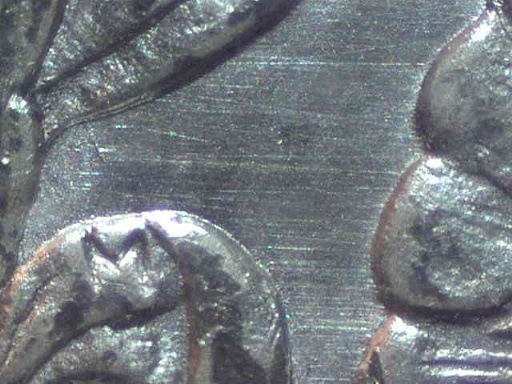
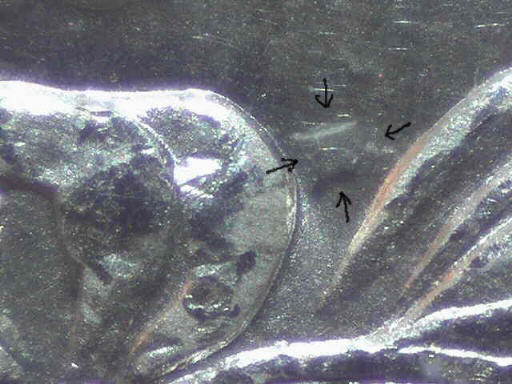
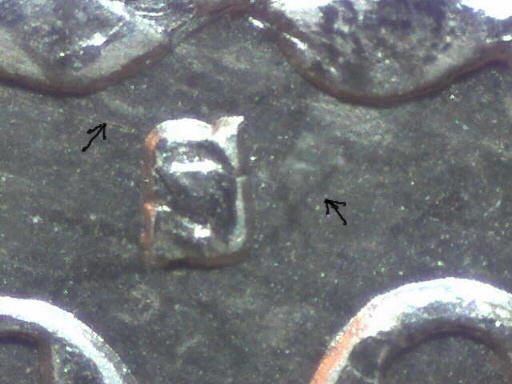
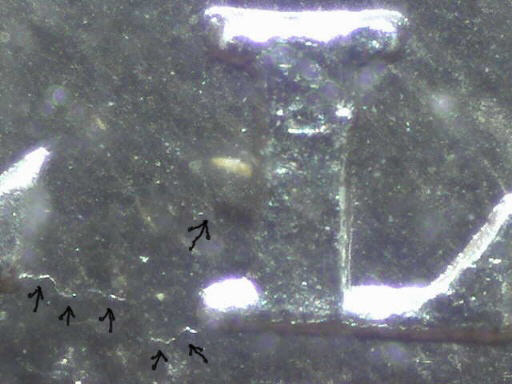
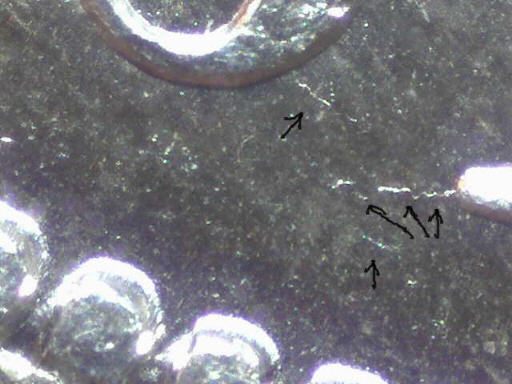
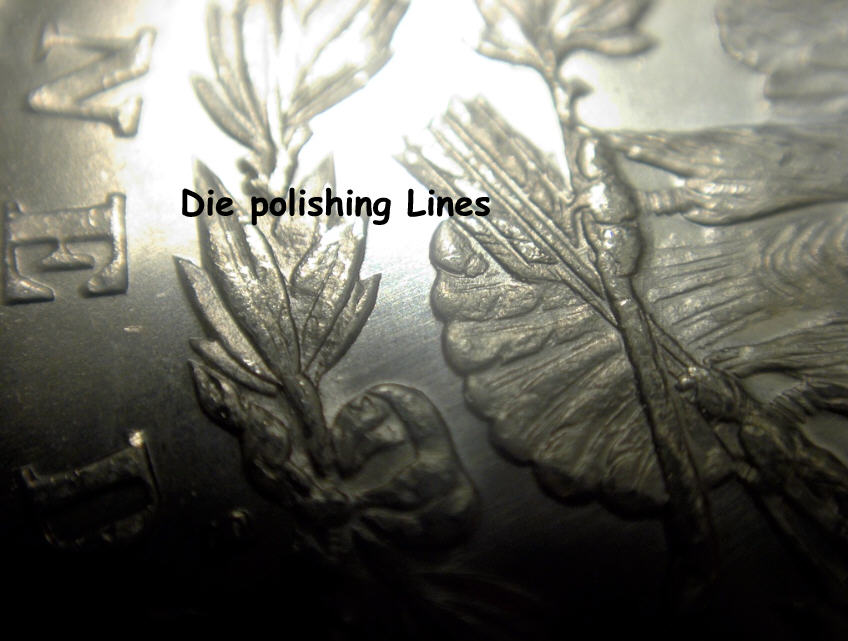
Ok this is a 1878-S and I know it is atleast a VAM17 but there are only 15 known 17A's to exist and well after looking closely at mine I beleive it is a 17A after a repolishing of the dies after the clash. What would make this coin very interesting is because this coin was never really deemed a clash because nothing like it has ever happened before, and if this is indeed after they polished the dies (the reason I think this is because you can clearly see die polishing lines on the reverse and obverse 9the obverse is noted in the book, the reverse wasn't) it would put that question to rest because if it were a capped die there would be no reason to polish the dies. Also there is some of the clashing still seen as you will see in the photo's that didn't get polished out.I am going to post exactly what the book "Elite Clashed
Morgan dollars" says about the 17a then I will post the pictures. This is directly from the book:
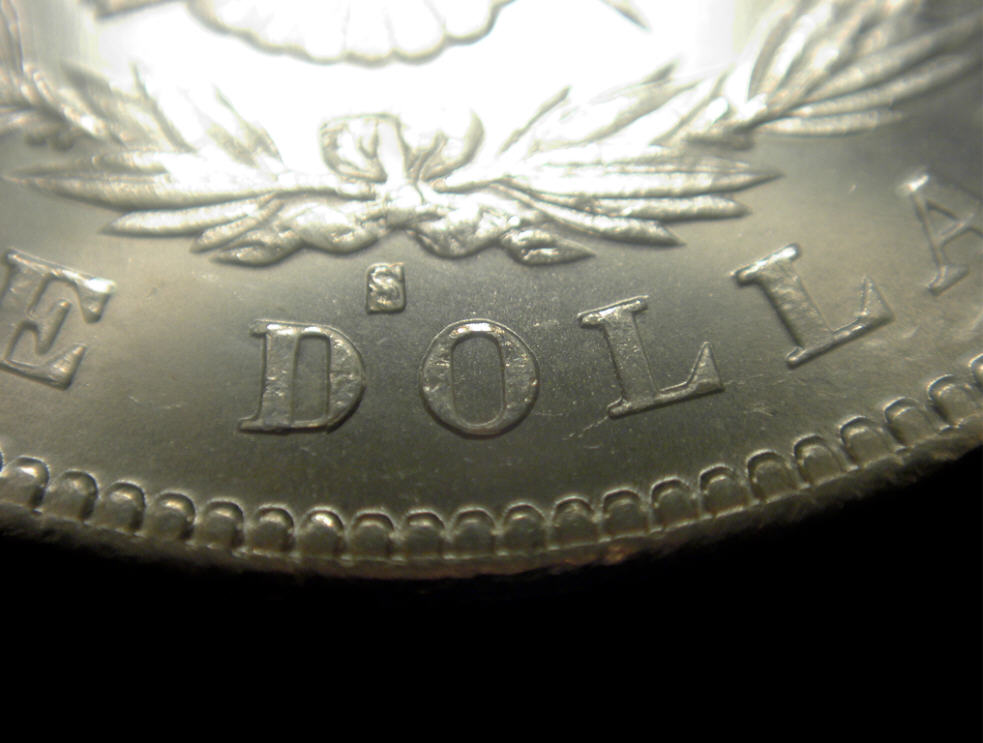
The 1878-S VAM17a is known as the "CASTLE" variety. It was the first clashed denticle type of variety ever discovered. Denticles are the rounded ridges found along the rim of a
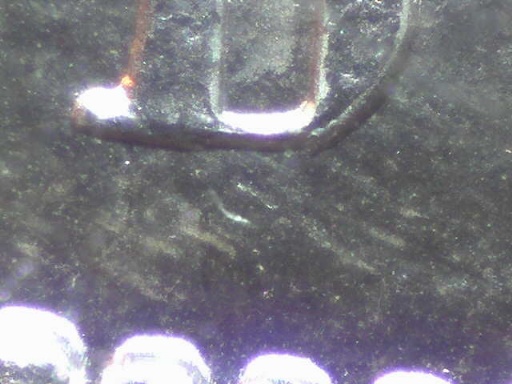
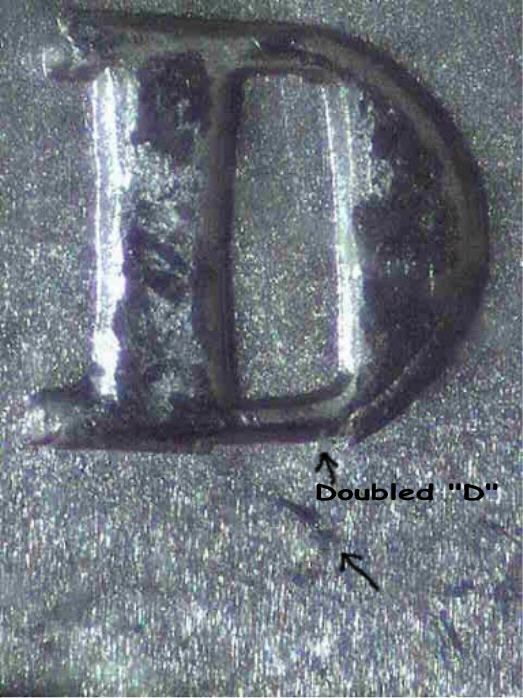
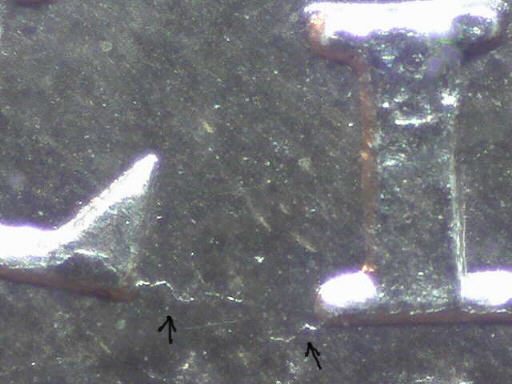
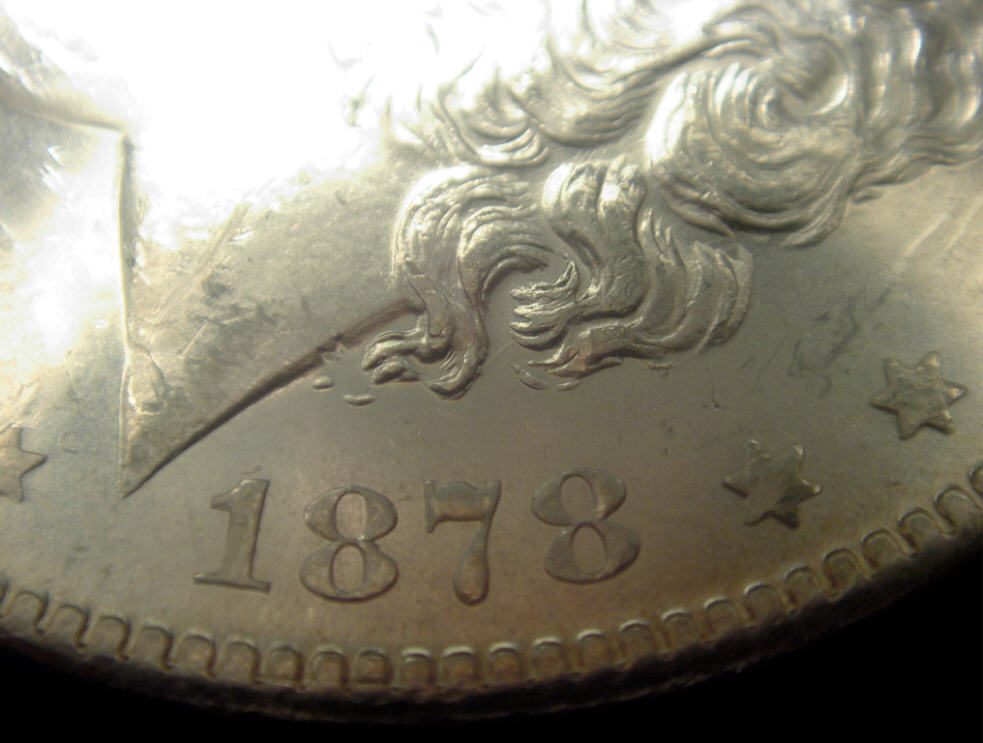
Morgan dollar. The 1878-S VAM17a has multiple sets of denticled clashed on its reverse. these rows of denticles give the appearance of rounded stones with gaps between them much in the same way the tops of castle walls were designed in the middle ages, which led to its nickname. Other points of interest can be found on the 1878-S VAM17a aswell. The non-clashed VAM17 has a strongly doubled "D" in DOLLAR found on the reverse. Nothing else around the D shows doubling. The Obverse die has been Highly polished causing shallow date and missing portions of lower hair line. The Reverse shows the result of the SIX seperate clashed episodes that appear to track from around the rim around DOLLAR amd travel towards the eagles tail feathers. With this many clashed episodes you would expect to see some evidence of clashing on the Obverse. Unfortunately just the opposite is true. The Obverse shows NO clashing. Rather, it shows the results of heavy handed polishing. A great many details have been polished away on the Obverse, yet the reverse die was left alone. Evidently the mint missed the evidence of the clashed denticles, much the same way collectors have done for over 120 years. Since its discovery in 2001, other clashed denticle varieties have been found. However, the 1878-S VAM17a is still in a class by itself. It is the only clashed denticle variety with rounded details, as opposed to triangles found on other coins, and is the only one known to have clashed 6 times! The 1878-S VAM17a is considered to be a scarce variety. Since its discovery in 2001 only 5 examples have been certified by ANACS, however, most collectors have been unaware of its existance and have not been looking for it. There are atleast 10 other raw VAM17a's that I am personally aware of. In spite of six seperate clashed episodes,there does not appear to be much in the way of other damage to the dies. Only the reverse shows clashing as the obverse was heavily polished. A theory that this feature is not the result of clashing but was the result of a coin stuck between the dies may potentially explain why there is little obverse damage. If this is true then the VAM17a would not technically be a clashed variety, but this theory has yet to be proven. The 1878-S VAM17a "CASTLE" was the first clashed denticle type of varity discovered. No other denticle variety has been found with more than two clashed episodes, let alone the six found on the VAM17a. Few varieties of ANY kind can suffer six seperate clashed episodes and live to tell about it. While the reverse still shows the details of the clashing, the obverse has been heavily polished, resulting in an attractive proof like quality, but no clashed details. There is also doubling on the D of DOLLAR on the reverse. If you are looking for something truly out of the ordinary, this is the coin for you. Nothing else like it exists!
Here is what Leroy Van Allen says about it on the Ashmore Site:
¨17A(revised) II 13 · B2d (Doubled D, Denticle Impressions) (184) I-4 R-6
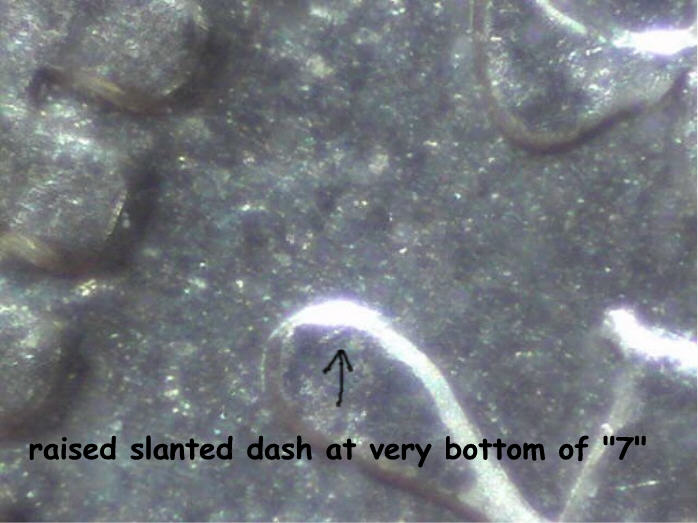
Obverse II 13- 7 has raised slanted dash at very bottom.
Reverse B2d- Slightly raised denticle impressions thru OLL in DOLLAR, below OL and four slanted impressions below left tail feathers.
Ok here is the pictures teken with my camera and QX5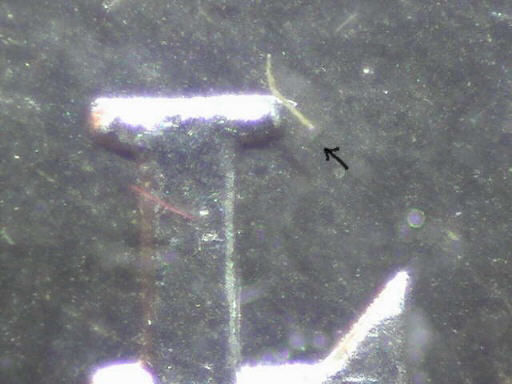










 Posted 09/01/2006 08:10 am