











 Posted 12/22/2010 3:01 pm


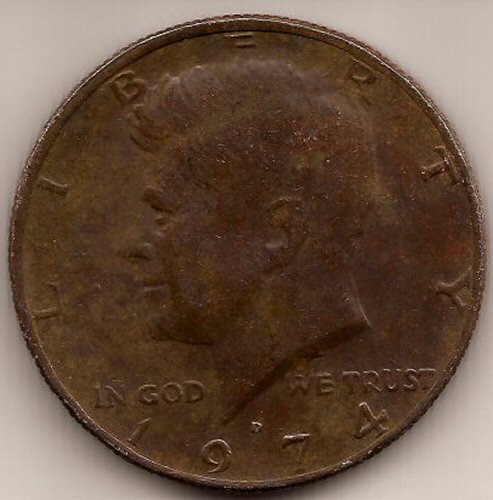
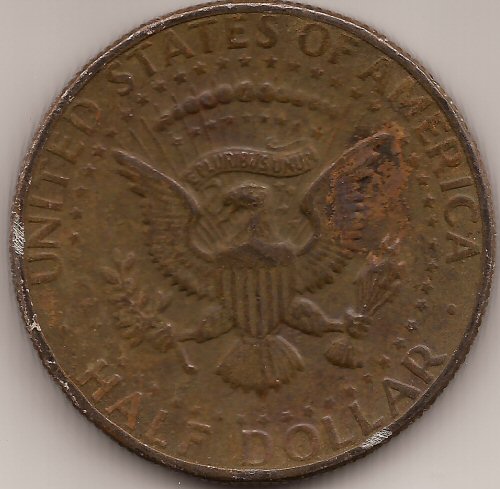
Nope, just environmental damage. A coin with missing clad layers will always be light in weight. The appearance can differ depending on whether the clad layer fell of pre- or post-strike. A pre-strike separation will result in a fairly normal looking coin(other than the exposed copper core) with a bit of strike weakness becuase the planchet is thinner than normal. A post-strike separation will result in a coin missing a portion of the "as minted" details. You will still see something resembling the design but it will be diffuse in appearance. Also be aware of post-mint splits that have been "helped", tooling marks are almost always present along the rim upon examination.

This is a quarter from my own error collection. A portion of the reverse clad layer fell off before the coin was struck. Pure copper is considerably softer than cupro-nickel so the strike on the reverse is fairly strong but there is some weakness present on the obverse(not pictured ). If you look carefully on the reverse, you will see some weakness next to the clad layer on UNITED and QUARTER.
This is a quarter from my own error collection. A portion of the reverse clad layer fell off before the coin was struck. Pure copper is considerably softer than cupro-nickel so the strike on the reverse is fairly strong but there is some weakness present on the obverse(not pictured
). If you look carefully on the reverse, you will see some weakness next to the clad layer on UNITED and QUARTER.


