











 Posted 06/04/2011 1:11 pm


DIC Initially I saw nothing that condemned the coin as a forgery. After, considerable time looking at it - I have to say I am unsure at present.
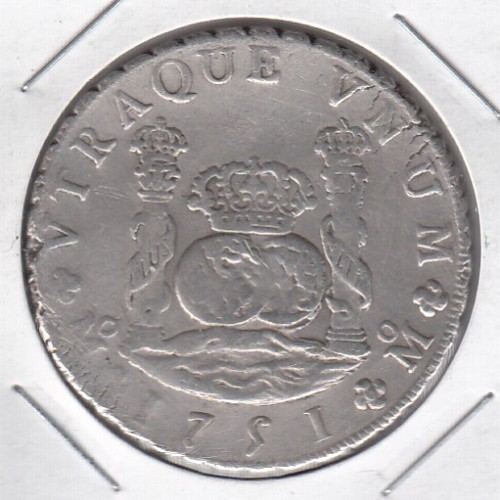
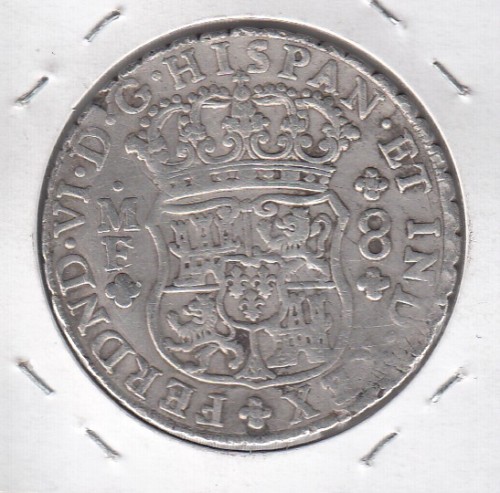
The design parameters are correct - 1751 Mo MF and Ferdinand VI all fit. The shape of the 5 is correct and the correct Imperial Crown is in place. The features on the globe also seem to be consistent with the Mo design for the early 1750's. So the coin is either real or a transfer impression of a real coin.
The right globe appears to be cut twice along the lower edge - a good feature to closely examine because this kind of a slip up is not that common. Forgeries have numerous die cutting errors.
The weakness and crazing observed on both sides of the coin (Dos Mundos at 7 o'clock and Shield at 4) and again at 2 on the Dos Mundos side appears to be caused by a tapered planchet. The spot were crazing appears on both sides is because the planchet was thinner than the rest of the blank so the dies did not fully fill with metal and the original surfaces of the planchet show through. That is a normal type situation. It is most commonly seen on forgeries BUT it can and did happen on some originals. So this alone can not condemn the coin.
The dimple in the planchet resulting in a single sided appearance of crazing at 2 o'clock is slightly more bothersome but not automatic proof of forgery. There should be a corresponding weakness in the design at that point which I do not see. It is a hint of a possible forgery but not proof.
The fact the coin has been cleaned makes authentication much more difficult. It is fairly easy to hide modern casts in this way BUT again cleaning alone is certainly not a ground for condemnation. But is is a reason to be more cautious. Are any of the surfaces actually intact in the areas right next to high points? Can you find any metal flow lines anywhere to prove it was struck?
I agree with Meldercat that weighing the coin may help. Being worn it will (should) weigh a bit less than standard. 27 grams is an essentially NEW weight but here 26.7 or even a bit less is possible. Wear is a difficult issue to address because wear is not always even and the strike depth of the original coin varies. SO APPARENT wear can be misleading. A poorly struck coin appears very worn after slight circulation while a heavy strike can still look good after substantial wear. In addition the original tolerances amounted to nearly 2/10 ths of a gram so a coin could start life as light as 26.89 grams theoretically. I would get more suspicious at 26.4 grams and could see labeling it as a definite counterfeit if it was 26 grams or less. ONE CAUTION however, there is some post strike rim damage visible so the loss of a bit of metal is always possible. Check the rim carefully to see if any amount of metal is missing (gouged out). On the other end of the scale, if the coin exceeds 27 grams in weight I would also be very suspicious of forgery.
Regarding the rim reversal question which you raised - the best source is Gilboy's book and I will quote from page 52.
The statement is easy to misread because Gilboy sees "direction relative to the obverse die as a factor. I simply think that a planchet was picked out of a basket and placed on the die face - DID they notice which way the leaves faced or where the joins were? I don't know but can not believe that positions of the face dies relative to the edge was more important that one's fingers. But Gilboy is clearly saying that reversal and NON reversal of the design - BOTH - occurred in all years before 1762-3. Therefore the fact that you have a non-reversing edge dated 1751 is possible.
In practice, the earlier the date the more often I have observed the reversal. I know of no studies that estimate which method is scarcer by date, but it would be an interesting question to address if you had access to enough originals. The reversal was phased out gradually but based on Gilboy ALL coins dated 1763 and later should NOT exhibit the reversal while coins before that COULD.
However, you can see another thing on this coin that is of interest and possibly could add another clue pointing to forgery. The coin appears to have been edged POST STRIKE. Note that the edge design application caused a distortion of the dentils near the letters ET IND. There is a clear pattern to the wear I see indicating that the dentils were in place when the application of the edge distorted the design - you can see it in the wear pattern - a wavy line where wear has removed the detils on a part of the coin that corresponds perfectly to the area that would be raised by the edge operation.
The edging priority is less well documented in the most period sources - most authors simply presume that the strike came last and that is that. However, it is clear that two different groups of employees were involved and that all of them were paid based on production rates. Could the edging group have gotten ahead or behind the striking crews due to equipment failures? Of course. Would it be recorded? Not necessarily. However, based on my personal observations of coins I consider to be real that in the earliest days of the mint most if not all coins were struck BEFORE edging was done and that gradually it shifted around so that by 1756 or so most if not all planchets were edged FIRST.
The problem here is that a post strike edging of this coin could have been used to conceal evidence of forgery - especially casting (the method preferred when using transfer images).
So you have a heavily cleaned coin, with damage more typically seen on a forgery (Tapered planchet) and the same coin exhibits a Post Strike edge (often used to conceal forgery).
I would say the jury is still out on this coin - weight followed by SG may be the only way to decide.
Hope that helps. My gut says real ......but.
The design parameters are correct - 1751 Mo MF and Ferdinand VI all fit. The shape of the 5 is correct and the correct Imperial Crown is in place. The features on the globe also seem to be consistent with the Mo design for the early 1750's. So the coin is either real or a transfer impression of a real coin.
The right globe appears to be cut twice along the lower edge - a good feature to closely examine because this kind of a slip up is not that common. Forgeries have numerous die cutting errors.
The weakness and crazing observed on both sides of the coin (Dos Mundos at 7 o'clock and Shield at 4) and again at 2 on the Dos Mundos side appears to be caused by a tapered planchet. The spot were crazing appears on both sides is because the planchet was thinner than the rest of the blank so the dies did not fully fill with metal and the original surfaces of the planchet show through. That is a normal type situation. It is most commonly seen on forgeries BUT it can and did happen on some originals. So this alone can not condemn the coin.
The dimple in the planchet resulting in a single sided appearance of crazing at 2 o'clock is slightly more bothersome but not automatic proof of forgery. There should be a corresponding weakness in the design at that point which I do not see. It is a hint of a possible forgery but not proof.
The fact the coin has been cleaned makes authentication much more difficult. It is fairly easy to hide modern casts in this way BUT again cleaning alone is certainly not a ground for condemnation. But is is a reason to be more cautious. Are any of the surfaces actually intact in the areas right next to high points? Can you find any metal flow lines anywhere to prove it was struck?
I agree with Meldercat that weighing the coin may help. Being worn it will (should) weigh a bit less than standard. 27 grams is an essentially NEW weight but here 26.7 or even a bit less is possible. Wear is a difficult issue to address because wear is not always even and the strike depth of the original coin varies. SO APPARENT wear can be misleading. A poorly struck coin appears very worn after slight circulation while a heavy strike can still look good after substantial wear. In addition the original tolerances amounted to nearly 2/10 ths of a gram so a coin could start life as light as 26.89 grams theoretically. I would get more suspicious at 26.4 grams and could see labeling it as a definite counterfeit if it was 26 grams or less. ONE CAUTION however, there is some post strike rim damage visible so the loss of a bit of metal is always possible. Check the rim carefully to see if any amount of metal is missing (gouged out). On the other end of the scale, if the coin exceeds 27 grams in weight I would also be very suspicious of forgery.
Regarding the rim reversal question which you raised - the best source is Gilboy's book and I will quote from page 52.
Quote:
Mexico City and Guatemala were the only mints to produce pillar dollars and half dollars on the edges of which laurel leaves point in different directions. Up to 1762-1763, coins were struck each year on which all of the leaves pointed one way, on which all the leaves pointed the other way or on which the leaves start back to back and meet half way around the circle.
Mexico City and Guatemala were the only mints to produce pillar dollars and half dollars on the edges of which laurel leaves point in different directions. Up to 1762-1763, coins were struck each year on which all of the leaves pointed one way, on which all the leaves pointed the other way or on which the leaves start back to back and meet half way around the circle.
The statement is easy to misread because Gilboy sees "direction relative to the obverse die as a factor. I simply think that a planchet was picked out of a basket and placed on the die face - DID they notice which way the leaves faced or where the joins were? I don't know but can not believe that positions of the face dies relative to the edge was more important that one's fingers. But Gilboy is clearly saying that reversal and NON reversal of the design - BOTH - occurred in all years before 1762-3. Therefore the fact that you have a non-reversing edge dated 1751 is possible.
In practice, the earlier the date the more often I have observed the reversal. I know of no studies that estimate which method is scarcer by date, but it would be an interesting question to address if you had access to enough originals. The reversal was phased out gradually but based on Gilboy ALL coins dated 1763 and later should NOT exhibit the reversal while coins before that COULD.
However, you can see another thing on this coin that is of interest and possibly could add another clue pointing to forgery. The coin appears to have been edged POST STRIKE. Note that the edge design application caused a distortion of the dentils near the letters ET IND. There is a clear pattern to the wear I see indicating that the dentils were in place when the application of the edge distorted the design - you can see it in the wear pattern - a wavy line where wear has removed the detils on a part of the coin that corresponds perfectly to the area that would be raised by the edge operation.
The edging priority is less well documented in the most period sources - most authors simply presume that the strike came last and that is that. However, it is clear that two different groups of employees were involved and that all of them were paid based on production rates. Could the edging group have gotten ahead or behind the striking crews due to equipment failures? Of course. Would it be recorded? Not necessarily. However, based on my personal observations of coins I consider to be real that in the earliest days of the mint most if not all coins were struck BEFORE edging was done and that gradually it shifted around so that by 1756 or so most if not all planchets were edged FIRST.
The problem here is that a post strike edging of this coin could have been used to conceal evidence of forgery - especially casting (the method preferred when using transfer images).
So you have a heavily cleaned coin, with damage more typically seen on a forgery (Tapered planchet) and the same coin exhibits a Post Strike edge (often used to conceal forgery).
I would say the jury is still out on this coin - weight followed by SG may be the only way to decide.
Hope that helps. My gut says real ......but.

 swamperbob


