Quote:
When did they start repatriating British silver back home? I suspect that it may be the same year, because that was when British silver was debased to 50% purity.
They began as soon as Australian currency was introduced, but they proceeded slowly; part of the delay in getting Australia's coinage started was a disagreement between Australia and Britain over who should pay for this repatriation. Britain was hoping that some other colony in our area (like New Zealand) would take them, but there weren't any takers. In the end, Britain agreed to take back its coins, but only in small batches at a time.
This Adelaide Advertiser article from 1909 estimated that there was about £2,000,000 worth of British silver in Australia at the time and that the agreement between Britain and Australia stipulated that they be repatriated at no more than £100,000 per year - a process that would have taken 20 years.
This Townsville newspaper article from 1925, though slightly garbled by a low-grade scan, indicates that the repatriation stopped because of WWI but had resumed with gusto "during the last two years" (i.e. from 1922/3), once the cheap-alloy British coins started arriving on our shores. If British coins had continued to be imported and accepted at par, Gresham's Law would have driven the native Australian coins out of circulation. The measures seem to have worked; I believe all the British coins were effectively gone from circulation by 1928.
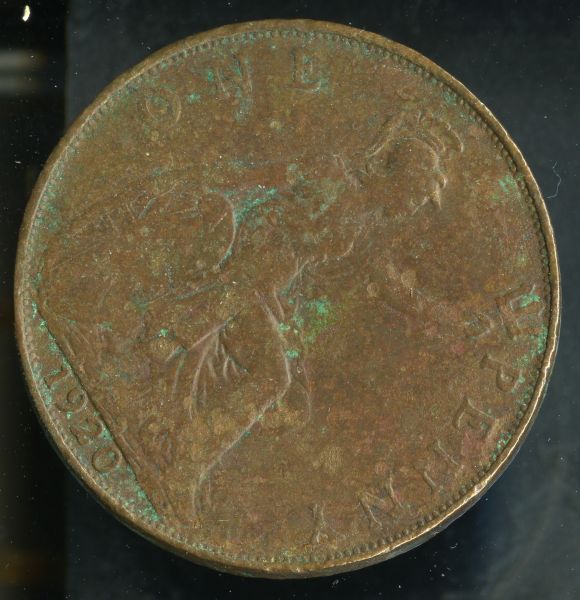
As for the bronze coins like the one in the OP, I don't think they were ever formally repatriated; it simply wasn't worth anyone's while shipping that amount of base metal around the world. They would have simply been withdrawn and sent to the Mints for melting down if they were spotted as they passed through the banking system.
Don't say "infinitely" when you mean "very"; otherwise, you'll have no word left when you want to talk about something really infinite. - C. S. Lewis










 to CCF!!


 Posted 06/05/2011 03:26 am


