| Author |
 Replies: 14 / Views: 1,720 Replies: 14 / Views: 1,720 |
|
|
Valued Member
United States
417 Posts |
Found this while searching a can of coins. Was not sure what it was until I showed it to a local dealer. He felt it was a copper core for a dime that was stamped before the coin was finished. 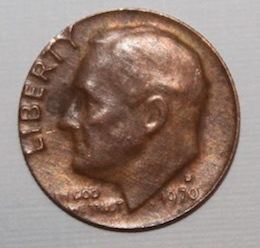 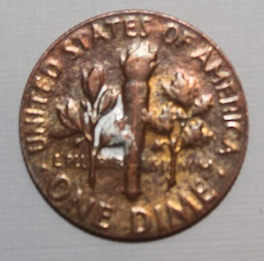 |
|
|
|
Rest in Peace
United States
1943 Posts |
|
|
Valued Member
 United States
417 Posts |
|
|
Pillar of the Community
United States
1374 Posts |
At 1.0 grams, would half to say it must be a fake. That is about half the weight it should be.
|
|
Pillar of the Community
United States
2651 Posts |
Its interesting because it has a small rim....Dryer coin?
|
|
Pillar of the Community
United States
1374 Posts |
Yeah, the planchet seems too small, but what is smaller than a dime? lol
|
|
Valued Member
United States
417 Posts |
I thought it was a fake at first, but the edge even has the ridges like a dime would. That's why the dealer thought it was a core that slipped through.
|
|
Pillar of the Community
United States
3640 Posts |
No need for anyone to fake a roos dime.
At that weight and color just might be a copper alone.
Seems to have been upset and that would cause the slightly
smaller diameter. Interesting find none the less.
|
|
Pillar of the Community
United States
2752 Posts |
It was dissolved in acid. The clad layers were eaten away.
Error coin writer and researcher.
|
|
Rest in Peace
United States
9104 Posts |
Mike nailed it, and any dealer who doesn't immediately recognize that should close his doors, because he knows nothing about coins.
Clad coins are made by bonding three sheets of metal under heat and pressure, like smooshing a cheese sandwich. There's no "unfinished core".
|
|
Valued Member
United States
417 Posts |
If it was in acid, would the core have edges like a dime should?
|
|
Bedrock of the Community
United States
62064 Posts |
The rim is reduced, so the reeding on the edges are probably gone. On some quarters dipped into acid the copper core looses diameter and the silver clad remain the same size as the original.
|
|
Rest in Peace
United States
9104 Posts |
Depends on whether the acid eats mainly nickel (in this case) or copper. Am I the only one who sees CuNi on the reverse?
Put a zincoln in nitric acid for similar results.
Remember that acid eats all similar metal at the same rate. So it will eat both the grooves and the high points of the reeding equally.
|
|
Valued Member
United States
417 Posts |
What's puzzling is that the reeding is there.
|
|
Rest in Peace
United States
9104 Posts |
Did you read the post above yours? Nothing puzzling, the acid eats the reeding evenly.
|
| |
Replies: 14 / Views: 1,720 |
|







 Posted 07/18/2011 7:43 pm


