| Author |
 Replies: 156 / Views: 107,129 Replies: 156 / Views: 107,129 |
|
|
|
Pillar of the Community
 India
1996 Posts |
Copper - 20.7gms - Paisa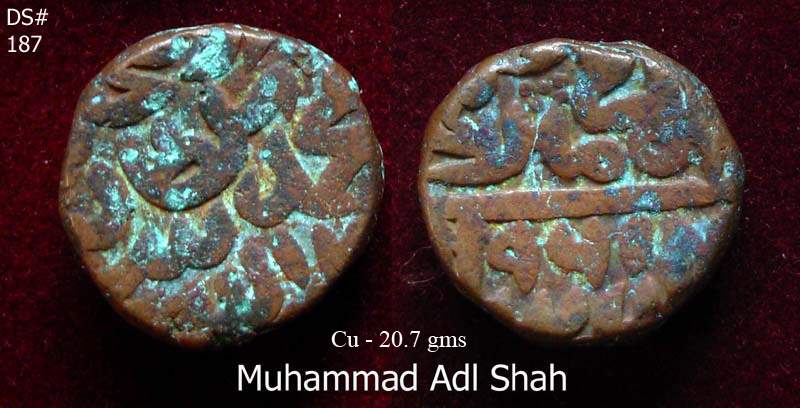
|
|
Pillar of the Community
India
1996 Posts |
Copper - Paisa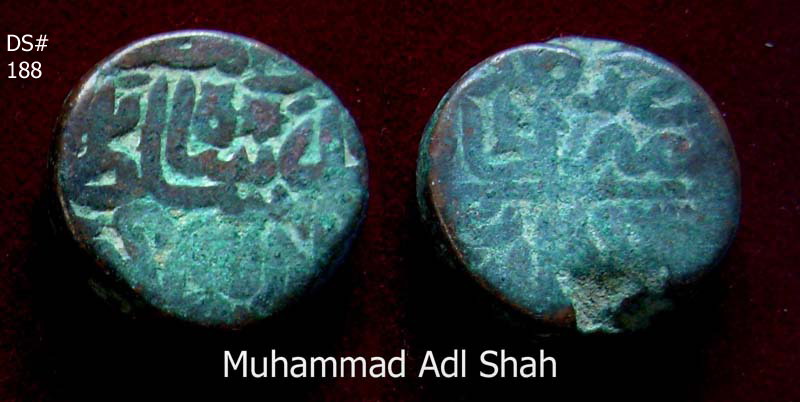 This brings to the end of my Delhi coin images. Thanks for being with me especially to DVCollector, EgCollector, amassey08873 and Bacchus2 who encouraged me to post them. 
|
|
Pillar of the Community
India
1996 Posts |
Here is the latest addition to my collection.
It is billon, 3.5gms, Bull and Horseman type coin.
On one side, there is a bull to left with legend "Jalalad..." above in Nagari script. On the other side, there is a horse man to right, but no clear legend other than remnants of a "Sree" can be made out.
In Ohind and Delhi, we come across bull and horseman coins with similar appearance.
Ghazni rulers had bull and horseman issues with a different texture. They have more abundantly issued bull and legend coins.
Ohind coins have legends like "Samanthadeva", "Spalapathi deva" etc. Chauhans and Rathods also have issued bull and horseman coins with legend "Chahatadeva", "Madanapaladeva", "Someswaradeva", "Prithvirajadeva", etc.
In Delhi, Shams ud din Iltatmash used to issue such type of coins with legend "Samasadina" above the bull. His horseman side legend reads"Sri Hamira". The immediate predecessor of Sultana Razia was Rukn ud din Firoz.He too used to issue coins with legend "Ruknadina" above the bull to left.But so far I have not come to know of a coin with "Jalalad(ina)" above the bull.
Weight of the coin corresponds to Delhi coins of Iltatmash and later rulers. But name of no ruler of that period starts with "Jalaladina" except Sultana Jalalath ud din Razia.
Nagari script "La" is written in the style of that period and this "La" can be seen on Mahipala coins of around that period.
"Ja" with similarity can be found on the coins issued around this period by Vijayabahu of Sri Lanka and on issues of Rajaraja Chola of 11th Century.
Hence the script, metal,style and weight fit with the 12th and 13th Century Delhi rulers coins.The only one Delhi ruler with a name beginning "Jalaladdin" of that period is Sultana Razia. So I hold that this is a so far obscure variety of Sultana Razia Jitals.
 If someone wants to differ with this or to add something, it is the most welcome. If someone wants to differ with this or to add something, it is the most welcome.
Edited by drnsreedhar
06/26/2012 11:58 pm
|
|
Pillar of the Community
India
1996 Posts |
In the "Catalogue of the Coins of the Indian Museum",(Calcutta) published in 1893, Chas.J.Rodgers mentions a Jalal ud din who was contemporary to Iltutmash and issued bull and horseman coins with legend "Jalaladava" above bull. This Jalal ud din is "son of Ala ud din bin Takash of Khwarizm".(Page.31, Coin no.8725).This Jala ud din, known otherwise as Jalal ud din Mingburnu had lived for three years in India as a refugee as it is known from other sources.( http://en.wikipedia.org/wiki/Jalal_...in_Mingburnu ) He could never have issued coins in his own name in India. In Kwarizm, coins with Nagari legends are for sure unlikely. This makes me think of this being an issue of Jalal ud din Razia herself.Her predecessors' similar issues were discussed above.Her successor Ala ud din Masud also has similar issues with "Sri Alav" above bull and "Sri Khalifa" above horseman.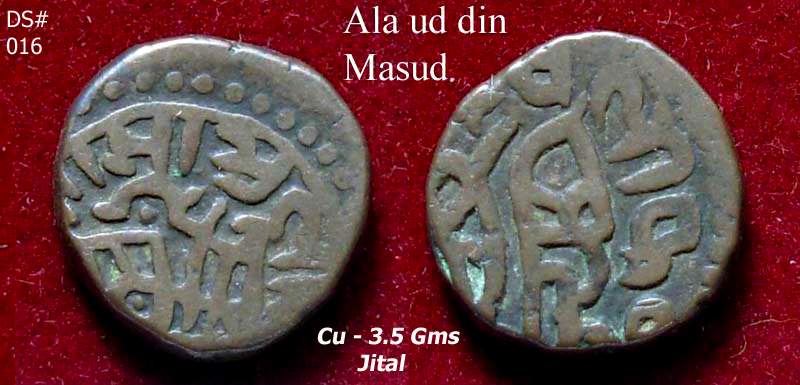
Edited by drnsreedhar
07/08/2012 01:05 am
|
|
New Member
United States
38 Posts |
I have a fair number of these coins I got from a trip to India in 2002 and more after I returned that I purchased direct from India. I have found Indian coins to be very fascinating and educational. Thanks for the posts!
|
|
Pillar of the Community
United Kingdom
2936 Posts |
Yes - thanks very much for posting all those Sultanate coins. It's great to see the imagery dissected and labelled the way you did as it makes it much easier for those of us who are not overly familiar with the writing style to see what is going on.
I've just recently received the Goron and Goenka "Coins of the Indian Sultanates" book - one I should have bought ages ago. So it and this thread go well together.
thanks again
|
|
Pillar of the Community
India
1996 Posts |
Rukn ud din Firoz (1236.AD)Rukn ud din followed Iltutmash though Mash had nominated Razia as heir apparent. He could not be borne by the nobles and they deposed him in a few months to elevate Razia to the throne. 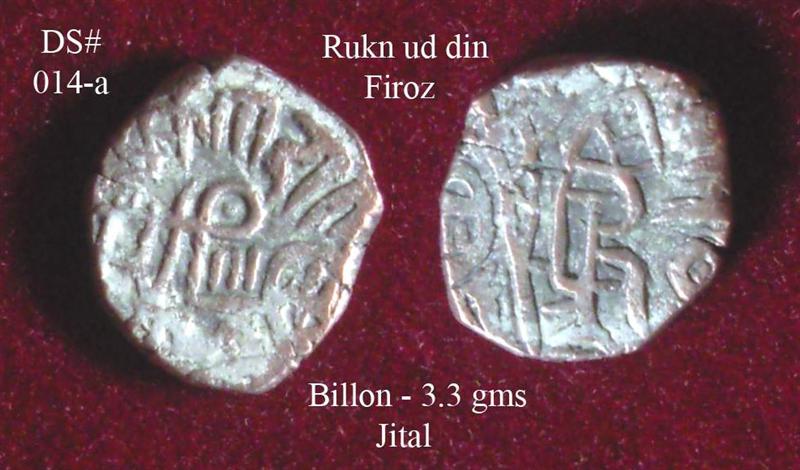
|
|
Pillar of the Community
India
1996 Posts |
This is a coin of Sultana Razia (1236-1240.AD)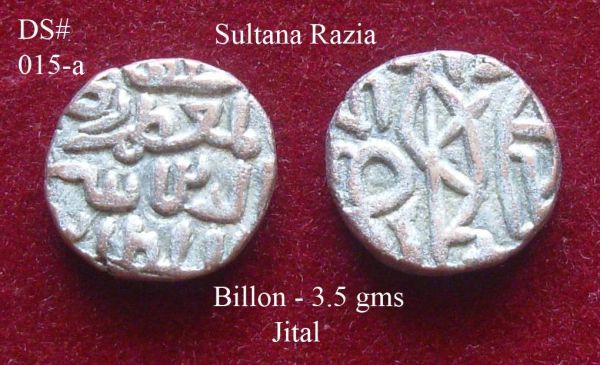 |
|
New Member
United Kingdom
9 Posts |
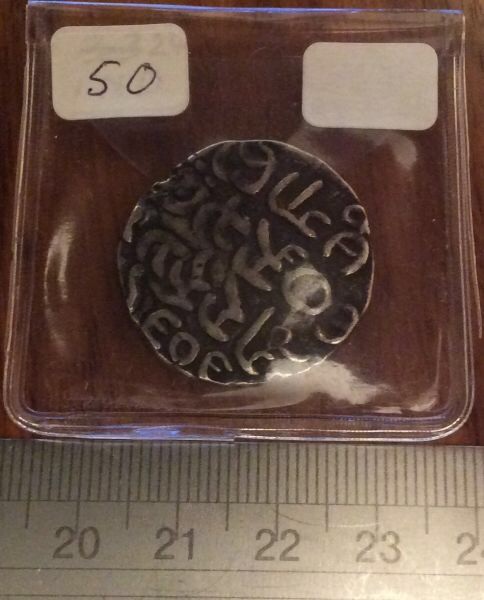 Hi, does anybody know if the attached coin is a Sultanate type? It's in my late father-in-laws collection but not listed/identified in his records. The obverse and reverse just look exactly the same to me. Thanks |
|
Pillar of the Community
India
1996 Posts |
@bmack:)
Sorry that I did not quite notice your post for very long. Please look up Arakan Rajas under independent kingdoms in India. Possibly an issue of Sanda Parama(1761-64.AD). Arakan coins are rather rare.
|
|
New Member
United Kingdom
9 Posts |
Thanks drnsreedhar.......I've had a look on websites and believe it is a KM#13 Sanda Thudhamma Tankah......I shall list it for ebay auction today with title 'Rare coin India-Independent Kingdoms ARAKAN Silver Tankah 1652' |
|
Pillar of the Community
India
1996 Posts |
Muiz ud din BahramThis ruler followed Sultana Razia when she was murdered in 1240.AD. He ruled only till 1242.AD. He issued bull and horseman coins to his credit. His name is struck above the recumbent stylised bull to left. On the revers, there is a stylised horseman to right above which is written "sri hamira". These coins are similar to the pattern that Muhammad bin Sam had followed. 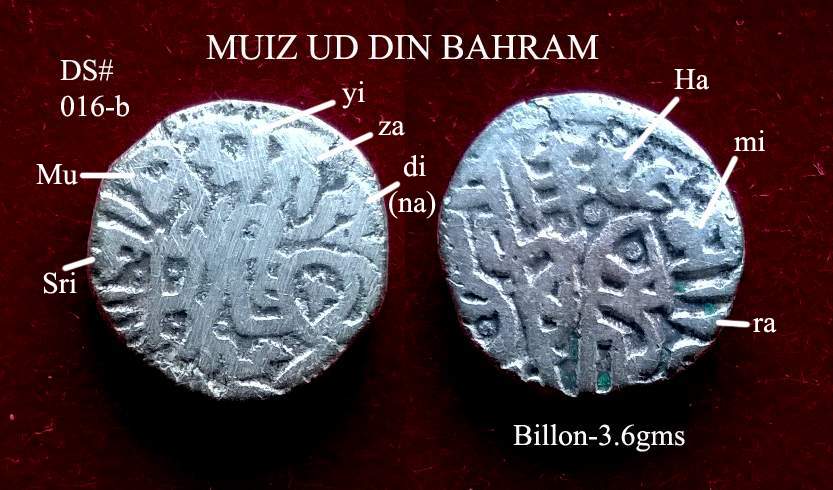
|
|
Pillar of the Community
India
1996 Posts |
A few more additions Another type of coin of Rukn ud din Firoz who preceded Sultana Razia. 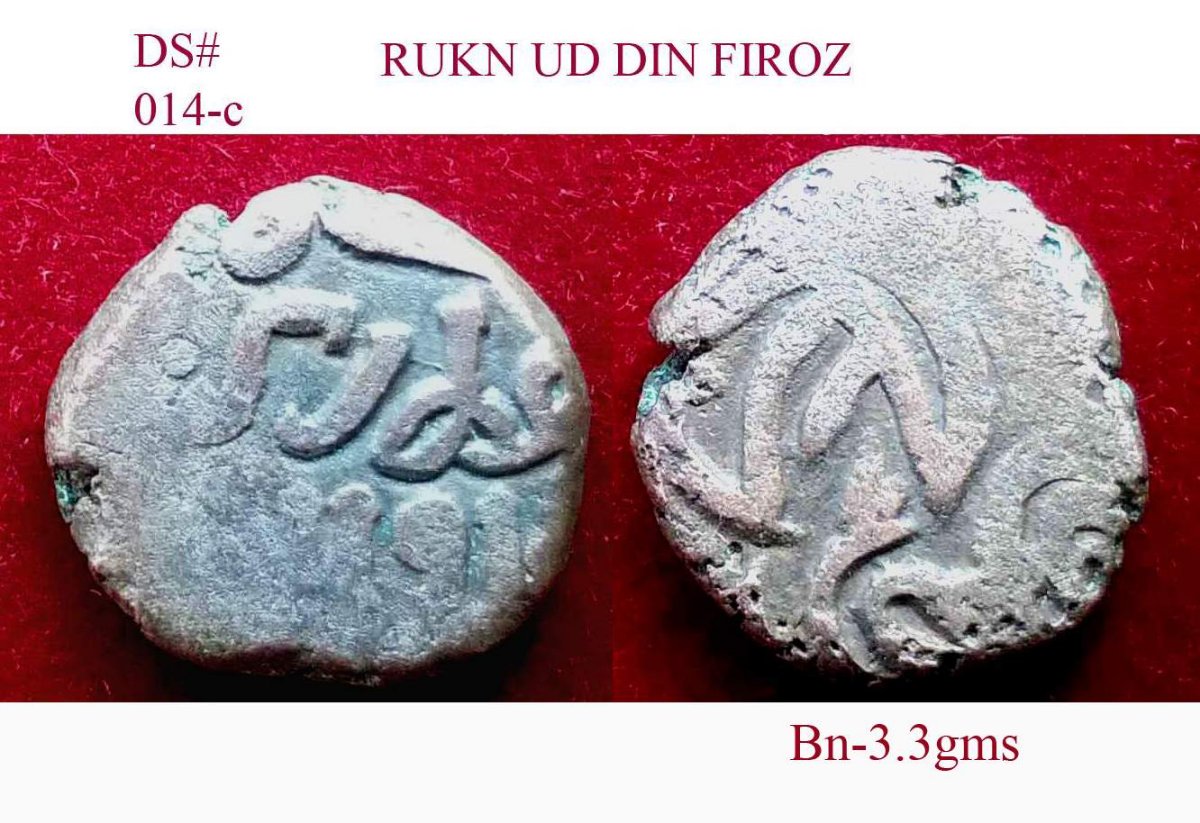 This is type D95 G&G. On the obverse, ruler's name is seen. There is very crude horseman on the reverse. 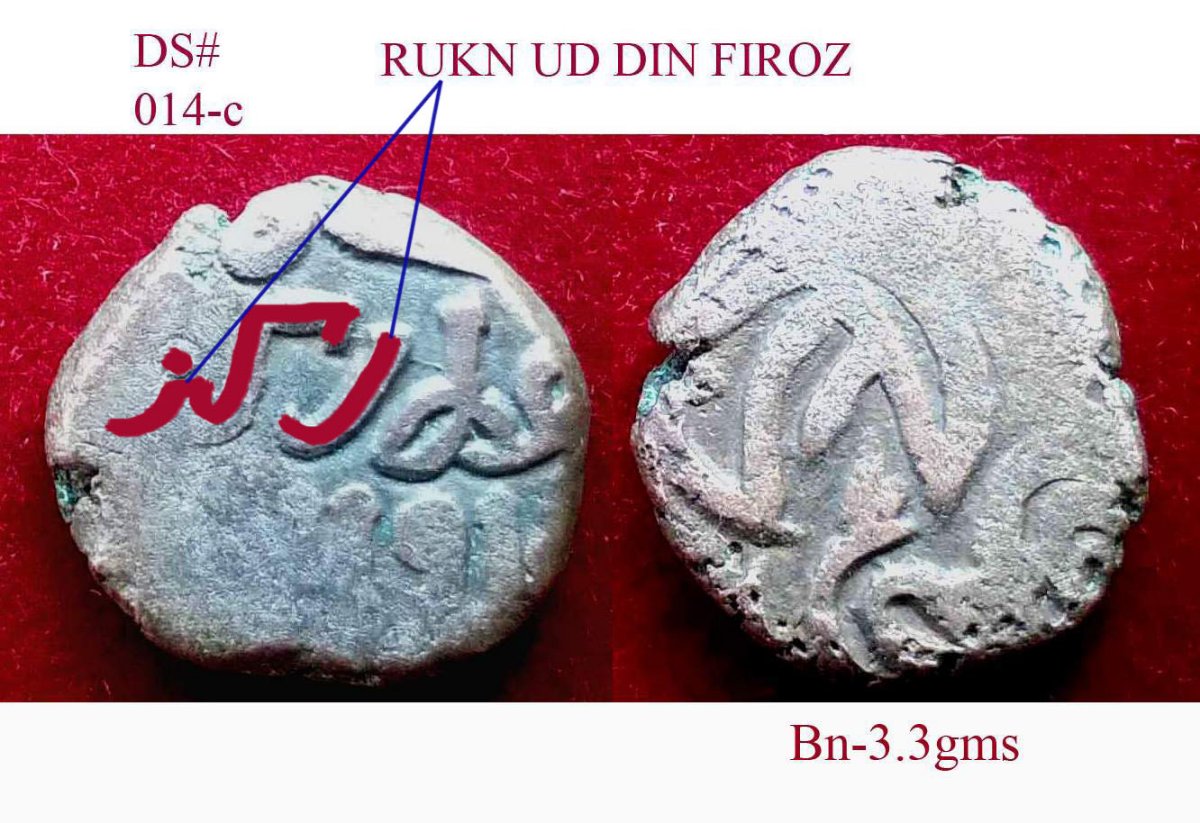 |
|
Pillar of the Community
India
1996 Posts |
A coin of Ala ud din Masud, different from the bull and horseman coin posted before. On the Jhula of the bull, we can see numeral "1". 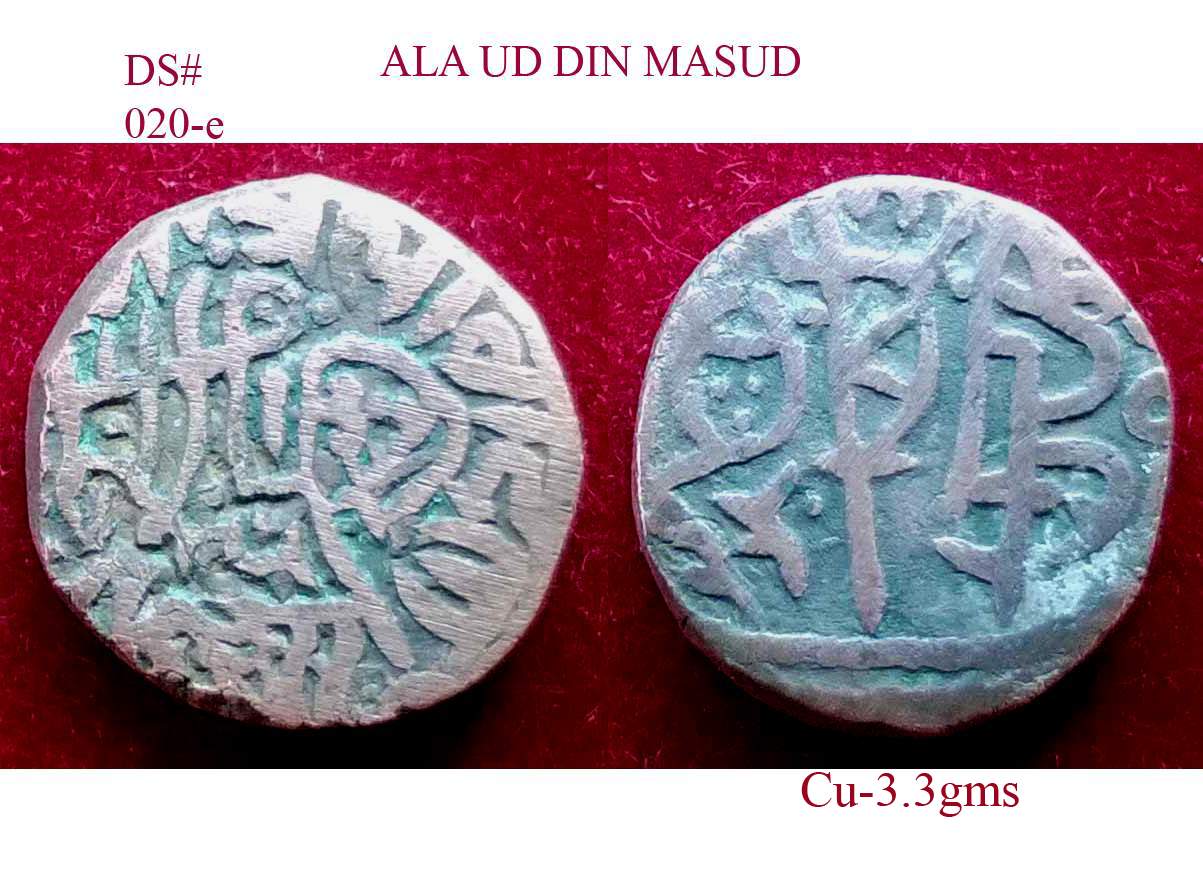 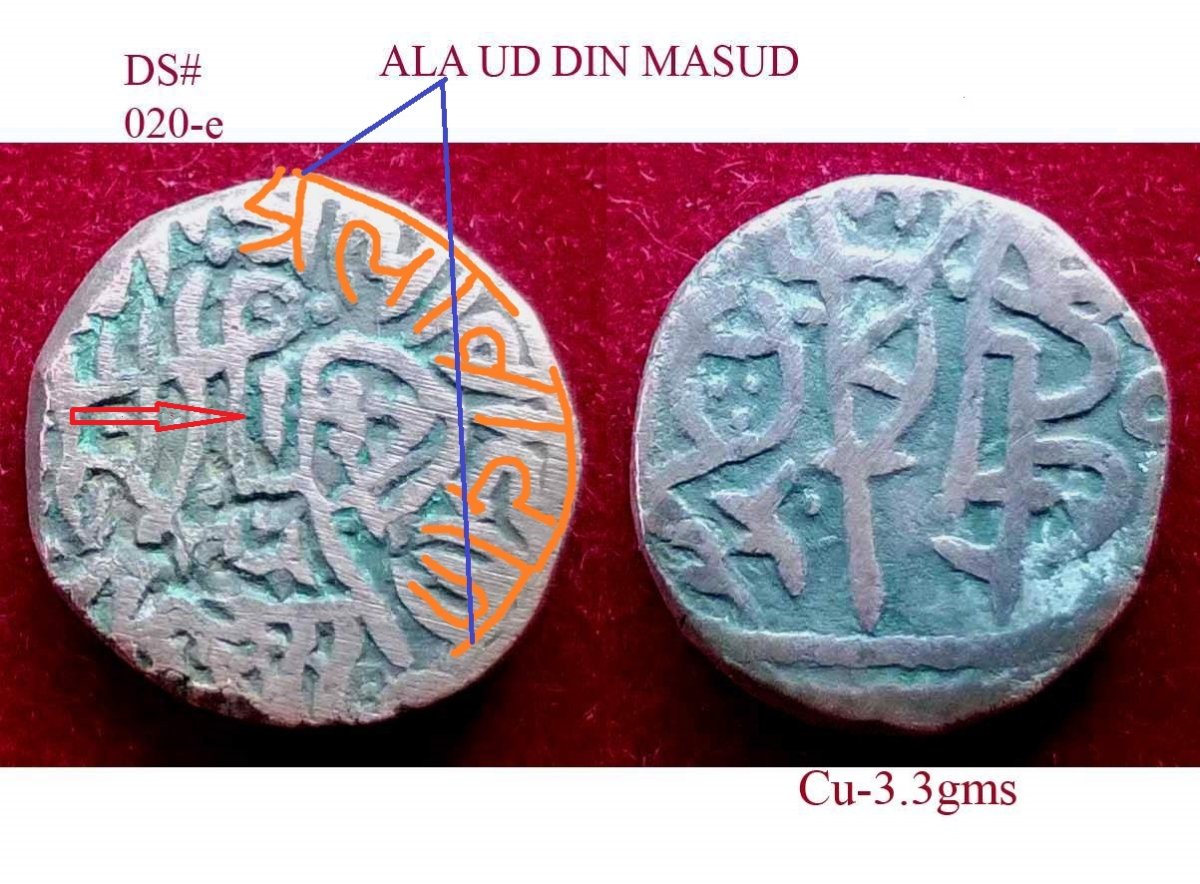 |
|
Pillar of the Community
India
1996 Posts |
Rukn-al-din Ibrahim 1296.ADJalal ud-Din Firuz was of Turkic origin. He was murdered in 1296 after a rule of 6 years. His nephew and son-in-law Juna Muhammad Khilji was immediately declared sultan and later came to be known as Ala ud-Din Khilji. The queen-mother Malikah-i-Jahan declared her second son, Qadr Khan, as Sultan with the title of Rukn-al-din Ibrahim though the eldest surviving son was Arkali Khan. The supporters of Arkali Khan at Delhi revolted against this move. Ala-ud-din marched on Delhi and met Ibrahim who gave him a fight. Ibrahim lost it and fled to Multan with the queen-mother. Ala-ud-din took the throne of Delhi on Oct. 20, 1296. and resided in the Red Palace of Balban. Later, an army was sent to Multan from Delhi. Arkali and Ibrahim were captived, blinded and later killed. 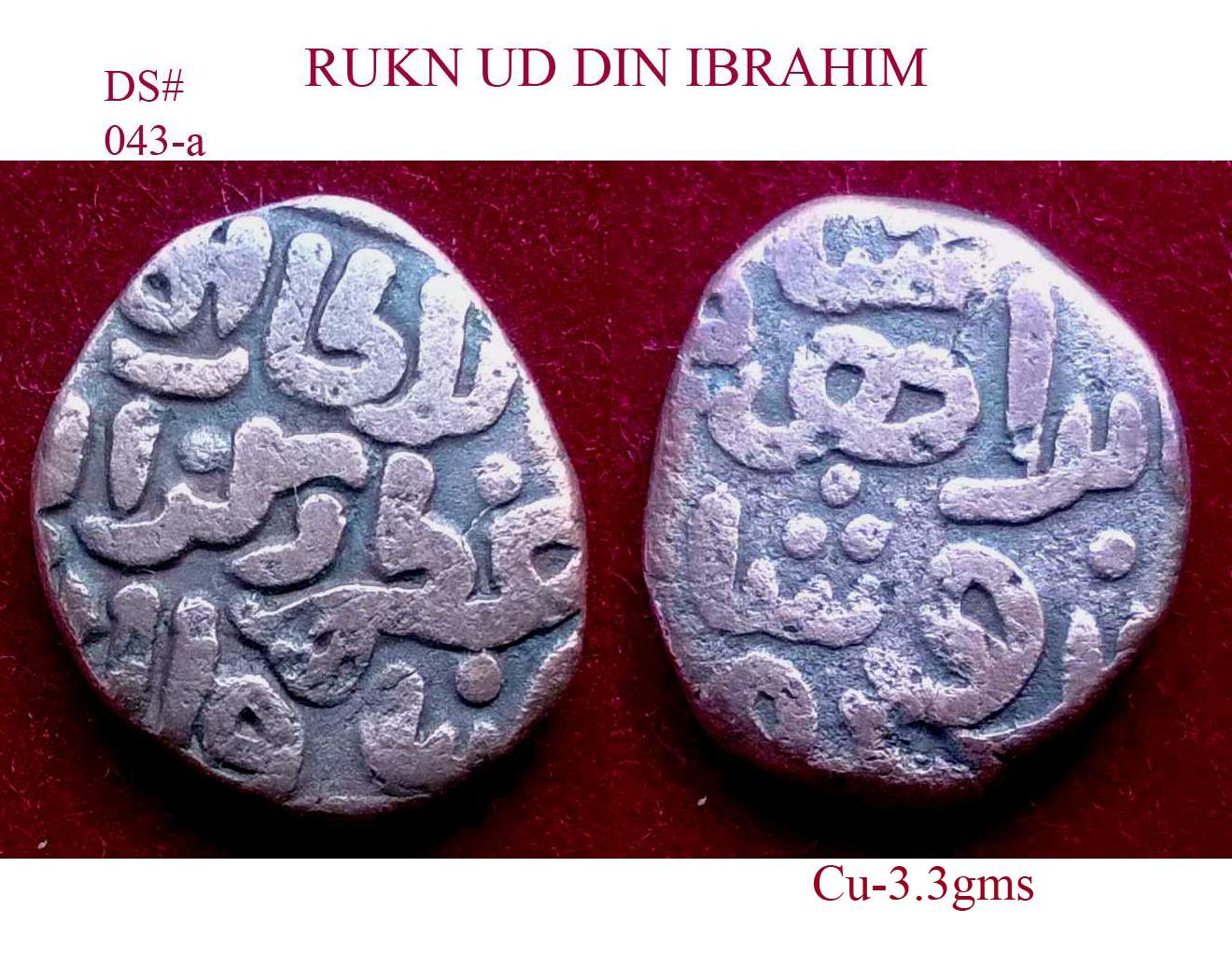 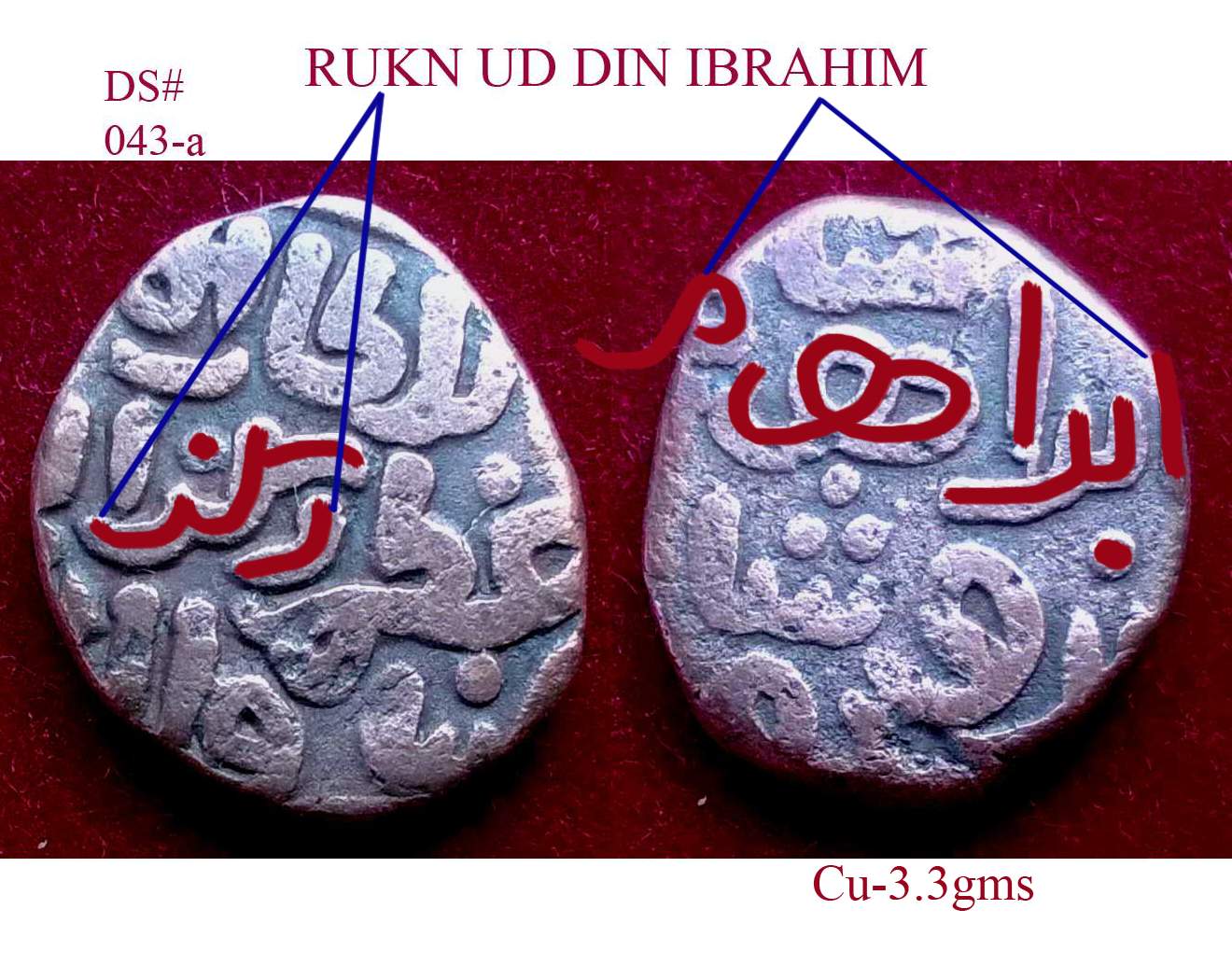 Obv: As sultan al azam Rukn al dunya wa al din Rev: Ibrahim shah bin Firoz shah
|
| |
Replies: 156 / Views: 107,129 |








 First Page
 Previous Page


 Posted 11/03/2011 2:44 pm


