| Author |
 Replies: 17 / Views: 2,633 Replies: 17 / Views: 2,633 |
|
Pillar of the Community
Czech Republic
803 Posts |
Wanted to share a coin with you all. It's an 1842 Type I (1826-1842 eagle, coin rotation) and since I've bought it years ago unattributed, had it slabbed @ NGC. In 1842 the die style changed early in the year and these Type I's are pretty scarce, especially in high grades. Would love to hear your opinions. 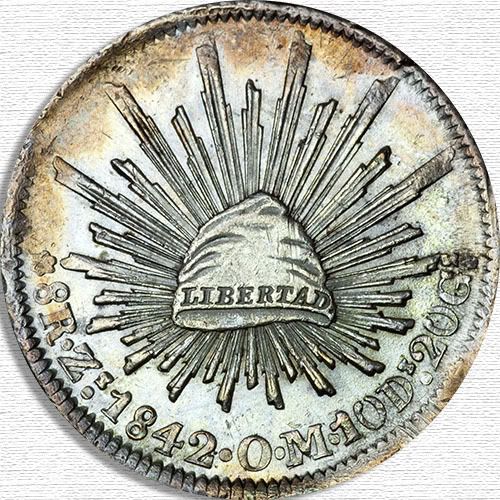 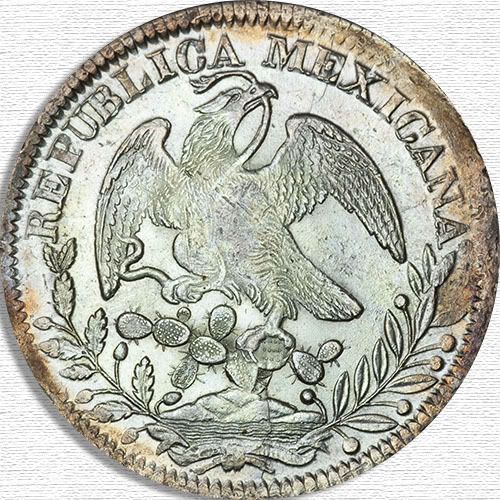 |
|
|
|
Pillar of the Community
France
1591 Posts |
Beautifull coin ! The details are impressive :)
Did it came back from grading yet ?
I don't know much about ratings (certified grading is common in the US only, although NGS is expending in Europe recently) - but it misses MS for a few scratches in the center of the eagle and cap ...
|
|
Pillar of the Community
 Czech Republic
803 Posts |
Thank you, Mathieu. It graded AU53.
|
|
Pillar of the Community
United States
651 Posts |
|
|
Pillar of the Community
United States
2120 Posts |
|
|
Valued Member
United States
426 Posts |
Awesome coin and awesome photography!
Hard to find with any breast feathers.
What did NGC grade it at? or are you still waiting for it to come back?
|
|
Pillar of the Community
France
1591 Posts |
He said AU53 above :)
Gosh, it's gorgeous !
|
|
Pillar of the Community
United States
5362 Posts |
It is hard to ascribe a number grade in the case of most screw press coins and often the graders treat them as if they were made on a modern press with a far more controlled pressure. It is key to note that striking pressure of upwards of 100 tons was required to strike a dollar coin and the results are VERY uneven. The vast majority of First Republic issues 1823-1866 are low pressure strikes that have incomplete detail. The "breast feathers" in particular are a high point feature seldom seen on 8Rs. The "Full Snake" is in fact a RARE commodity for some individual dates. I prefer the use of a far more subjective form of grading that takes into account percentage of strike as well as the wear attributed to circulation. There are many MS graded coins that are only 80% struck up - they should be DOWNGRADED. Personally I see wear - that removes a feature as identical to a weak strike that means a feature was never there. To be considered a TOP TIER coin whatever you wish to call that a coin needs to be FULLY STRUCK-UP and it needs to show NO WEAR or bag marking. I do NOT pay MS prices for coins that are not fully struck up regardless of wear level - I do not care what the TPG's put on their overpriced holders. By the way the coin has great eye appeal, minimal wear and bagging AND a solid if not perfect strike. A- |
|
Pillar of the Community
Czech Republic
803 Posts |
Thank you for the comments, everyone!
Bob, 1826-42 Zacatecas is my favorite eagle design of the series. Have you ever seen a fully-struck breast and snake on these?
|
|
Pillar of the Community
France
1591 Posts |
I start to look for a similar one - will be my first cap & ray.
I want to start this well :D
There are none from this mint in the next heritage auction (didn't checked elsewhere)
|
|
Pillar of the Community
Czech Republic
803 Posts |
Pre-1842 Zacatecas pieces are not as often seen in the major auctions as one might think. I'll keep an eye out for you.
|
|
Pillar of the Community
France
1591 Posts |
|
|
Pillar of the Community
United States
5362 Posts |
Yes, I have seen a few early Zs coins with full snakes.
Full breast feathers and a complete snake are in my experience rather scarce - but ONLY for the earlier high relief eagles. Knowing which dates and mints are involved is the key.
Sometimes - people read that Full Snake's are rare and think it applies to ALL Cap and Rat coins - THAT IS NOT THE CASE. It is ONLY true for the higher relief strikes and those are USUALLY very early. But like everything else there are exceptions.
|
|
Pillar of the Community
United States
1962 Posts |
In terms of actual wear (if there is any), what do you think of this piece... slightly modified eagle from the 1842 posted:  |
|
Pillar of the Community
United States
5362 Posts |
Nice coin - a nice example of the low relief dies that were used to extend die life starting in 1842 at Zacatecas. Personally, I never have liked this eagle - not as impressive as the earlier Zacatecas bird. But that is highly subjective. My favorite 1842 Zs eagle is the coin I use for my avatar picture. But it is COUNTERFEIT.
The coin is likely near MS but appears to have been dipped or otherwise chemically treated. The dark spots are typical of an old dip. Looks like silver sulfide that forms on a cleaned silver surface from exposure to polluted air.
It is not fully struck up but rather close - similar in strike percentage to the first coin pictured, but far more common. The snake is visible for the entire length but is VERY weak at the deepest points. Of the two design types this one is far more common and exists in "better" grades because of strike NOT because of wear. When a coin with a weak strike circulates even a little it looks like a coin worn to VF. That is why I prefer to use the older grading systems that rely heavily on preserved mint luster as a primary grading criteria - NOT APPARENT WEAR.
So in other words the older 1842 suffers downgrades due to lack of a full strike FAR more often than the second type. Where the strike percentage of the first (older) coin places it very high on the scale of fully struck coins for the type the second coin (with the same details) is actually a lower end coin in terms of full strike. This is one of the subtle elements of this series that makes it difficult for a beginner to grasp. Modern coins are all identical and all are essentially full strikes. It is a different world when you are dealing with a manual press.
|
|
Pillar of the Community
United States
1962 Posts |
Thanks for the input. I agree about the toning, except that along with that, I think this piece probably then spent many years in a cardboard/mylar 2x2 which had a few tiny cracks/holes in those spots... Always drives me nuts to find pieces like that! Yes, luster is a sure-fire sign of a higher-grade piece, clearly... yet some people don't process that when it's accompanied by a weak strike. Remaining luster (in non-protected areas... the fields) means the coin didn't get rubbed enough to wear the flowlines away. --- "Of the two design types this one is far more common and exists in "better" grades because of strike NOT because of wear..." Same thing with Buffalo nickels, as an example... Essentially, high relief/poorly struck pieces start life in a lower MS grade than "normal" pieces. This is somewhat unfair, as each piece should really be considered within the striking parameters of that particular date/mint (e.g., don't compare a 1920-S Buffalo to a 1938-D or even a 1926). |
| |
Replies: 17 / Views: 2,633 |







 Posted 08/30/2011 11:23 pm





