| Author |
 Replies: 185 / Views: 15,619 Replies: 185 / Views: 15,619 |
|
|
|
Pillar of the Community
 United States
8062 Posts |
Quote:
However, the switch did cause the average Joe to lose more of their own earnings to buy the same things they had been buying beforehand, OK, last time I'll say it, and then I'll stop, since this appears to be a strongly held conviction which is unlikely to be changed. This is not true. Edited by tdziemia
02/24/2019 3:29 pm
|
|
Valued Member
United States
411 Posts |
In 1969 Jamaica first issued their own banknotes, the largest of which was JMD$10=£5
At the time Britain was not circulating any banknotes above £10, but shortly thereafter on 9 July 1970 Britain introduced the £20 banknote.
As the Jamaican Dollar continued to lose value higher and higher notes were issued
1976 JMD$20 notes
1986 JMD$100 notes
1988 JMD$50 notes
1994 JMD$500 notes
2000 JMD$1000 notes
Finally in 2009, the government issued a JMD$5000 banknote only 15 years after issuing the JMD$500 banknote. Today JMD$5000= £28.50 =$37.26
The government was criticized for issuing such a large denomination banknote because of the belief that it was causing inflation.
Obviously Canada is not ever going to have the runaway inflation of Jamaica, but the principal is still the same. Inflation eats away buying power slowly, but the issuance of a new denomination or the conversion of a banknote to a coin is a very discrete event that people are aware of. It's natural to assume that the discrete event had a greater impact than any long term change.
In July 1969 the federal government pledged to destroy any banknote higher than $100 that they came into possession. Well $100 in 1969 has the buying power of almost $700 today. The Fed is ordering the same number of new $100 banknotes as $20 banknotes, and because the $100 stays in circulation so long, the circulating supply of $100 banknotes exceeds that of the $1 banknote.
The problem of ordering 2.5 billion new $100 banknotes each year is compounded by the fact that security must be more elaborate than for a $20 banknotes. The production of the $100 banknote has broken down severely at least twice because of technical problems. Critics maintain it is time to re-introduce the $500 banknotes, but that will obviously create huge political issues.
Edited by PacoMartin
02/24/2019 5:23 pm
|
|
Pillar of the Community
United States
8062 Posts |
Concerning Canada ... Inflation is caused by the growth of the money supply being faster than the growth of the economy over a prolonged period of time. https://www.phil.frb.org/-/media/re...brma93lb.pdfIf we look at the growth of money supply during the first years of issue of the Canadian dollar coin (1987-89), we see that M1 grew by $22.6 billion Canadian. https://fred.stlouisfed.org/graph/?...MM101CAA189S, The value of the new dollar coins issued in these years was only $0.5 billion, or about 2% of the overall growth of the money supply. So these dollars were insignificant in terms of their impact on inflation. But it is easy to see how someone who did not like this change would assign cause and effect, when it was not justified. Edited by tdziemia
02/24/2019 6:01 pm
|
|
Bedrock of the Community
United States
10065 Posts |
Quote:Inflation is caused by the growth of the money supply being faster than the growth of the economy over a prolonged period of time. https://www.phil.frb.org/-/media/re...brma93lb.pdf This study may very well be valid. But the subject of the study is not applicable to the dollar coin-only issue. The cited study (admittedly I only skimmed it to find out what it was about) applies to what causes inflation "proper" in society over a period of time. The coin-only switch was a one time action which had an impact on prices once (well - OK - maybe Twoonies did the same?). The switch was not a part of the continual inflationary model of Canada although the switch did result in prices being "inflated" (increased, went up). The switch and resulting one time price increases were a one time phenomenon. This is not what the subject of that paper is about. Quote:
But it is easy to see how someone who did not like this change would assign cause and effect, when it was not justified. People who do not research tend to do this very thing. But I did the homework and posted it here asking for help in finding my errors. If I had personally not downloaded and dissected/read the governmental (US) report, crunched the numbers they included (and also forgot to include), and especially not had first hand experience with this kind of switch years ago, then it would be foolish for me to post concerning this issue. I do not know how many hours of specific data concerning this issue others have put in. So I also am not qualified to make a judgement about their knowledge. I never am qualified to make a factual statement as to someone's motivations since I am not a mind reader. Being a coin collector, I liked the idea of collecting the small dollar coins (well, just the Sacs in proof). But when the data and research time I put into this subject showed the reality of the situation being political "cap feathers" at my own expense (literal, out of pocket expenses)...no thanks. How much squash could a Sasquatch squash if a Sasquatch would squash squash? Download and read: Grading the graders Costly TPG ineptitude and No FG Kennedy halveshttps://ln5.sync.com/dl/7ca91bdd0/w...i3b-rbj9fir2Edited by Earle42
02/25/2019 12:06 pm
|
|
Valued Member
United States
411 Posts |
Looking at the percentage of cash which is coins, Canada seems to rank #1 in the world of major currencies CAD 6.7% GBP 6.0% AUD 4.9% SEK 4.8% JPY 4.3% CHF 3.7% USD 2.9% EUR 2.3% KRW 2.2% RUR 1.0% I should note that while 2%-7% sounds like a small percentage, the majority of cash (by value) seems to be used as store of value and not for transactions. So those numbers are a larger percentage, of transactional cash. But there is no easy way to calculate that percentage. Canadian coins are 6.7% of all cash in circulation, but they are 21.2% of cash in denominations worth less than CAD$50. The Russian Ruble is a relatively unstable currency, which by it's very nature is difficult to mint coins. Inflation constantly requires new denomination in banknotes or a radical shift in the amount of each denomination in circulation. That is much easier to do with banknotes. Quote:
The dollar was now the "new quarter" psychologically. Costs went up accordingly and it was easy to see over a shorter amount of time than normal when going to Canada to shop.
People who do not research tend to do this very thing. But I did the homework and posted it here asking for help in finding my errors. I am not sure I understand your hypothesis. It sounds like you are saying that people treat coins as incidental money and banknotes as real money. So by Canada converting such a large percentage of cash to coins, made people less aware of price increases as they were now paying only with coins. Edited by PacoMartin
02/25/2019 05:28 am
|
|
Pillar of the Community
United States
8062 Posts |
For the 24 months before the introduction of the coin (June 1985-May 1987) the monthly inflation rate in Canada was pretty consistent, ranging between 3.8-4.7%.
It remained in this same range for the first 23 months after the coin was introduced (and the rate of introduction was highest in the first few months).
This also makes a causality argument (new coin -> inflation) problematic.
|
|
Moderator
 United States
196572 Posts |
Quote:
However, the switch did cause the average Joe to lose more of their own earnings to buy the same things they had been buying beforehand, and costs of services increased when volumes of change were associated with the service. Negative. No one I know in Canada lost more of their earnings or any other such nonsense when the dollar and two dollar coins were introduced. Budgets were not busted because they had to buy things with coins instead of notes. It is absolute rubbish to suggest such nonsense. |
|
Pillar of the Community
Canada
849 Posts |
Quote:
However, the switch did cause the average Joe to lose more of their own earnings to buy the same things they had been buying beforehand, and costs of services increased when volumes of change were associated with the service. I don't really get this quote either. If a million dollars in paper currency is withdrawn and a million dollars in coin replaces it, there is no increase in the money supply and no inflation because of it (just like the government replacing old worn bills with new ones). Yes there is a cost to make the new coins but they last many times more than the cost of having to replace worn bills so no increased costs there either. I live in Canada and was an adult when the one and two dollar bills were replaced. Some people liked it, some did not, most seemed neutral, but I don't recall anyone complaining about losing more of their earnings. Most transactions are done by debit cards, credit cards, automatic withdrawals, a few cheques, and very little cash is used anyways. Edited by punman
02/25/2019 11:41 am
|
|
Moderator
Canada
10477 Posts |
Frankly, as Canadian who was an adult in 1987, when the dollar coins was introduced, and already financially astute in 1996, when the two dollar was introduced, I cannot believe the amount of unfounded rubbish, when reading your arguments Earle42. Quote:
Also, a huge amount of people use electronic means (even more convenient) and so its only the old timers who are qualified to really say, from experience, which is better. That is merely your opinion, not fact... when I read that, this is what I see.  Quote:
The cited study (admittedly I only skimmed it to find out what it was about) applies to what causes inflation "proper" in society over a period of time. Only skimmed it? Seriously, if you are trying to prove a hypothesis, I would expect not only fully reading a study, but reading many studies. Do you really expect me to believe you fully understand the complexity of inflation in any given society in any period of time, by "skimming a study"? Quote:
People who do not research tend to do this very thing. But I did the homework and posted it here asking for help in finding my errors. If I had personally not downloaded and dissected/read the governmental (US) report, crunched the numbers they included (and also forgot to include), and especially not had first hand experience with this kind of switch years ago, then it would be foolish for me to post concerning this issue.
Oh, I know research. I know exactly what that word means, as a researcher myself. Please cite your sources, and show us exactly what numbers you crunched, to support your argument.... then have it validated by peer review by experts in this field. If you are one of those experts, what degrees and publications do you have in economics and financial analyses that supports your expertise? Then, prove to us that you are not falling into the statistical number trap of correlation versus causation, specially when it comes to the economy of Canada, versus net income of the "average Joe" Canadian. Frankly - no matter what I write, your mind is already made up... so what I will provide is my perspective, my opinion, from an "Average Joe" Canadian, who still uses cash as well as plastic. The impact the change of $1 and $2 bills to coins, in Canada, has had a ZERO impact on me, and any of my "average Joe" Canadian friends. If anything, the opposite has occurred. This encouraged me, and many of my friends, to save money. Almost every one of my friends has a story where they bought an RRSP by simply cashing in change jars that contained $1 and $2 coins. Financially, in the long run, they are in a better place with those change-funded RRSPs... "Discovery follows discovery, each both raising and answering questions, each ending a long search, and each providing the new instruments for a new search." -- J. Robert OppenheimerContent of this post is licensed under a Creative Commons Attribution-NonCommercial 3.0 Unported License. See: http://creativecommons.org/licenses...0/deed.en_USMy eBay store
|
|
Valued Member
United States
411 Posts |
I found a website that gives production estimates of the $1 and $2 Canadian coins through 2017
So that is roughly 2.3 billion Canadian coins vs 100 billion $1 USA banknotes. Even accounting for a 9X difference in population, the coins have to be cheaper.
36,309,000 population
1,381,206,441 1 Dollar coin 38.04 per inhabitant
914,316,500 2 Dollar coin 25.18 per inhabitant
2,295,522,941
USA $1 banknote
8,755,200,000 2013 series
9,017,600,000 2009 series
9,632,000,000 2006 series
7,776,000,000 2003A series
7,155,200,000 2003 series
4,921,600,000 2001 series
10,131,200,000 1999 series
18,585,600,000 1995 series
4,601,600,000 1993 series
15,084,800,000 1988A series
3,964,800,000 1988 series
99,625,600,000 total $1 banknotes
a few billion $2 banknotes
Edited by PacoMartin
02/25/2019 3:48 pm
|
|
Bedrock of the Community
United States
10065 Posts |
Quote:Quote:
Quote:
However, the switch did cause the average Joe to lose more of their own earnings to buy the same things they had been buying beforehand, and costs of services increased when volumes of change were associated with the service. Negative. No one I know in Canada lost more of their earnings or any other such nonsense when the dollar and two dollar coins were introduced. Budgets were not busted because they had to buy things with coins instead of notes. It is absolute rubbish to suggest such nonsense. The "nonsense" was first pointed out to me in a discussion with a Canadian Bank manager the year the Sacagawea dollar program had been announced in the US. Sorry I made a mistake in my former posts saying the initial conversation was when the Presidential dollars were announced. Here is the first place this happened. A bank I frequented back then: 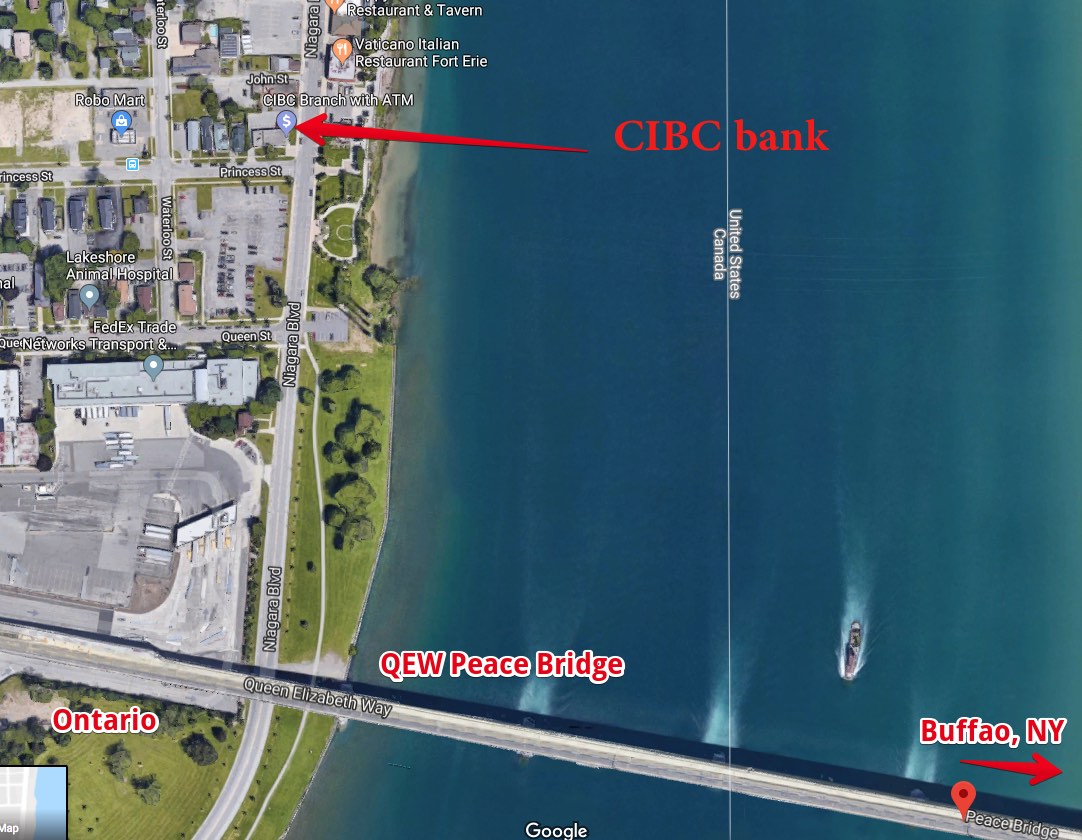 I did not feel qualified to doubt the bank manager's "nonsense" she was telling me when she said the switchover had increased prices b/c operating costs were passed onto consumers as a direct result of the Looney: Her: I cannot believe the US is going to make the same stupid mistake we did in switching to dollar coins. Me: (surprised - we had been talking halves and clad Canada dollars) What do you mean? Her: (I do not have the exact words as this was awhile ago, but the gist of the reply was three points) 1. We banks don't like to take the coins in bulk b/c it costs us so much more to ship, let's say, a million dollars of metal instead of paper to exchange lower denominations for higher ones. 2. We have had to pass the added costs onto businesses who pass it onto consumers. 3. We had to raise our prices for the average consumer to also cover our new costs to handle them coins. Being of curious nature I questioned a bank manager in Chippewa, Ontario concerning their opinions of the new US dollars and got the same results. As is my habit, I was careful to ask a non-leading question something to the affect of, "So what do you think of the US implementing the new dollar coins? The question was also proffered to a bank manager at the (now Starbucks) bank (Scotiabank at one time I think?) sitting at the Clifton Hill Rd. and Victoria Ave. intersection in Niagara Falls, Ontario. I got the same reply. Overall costs had increased because of the implementation. So the "nonsense" idea I got from three professional Canadian financial institutions at the time also led me to what seemed an "aha! moment." I now knew why the typical items I always bought in Canada had an unusual uptick in price not long after the new (and I thought cool!) Looney had been introduced. Inflation:BTW - I am going to try to not use the word "inflation" so it will not continually be being mistaken as a reference to the official inflation rates as seen over time. I did mention I made a mistake in using that specific word b/c I did not foresee how it could mislead into a separate subject. Think of it this way. Represent normal economic inflation as the affects of a wave pattern, caused by a small and continual wind, hitting the bank of a small pond. Someone throws a rock into the pond (switching to Looney-only) and the action generates its own small waves. The rock's waves (one time Looney-only economic impact) will still hit the same shore (price increases). But the rock's waves are not an actual part of the wind-system-waves (normal, annual economic rate of price increases caused by repetitive circumstances). Busted Budgets:Quote:
Budgets were not busted because they had to buy things with coins instead of notes. It is absolute rubbish to suggest such nonsense. It is also rubbish *** offensive statement and image removed by the staff ***. I made neither statement. Please stay rational for the sake of good debate. You have once again introduced sensationalism - maybe (I have no idea) thinking it adds affect to your post? I never said anything about budgets being busted, people losing earnings on a massive scale, Canada being ruined (previous use of sensationalism), or for that matter, the end of the world (just in case  ). I did say prices went up as a result of the switch. I gave the source from which I first heard of the issue as being a bank in Canada who went through the change (no pun intended, but I like it ). I stated the bank's information was the first time I heard the ("nonsense") explained to me as to why they thought the US should learn from their mistake (their concept) in eliminating $1.00 bills b/c it brought higher costs to everything. I have now also shared that more than one bank shared the same "nonsense" with me as a direct result of their financial dealings and experiences. I grew up crossing the border and shopping in Canada as well as frequenting the banks for roll searching, currency exchange and collecting the clad dollar coins and halves. For some strange reason (not really) neither coin circulated to the point I ended up asking for managers b/c the tellers had no clue there were such coins made. A manager typically would say, "We might have a few back in the vault, let me check," and return with very few coins in hand saying they rarely ever see or get either denomination. It was one of those times that led to my first discussion with them concerning the US implementing Sacs. I also don't think calling the issues nonsense will ever bring back to me the extra money I ended up spending at the time due to the situation. Facts, unfortunately, are not subject to emotional desires or whims. Quote:
I don't really get this quote either. If a million dollars in paper currency is withdrawn and a million dollars in coin replaces it, there is no increase in the money supply and no inflation because of it (just like the government replacing old worn bills with new ones). I will reiterate. Typical inflation rates are not affected, a one time price increase resulted As stated, the banks are the ones who told me there were large costs increases to them and other businesses who handled volumes of money. The bank manager(s) told me the costs of moving/shipping large amounts of $1 of metal vs. $1 pieces of paper is where a main problem making the difference existed. Explanation: One Looney - originally 6.988 grams - means 1,000,000 1987 coins was 7.7 US tons. One million 1986 issue Canadian paper $1 bills would weigh just over 1.1 US tons (approximated using US dollar bill weight since finding the weight of the 1896 series Canadian bills proved elusive online- yet the Canada bills are .5 square inches larger - hence more mass when dealing with such a large number). Bringing this home. 490 bills = 1 pound 56 dollar coins = 1 pound Toting and shipping can become weighty/expensive quickly. Do the math for shipping and handling costs as well as for other things we don't generally think about such as equipment needed to move large amounts. Personal example: in the past I got a small hand cart for roll searching four $500.00 boxes of on a regular basis. But carrying the 2K to pay for the boxes, even if it was in $1.00 bills, could easily be done on person without physical strain (~4 pounds of paper vs ~100 lbs. of halves). Quote:
Most transactions are done by debit cards, credit cards, automatic withdrawals, a few cheques, and very little cash is used anyways. Nowadays yes - we are talking about 1987. In fact, come to think of it...I would think our past history of rejecting dollar coins in the US implies an elimination of bills would just drive more people to use their credit/debit cards for even more smaller purchases. The coins, as before (and before, and before), would not circulate and we get all our small purchases being recorded somewhere.    |
|
Moderator
United States
196572 Posts |
Quote:
I never said anything about budgets being busted, people losing earnings on a massive scale But you did say this... Quote:
However, the switch did cause the average Joe to lose more of their own earnings to buy the same things they had been buying beforehand, and costs of services increased when volumes of change were associated with the service. To me this implies a ruined budget and if earnings were not massive then why make the change to coins out to be a huge mistake? Regardless, the fact is that three Canadians have now commented and none support your claims. |
|
Valued Member
United States
466 Posts |
The argument that the government will save unit manufacturing costs by issuing $1 and $2 coins and eliminating corresponding bills seems irrefutable if the analysis ends there.
But actions can have unforeseen consequences. Earle42 has raised one relating to increased transport costs for banks and others who move large amounts of money. Maybe there are others, maybe not, I don't know. But I do know I won't use the dollar coins because I never carry change. Ever. Haven't in 40 years. If they come to me, they are going out of circulation and into the coin jar. Just like pennies.
Has anyone done a study or made projections about whether other people will do the same thing? If others are like me, then the mint will have to make billions of dollar coins a year just to replace those being stashed away as a matter of convenience or personal preference. I've never heard of anyone hoarding dollar bills.
I don't know. I just wonder. At the end of the day there will be some amount of inconvenience, and the value question is "is it worth it?
|
|
Bedrock of the Community
United States
10065 Posts |
Quote:
To me this implies a ruined budget and if earnings were not massive then why make the change to coins out to be a huge mistake? The banks are the ones that gave me the first inclination it was even a point to be considered. I will stand by what I was told by these institutions who, I assume, would be considered (at the time in question) a lot more knowledgeable about the overall finances in their own country during this time period. Since the issue is now 0ver thirty years in the past, and the people who I would assume being the experts on finances back then alerted me to this, which then correlated with what I had personally experienced, I wlll still put more faith in those 1987 contemporary authorities and on my own personal experiences. Most people don't necessarily log every price increase for everything they buy, yet I noticed all of the items I specifically went to Canada to buy all had an unusual price hike over s shorter period of time. I assumed the hike was something to do with the economy and politics. The banks explained it. I assume banks know something more about finances and considered them a credible source - especially since three independent ones told the same story. Was the extra money my trips to Canada cost me, on a regular basis and to buy the same Canadian items, imaginary? It was all written in our house budget. The numbers went up. My wife is beyond meticulous in tracking down every cent. What ww aownt in Canada for the same items did take a jump unlike it had been doing just with the normal passage of time. Should I have asked more banks so the current thread would be more palatable to coin-only viewpont? I doubt that would make a difference. This topic is likely a typical example of why we keep repeating historic mistakes. "Being human" and clinhing to desires gets in the way. How much squash could a Sasquatch squash if a Sasquatch would squash squash? Download and read: Grading the graders Costly TPG ineptitude and No FG Kennedy halveshttps://ln5.sync.com/dl/7ca91bdd0/w...i3b-rbj9fir2 |
|
Valued Member
United States
411 Posts |
Quote:
Has anyone done a study or made projections about whether other people will do the same thing? If others are like me, then the mint will have to make billions of dollar coins a year just to replace those being stashed away as a matter of convenience or personal preference. I've never heard of anyone hoarding dollar bills. Sharkman I think this point is logical and demonstratable, Statistics from Canada (assume present day population of 36,309,000) up through end of 2017. 1,381,206,441 1 Dollar coin 38.04 per inhabitant 914,316,500 2 Dollar coin 25.18 per inhabitant 2,295,522,941 total The USA has printed over 100 billion banknotes during that time period, but at the end of 2017 the Fed reports a count of notes that have been issued but not destroyed $12.1 billion, $1 notes $2.4 billion, $2 notes Now obviously billions of the $1 banknotes are lost, eaten by dogs, and inadvertently thrown in the trash. To a much lower degree so are the Canadian coins. But we have to ignore this statistic since it is difficult to measure and it doesn't affect the outcome very much. I am going to ignore the USA $2 banknotes since they are all in drawers somewhere. But as of the end of 2017 circulation figures are: 1 Dollar coin 38 per inhabitant in Canada 2 Dollar coin 25 per inhabitant in Canada 1 Dollar banknote 38 per inhabitant in USA 2 Dollar banknote 7 per inhabitant in USA That seems to indicate you need more coins than banknotes, presumably because people don't hoard dollar bills. We see a similar pattern in Scandinavia where the 20kr (between $2 and $3) is a banknotes in Sweden, and a coin in Norway and Denmark. The banknotes are circulating at a much lower rate than the banknotes. Another source of data is from casinos. Profit margins soared when casinos stopped accepting real coins and installed noisemakers that sound like coins dropping into a bin. |
| |
Replies: 185 / Views: 15,619 |
To participate in the forum you must log in or register.
- 1966 Nickel Die Adjustment Strike?
- 2026 Emerging Liberty Dime Spider Veins?
- Error Opinions, 1971-D DDO, 1955-D/S, 1996-P Quarter
- Guess The Price - Season 96 - Round 3
- 20 Questions! (Forum Game) 11/04/24
- Will Our Coins Ever Be Valuable?
- Quarter Roll Searching
- Going Fishing - Checking In On Occassion
- Post Your Coins With Coats Of Arms, Shields, Crests, Crowns, Etc.
- Definitive Test For Black Beauty Nickels
- My Last Purchase: A Bronze Greek Coin Representing The Poetess Sappho
- How Many Countries Do You Have Coins From?
- How Far Back Can We Go? Ninth Edition!
- Post Your Stories & Pix Of Found Money
- 1885-Zs Mexico - 25 Centavos W/Arcing Die Crack, Tilted & Re-Punched Reverse Die
- 1934 Peace Dollar NGC MS-67+ At Auction
- G L B 49's MS-70 Perfect Silver Coins
- ID Help - Roman Provincial Coin
- 1894 Fifty Cents - Grade This Coin. It May Or May Not Be TPG.
- 1847 Undecimo Edge Great Britain Gothic Crown, Gothic Type, NGC PF61
Disclaimer: While a tremendous amount of effort goes into ensuring the accuracy of the information contained in this site, Coin Community assumes no liability for errors. Copyright 2005 - 2026 Coin Community Family- all rights reserved worldwide. Use of any images or content on this website without prior written permission of Coin Community or the original lender is strictly prohibited.
Contact Us | Advertise Here | Privacy Policy / Terms of Use
|
| Coin Community Forum |
© 2005 - 2026 Coin Community Forums |
| It took 1.59 seconds to rattle this change. |
 |
|







 First Page
 Previous Page


 Posted 02/24/2019 5:14 pm


