| Author |
 Replies: 46 / Views: 5,485 Replies: 46 / Views: 5,485 |
|
|
|
Pillar of the Community
United States
9811 Posts |
Quote:
the reason I think the coin is recolored is because I think it was tooled. the tooling would have ripped the copper up to the point of being bright shiny red. I dont think you could smooth it without recoloring it after.
there are quite a few people who are expert at recoloring coins. its a problem of chemical reaction over time. if the coin doctor is adept there really isn't anything different between artificial patina and original patina. its similar to artificial toning in silver. when its done well I cant tell it apart from original patina.
If you missed this post from a year ago: http://goccf.com/t/408671I'd love for you to read it, this coin is one of two big rarities which the OP purchased from a private party, I did a little digging and turned up quite a reveal on it. This coin has some history to say the least. Jack Young also jumps in at the end and he and I worked together to dig up more information, (Jack is aware of the dealer and has had some interesting dealings with him at one point). I messaged the OP (NumismaticStudent) around the end of the 2nd page of comments, then I kick in around page 3, after the OP say it's okay to reveal my findings in public, this is where the story really gets interesting. Strap in for a roller coaster of a ride into recoloring and moving metal on copper coins and coin doctors on another leve we have not seen before. That one coin has me questioning all serious copper purchases in the future. Oh and the other coin (1794 dollar) that the OP bought (from the same private seller) has a eerily similar story that another CCF member (Adam_E) uncovered. Be sure to visit this thread after the 1793 Chain Cent thread: http://goccf.com/t/408717&whichpage=3#3506859Jack is a great resource and I've worked with him over the internet uncovering some shady sellers, photos of them, address, etc. I can't say enough good about Jack's work either. Thankfully in the case of this wild roller coaster story of the 1793 Chain Cent, NumismaticStudent handles it all with aplomb and grace, much better than I might have, given everything that was revealed by myself, Jack and Adam about his new coins.  Quote:
The 2023 EAC convention will be held in Portland. I will be offering a counterfeit detecting and grading seminar at that show. Mark Borckardt has offered to teach it with me. I'm excited about that. it will be our first time working together. He handles coins that are mind blowing. So cool wish I could make that event. Probably wont though. I am privileged to call Mark a friend, he lived not too far from me while he was in Texas. My first meeting with him, was at a Starbucks where he met me to help ID some interesting counter-stamped Two Cent coins I had using his copy of Brunk. As I fell deeper and deeper into the numismatic literature rabbit hole I began to purchase many duplicates items from his library as he and Mary were preparing the move to be near their grand kids. Mark wrote my all time favorite auction catalog "Walter Husak" sale at Long Beach in Feburary, 2005, I only wish the photos were a bit brighter (ex-professional photographer in me), the information contained in that catalog is an award winning book in itself.  I'm sure that with you and Mark at the helm of your Dad's old EAC convention gig, you'll do a bang up job at edumactin' the copper weenies!  "Buy the Book Before You Buy the Coin" - Aaron R. Feldman - "And read it" - Me 2013! ANA Life Member #3288 in good standing since 1981, ANS, Early American Coppers Member (EAC), Colonial Coin Collectors Club member (C4), Conder Token Collector Club member (CTCC), Civil War Token Society (CWTS) member, Liberty Seated Collectors Club (LSCC) & Numismatic Bibliomania Society member (NBS), USMex, Member in good standing, 2¢ variety collector. See my want page: http://goccf.com/t/140440Edited by westcoin
09/27/2022 7:58 pm
|
|
Pillar of the Community
 United States
756 Posts |
@ paralyse - thats really cool about the continental currency. ive never had the opportunity to handle one of those. Mark has an excitement for numismatics that is truly contagious. last time I saw him he pulled me and my girlfriend over and pulls out a mint red double struck 1797 Half Cent and casually hands it to her, whom he had never met before. the time before that it was a red 1796 Half Cent. passionate people are my favorite kind! I love how willing to share coin collectors are. when my father first got interested in large cents he was having some trouble with attribution. He had made a couple purchases from a dealer named Rod Burris. Rod heard dad was trying to learn attribution and decided to help. he mailed dad a double row long box of attributed large cents with stickers over the attributions. dad had maybe bought $50 worth of large cents total and rod just mailed him 200 large cents to play with. return them when your are done. no worries. I am always amazed at how trusting and kind the people in numismatics are. @westcoin - wow. thats quite a saga. it seems like the story kind of peters out there at the end. was there ever any resolution to that coin? I'm curious if it was found to be altered or if it was in fact a struck counterfeit. |
|
Pillar of the Community
United States
9811 Posts |
Quote:
@westcoin - wow. thats quite a saga. it seems like the story kind of peters out there at the end. was there ever any resolution to that coin? I'm curious if it was found to be altered or if it was in fact a struck counterfeit. Thought you might enjoy reading that one Jim. I know NumismaticStudent has kept the coin and considers the whole thing a learning experience in collecting coins. He has a much better attitude than I do I suppose - at least if it had been my coin and money. Jack has the whole story beyond what I shared, he has had dealings with the seller of the coin, but there is no way to know who doctored the coin, I'm still a bit amazed at the amount of metal moved and the color quality, as you and I both know it's virtually impossible to move old metal and maintain the look of the old patina. Jack didn't think it was a stuck counterfeit, I'm not sure if he ever had the coin in hand, they could have met at a show in the East like Baltimore to examine it. But boy does he have some stories about the last seller. Seems he sells a lot of detailed coins or coins that used to reside in details holders. No proof he is the coin doctor, but I'd suspect he knows who it is that is producing these "super doctored" coins. He sells in the $5K to $75K range primarily. The coins seem to come from all over mainly auctions are where we've been able to track them, no auction company is going to tell us the buyers and PCGS/NGC isn't going to tell us the submitter of the newly doctored coin, especially if they don't even know or catch the changes made. So yeah the story fizzled out. But it opened my eyes a lot in that area, I'm sure your dad would have some idea on the whole story too. I thought about writing an article on it, but decided not to as there is only conjecture and guesses as to the coins fate and not being the owner of the coin it's not my place to do so beyond tell what I found and let collectors know what may now be possible in doctoring coins.  "Buy the Book Before You Buy the Coin" - Aaron R. Feldman - "And read it" - Me 2013! ANA Life Member #3288 in good standing since 1981, ANS, Early American Coppers Member (EAC), Colonial Coin Collectors Club member (C4), Conder Token Collector Club member (CTCC), Civil War Token Society (CWTS) member, Liberty Seated Collectors Club (LSCC) & Numismatic Bibliomania Society member (NBS), USMex, Member in good standing, 2¢ variety collector. See my want page: http://goccf.com/t/140440 |
|
Pillar of the Community
United States
3013 Posts |
Perhaps I should chime in? Now what if one has a corroded coin from before 1830, say that the planchet blank was manufactured overseas in Europe and then shipped over here to be minted, but before it got here, salt water got onto the planchet therefore corroding it. So would it be considered unfair to have said coin in a holder with a details grade modifier if those defects happened before minting? Though it is possible that the coin could have corroded after minting, therefore there might be minor differences in the pits appearance to determine which type of corrosion happened. So one could technically have a gem uncirculated 1812 large cent with lots of corrosion pits due to its manufacture overseas but minted in Philadelphia; should it really receive a details grade because of that?
|
|
Pillar of the Community
United States
9811 Posts |
mrwhatisit - That scenario plays out in the several of the Pre-Federal coinages, primarily the Vermont Coppers where the coins are struck on really poor planchets. Grading these types of damaged planchets before being struck and coming up with a fair net grade is difficult to even experts I've found. A valid and relevant point. The early large cents and Half Cents were struck from copper planchets that were shipped over from Matthew Boulton in the United Kingdom and being shipped in wooden kegs, also being quite heavy, they were used as ballast in the sailing clippers. Salty sea water could easily get to them, and corrosion and deterioration of them was a very real problem. I recall Bill Eckberg touching on this in his NNPS online presentation in 2020 - you can find his discussion on this very issue around the 22:15 minute/second mark in the following video... https://archive.org/details/39BillEckbergHis opinion is they didn't use many of the severely damaged and corroded planchets, but they did strike cents on the blanks with light corrosion, the heavier damaged blanks were melted down and poured into ingots to be used as an alloy in gold and silver coinage. A very interesting talk all around beyond the relevant points you bring up. Bill is a great communicator, I just got the latest ANA Numismatist magazine and see he has written another cover story on politics behind the early coinages. He has really been putting out some tremendously well researched articles in the past few years in various venues (ANA, EAC, C4, NNPS, etc.). EDIT: Michael to Matthew Boulton (DOH!) of the SOHO Mint in the U.K. "Buy the Book Before You Buy the Coin" - Aaron R. Feldman - "And read it" - Me 2013! ANA Life Member #3288 in good standing since 1981, ANS, Early American Coppers Member (EAC), Colonial Coin Collectors Club member (C4), Conder Token Collector Club member (CTCC), Civil War Token Society (CWTS) member, Liberty Seated Collectors Club (LSCC) & Numismatic Bibliomania Society member (NBS), USMex, Member in good standing, 2¢ variety collector. See my want page: http://goccf.com/t/140440Edited by westcoin
09/29/2022 1:58 pm
|
|
Pillar of the Community
United States
756 Posts |
@mrwhatisit - Your question is pretty interesting and really gets at the heart of what we are trying to do with grading. what westcoin has said is pretty spot on. I have a couple points I would like to add.
if grading is viewed as a means to determine a price then collectors have decided that a corroded planchet is less valuable than an undamaged planchet. planchet quality has an impact on price. aesthetics matter. this is market (slab) grading.
if grading is viewed as a means to describe the amount of wear on a coin then nothing pre-strike should impact the grade. its all mint made. can you prove that the corrosion is pre-strike? this is technical grading.
if grading is a means to rank the best extant examples than things like planchet quality should absolutely be taken into account. a theoretical perfect example would be well struck, well centered and struck on a quality blank. I think this is what eac grading is trying to accomplish.
while the bolton blanks were not in good shape they are not uniformly poor quality. its possible to find honey-tan colored classic head cents. they are scarce, and have strong demand compared to their uglier brethren. the blank at the bottom of the barrel was exposed to different conditions than the one in the center or the one on top.
i think in the case of the large cents struck from bolton blanks the poor quality is taken into account when grading. if you look around you will see a lot of strait graded mid range classic heads that would be in details holders if they were late dates with the same surface quality. classic heads are given a bit of leeway for poor surface quality. with that said a corroded blank will never get top marks. its more a case of the quality examples being elevated above the rest of the pack.
there arent any rare varieties in the classic head series. this allows everyone to be choosier. nobody has to accept a G4 scudzy example if they don't want to. the copper specialist can track down the golden-tan example and pay stupid premiums above retail while the 7070 guy can get a nicely detailed example for their type set that maybe has a bit darker and more granular surfaces while still feeling like they have a great coin. both of these collectors have great coins.
if all things were equal would you rather own a tan or a black example? how much of a price difference would you need before you would want the other coin instead?
|
|
Pillar of the Community
United States
2760 Posts |
Here's my observation: There is an inverse relationship at play with certified grades ... the better the date, the lower the chance that flaws result in a details grade.
|
|
Bedrock of the Community
United States
94367 Posts |
With the major TPGs, no question. But not with EAC.
|
|
Pillar of the Community
Germany
1856 Posts |
Here is an 1812 cent with very nice surfaces; certainly not the norm for Classic Heads. It was struck from very worn dies thus the die flow drawing the design toward the edges. If I was to hazard an EAC grade it would be 12, maybe 15 due to the eye appeal, but would like to hear your opinions. Thanks! PS - on a personal note: my thoughts today are very much with our neighbours in Bonita Springs, Fl. after the damage caused by Hurricane Ian. We are happy to hear that all of them are safe. 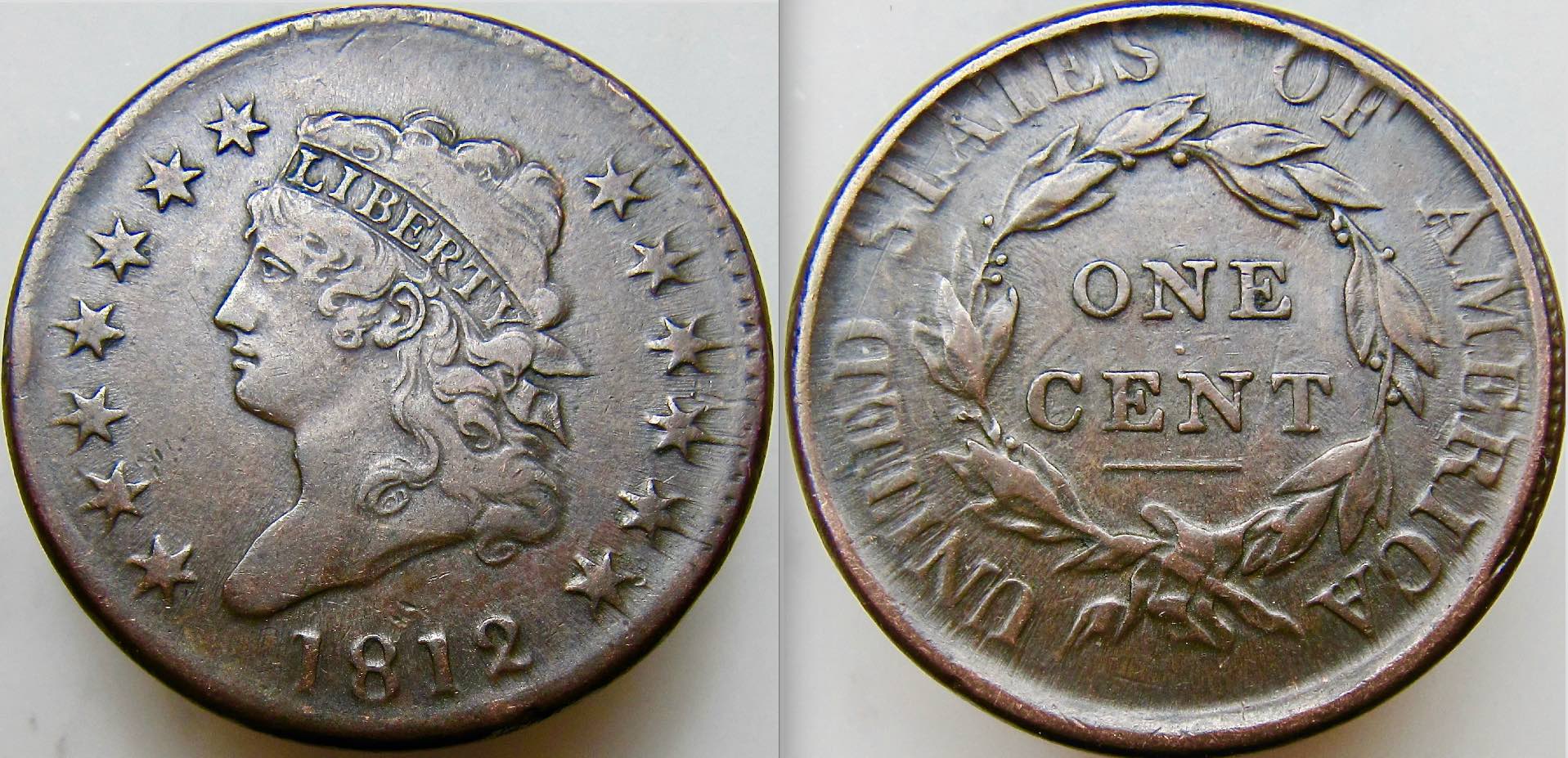 Edited by GERMANICVS
09/30/2022 09:24 am
|
|
Pillar of the Community
United States
756 Posts |
@robbudo - I agree with what you are saying to some extent. as an example there are quite a few chain cents in strait graded TPG holders that would get a details designation if they were coronet cents. if you have a lot of examples to choose from you can be more selective about what constitutes a quality coin. 1812 S-289. R-1. large date or wide date depending on who you ask. this coin is available in all grades up to AU. it becomes hard to find and financially prohibitive pretty quickly once you start talking about mint state examples. this example is very late die state. its a small miracle that the dies stayed together as long as they did. substantial die flow everywhere. the deteriorated state of the dies make this coin pretty tough to grade. I'm less confident in my grading here than I have been on any of the other coins we have talked about so far. Obverse: rim bump at k9. some small nicks in the field near the second star. 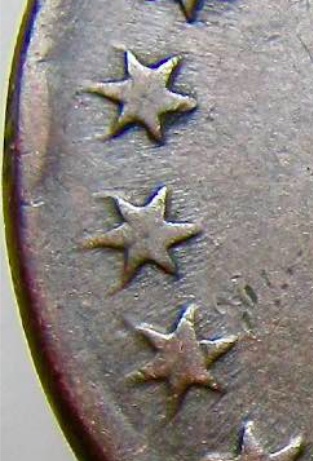 the field looks a little strange above the date. it might be a cuprous oxide spot which is a sort of copper rust. a scratch across the bust and some small nicks too. 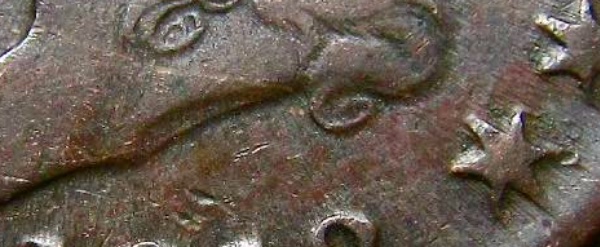 there are a couple fresh copper spots on the top of the hair and one on the rim. those will tone back eventually but are evidence of recent mishandling. 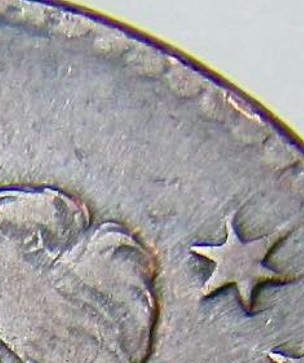 some more minor nicks by the stars 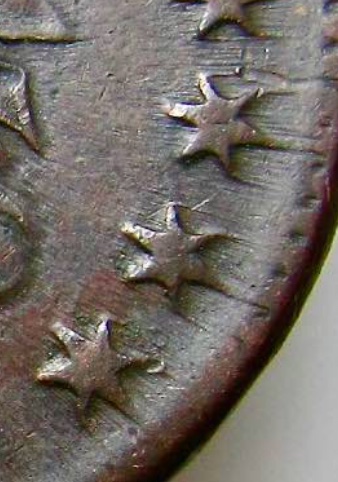 Reverse: minor nicks in a variety of places. light scratch across (unite)D STA(tes). 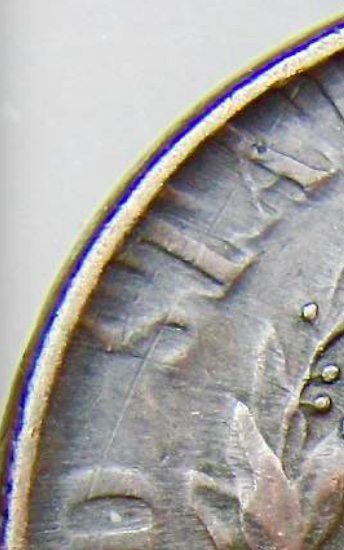 lines in the center of the reverse are from clashed dies. they look a bit like nicks but are mint made. notice the lines above the C and between NT. no grade deductions for mint made imperfections. 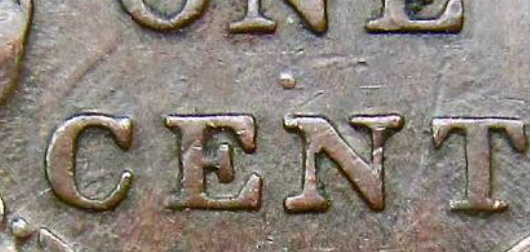 the reverse rim is kinda pink adding to my belief that this coin was recently handled in a way that wasnt ... shall we say . archival. 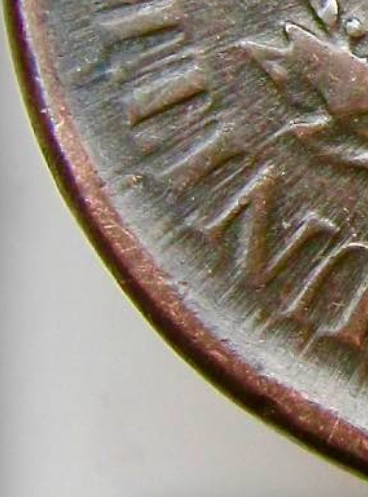 when offering seminars on copper grading my example coins get handled by a bunch of people with varying degrees of care. I will frequently get my coins back with pink rims and small bright copper spots. they tone back to the appropriate brown colors without any outside intervention. there are only 2 of those problems that I consider to be worth net grade deductions. the rim bump and the potential cuprous oxide spot. they are both deal breakers to a number of collectors. the minor nicks and scratches are all acceptable. there are enough minor imperfections that I think the coin ends up as an average. technical grade is tough for me to feel confident in. I think that this coin is in the XF range. the wreath only shows wear on the highest points on the leaves and there isn't a lot of wear there. 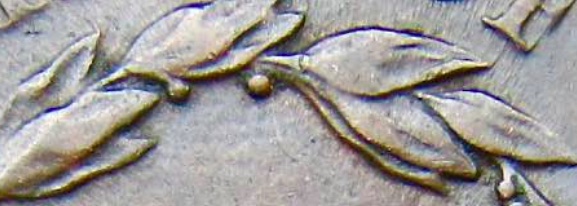 the obverse appears worn enough to warrant a VF grade however I think most of the rounded look is die wear rather than wear on the coin. the flow lines are worn off of most of the obverse fields. slab grade - I think it should strait grade 40 but I wouldnt be too shocked by it getting as low as a 25. it really doesn't have much wear so I guess 45 or 50 might even be possible. they could details it for the rim bump but I dont think they would. really depends on who your graders are and how much experience they have with this series. eac I'm going to call it a 35 net 20. this is assuming that the obverse spot is indeed cuprous oxide. if its just the light then I would call it 35/25. |
|
Pillar of the Community
Germany
1856 Posts |
Thank you, CarrsCoins. I really appreciate your thoughtful and detailed answer! It gives me new insights into EAC grading.
|
|
Pillar of the Community
United States
756 Posts |
1794 S-65. R-1. Head of 1794. Shielded Hair Variety. - this is the variety I see with the most inconsistent grading. its also one of the most common varieties of 1794. the dies for the S-65 were vertically (axially) misaligned. the obverse of the coin is always bold and well struck to the lower left and weakly struck on the upper right. the reverse eventually cracks and sinks inward obliterating much of the design. the obverse alignment means that the hair and date are always bold and well struck. the detail in the hair is preserved to a much greater extent than what you will see on any other variety of this year. the date is always bold and legible. this means that this variety is quite popular with type collectors. who doesn't want to see the date on their 1794? it also means that the coin is often over graded. a coin that the wear of a vg may have the hair detail and date closer to what you would expect from a vf or xf coin. the cracking, crumbling and failure of the reverse die has the opposite effect. the back is often obliterated even in higher grades. late die states have almost no central reverse in any grade up to and including mint state. here is my example. 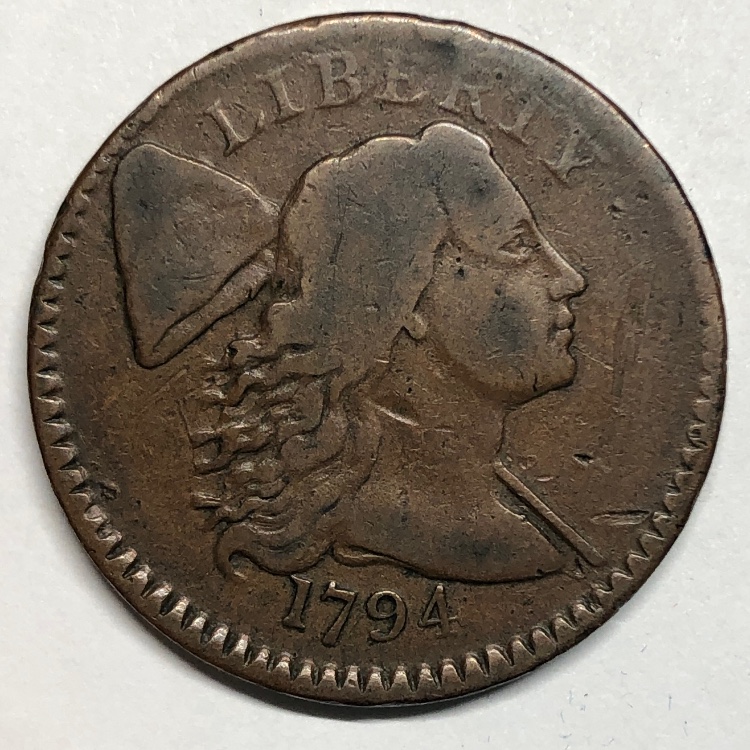 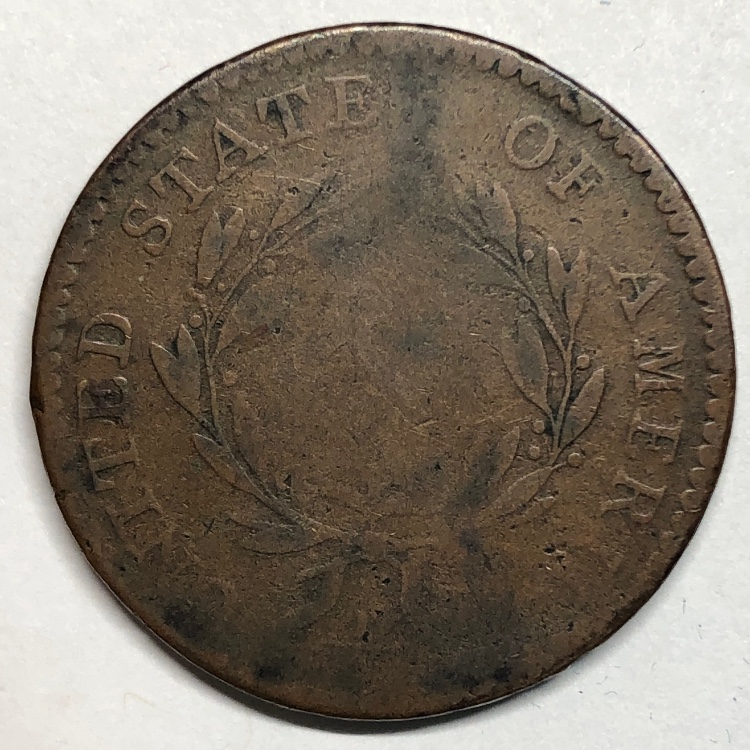 it has some nicks. the most egregious is a horizontal dig at around k4. there is another one on the neck below the ear. I grade this coin a 10 net 7 EAC. I frankly have no idea what to expect from third party grading on this variety. it would strait grade but the number is hard to predict. between G6 and VF35. most likely 12 or 15. here are the good 6 and vf 35 reference coins from photograde. note the lower obverse on the 35 example. the hair and date is what most people look at when grading this coin. note the central reverse on the good 6. its in better shape than the reverse on my S-65. this is a huge part of why people struggle to be consistent when grading these coins. 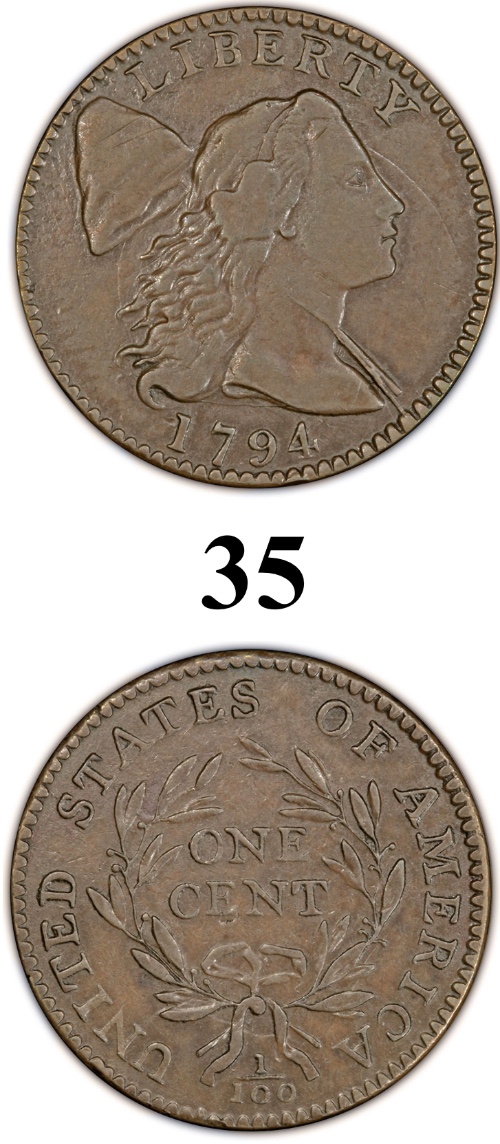 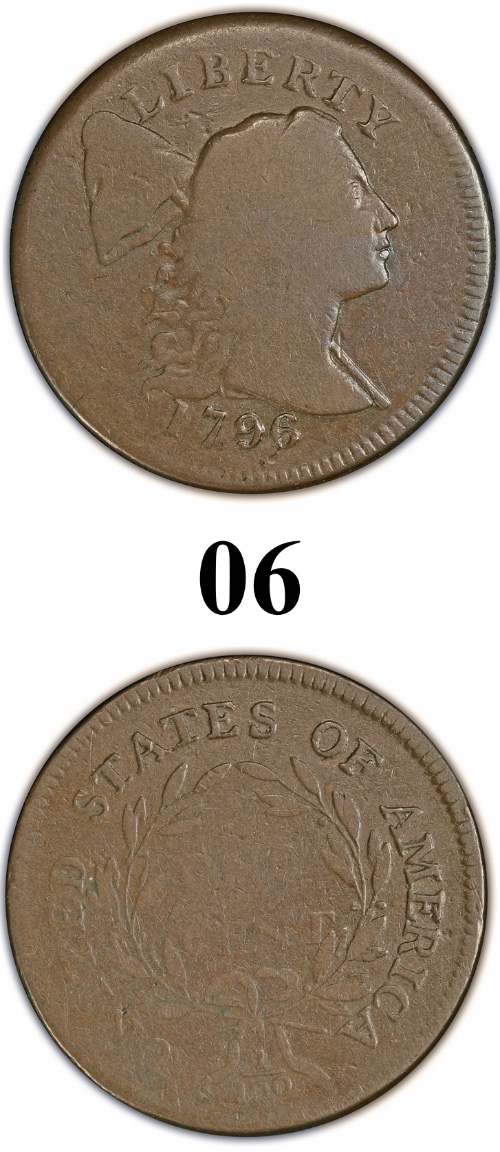 by knowing that this variety comes with odd striking patterns you can save yourself a bunch of money. Good 6 is $585 on PCGS price guide. Very Fine 35 is $3,850. this isn't the only variety that comes that way. there are a number of varieties that come poorly struck, or with details like the date totally obliterated. |
|
Pillar of the Community
Germany
1856 Posts |
I am coming back to this 1798 Sheldon 163 I posted early on in this thread. I was intrigued (read concerned) by this observation concerning the area behind the bust: Quote:
the bad news is that this area has been burnished. someone tooled this coin to smooth out pitting in this area. because it has been tooled it would have been recolored as well. I was very surprised to find in my photo file this picture of another example of S-163 which shows exactly the same disturbance behind the bust as my example. In fact, it is even more pronounced on this other example. I do not recall where I saw this picture of this other example of S-163, and unfortunately I did not record that in my files either. I have a few other photos of S-163's and they do not show this. However, this is very interesting and, in my opinion, proves this was in great likelihood not post mint intentional damage to my example, but rather, a feature of some strikes as minting of the variety progressed. One possible explanation was that the die was somehow damaged, or more likely, some foreign matter got caught between the dies imprinting this damage onto some of the strikes before it was removed. Anyway, I thought it would be interesting to post this and possibly collect some additional thoughts. Top Photo: another example of S-163 Bottom Photo: Example of S-163 from my collection. 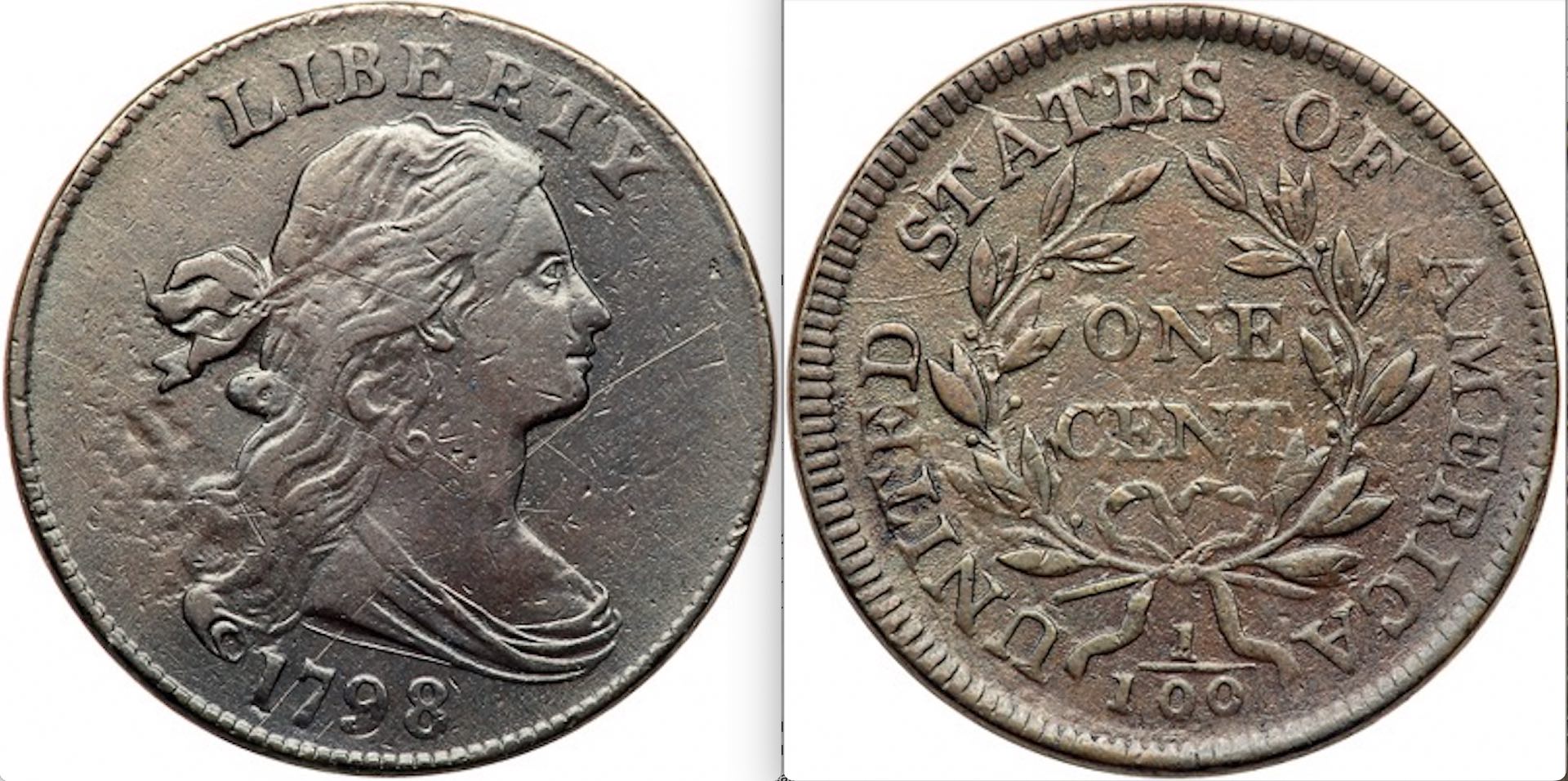 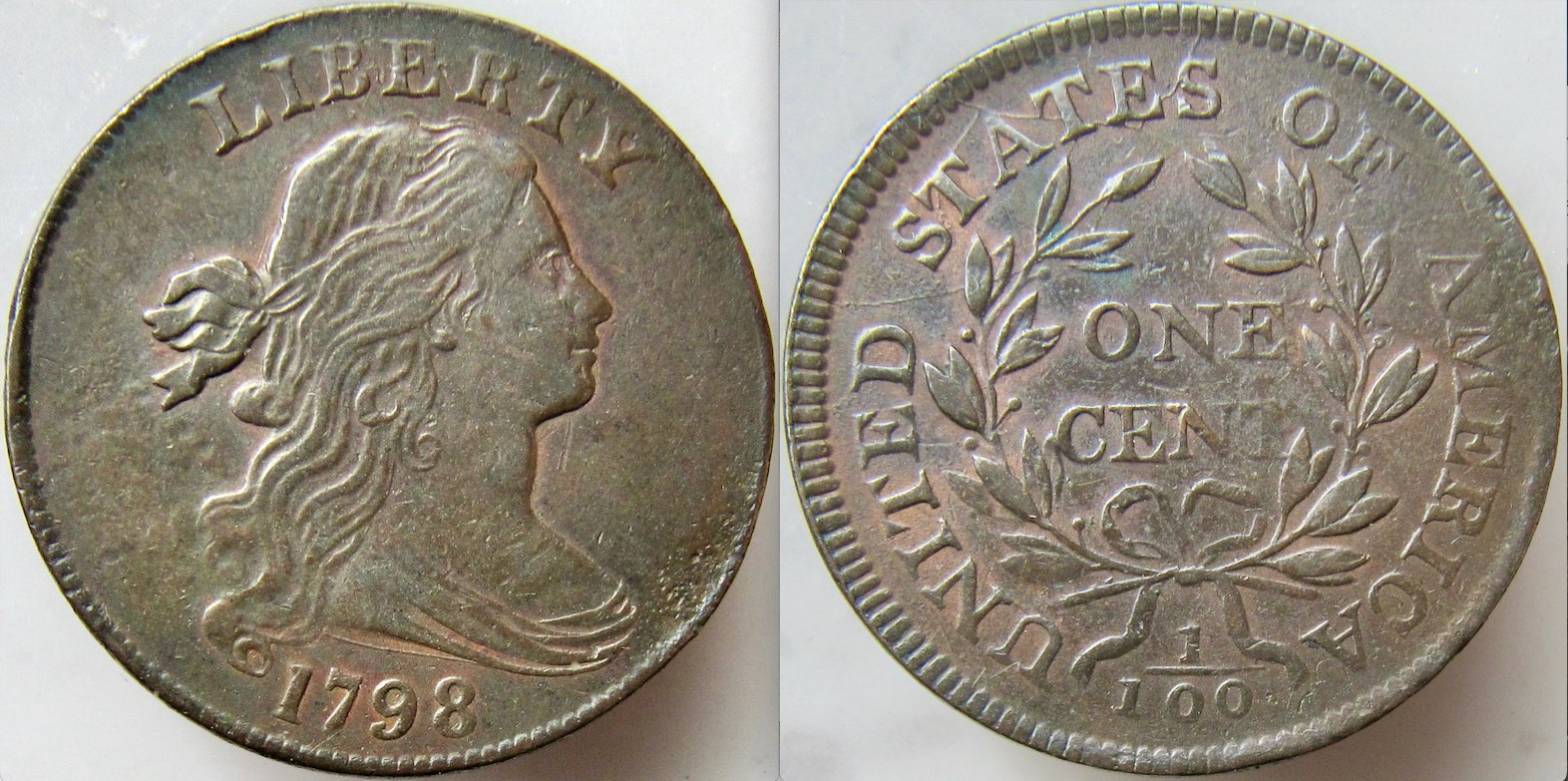 Edited by GERMANICVS
11/01/2022 4:38 pm
|
|
Pillar of the Community
United States
756 Posts |
interesting. ill do some learning and poking around and see what I can figure out.
how long have you had your coin?
edit:
i have checked the books and the auction records. I didnt see anything about such a flaw. later die states have the hair fully formed, so its not die grinding or polishing. I dont think a strike through would behave like that.
i have some suspicions about what might be going on but I need to learn a bit more.
i have reached out to a couple people to get additional opinions. ill update again when I have more to add.
Edited by CarrsCoins
11/01/2022 6:18 pm
|
|
Pillar of the Community
Germany
1856 Posts |
Hi, CarrsCoins, thank you for your reply.
I've had this coin since 2015.
I wish I had access to the latest CC for the variety published by Mr. Noyes. I have a feeling the other example I posted showing the same planchet disturbance behind the bust is actually listed in the CC for S-163.
|
| |
Replies: 46 / Views: 5,485 |





 First Page
 Previous Page


 Posted 09/28/2022 6:08 pm


