First Page


 Posted 07/14/2013 01:10 am


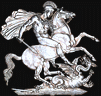
It has to be remembered that larger coins require much greater striking force, to attain the same striking pressure, as for smaller coins.
Two reasons for the less than perfect detail, especially in the lettering:
1. oil or Grease Filled Die. (I don't think so in this case).
2. not enough striking force. (IMO, that is the reason here).
From the pictures I have convinced myself there is little to no wear on this coin therefore, it has to be in some sort on MS condition.
Nevertheless, a weak strike will detract somewhat from the value. How much value is lost is a decision the buyer has to make for himself.
Quality of strike can sometimes have a great deal of bearing on the value of ancient coins.
That seems the case, at least in some opinions, here as well.
Two reasons for the less than perfect detail, especially in the lettering:
1. oil or Grease Filled Die. (I don't think so in this case).
2. not enough striking force. (IMO, that is the reason here).
From the pictures I have convinced myself there is little to no wear on this coin therefore, it has to be in some sort on MS condition.
Nevertheless, a weak strike will detract somewhat from the value. How much value is lost is a decision the buyer has to make for himself.
Quality of strike can sometimes have a great deal of bearing on the value of ancient coins.
That seems the case, at least in some opinions, here as well.
Edited by sel_69l
07/14/2013 01:15 am
07/14/2013 01:15 am