| Author |
 Replies: 285 / Views: 11,741 Replies: 285 / Views: 11,741 |
|
|
|
Bedrock of the Community
United States
12057 Posts |
Electorate of Saxony - 1694 EPH 1/12 Thaler (Doppelgroschen). Leipzig mint. Johan Georg IV, Elector of Saxony. AR, 26mm, 3.5g. KM #638. 48.6% silver 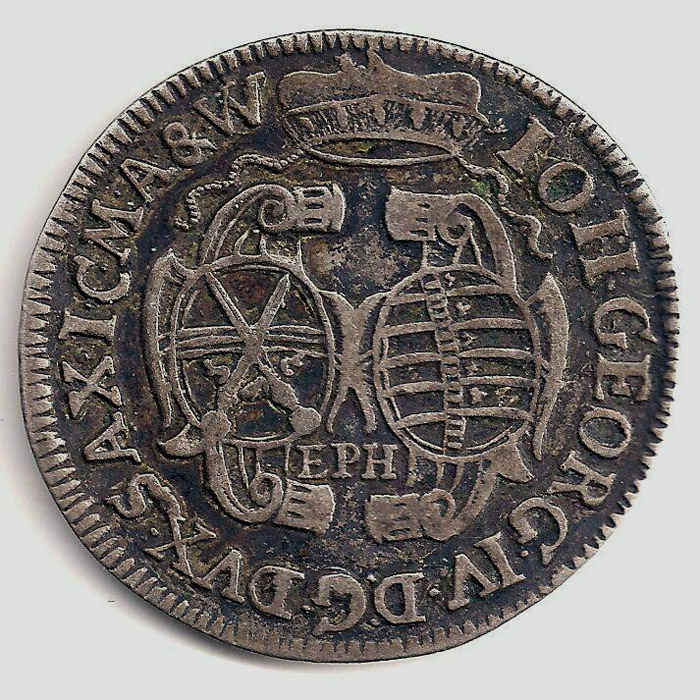 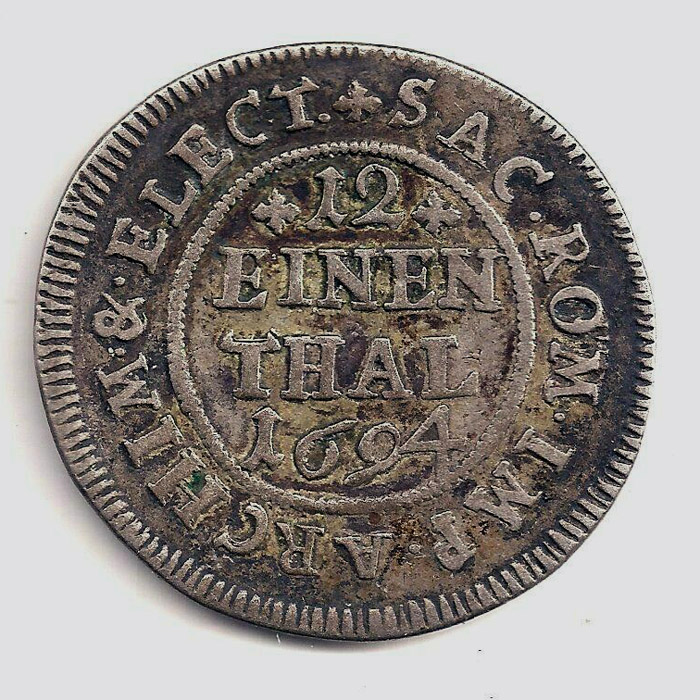 Austria-Netherlands. 1752 H Escalin of Liege. 56.9% silver. Johann Theodore of Bavaria. KM 165, Migolet 683 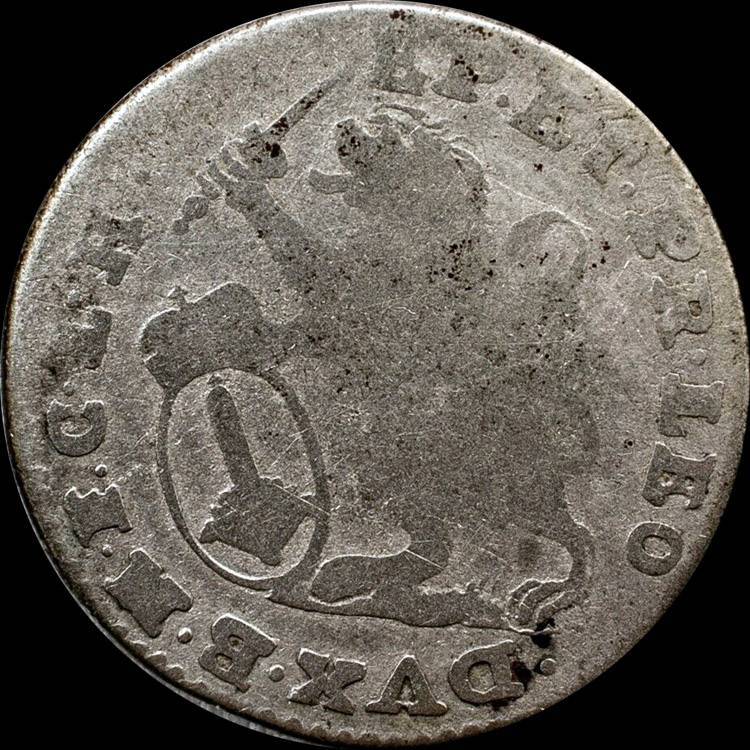 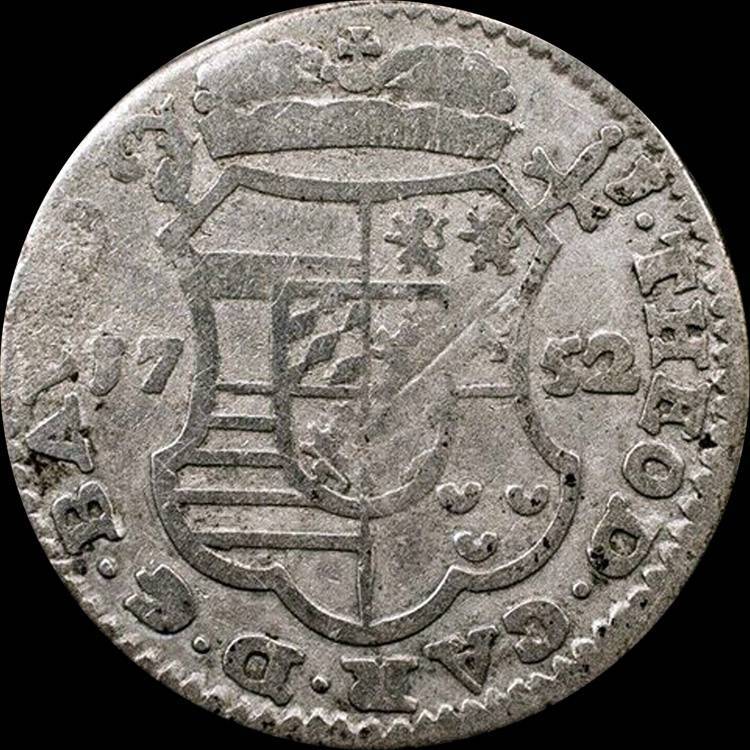 Member ANA - EAC - TNA - SSDC - CCT #890 "Most of the things worth doing in the world had been declared impossible before they were done." -- Louis D. Brandeis |
|
Moderator
 United States
196100 Posts |
Quote:
Almost forgot this one for 0.500, how could I?  Quote:
Poland - 1664-AT 30 Groszy (Tymf / Gulden). Bydgoszcz (Bromberg) mint. 6.5 grams, 30-31mm, 0.500 AR. John II Casimir (Vasa).  |
|
Pillar of the Community
  United States
8056 Posts |
Quote:
48.6% silver Woo hoo  ! I never thought we would find 49%. What is your source for the Saxony compositions? I have a few of these between 1700-1750, and can't find composition on any of them (possibly because they have dropped farther into the billon range). Just in case, I am looking for silver content on: 1/12 thaler KM#683 1/24 thaler KM#682 1/48 thaler KM#703 3 pfennig KM#711 1/48 thaler KM#883 1 pfennig KM#894 |
|
Pillar of the Community
United States
8056 Posts |
Quote:
Here you go: Thanks for that contribution @ariette! Not that we need another 40% coin, but here is an example of the first dated coin struck in the Burgundian Netherlands, a 1474 "briquet" (equivalent to a patard or stuiver) from the County of Flanders. Like one of erafjel's blancs, struck at 5 deniers or 0.399: 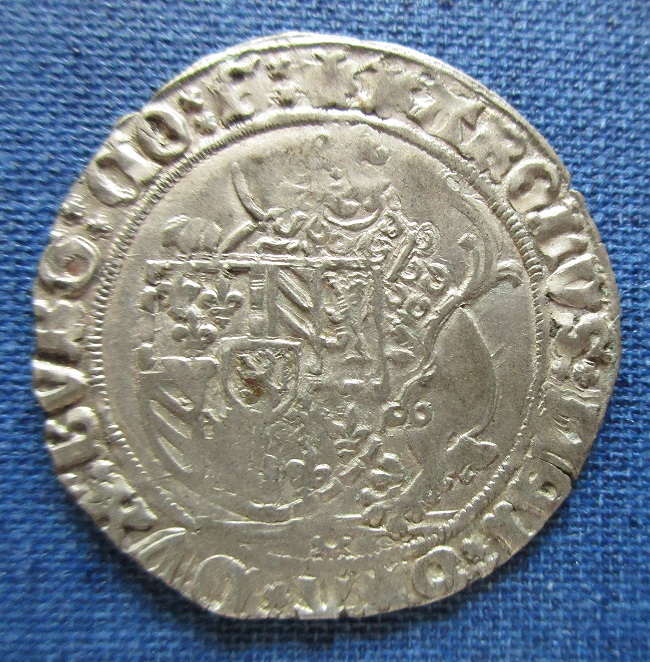 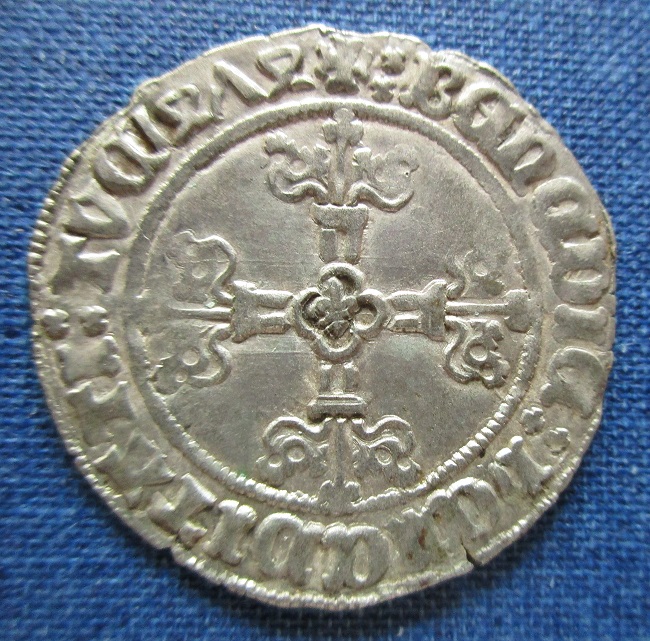 Here is where we stand for the 40-49% slice: 49% German States/Saxony-Albertine 1/12 thaler KM#638 (paralyse) 48% Burgundian Netherlands/Brabant 2 gros N#95425 (tdziemia) .......France, blanc Charles VI (1385-1389) (erafjel) 45% Poland 6 groschen KM#42 (tdziemia) 44% German States/Hamburg doppelschilling KM#419 (spence) .......German States/Hamburg 4 schilling (KM#359.1) and 8 schilling KM#367 (paralyse) 42% Mexico 50 centavos KM#448 (ariette) 41% Burgundian Netherlands/Brabant 2 gros N# 104038 (tdziemia) 40% Burgundian Netherlands/Flanders, briquet N#248787 (tdziemia) .......France, blanc Charles VII N#4633 (erafjel) .......French Indochina 10 cents KM#14 (erafjel) .......Sweden I krone KM#814 (paralyse) .......Sweden 5 kronor KM#839 (triggersmob) .......U.S. Eisenhower dollar (jbuck, paralyse, kbbpll) .......U.S. Kennedy half (paralyse) I know from this thread http://goccf.com/t/457142 that 47% exists (maybe someone has an Ottoman zolota?) |
|
Bedrock of the Community
United States
27514 Posts |
Looking through my collection for anything in the 40s range (besides my Mexico 1935 50 Centavos), I ran across this 1963 South Africa 50 Cents that clocks in at .500. 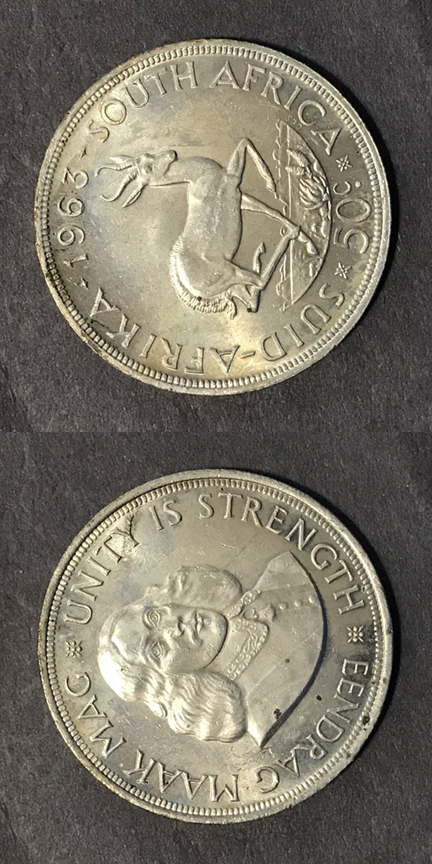 Inordinately fascinated by bits of metal with strange markings and figures
|
|
Bedrock of the Community
United States
12057 Posts |
Just going based on Numista -- I don't have a more accurate source except the Standard Catalog of German Coins book - and I'm at work, so can't get to it anyhow.
Value 1/12 Thaler
Currency Thaler (1493-1805)
Composition Billon (.486 silver)
Weight 3.55 g
Diameter 26 mm
Thickness 1.03 mm
For many of my German States and Austrian coins, I have no data on file for silver content.
@erafjel - I do have a blanc aux couronne of Charles VII but no idea as to its silver content. Perhaps you might know?
Member ANA - EAC - TNA - SSDC - CCT #890 "Most of the things worth doing in the world had been declared impossible before they were done." -- Louis D. Brandeis Edited by paralyse
12/20/2023 5:41 pm
|
|
Pillar of the Community
Sweden
2124 Posts |
Quote:
@erafjel - I do have a blanc aux couronne of Charles VII but no idea as to its silver content. Perhaps you might know? The 2nd blanc I showed I have attributed as Charles VII blanc à la couronne (Duplessy 519), with 0.399 fineness. Is it a different one you have? I might have to see a picture, or if you have a Duplessy or other number. I think I have fineness data for all Charles VII blancs. |
|
Pillar of the Community
United States
8056 Posts |
Likewise, if anyone has coins from Spanish Netherlands or Burgundian Netherlands, I can help with silver contents, which are published in Van Gelder and Hoc. For even earlier coins from Brabant and Flanders there are other references (de WItte for Brabant, and de Pas for Flanders) that have some compositions, but the records are pretty spotty before 1400. Gumowski's book on Polish coinage also collects composition information in a series of tables at the back of the book, organized mostly by reign and monetary ordinance. As we will see with Low Countries (and maybe also France?), for countries with a bimetallic coinage system based on silver and gold, even the smallest denominations contained some specified amount of silver (as low as 1% in the Low Countries!), before these places threw in the towel and went to a trimetallic monetary system adding copper or bronze in the mid-1500s. Poland never got quite that low on silver content (9.4% is the lowest I found), but the principle was the same. Quote:
For many of my German States and Austrian coins, I have no data on file for silver content. OK, so it's not just me  I think once things get below about 40% many catalogs just call it billon. This is what I see on those Saxony types, starting a bit after 1700 in the reign of Friedrich August I Edited by tdziemia
12/21/2023 09:30 am
|
|
Pillar of the Community
Russian Federation
5186 Posts |
Quote:
even the smallest denominations contained some specified amount of silver (as low as 1% in the Low Countries!) When we get there I'll try to post my Siberian kopek, which was officially made in an alloy containing 0.79% silver (and 0.01% gold, with the rest intended to be copper). I'm not sure to what extent this was really attempted vs. a legal fiction to explain their smaller size compared to regular copper coinage, though. |
|
Pillar of the Community
Sweden
2124 Posts |
Quote:
As we will see with Low Countries (and maybe also France?), for countries with a bimetallic coinage system based on silver and gold, even the smallest denominations contained some specified amount of silver (as low as 1% in the Low Countries!) The last French denier tournois in billon (1575) had 0.056 silver. The lowest fineness I know of for French coins is 0.026 for the vaquette (3/4 denier tournois, minted until 1642). |
|
Pillar of the Community
United States
8056 Posts |
Quote:
The last French denier tournois in billon (1575) had 0.056 silver. The lowest fineness I know of for French coins is 0.026 for the vaquette (3/4 denier tournois, minted until 1642). Philippe le Bon of Burgundy specified the... Brabant mite at 4 grains (1.3%) Brabant double mite at 6 grains (1.9%) Flanders double mite (1427-1433) at 9 grains (3.0%) Brabant 4 mites and double denier of Hainaut at 12 grains (3.9%) There were Polish coins specified at 1/16 (6.3%) and 1 1/2 / 16 (9.4%). I don't have all of those, but I am beginning to think that we may do OK on the 0 - 10% slice, which was the one I was most worried about. Edited by tdziemia
12/21/2023 11:15 am
|
|
Pillar of the Community
Russian Federation
5186 Posts |
I have a coin that's apparently specified at 7.9% (I suspect it's really some complicated nondecimal fraction that comes out to approximately this, but the only sources I found just give a decimal fraction of 0.079), though my example doesn't look quite silvery enough to be this much silver, and I'll have to check if I took any photos of it at all (it's not in my uploaded pics).
Offhand I can't think of any coins with specified nonzero silver content that rounds to 0% silver, but it's nice to know that we can (at least theoretically) get 1% without invoking Siberian copper.
|
|
Pillar of the Community
United States
8056 Posts |
Quote:
... it's nice to know that we can (at least theoretically) get 1% without invoking Siberian copper. We will need that one for 1%. At 0 - 10%, I have 3, 4, 6 and 9. I just cited those Brabant & Flanders types as the lowest I know, but I don't have them all. Consider yourself "on the hook." |
|
Bedrock of the Community
United States
12057 Posts |
Erafjel - Yes, this is Duplessy 519c. Here is my example. 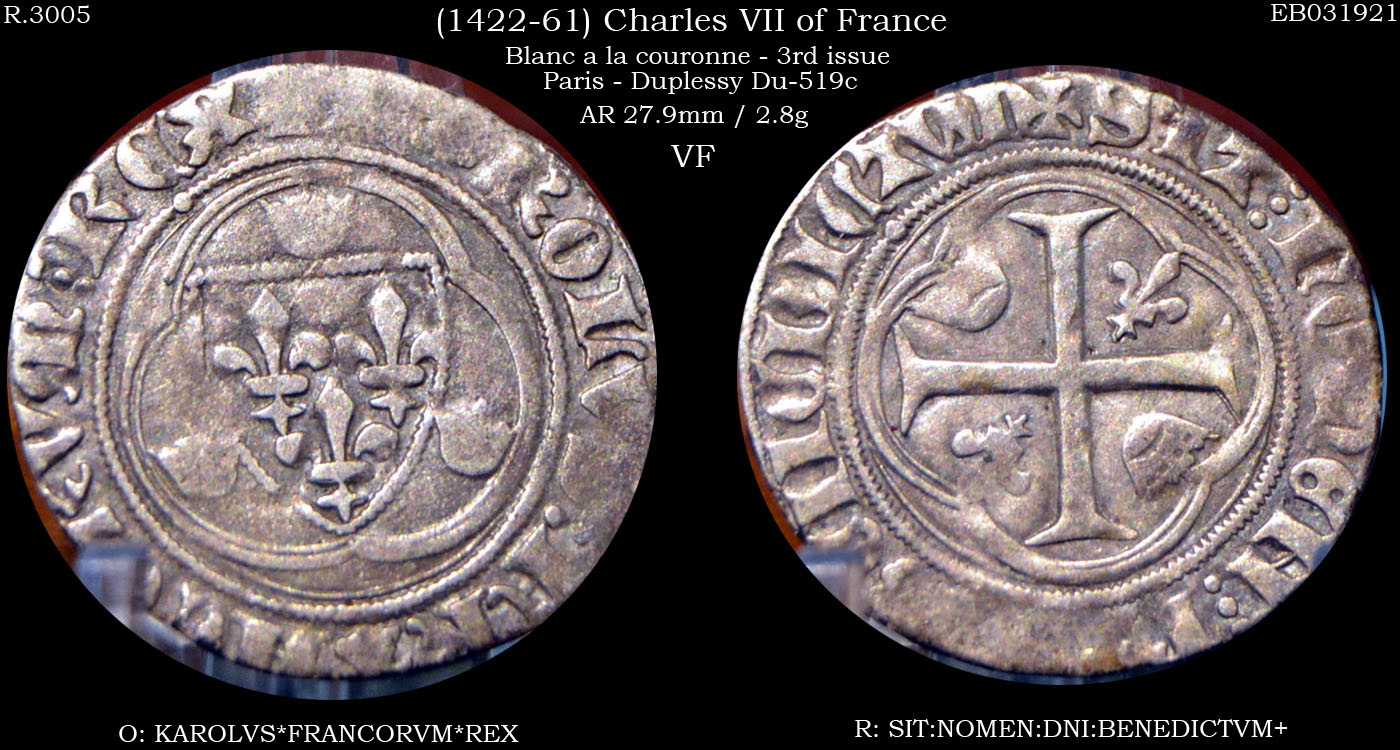 Member ANA - EAC - TNA - SSDC - CCT #890 "Most of the things worth doing in the world had been declared impossible before they were done." -- Louis D. Brandeis |
|
Pillar of the Community
Sweden
2124 Posts |
Quote:
Yes, this is Duplessy 519c. Here is my example. I would say that one is the same type as mine, that is, 1st issue, Duplessy 519. Yours has three dots instead of two (":") as punctuation, but there is variation for that. 3rd issue (Duplessy 519b) has a fleur-de-lis instead of a "+" at the beginning of the inscription. Duplessy 519c (4th issue) has "*" instead of ":" as punctuation. |
| |
Replies: 285 / Views: 11,741 |






 First Page
 Previous Page


 Posted 12/20/2023 2:32 pm


