| Author |
 Replies: 24 / Views: 2,371 Replies: 24 / Views: 2,371 |
Page 2 of 2
|
|
|
|
Valued Member
 Canada
219 Posts |
Thank you Silvio for the 12 Nickel rolls. There were 105 nickels dated after 2004 out of 480 nickels. The following table is the distribution per year and per mint. 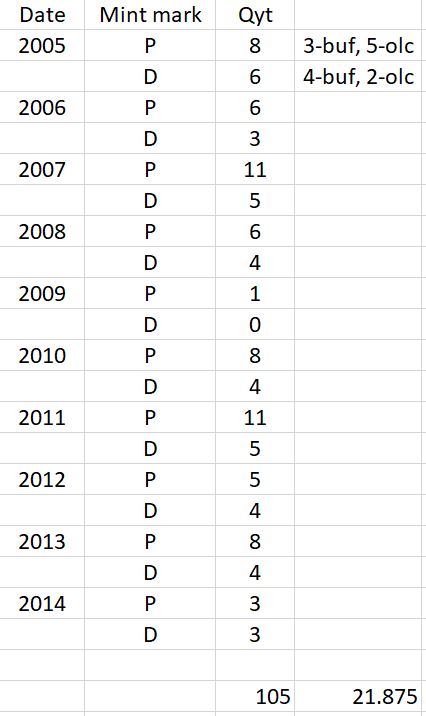 I know statically, I will not be able to conclude much but it is a start. I was trying to find a chart showing various die states but I did not find one for the nickel. So, I had enough of year 2000 to get good pictures of the parallel flow lines at different die state. Can someone indicate which pictures you would consider mid (middle) die state (MDS) and late die state (LDS)? 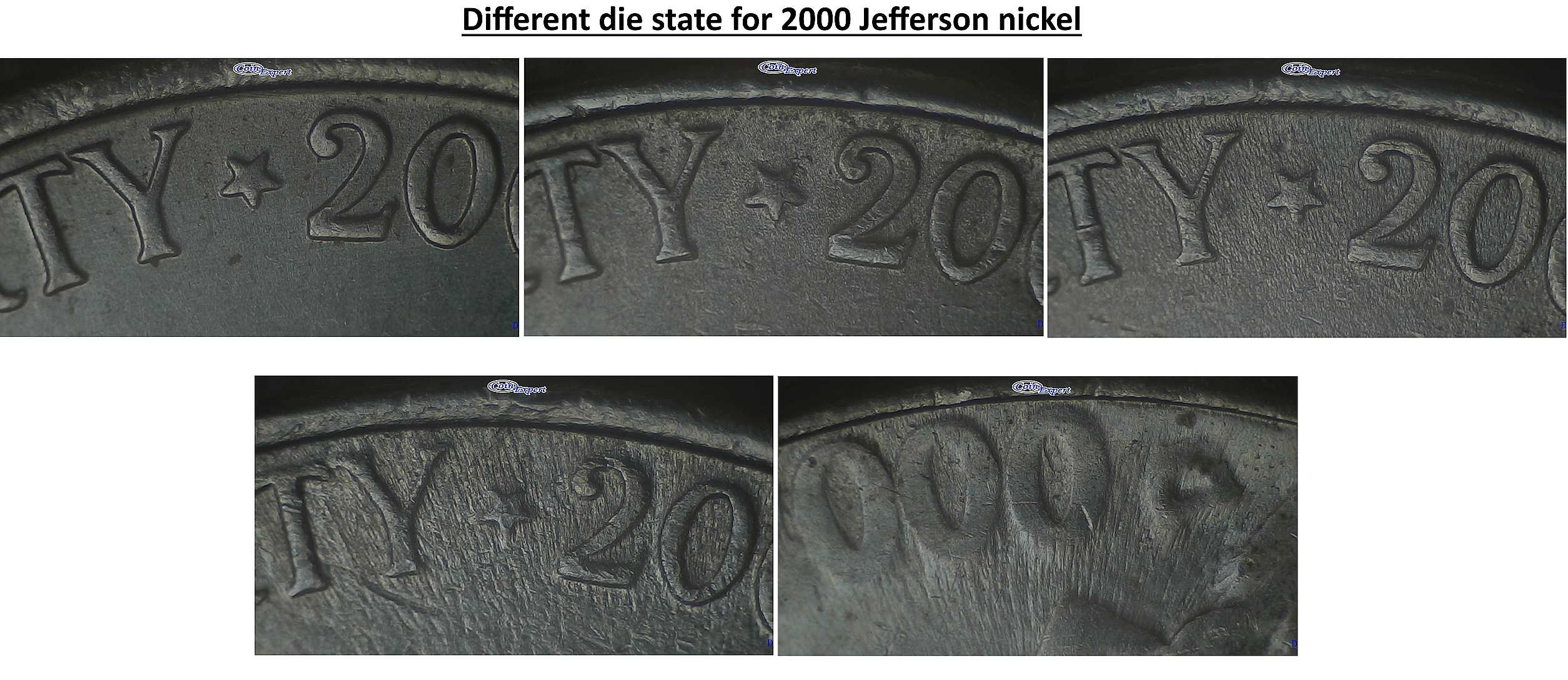 |
|
Pillar of the Community
Canada
6244 Posts |
Me I go different.
So I will state for what is state the words
V =very
E = Early
M = Middle
L = Late
D =Die
S =States
Ex = extremely
So me I use :
1. category 1 = a. VEDS, b. EDS and c. LEDS
2. category 2 = a. EMDS, b. MDS and c. LMDS
3. category 3 = a. ELDS, b. LDS and c. VLDS.
4. category 4 = Ex. VLDS
On your coins IMHO you has 1b, 1c, 2b, 2c and 3c
|
|
Valued Member
Canada
219 Posts |
Thank you Silvio, I will use your scale as of now when I need to describe die state. Deterioration of the working dieDeterioration of the working die occurs due to two forces. The first is the vertical impact the working die has with the coin blank as shown in illustration below. This can occur as early as Silvio's category 1b die state! Any weakness in the working die metal will cause fractures which eventually creates "chips", "breaks", "cracks", " Cuds", etc... In some cases, as the working die worn out, these fractures expands and eventually forms double Die Deterioration. 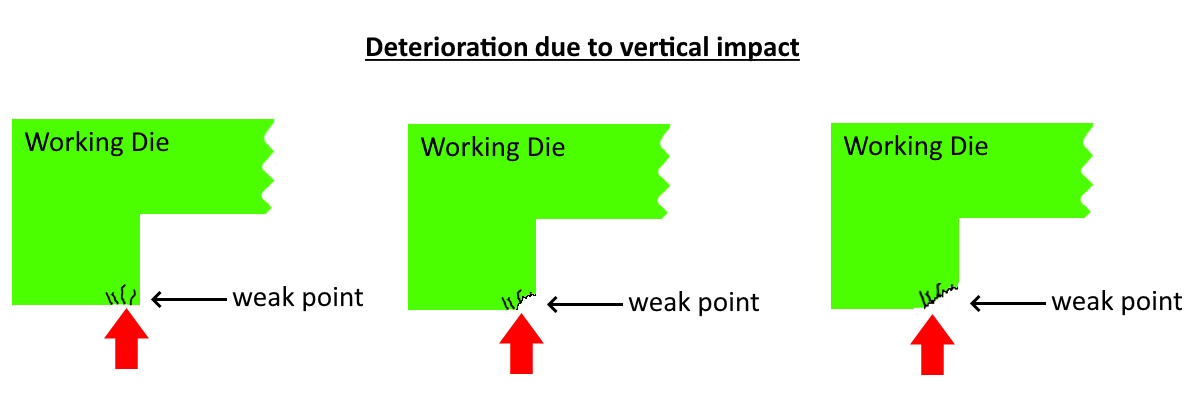 The other force is due to metal flow of the coin blank as shown in illustration below. This is usually visible in later die states (Silvio's category 2b die state). This flow acts like coarse sand paper on the working die. 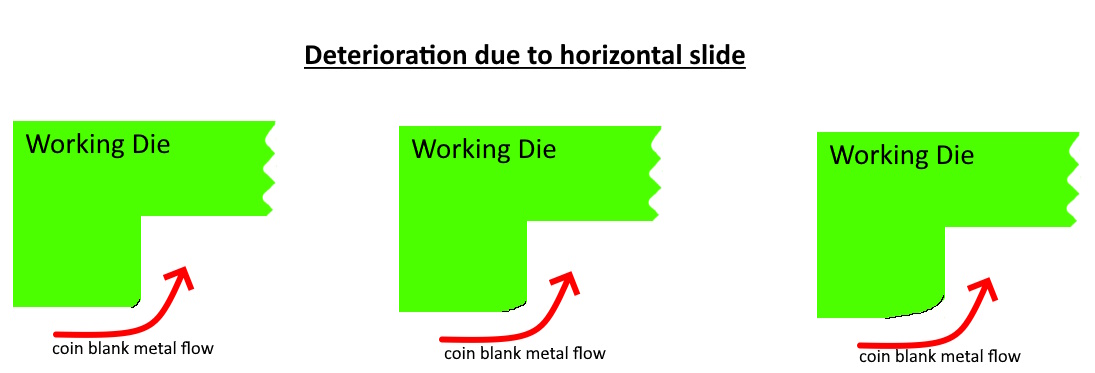 The following picture shows what it looks like up close. 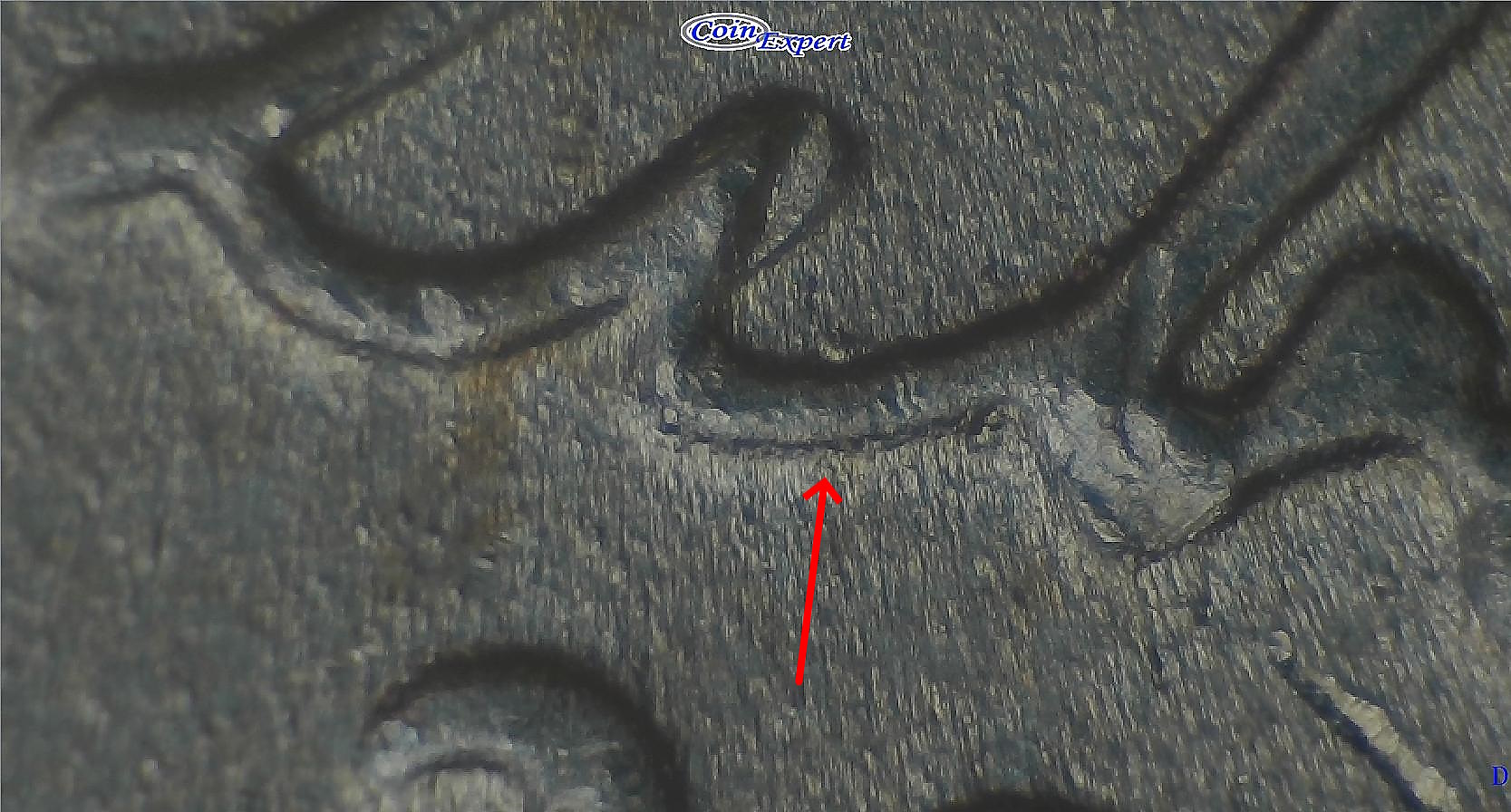 Edited by numidan
04/24/2023 10:04 am
|
|
Valued Member
Canada
219 Posts |
Here are pictures of various die chip and die crack found in the lot. 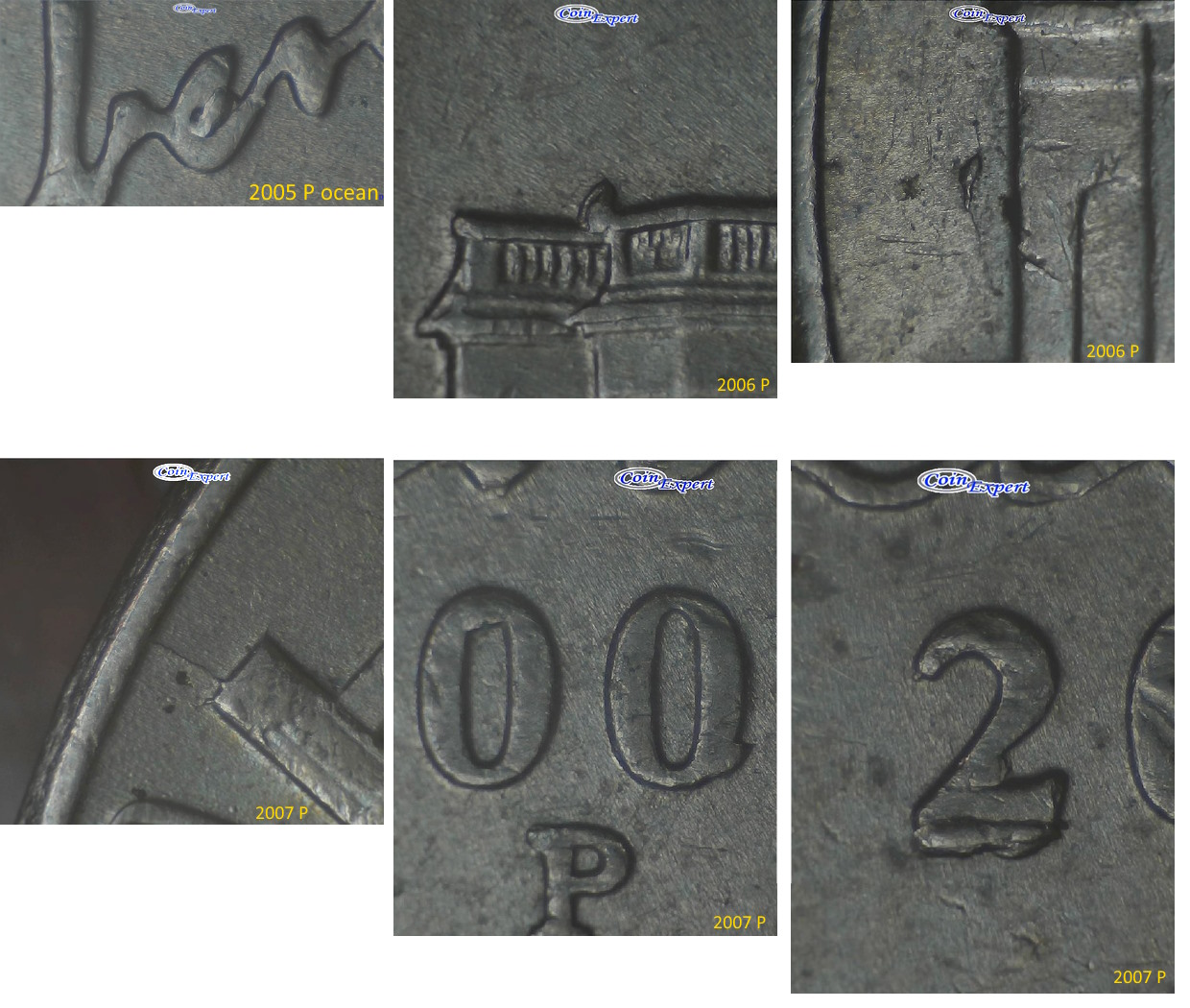 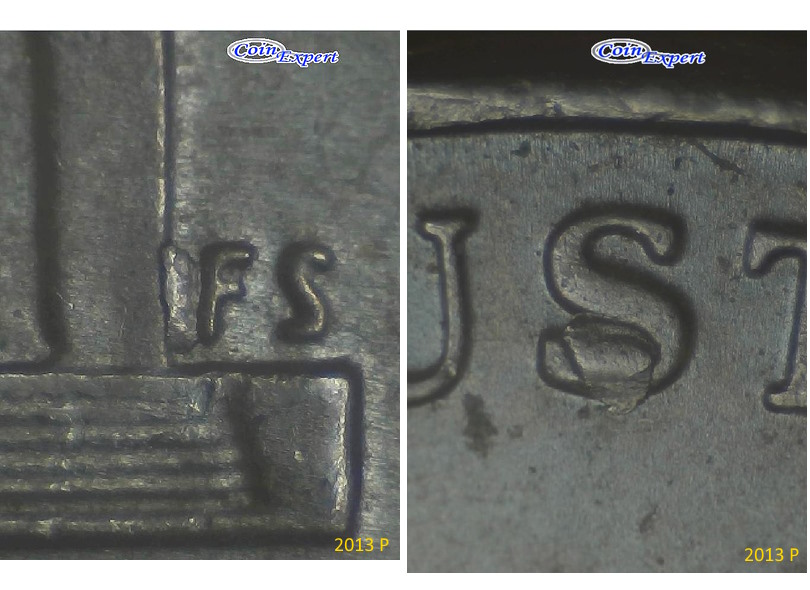 Edited by numidan
04/24/2023 8:37 pm
|
|
Valued Member
Canada
219 Posts |
Edited by numidan
04/25/2023 11:27 am
|
|
Bedrock of the Community
United States
62064 Posts |
Wexler has images of the 2004 DDO that I've used in the past: 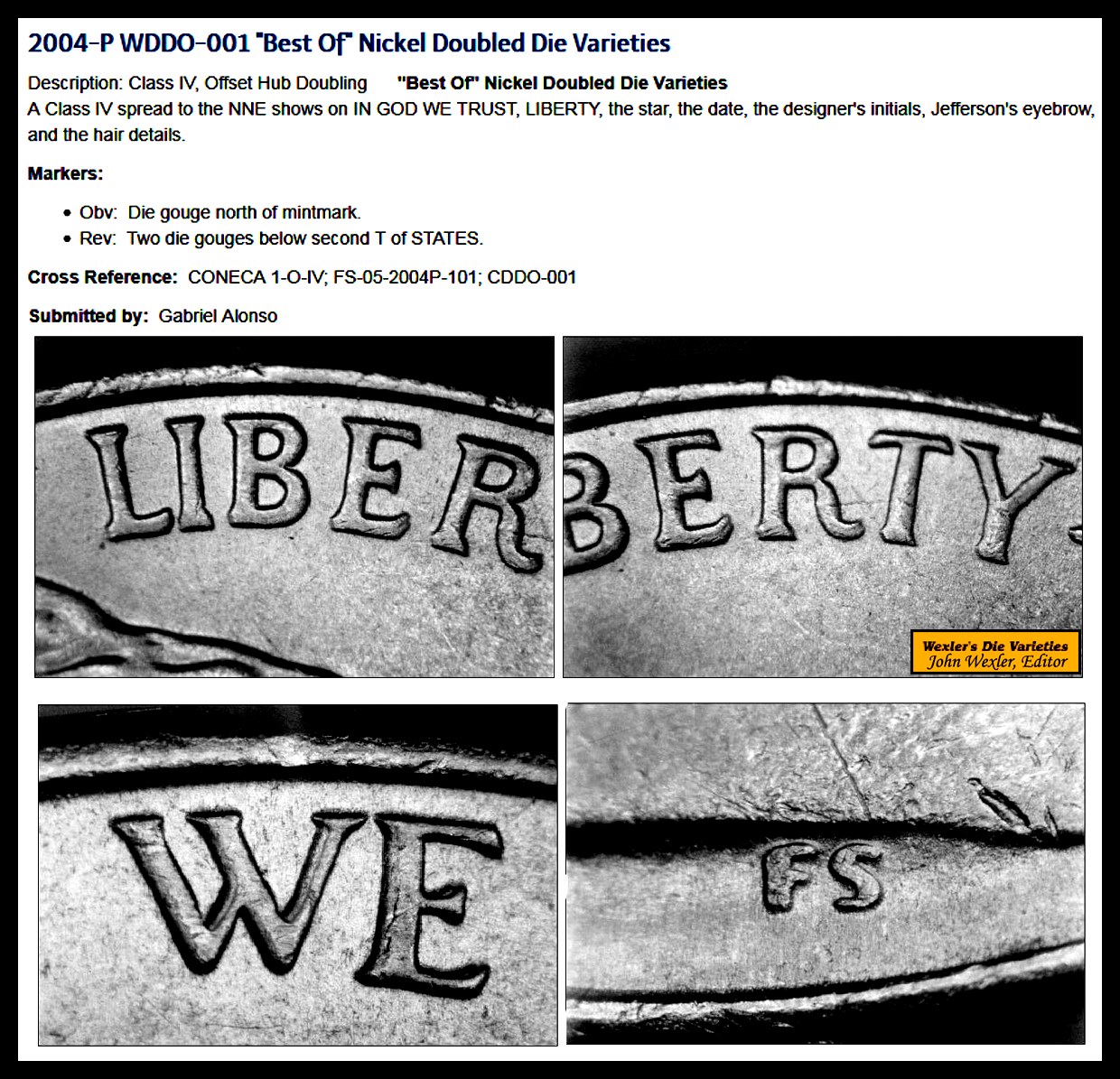 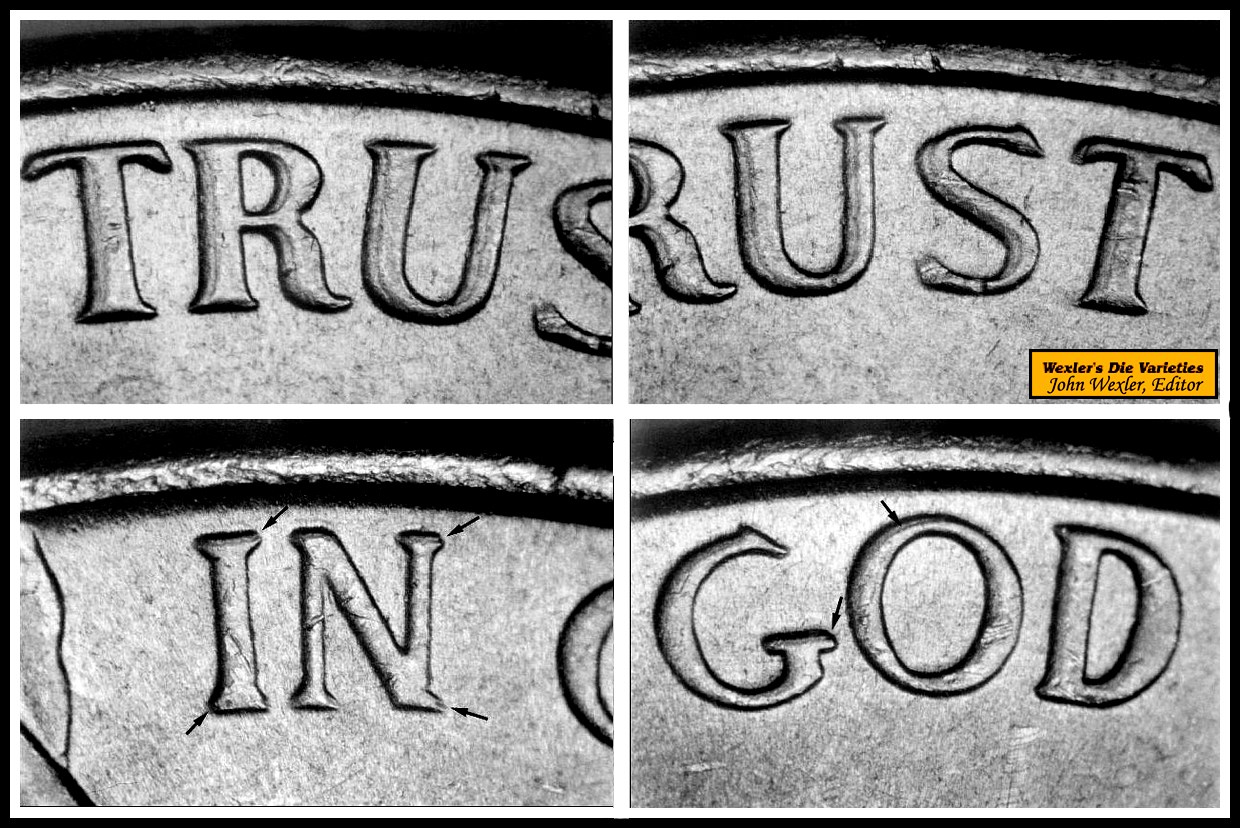 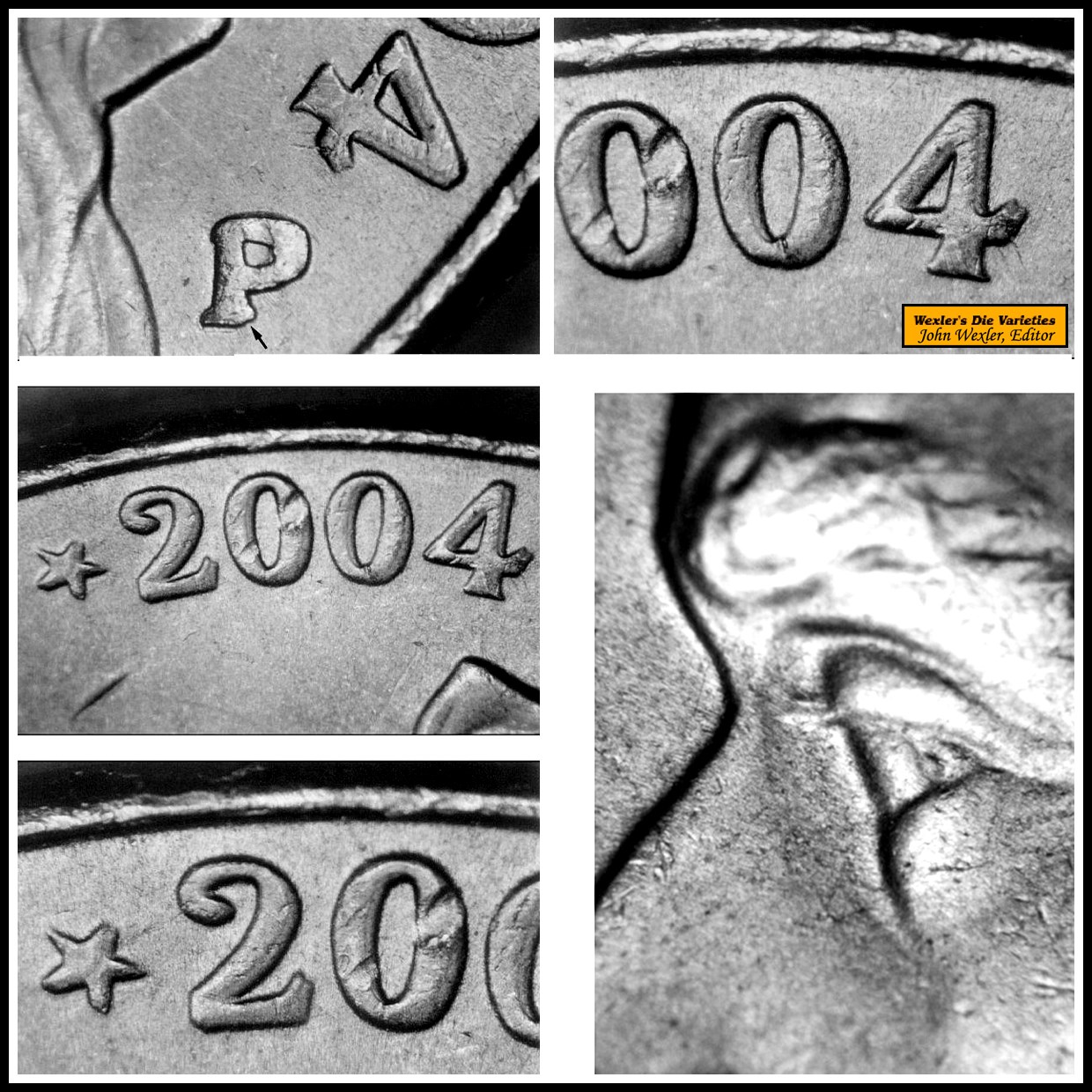 But side by sides, shows how the spread affects differently on the normal and DDO's on this 2004 1 DDR cent. 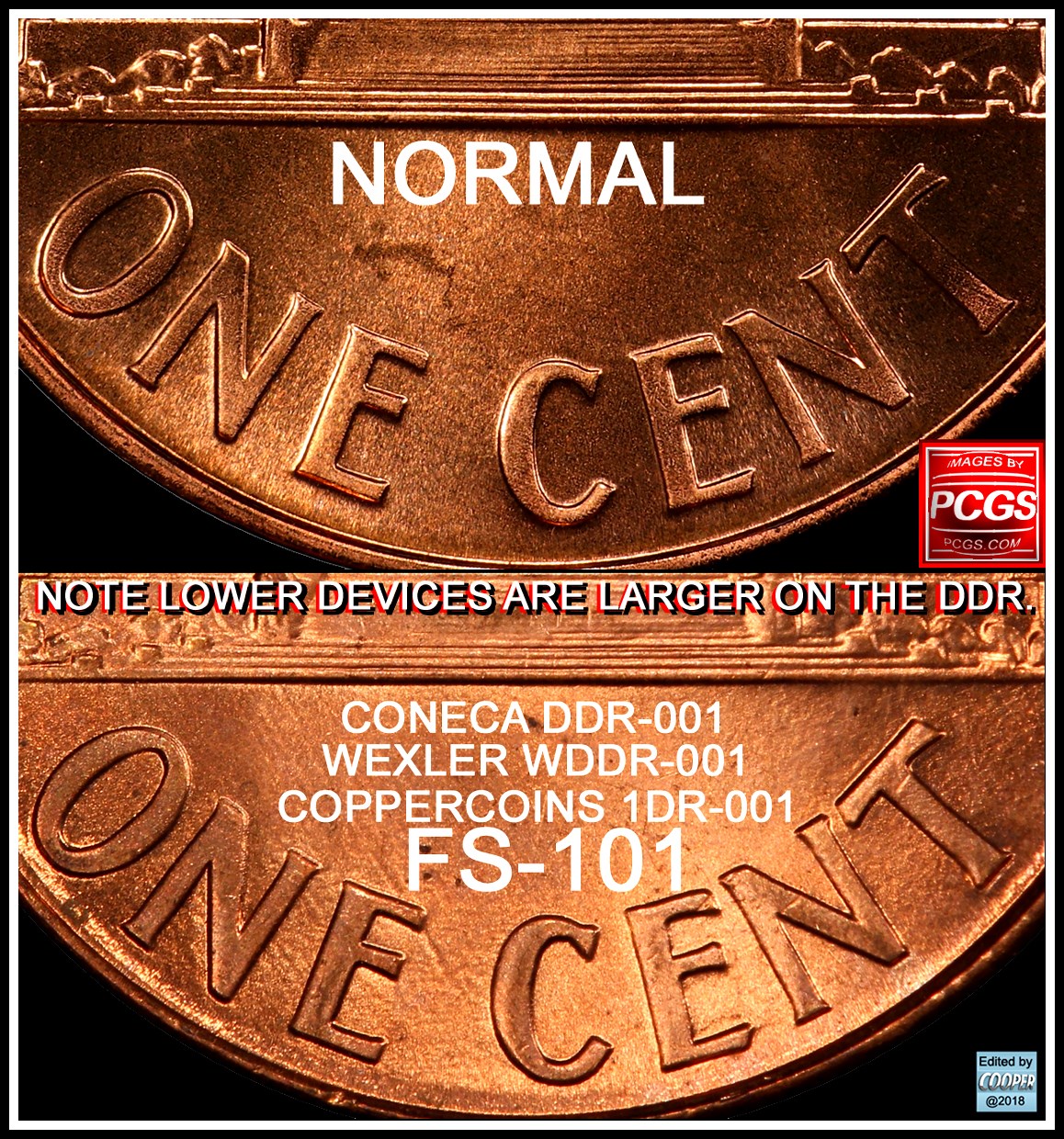 That way everyone can see the differences in size of the doubled dies. (Sorry I don't have examples of the 2004-P nickel DDO. But seeing them side by side is more convincing. |
|
Valued Member
Canada
219 Posts |
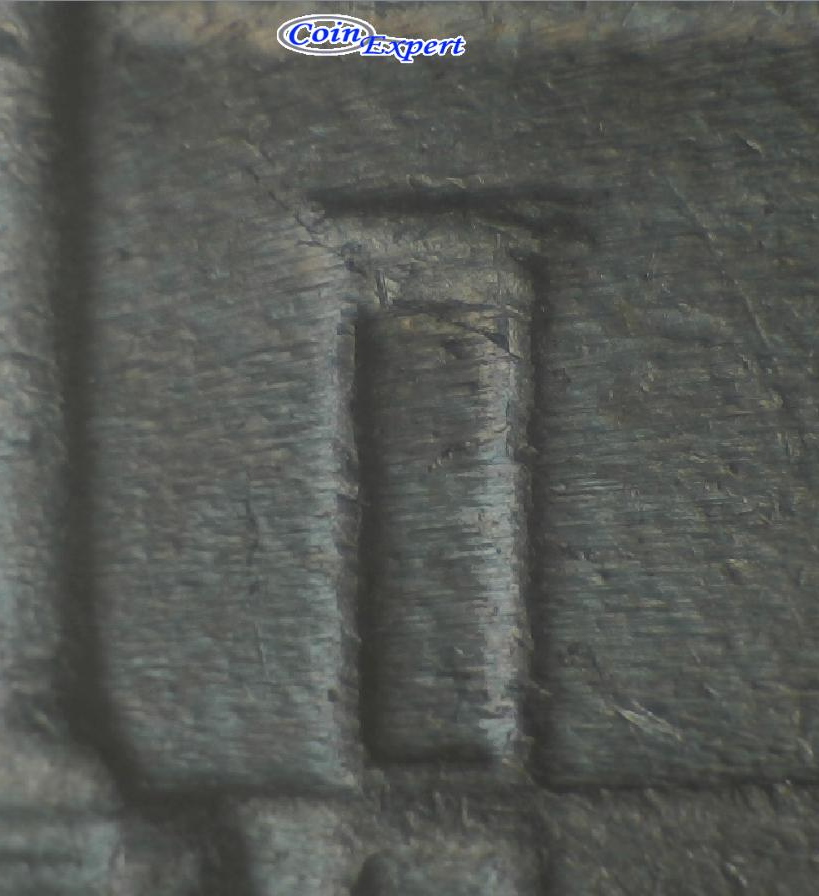
Thank you Coop for your pictures. Doubled die on ReverseHere is what I have found for the reverse side. 2013-P DDR-003 reference: http://www.varietyvista.com/04d%20J...3PDDR003.htm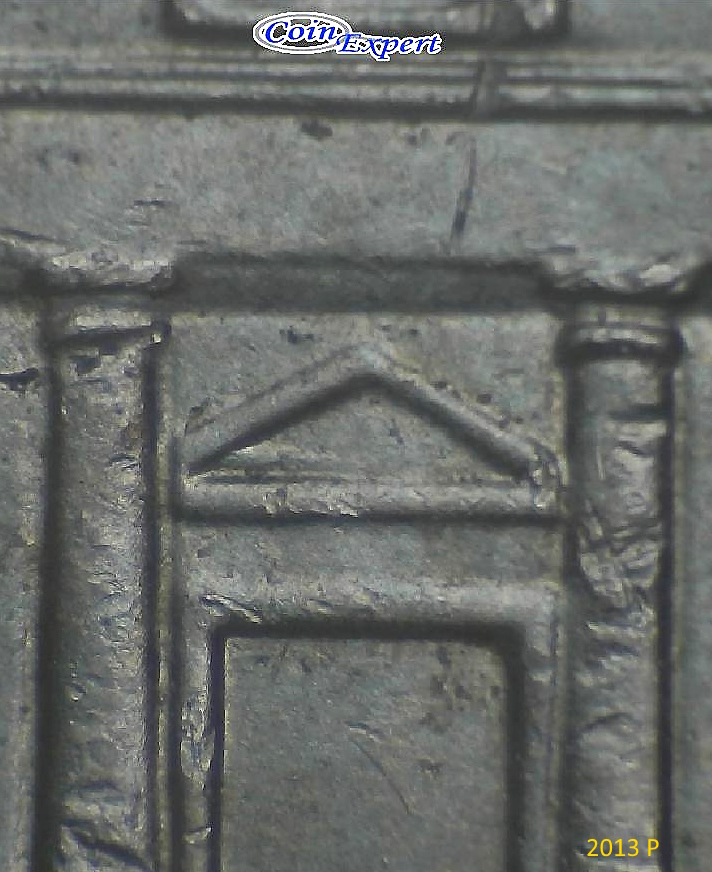  I do not know what happened for this one!  Maybe one of you have seen this kind of doubling. The whole right side of the building seems doubled (red arrow shows the doubling of door and small window under door) and the details are not sharp. There are metal ripples on the wall of the building. 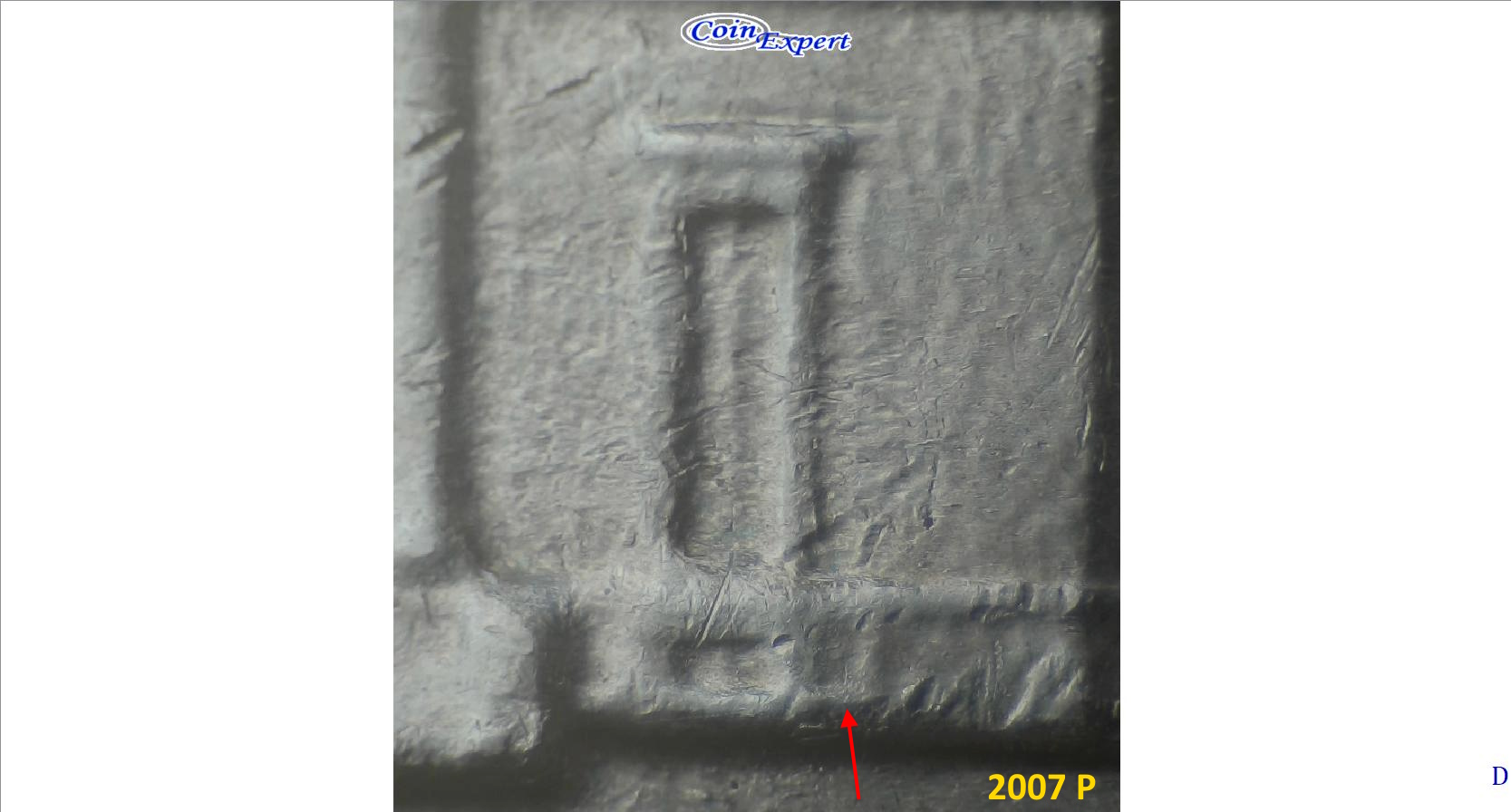 Reference coin vs coin in question 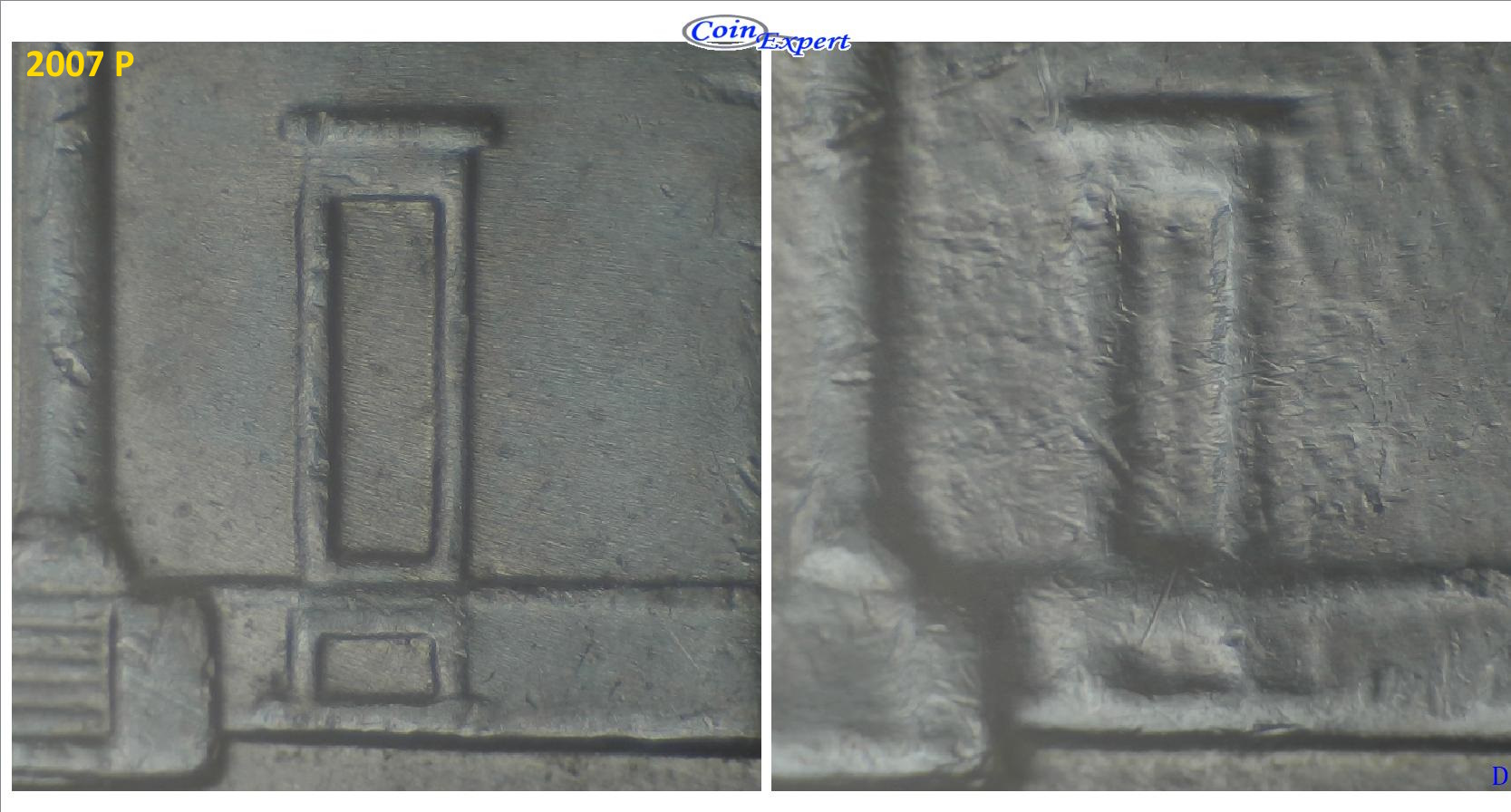 This is the window to the right. Notice the concave depression after the edges of the walls. 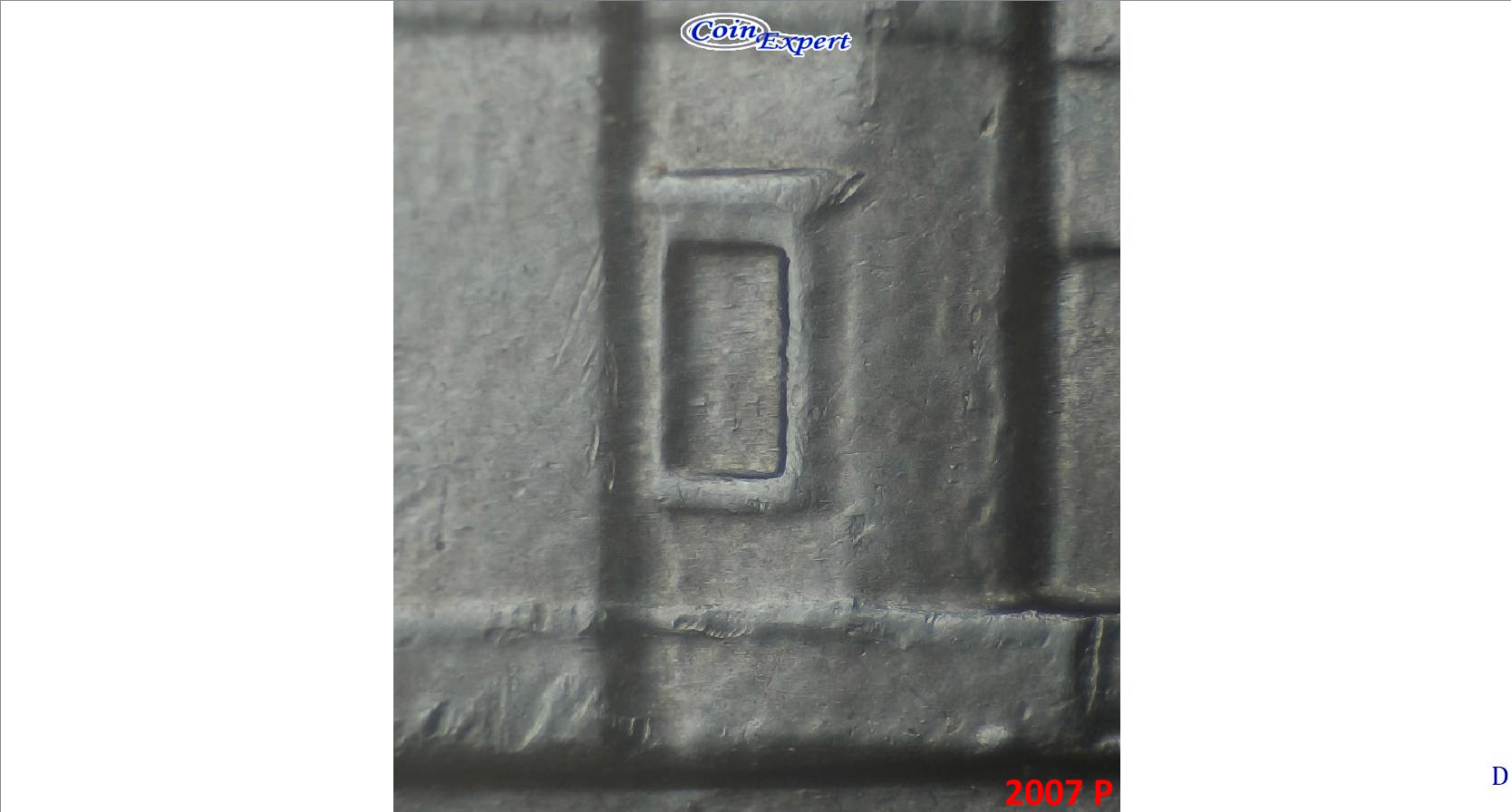 Edited by numidan
04/26/2023 07:45 am
|
|
Valued Member
Canada
219 Posts |
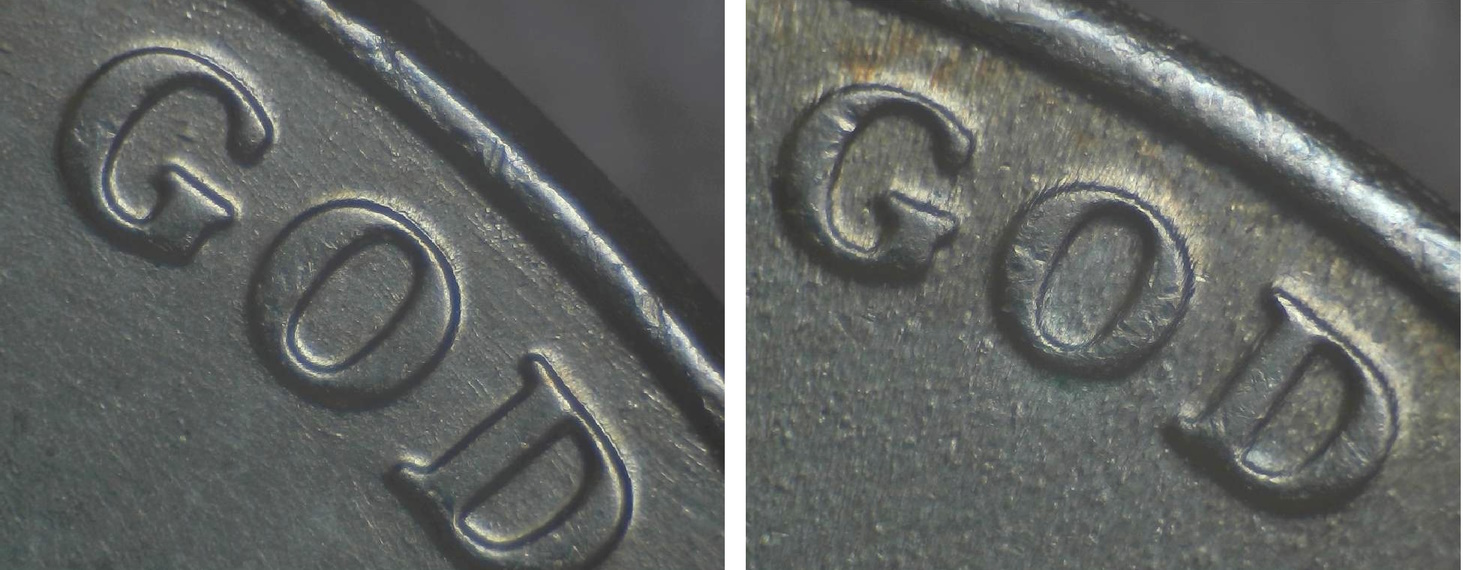
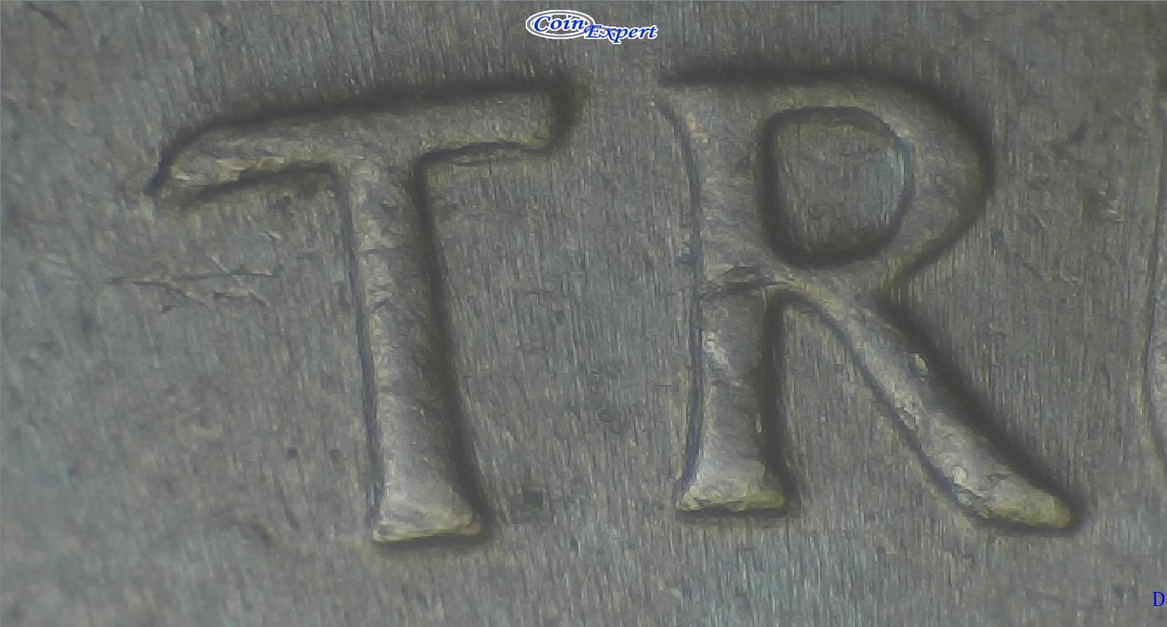
The 2007 P in previous reply is still a mystery  Doubled die on Obverse Doubled die on ObverseThis is what I found in lot. 2005 D WDDO-001 reference: https://www2.briansvarietycoins.com...gs/view/1697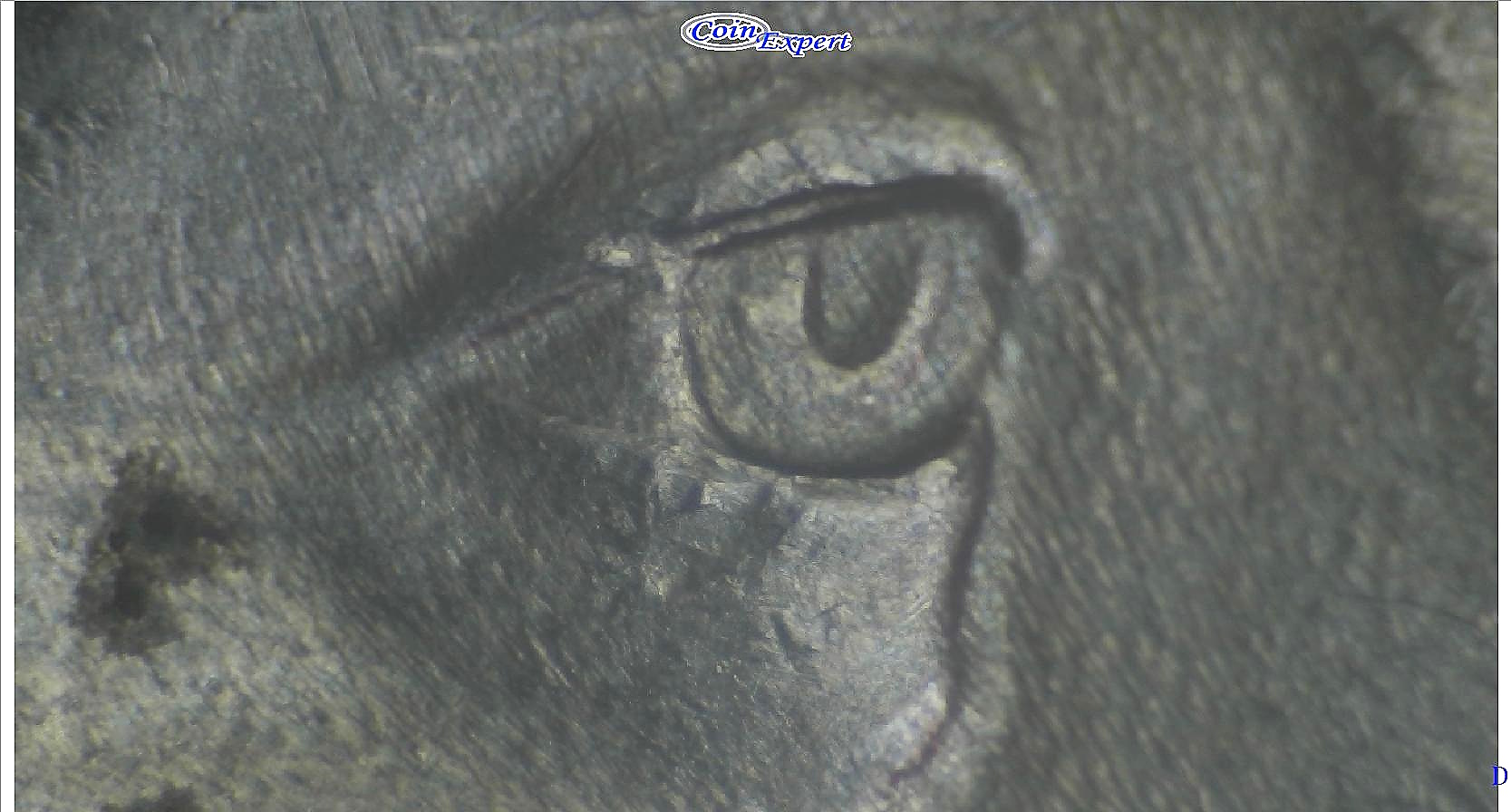 2008 P Doubling on left side of legend mostly visible on word "TRUST" 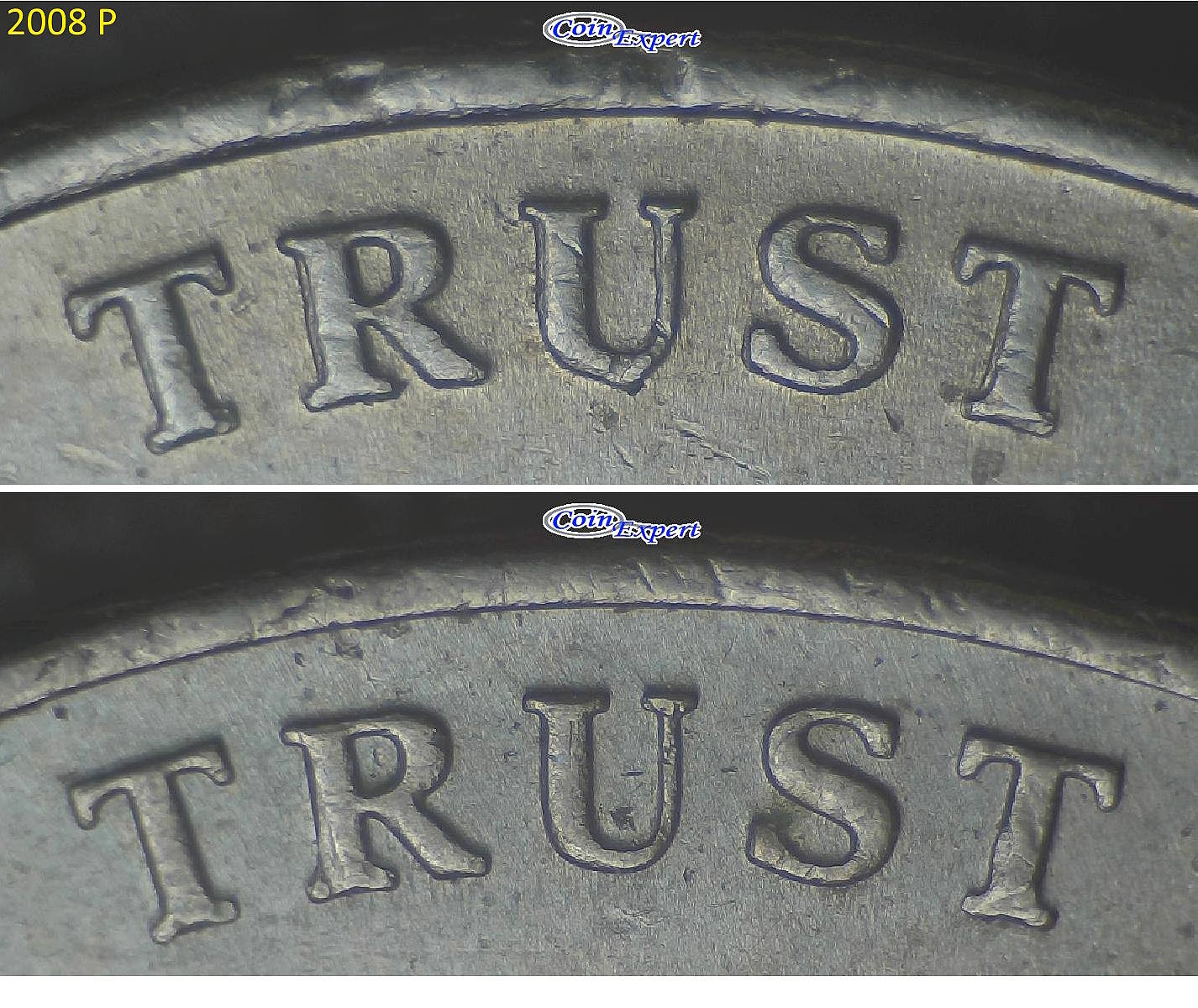 The rest is doubling on the word Liberty sometimes affecting digits in year. 2011 D Strong doubling on letters "ber" Die state = Silvio's catergory 1b+ 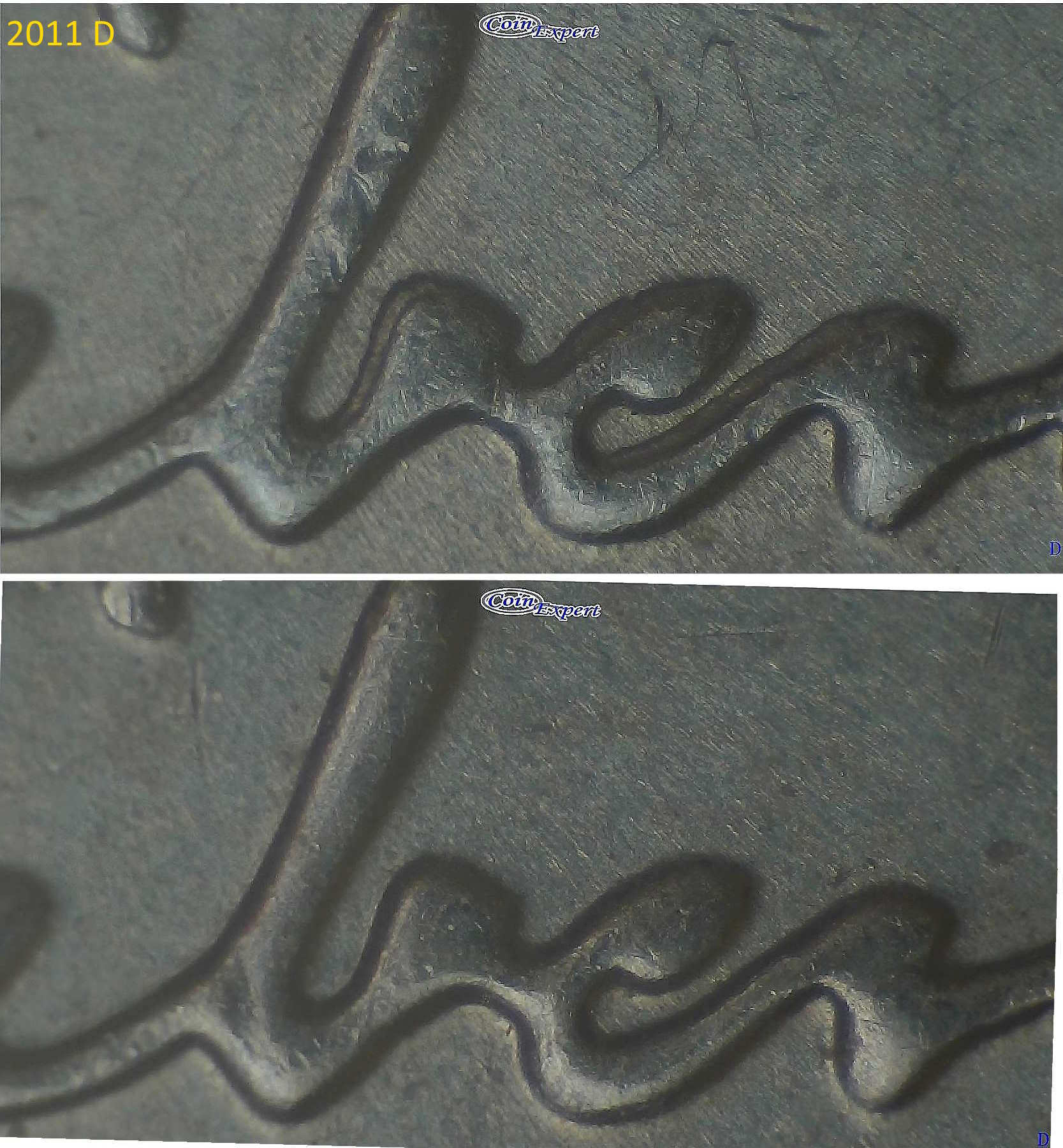 2007 D Small doubling on letters "ber" and digits "200" Die state = Silvio's catergory 1b 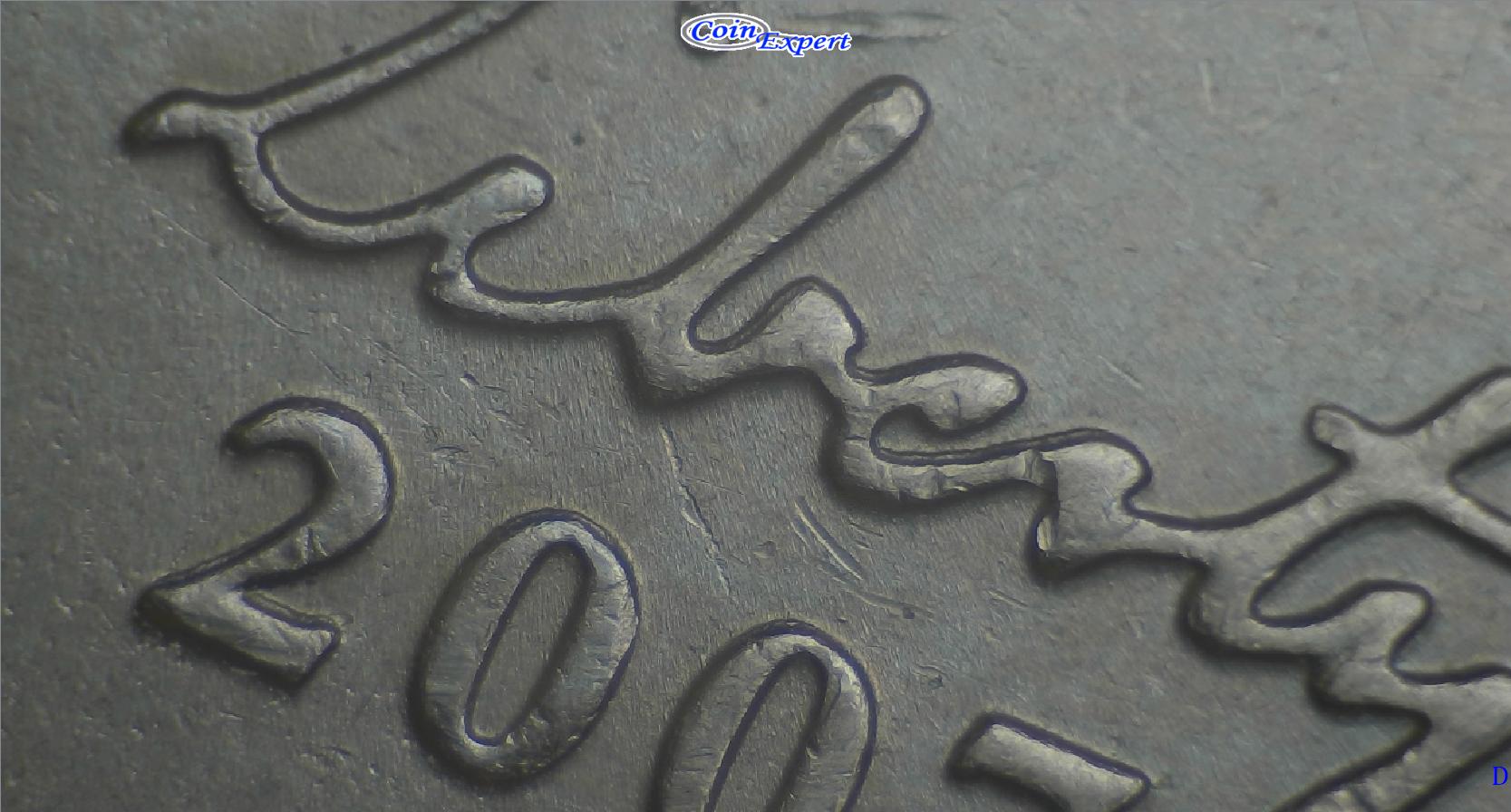 2012 D Small doubling on letters "ber" and digits "201" Die state = Silvio's catergory 1b+ 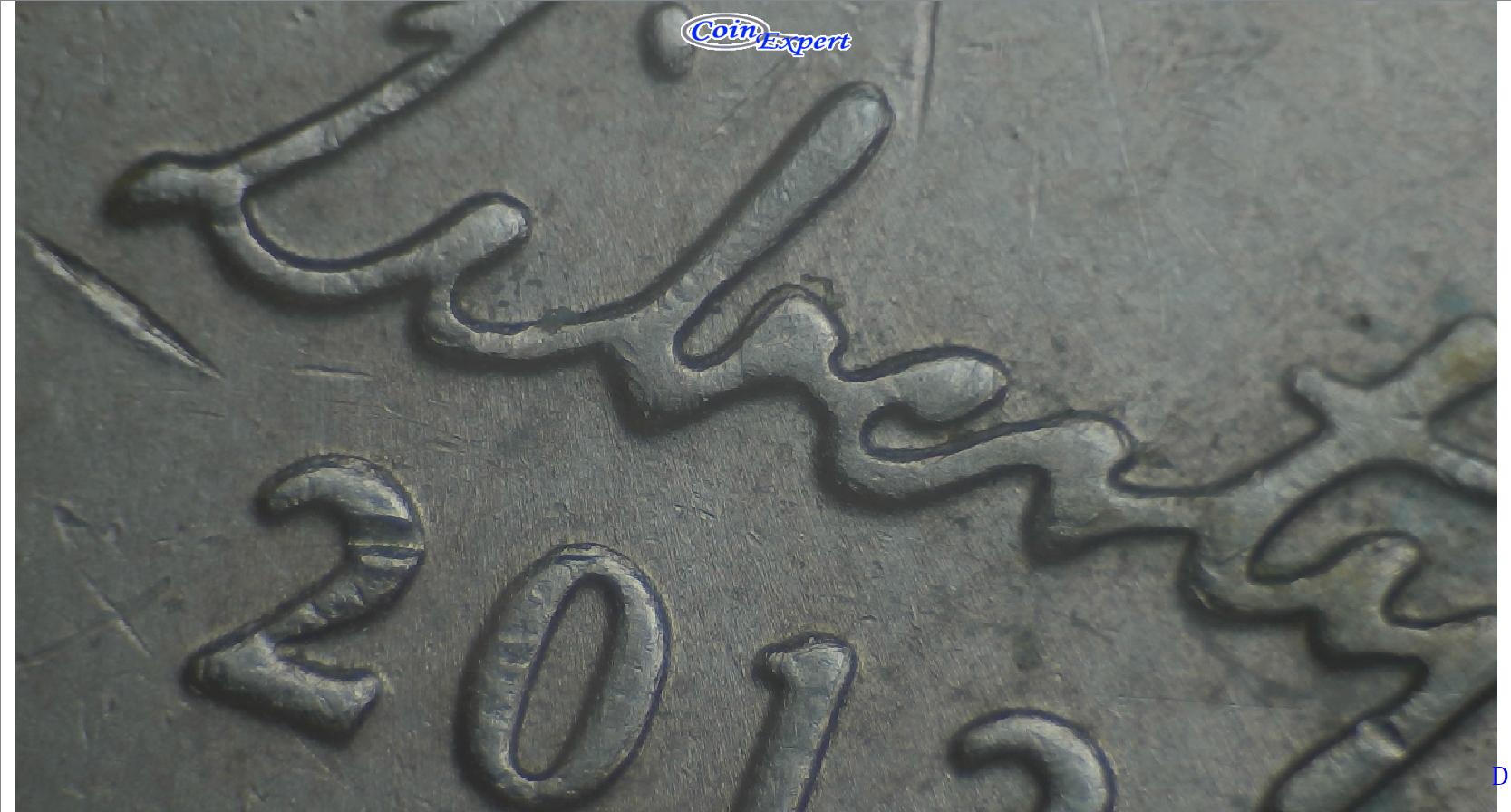 Edited by numidan
04/26/2023 08:00 am
|
|
Valued Member
Canada
219 Posts |
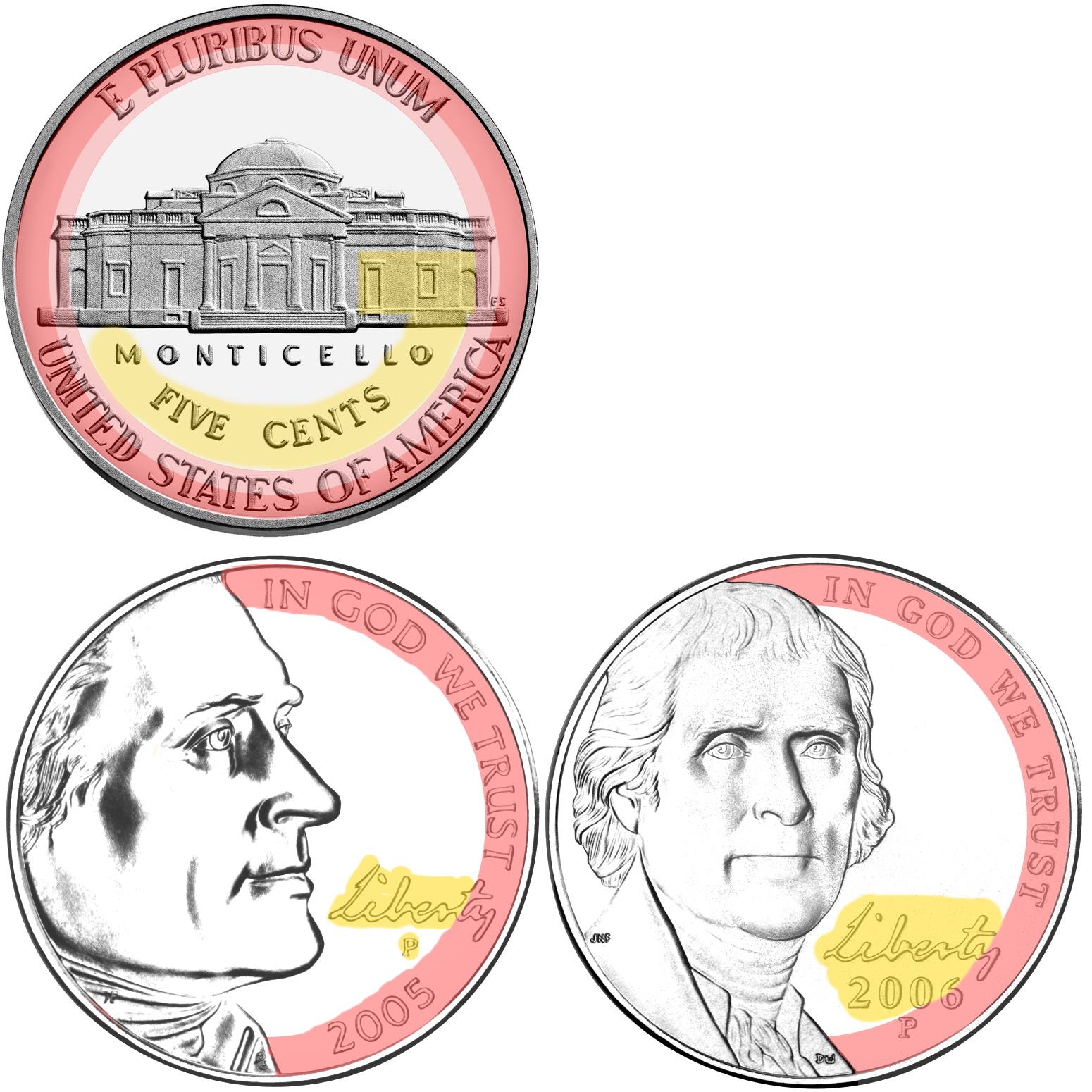
Die Clash on ReverseHere is what I have found. The most common die clash is the one on the side of building as shown in image below (Two areas I found highlighted in red). I have 11 coins with DC all having slightly different clash position. I only provided one picture of each DC type found. 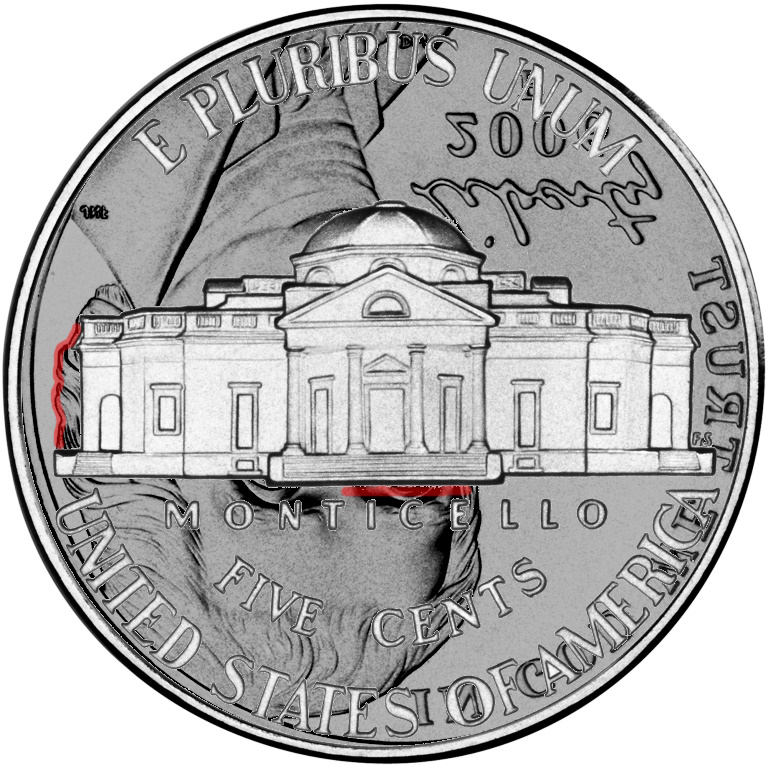 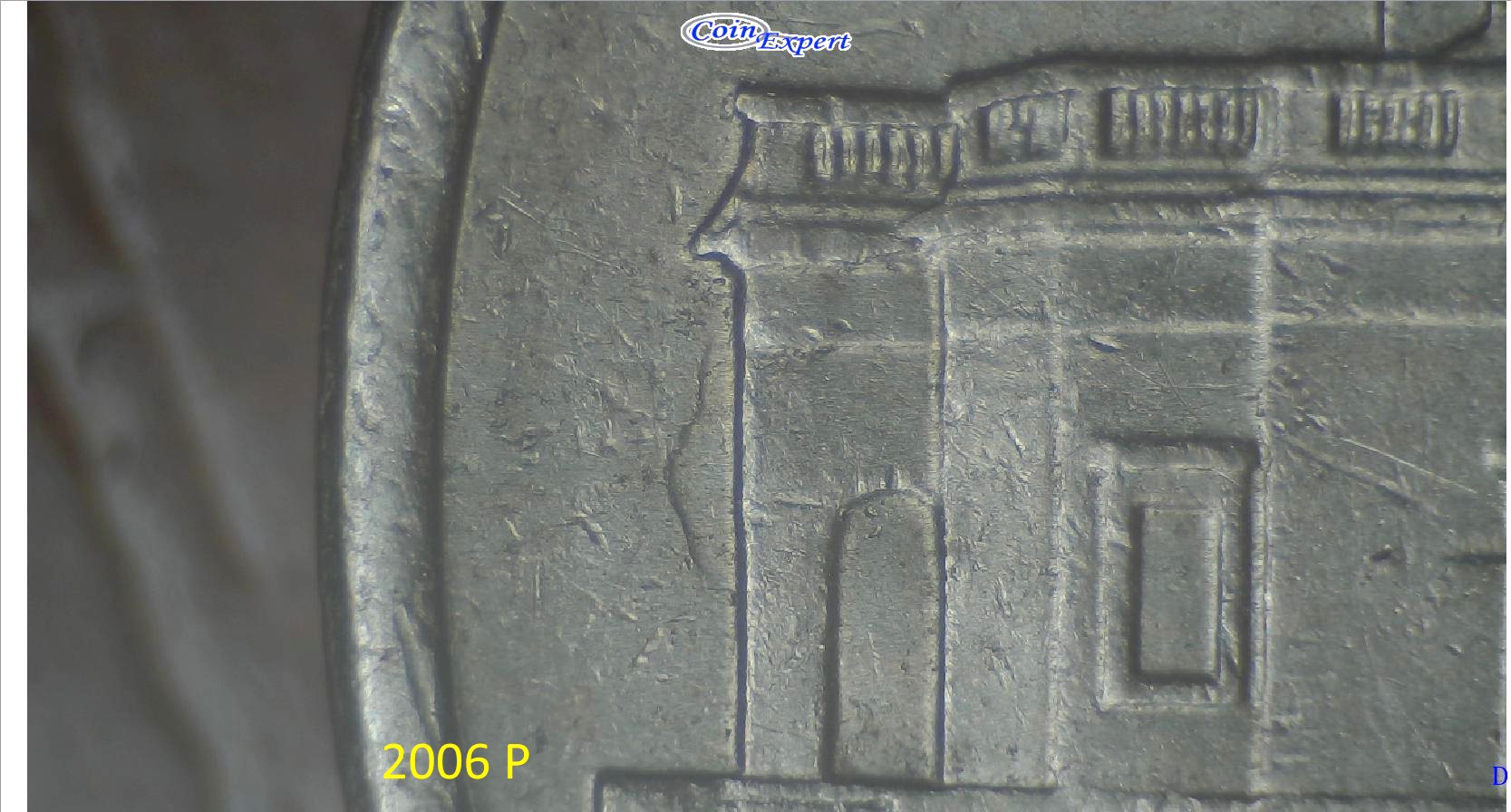 Note: Obverse picture was flipped for this montage. 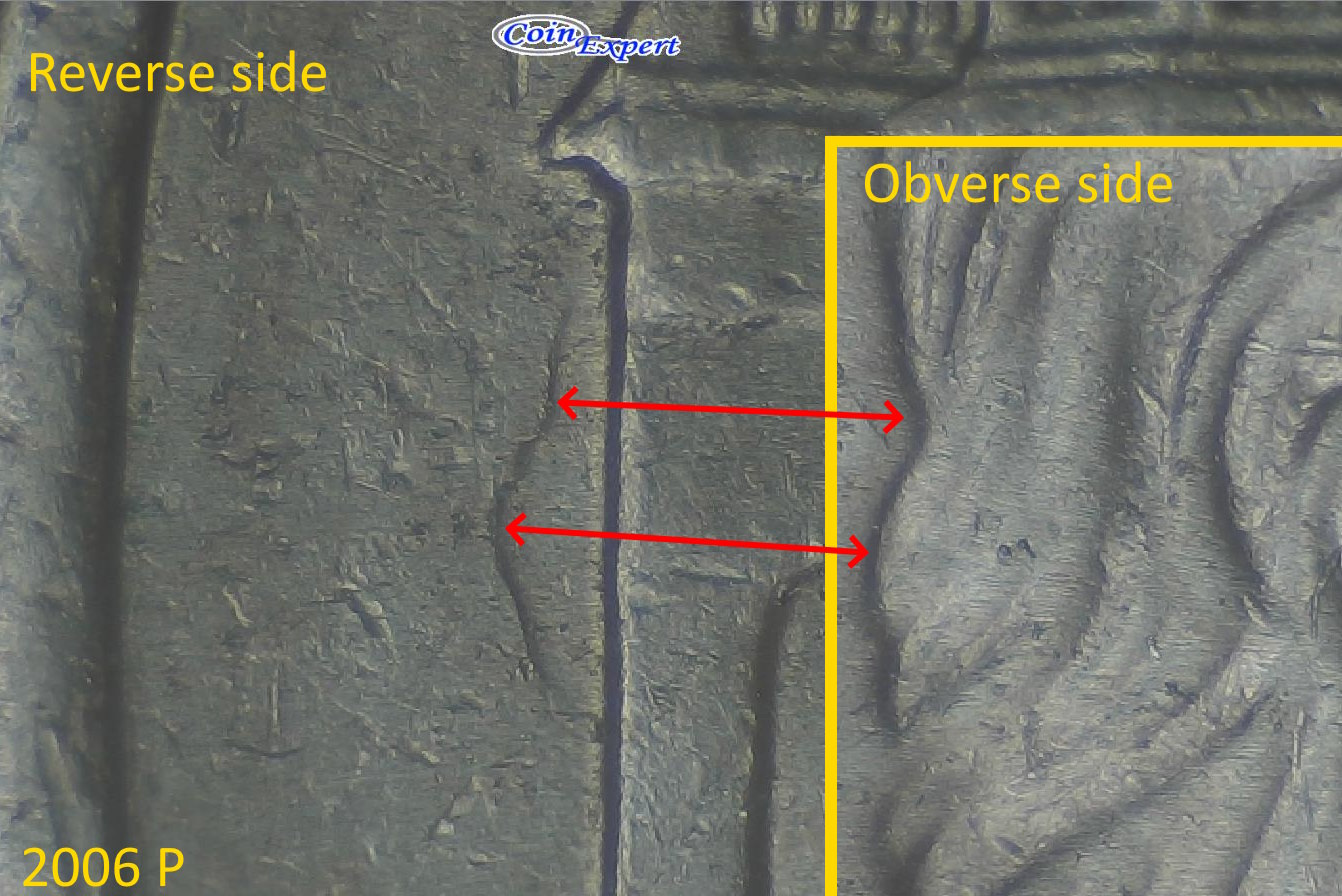 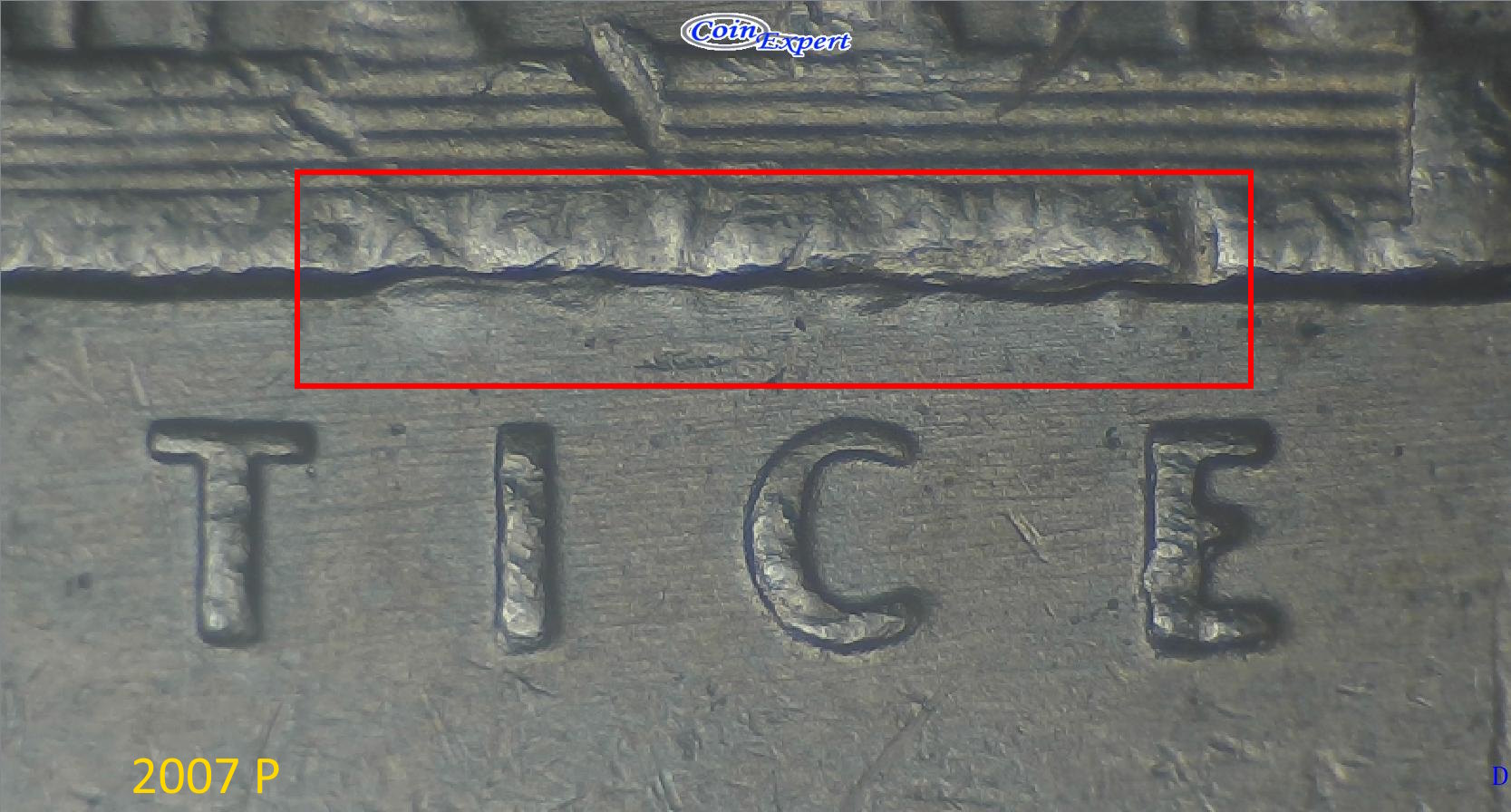
Edited by numidan
04/26/2023 8:27 pm
|
|
Valued Member
Canada
219 Posts |
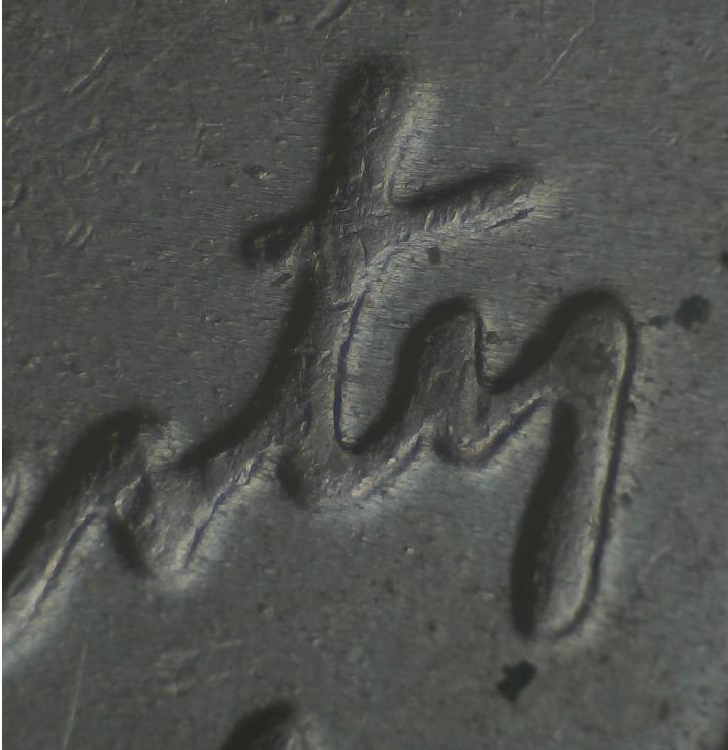
Incuse DoublingI never understood this type of deterioration but very easy to recognize. There is a concave depression outside the edges of the device. This type of error mostly seen on pennies, seldom seen on nickels. 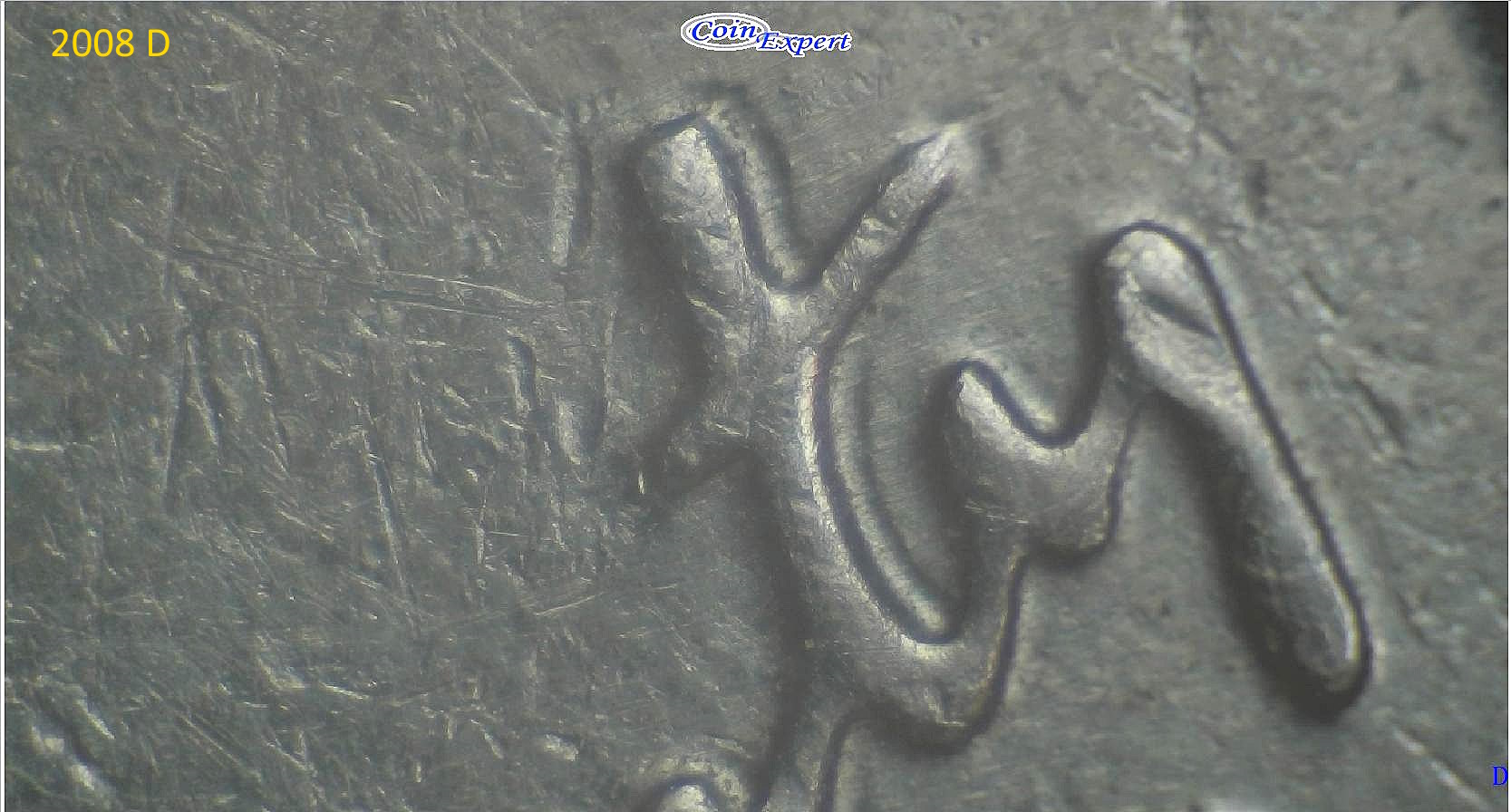 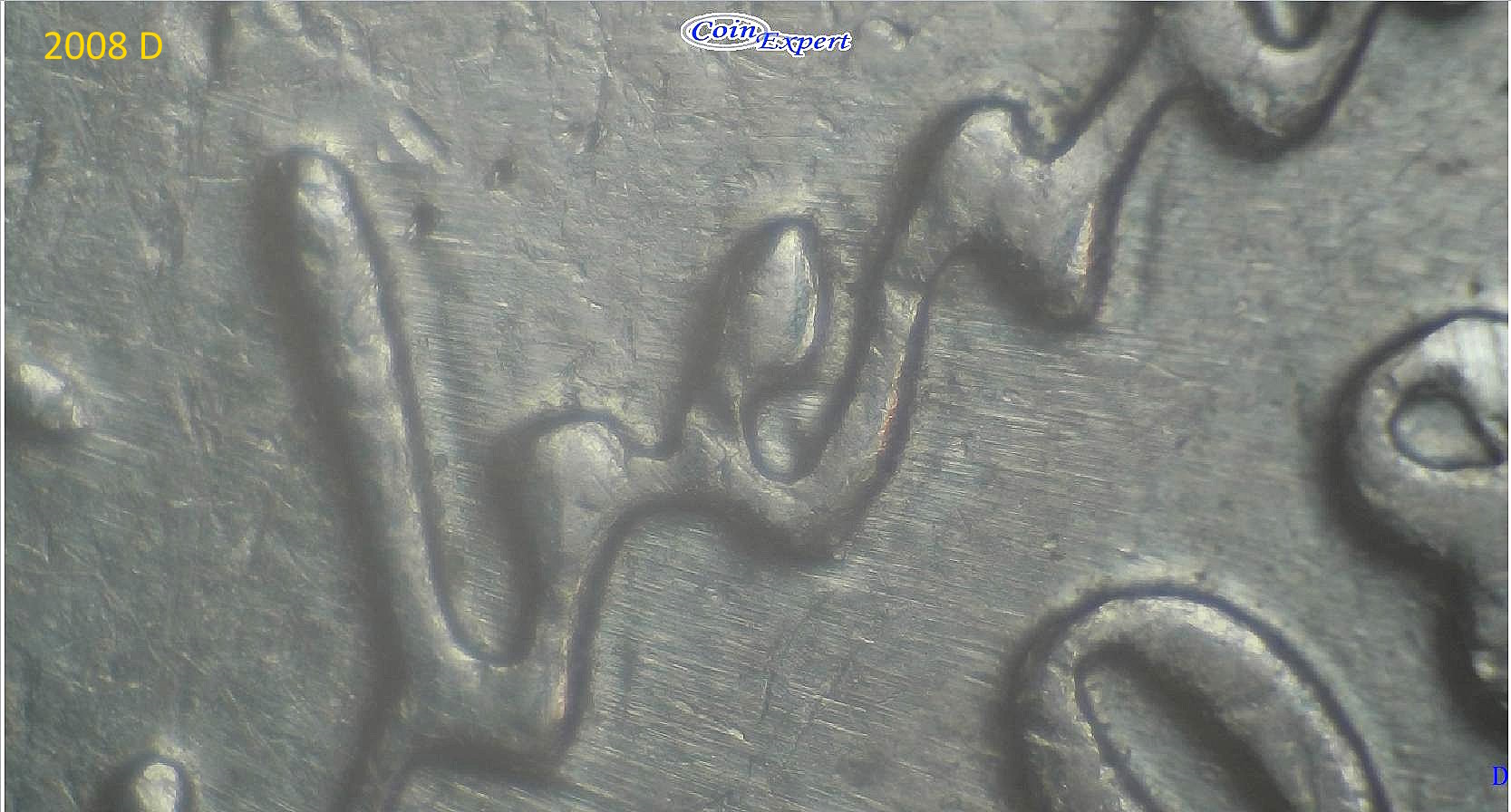 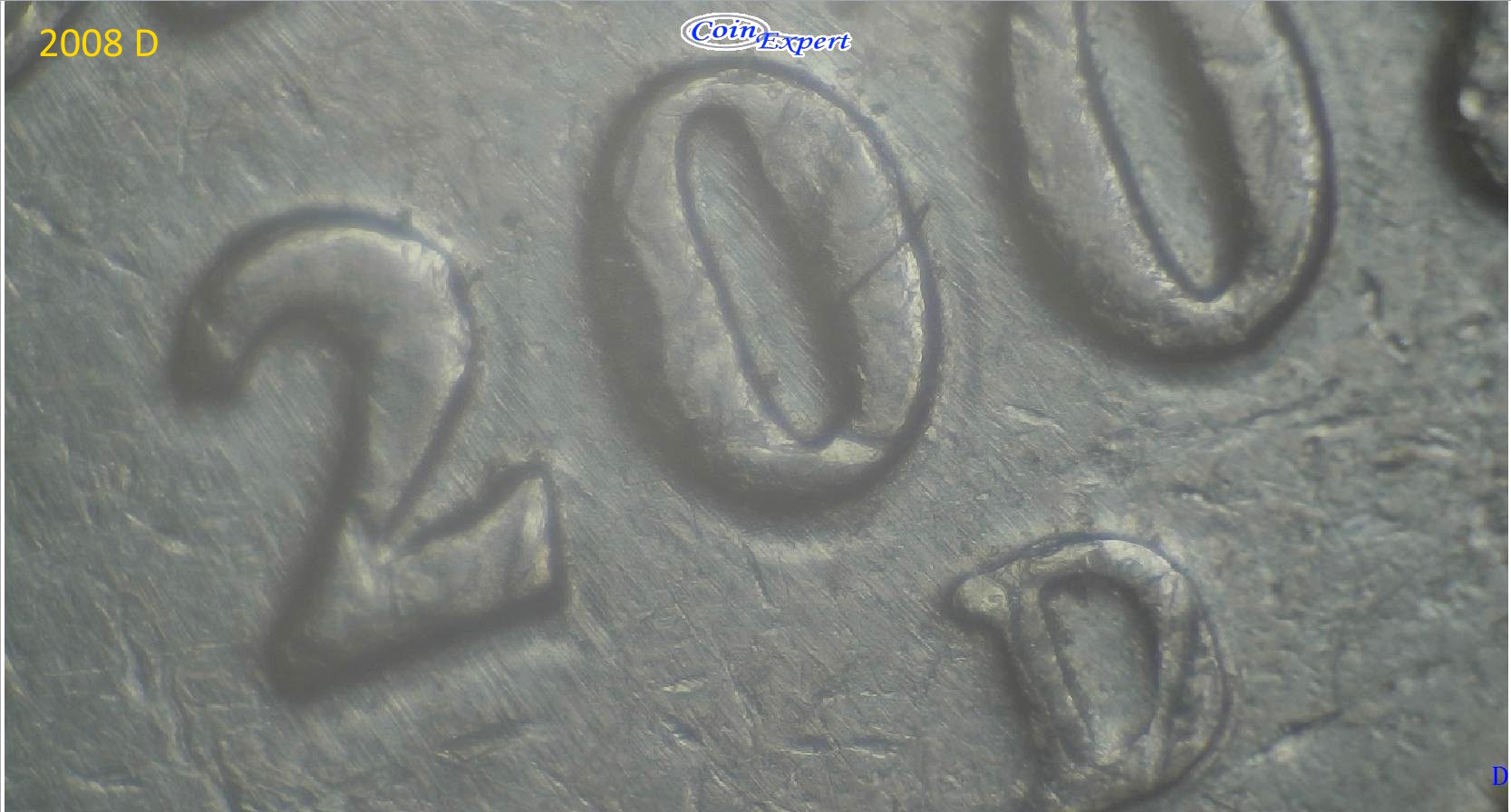 Trails TrailsVery noticeable lines extending from the corners of the letters "PLUR" 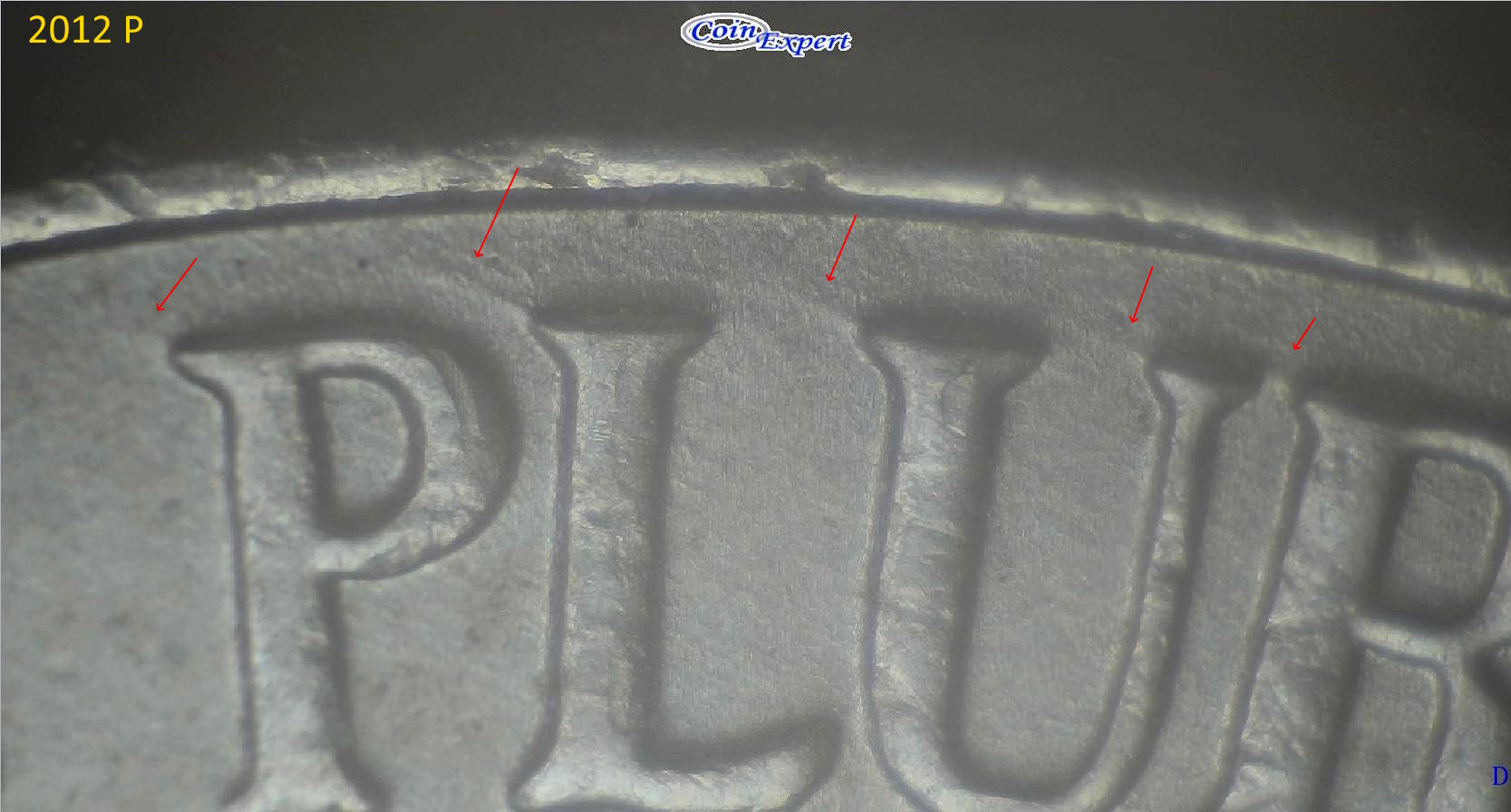 There are other observations I have made but the few nickels I have, prevents me to reach an acceptable conclusion (ie. lack of steps on building, is it a one year problem or can be observed on other years). Hope this was as informative as it has been for me. There are noticeable differences between errors found on Canadian nickels and those found on American nickels within this time frame. I have enjoyed this exercise. Until I get more US nickels (between 2005-now) to search through, I will try to perform the finite element analysis (this is new to me!) to get a better understanding of stresses on the working die. Here is a preview of the 3D modelling phase. 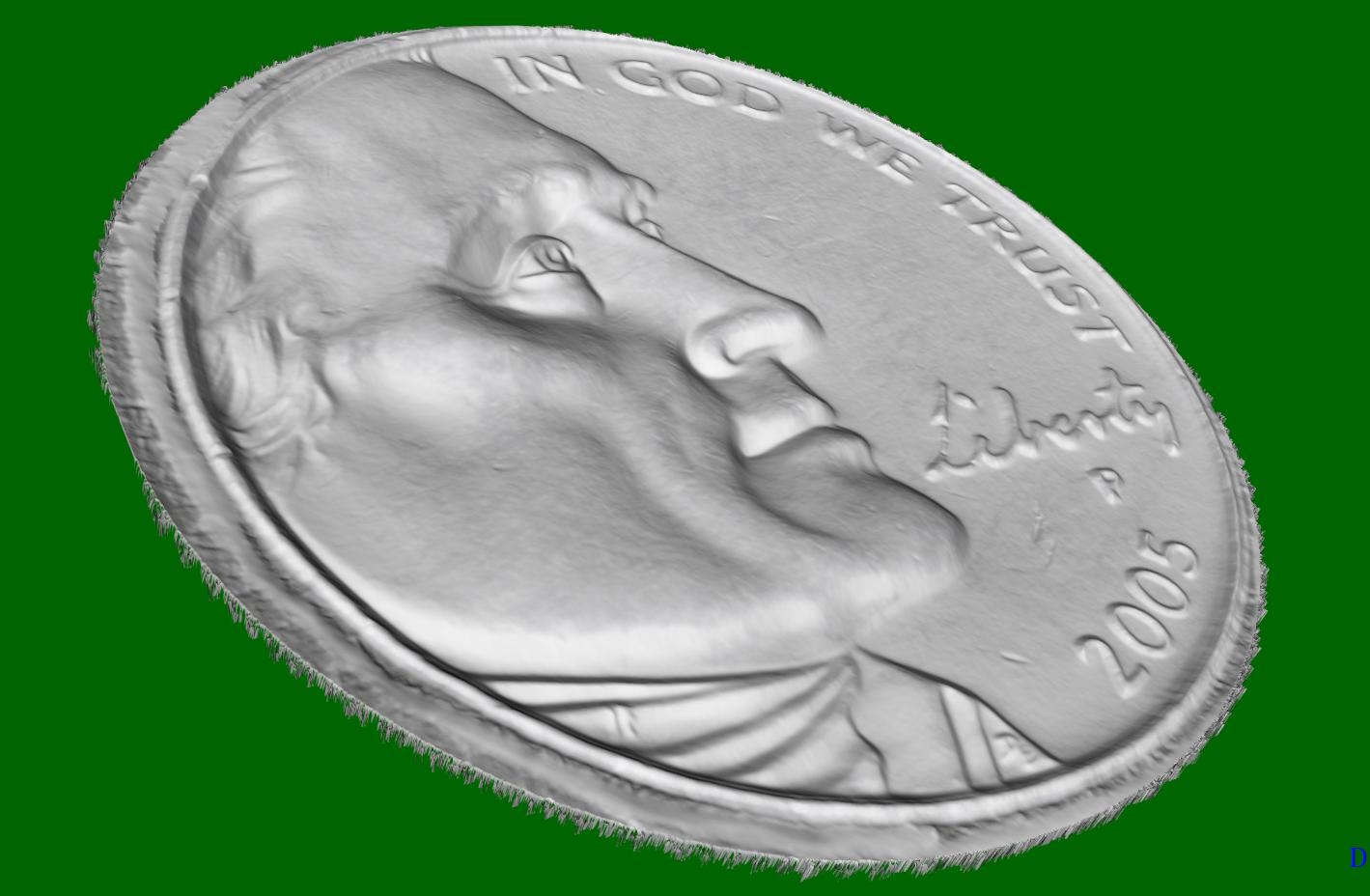
Edited by numidan
04/27/2023 09:17 am
|
|
Valued Member
Canada
219 Posts |
UpdateAfter 2 weeks into online course, the simulation process is harder than I thought! The student version of software is limited so I will not be able to simulate previous reply's 3D model :( In the course, it is mentioned that we can simplify a model to obtain meaningful results that can be extrapolated. So here is reduced version of Hub and Die colliding. You will notice the outer surface of die rod blank expanding during the hubbing process confirming what is seen in picture below. The simulation reports up to approximately 1.5mm diameter expansion. This might be the reason for some "play" between collar and Hub/Die. Sorry for small animation, CC will only allow 300k file size.  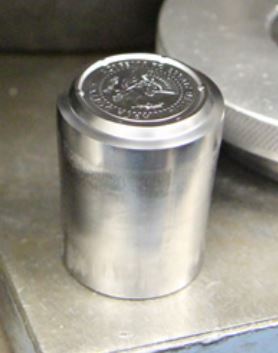 source: https://www.coinnews.net/2013/09/13...oduce-coins/Depending on the material used for the die rod blank, there could be some contraction as the piston is lifted. This depends on the elastic portion of stress-strain curve.
Edited by numidan
05/10/2023 3:15 pm
|
|
Pillar of the Community
Canada
6244 Posts |
@ numidan
I think your photo must be the working hub or perhaps the master Die.
In my office I show you the really working Die how it is and the points.
I just ask for my own clarification because produce Dies is Vertical squeeze and the coins struck is Horizontal. IMHO by the markers must be an Working Hub. Thanks.
|
|
Valued Member
Canada
219 Posts |
Quote:
I just ask for my own clarification No problem Silvio, always glad to clarify. Quote:
In my office I show you the really working Die how it is and the points. Thank you for showing me the working die as it was the first time I could see one in person! Below is a picture showing the different stages of producing a working die. What you showed me was the hardened ("working") die ground as indicated by the blue arrow. I was working on the struck ("working") die as indicated by the red arrow. What could have been confusing is that I have not included the shoulder on the working die blank in this simulation but in the new simulation I am attempting, it is there as shown in image below. 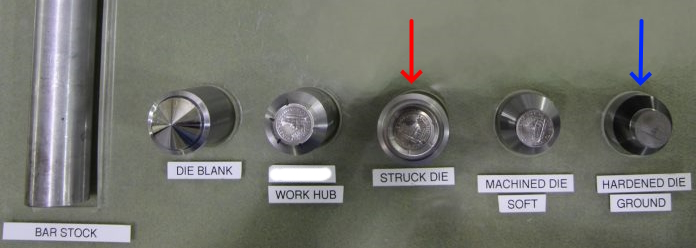 source: https://www.coinnews.net/2013/09/13...oduce-coins/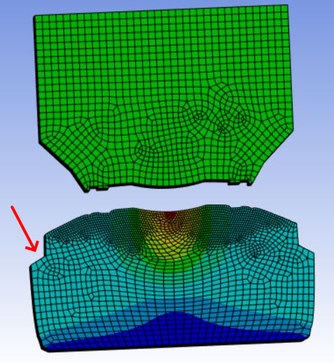 |
|
Valued Member
Canada
219 Posts |
Here is an interesting find for 2005 D Ocean. I think that a piece of metal was stuck between the letters E and R on the hub producing the die as shown in the top picture. The force during the hubbing process made a mark of the outline of the piece of metal on the hub. When the piece of metal fell out, the following die(s) produced shows the mark where the piece of metal was as shown in the bottom picture. 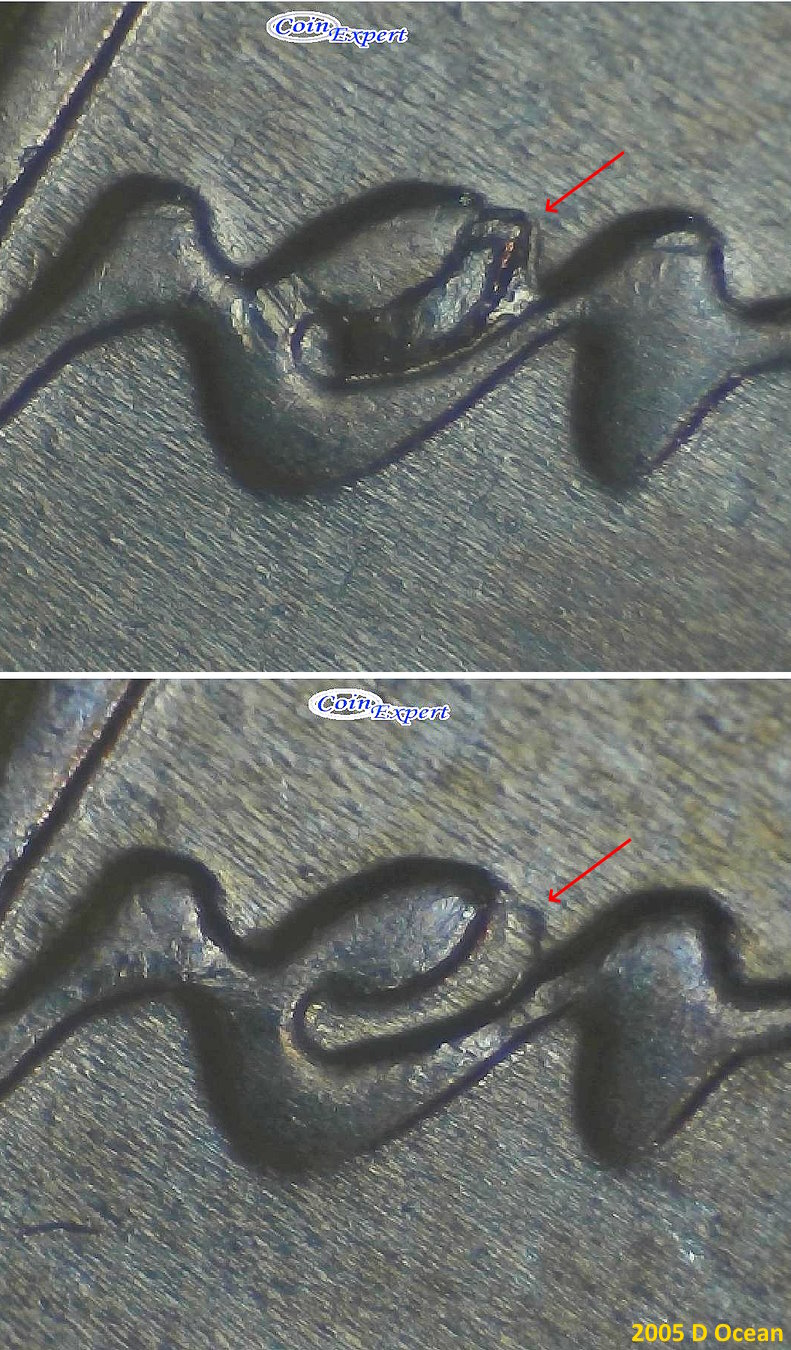 |
|
Valued Member
Canada
219 Posts |
At first I thought it was a new DDR but closer inspection it is a die clash. I am surprised at the amount of die clashes I find in the new rolls I purchased recently for the study! In the montage below, I have indicated with red arrows and numbers the marks left by Jefferson's nose as it is hard to get a good picture. 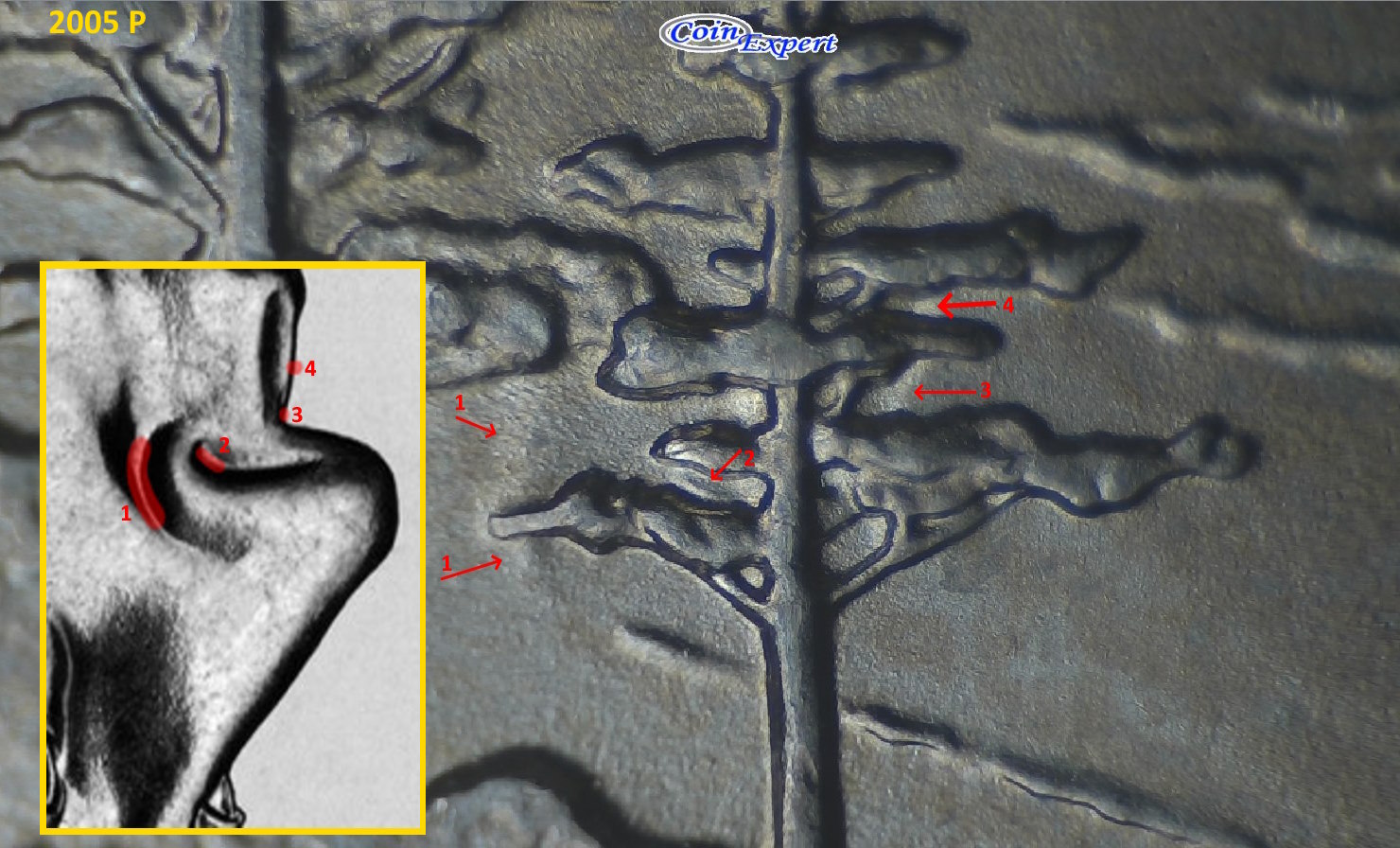 |
|
Page 2 of 2
|
Replies: 24 / Views: 2,371 |
Page 2 of 2
|





 First Page

 Posted 04/23/2023 2:31 pm