| Author |
 Replies: 39 / Views: 9,615 Replies: 39 / Views: 9,615 |
|
Pillar of the Community
Canada
743 Posts |
Greetings coin experts! A few months ago I found a quarter that seemed at little off. It felt a little thicker that other quarters and so I put it aside. I thought I would post a couple pictures it looks like a regular 2000 family quarter but is about as think as a nickel and what I found out today is that it is non-magnetic! First two pictures are the coin front and back. others are one compared to a quarter and other compared to a nickel. I tried weighing the thing but my scale is not that precise. Has anyone an knowledge of the thickness of a quarter and also why it would be non-magnetic? 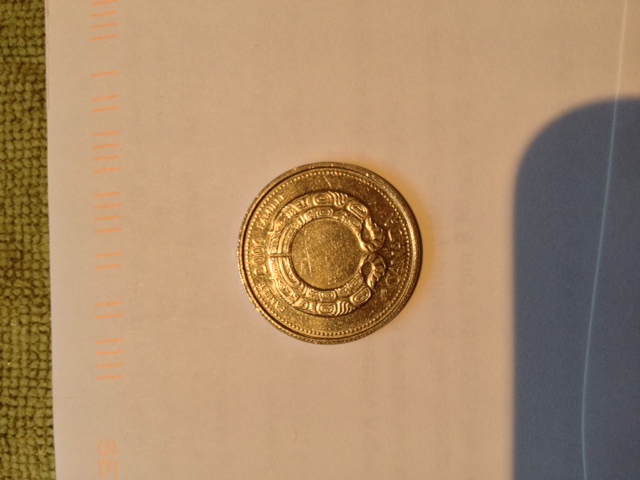 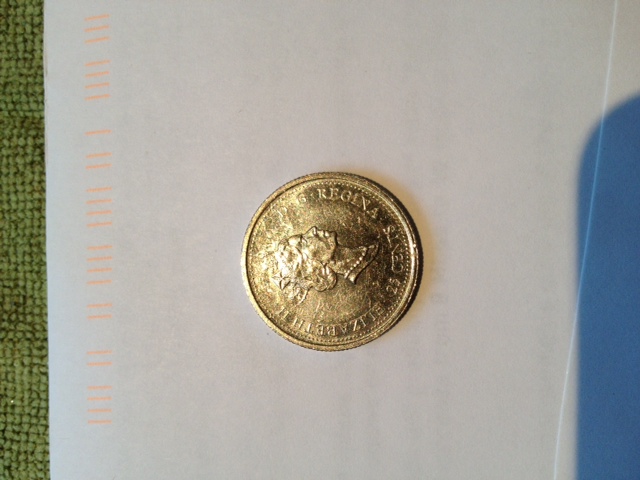 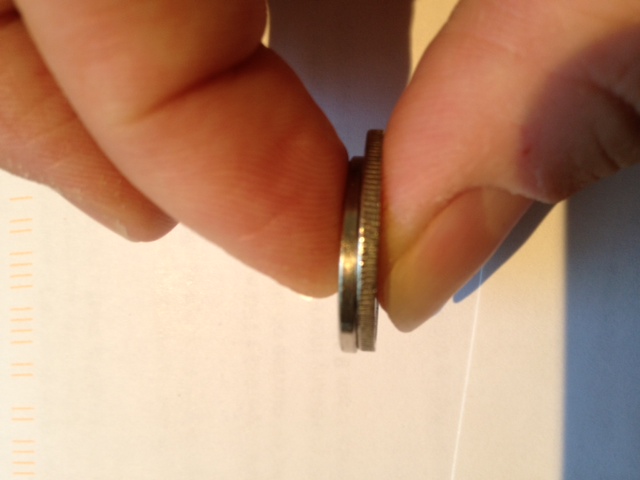 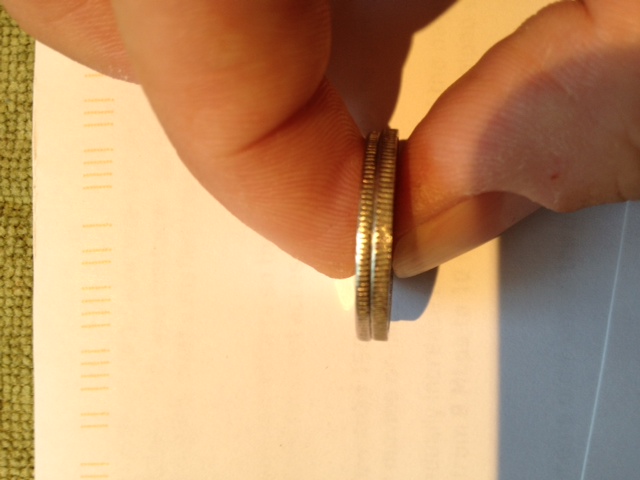 |
|
|
|
Pillar of the Community
Canada
5342 Posts |
get a real accurate scale and weigh it, looks like a nice find.
|
|
Pillar of the Community
 Canada
743 Posts |
Update: I saw random link to icollector and it had some sales in 2006 for about 3 similar quarters but not sure about the thinkness issue.
|
|
Pillar of the Community
Canada
1581 Posts |
Maybe it is struck on a foreign target cupro-nickel planchette.
|
|
Pillar of the Community
Canada
743 Posts |
The nuphilex show is coming up in November in Montreal so maybe I will take it in and ask around. I was hoping someone here either had one or has seen one before.
I doubt it has serious value but if its a mule then could be an interesting find. Maybe I have found the first "only one know" for this variety.
I wish....lol
|
|
Pillar of the Community
Canada
695 Posts |
These quarters were struck in silver for collector sets as well as the circulation Nickel quarters. The may have once been part of a silver set, and made its way into the wild.
|
|
Pillar of the Community
Canada
743 Posts |
I have silver coins and this does not have the same feel or look. My guess is a foreign planchet but will need to wait until an expert looks at it.
|
|
Bedrock of the Community
United States
12437 Posts |
Without an accurate weight, most everything else is speculation. I will say this though- higher-than-normal strike pressure can affect the thickness of a coin at the rim, making it appear to be thicker. To see evidence of the affect of striking pressure, compare the edges of a business strike and a proof coin. The proof(struck multiple times at high pressure) will be thicker than a business strike at the rim even though the planchets themselves were identical prior to striking.
|
|
Pillar of the Community
Canada
743 Posts |
Think I will wait until the show in Montreal in a few weeks and Maybe someone like SPP will be there with his expertise!
|
|
Pillar of the Community
Canada
695 Posts |
Fromwhat I've read, SPP has access to a machine that can tell you exactly what type of metal that coin is.
|
|
Pillar of the Community
Canada
743 Posts |
now that would be nice! I think finding that the coin is not silver would go a long way. I am still holding out to have that "only one known" coin in the charlton!
|
|
Valued Member
Canada
491 Posts |
Why not do a drop test? If its silver it will have a higher pitch that the standard steel planchet.
|
|
Rest in Peace
1988 Posts |
Hi JeyRey2000...RogerD is correct..You can download AUDACITY and as I posted a while ago tell the difference in same year coins by capturing the coin frequencies.
|
|
Valued Member
Canada
306 Posts |
I don't think the sound test for silver would work on a quarter that is thicker than normal. Cool find by the way!
|
|
Pillar of the Community
Canada
5342 Posts |
a 2000 scale from a hobby shop will go a long way in determinating if this coin was struck on a wrong planchet.
|
|
Pillar of the Community
Canada
743 Posts |
I will work on some option but I think the best is to wait until the Montreal Show becuase I am not an expert.
|
| |
Replies: 39 / Views: 9,615 |







 Posted 09/25/2012 4:56 pm





