| Author |
 Replies: 46 / Views: 8,574 Replies: 46 / Views: 8,574 |
|
|
|
Valued Member
 Canada
444 Posts |
Thank you agcoinau, that's one of the big questions answered. Would a specific gravity test be accurate for testing composition? I was informed that a local jewelry store has a machine they use to buy gold and silver. I'm not sure if it's an invasive test. It will have to wait, I'm not going to the mall to find out until Christmas is over.
|
|
Pillar of the Community
Canada
2526 Posts |
Found you something from the Journal. 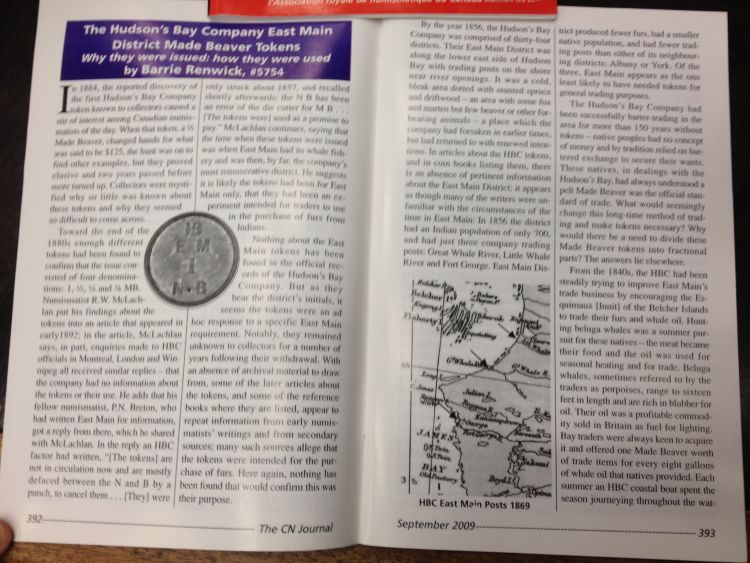 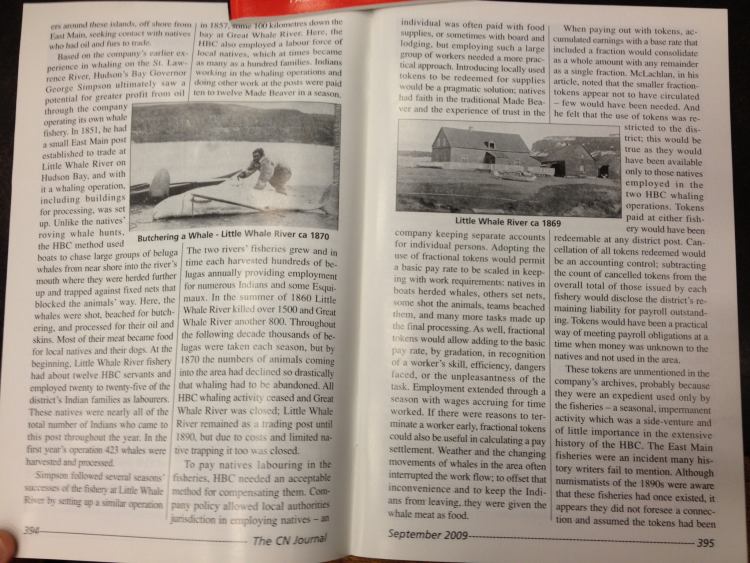 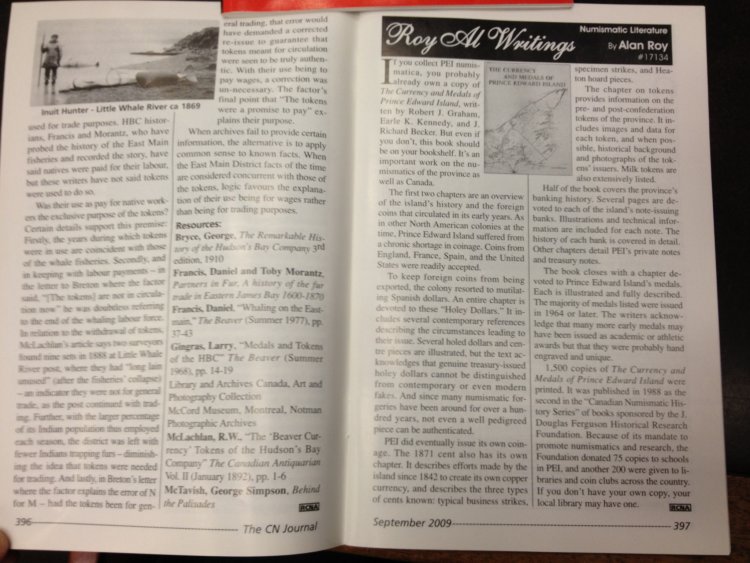 Sorry you have to squint. |
|
Pillar of the Community
Canada
3049 Posts |
Slur: you could also give us the journal date .. and look it up in the archives ourselves....
Ohhh never mind... I squinted and saw sept 2009... now I wanna read that article...
With respect to the specific gravity test... I think this token is supposed to be bronze so you I think you would use the bronze Sn (tin) figures ... to verify composition.
|
|
Moderator
 Canada
10471 Posts |
Quote:
Would a specific gravity test be accurate for testing composition? An XRF analysis would do the trick. Fire me a PM, and I would be happy to test your coin in my lab at work - no charge. "Discovery follows discovery, each both raising and answering questions, each ending a long search, and each providing the new instruments for a new search." -- J. Robert OppenheimerContent of this post is licensed under a Creative Commons Attribution-NonCommercial 3.0 Unported License. See: http://creativecommons.org/licenses...0/deed.en_USMy eBay store
|
|
Pillar of the Community
Canada
3049 Posts |
 An XRF would work very well ... SPP ... the XRF you have.. is that for geological research? |
|
Moderator
Canada
10471 Posts |
Yup - the machine I have mostly does analysis in soils. But, I was lucky enough that it also came with the "alloy" software package.  "Discovery follows discovery, each both raising and answering questions, each ending a long search, and each providing the new instruments for a new search." -- J. Robert OppenheimerContent of this post is licensed under a Creative Commons Attribution-NonCommercial 3.0 Unported License. See: http://creativecommons.org/licenses...0/deed.en_USMy eBay store
|
|
Valued Member
Canada
444 Posts |
I had the token tested at Ben Moss today. The machine they use to buy jewelry tested the composition at...
93.4 % silver
6.6 % copper
What would be the forums speculation on the token with these numbers?
Thank you in advance for any help.
|
|
New Member
Canada
10 Posts |
Based on 30+ years of dealing with Canadian Colonial tokens, I will simply toss in my Two Cents worth here. The Hudson Bay Made Beaver tokens were all issued in brass. The punch mark was to indicate tokens that were shipped to Moose Factory as previously stated. The numbers of punched and un-punched tokens are approximately equal. There were no MB tokens issued by HBC with holes, only punch marks which did not make a hole. In all my years, if I have seen one previously with a hole in it, I have forgotten about it long ago. The hole was put in this token after being issued. This token appears to have had a 'silver wash' or dipped in mercury (for whatever reason), and holed, likely to be carried on a string, since not all traders of beaver pelts had pants with pockets, or carried any form of purse. Because this token has a hole in that specific location, it is impossible to tell if it was intended for the East Main or the Moose Factory location. I would classify this now as simply a filler for someone collecting HBC tokens. It is damaged by the hole and the 'wash' and would likely be valued only in the $50 to $100 range. |
|
Valued Member
Canada
444 Posts |
Based on 30+ years of dealing with Canadian Colonial tokens, I will simply toss in my Two Cents worth here. The Hudson Bay Made Beaver tokens were all issued in brass. The punch mark was to indicate tokens that were shipped to Moose Factory as previously stated. The numbers of punched and un-punched tokens are approximately equal. There were no MB tokens issued by HBC with holes, only punch marks which did not make a hole. In all my years, if I have seen one previously with a hole in it, I have forgotten about it long ago. The hole was put in this token after being issued. This token appears to have had a 'silver wash' or dipped in mercury (for whatever reason), and holed, likely to be carried on a string, since not all traders of beaver pelts had pants with pockets, or carried any form of purse. Because this token has a hole in that specific location, it is impossible to tell if it was intended for the East Main or the Moose Factory location. I would classify this now as simply a filler for someone collecting HBC tokens. It is damaged by the hole and the 'wash' and would likely be valued only in the $50 to $100 range. The token was tested to be silver throughout. Edited by Coin Scavenger
01/26/2015 01:46 am
|
|
Pillar of the Community
United States
4428 Posts |
Perhaps, the silver one is a restrike from the 1890's? I've read that an English coin dealer was engaged in making restrikes of another Canadian issue in that era. The holes might then have been made to distinguish the restrikes. There certainly would have been demand for restrikes of these rare tokens by early collectors.
|
|
Valued Member
Canada
444 Posts |
I was also considering a restrike or copy made for jewelry but then why the hole?
|
|
Moderator
Canada
10471 Posts |
Quote:
The token was tested to be silver throughout. How did they test it? What instrument was used? "Discovery follows discovery, each both raising and answering questions, each ending a long search, and each providing the new instruments for a new search." -- J. Robert OppenheimerContent of this post is licensed under a Creative Commons Attribution-NonCommercial 3.0 Unported License. See: http://creativecommons.org/licenses...0/deed.en_USMy eBay store
|
|
Valued Member
Canada
444 Posts |
Not sure, I was told to get it tested by a local coin shop, that the equipment would test it without marking it and be able to check the complete composition. The person that scanned it didn't want to test it and was not very helpful other than the scan that was done. All I know from the experience is that the machine is very expensive and that they don't want everyone comming in and testing things.
|
|
Pillar of the Community
United States
4428 Posts |
Those machines cost around $15,000, I'm told.
|
|
Moderator
Canada
10471 Posts |
You do realize that unless that jewelry store has an industrial (research) strength X-ray tube (costing 6 figures), that those XRF instruments only give you the composition of the surface and near surface (a few microns) of any coin. If your coin was brass, and then heavily silver plated, your would get a Ag-Cu result similar to what you got, I would imagine you even got traces of zinc in that test as well. Have you thought of taking a small needle to the rim or edge of the coin and conducting a discrete scratch test?
Carpman98 is one of the best dealers and experts in the country (Canada) when it comes to pre-confederate tokens, aside from our own colonialtokens (Doug). I asked Carpman to participate in this thread, I would not take his words lightly...
"Discovery follows discovery, each both raising and answering questions, each ending a long search, and each providing the new instruments for a new search." -- J. Robert OppenheimerContent of this post is licensed under a Creative Commons Attribution-NonCommercial 3.0 Unported License. See: http://creativecommons.org/licenses...0/deed.en_USMy eBay store
|
| |
Replies: 46 / Views: 8,574 |






 First Page
 Previous Page


 Posted 01/19/2015 11:50 pm





