| Author |
 Replies: 12 / Views: 2,496 Replies: 12 / Views: 2,496 |
|
|
Pillar of the Community
United States
1962 Posts |
In doing some searching today, came across this post on CoinForgeryDiscussionList: "Around the turn of the 20th century, many 8 Real coins were made for use in celebrations(the equivalent today of beer tickets) - reproduction coins made of silver in almost the exact weight and resemblance as real 8 real coins. The only way to identify them is by looking at the markings around the edge. If there are either no markings, or the markings are small rectangle/circle patterns, the coin is 100 years old versus 200-250 years old. This is particularly true of the Carolus coins 1790-1805. In the case of the reproduced 1797 coin, the last 7 is different than the first... has a rounded tip. These reproductions sell on e-bay Brazil and other south american sites for 10-25$..." I believe this is related to the piece shown below which I came across a while back... Mexico "1821 8R", 26.9g. It was noted that this was a restrike from ca. 1900, and that these restrikes were commonly given as birthday presents around that time. Not at all a bad copy per a quick glance... Anyone (swamperbob in particular) know anything else about these? Are these in any way connected to your "Boston" bullion restrikes? 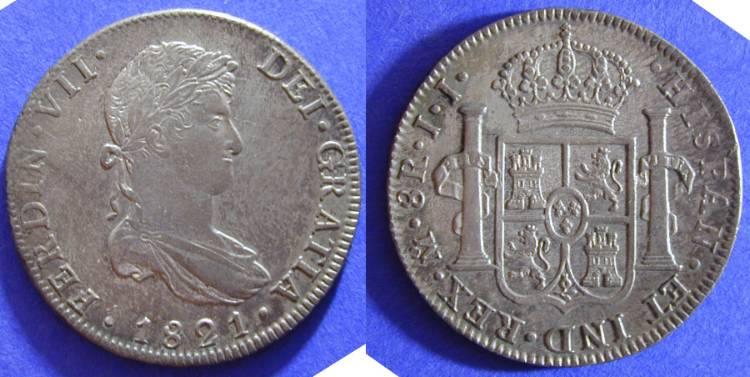 |
|
|
|
Pillar of the Community
United States
1801 Posts |
Without being able to view the edge, what makes you feel this coin is not original? It looks fine and nothing odd jumps out at me. Weight is within tolerance, all the design features are correct. And what did the article you quoted say the edge markings should be if not the rectangle/circle pattern. And did the article state any source material for its assertions?
|
|
Pillar of the Community
 United States
1962 Posts |
The message board I referenced first was the only info on the edge: "there are either no markings, or the markings are small rectangle/circle patterns".
All I have on the coin I showed is the picture and seller's description which I summarized - 26.9g, restrike from ca. 1900, commonly given as birthday presents... For the seller to advertise it as such, at a price below an original, he must have had some idea what he was talking about. Again, it seems like this coin might be an example of the restrikes that message board post is describing.
Either way, this restrike thing was mentioned in two different places, so there must be something to it.
|
|
Rest in Peace
United States
9104 Posts |
An interesting example of how a fake, given enuf time, becomes collectable in its own right.
|
|
Pillar of the Community
United States
1801 Posts |
What makes everyone think this is a fake? Does it have a plain edge? Is it not made of silver? Can whoever has the coin post pictures of the edge? As for "mentioned on 2 sites" so there must be something to it...without source material it means nothing. I have collected these for 30 plus years, never heard of this. The dealers I communicate with have never brought it up in the hundreds of conversations we have had about 8 reales. Yes there are many many many many (was that enought "many") counterfeits out there especially of the Carlos IIII and Ferdinand VII but most can be put into 3 distinct groups. Contemporary counterfeits meant to circulate as real coins "made during the same time period as the originals", numismatic fakes meant to fool the coin collectors, and what Swamperbob calls the "bullion or Boston counterfeits which were manufactured for a profit to meet a demand for the original coins that exceeded the supply of originals. Could you please post a link to the fogery website you quoted? I want to try and track down the author's source material if any exists. Do yuo still have info on the seller of the coin pictured, I would like to try and contact him/her as well.What was the original ask price, date and final sales price?
|
|
Pillar of the Community
United States
1962 Posts |
Logic dictates that if two separate entities are relaying some version of the same tale, then by necessity - whether it's originally just one person's fabrication, OR in fact reality - that tale must have a point of origin and must have circulated to at least SOME extent. That isn't debatable, regardless of whether it was ever written down somewhere. That said, any printed info on this would of course be good to see... I'm simply curious whether A) someone was actually ALSO aware of said tale, and possibly B) whether someone could actually confirm or debunk or confirm it.
Here was the message board post... it appears the poster was just making a isolated point tangently related to a discussion about some fishiness in ancients, and there was no further discussion of it. I'm sure he could provide some more info:
groups.yahoo.com/group/CoinForgeryDiscussionList/message/18029
The coin pictured was from a dealer inventory, apparently sold a while back, and the pic plus the brief blurb I relayed was the only info given. I will try to contact the seller and see what he knows, where he knows of that from, what was the edge like...
|
|
Pillar of the Community
Czech Republic
803 Posts |
The original coin looks fine to me and without seeing the edge nothing is raising a red flag. I haven't heard of the celebration restrikes from 1900 that would be only discernible by the lack of the edge pattern altogether or by the pattern being "small circles and rectangles".
|
|
Pillar of the Community
United States
1801 Posts |
I have emailed the original poster of the Coinforgery discussion comment and will see if he replies. I agree that someone had to hear it somewhere (unlikely 2 peple randomly made it up) but my interest lies in determining where it might be documented. There are lots of tales on the internet about coins and these "tales" seem to multiply with the speed of light. But without some proof or basis in fact they are just that, "tales". When a story like this comes along and is posted on a site wth a high degree of credibility such as CCF, we as members have a responsibility to question the source, lest other future readers see the post and accept it as fact. In this case I am most interested because I have never heard such a story and second, there is nothing to set off a red flag on the coin you posted. Was the dealer a knowledgable 8 reales dealer? I have seen many fakes offered as real by dealers, and pulled many real coins out of dealer junk bins and been told things like "that coin can't be real, the mint mark is a "Z" and mexican coins all say 'Mo". No dealer can know everything about everything. We'll see where this all leads if any of the source people get back to us.
|
|
Rest in Peace
United States
9104 Posts |
Quote:
There are lots of tales on the internet about coins and these "tales" seem to multiply with the speed of light Another problem is people comment without reading. In another thread the OP asked "I see a P, what does that mean?" followed by "My mistake, it's a B". The post just before his explained the P and B, and was up a day before he asked. A friend of mine with his own site said Mr A bought a building and linked to the article, which clearly stated that Mr B bought it, and already has Mr A ready to be a tenant. |
|
Pillar of the Community
United States
1758 Posts |
Bob is busy right now working on his book of Contemporary Counterfeit 8 Reales. He may chime in shortly. Good weight, you say good edge, good color, good motifs, not a Sheffield, some weak dentils but looks like weak strike not from a transfer die. I am sure XRF analysis would indicate good regal silver. I see no issues ...
John Lorenzo
United States
|
|
Pillar of the Community
United States
1962 Posts |
I didn't get a reply from the dealer on this... jfransch, anything? Quote:
Bob is busy right now working on his book of Contemporary Counterfeit 8 Reales. He may chime in shortly. Perhaps more specifically, after this past Sunday night, he might be calculating how many pints of blood can safely be extracted within one week. :-> Bob, if you catch this, you can always expound upon it at a later time... but for now a quick yes or no, have you ever heard of something along these lines? |
|
Pillar of the Community
United States
1962 Posts |
I came back across this from Googling something unrelated on 8R... had forgotten about it. Bob, never heard from you on this - are either of these two tales familiar to you at all? Note the time period ca. 1900 given in both cases... That was everything I know about them - that's the entirety of what that seller (on VCoins) said, and all that was posted on CoinForgeryDiscussionList. I never heard back from the seller, and I guess jfransch never heard from the forum poster.
The 1821 above:
vcoins.com/en/stores/aegean_numismatics/1/product/mexico__ferdinand_vii_18081821__8_reales__restrike_circa_1900/315199/Default.aspx
The forum post:
groups.yahoo.com/group/CoinForgeryDiscussionList/message/18029
|
|
Pillar of the Community
Hong Kong
1270 Posts |
Quote:
Around the turn of the 20th century, many 8 Real coins were made for use in celebrations(the equivalent today of beer tickets) - reproduction coins made of silver in almost the exact weight and resemblance as real 8 real coins. Is that equivalent to what swamperbob always said about "Class 2 contemporary counterfeit" or "Boston type 8R"? Or it is a new type of counterfeit? I don't understand what it means, can anyone clarify the about assertions? Quote:
In the case of the reproduced 1797 coin, the last 7 is different than the first... has a rounded tip. See my collection, I can't tell the difference of "7"s on it, can anyone tell it is a counterfeit or an original? 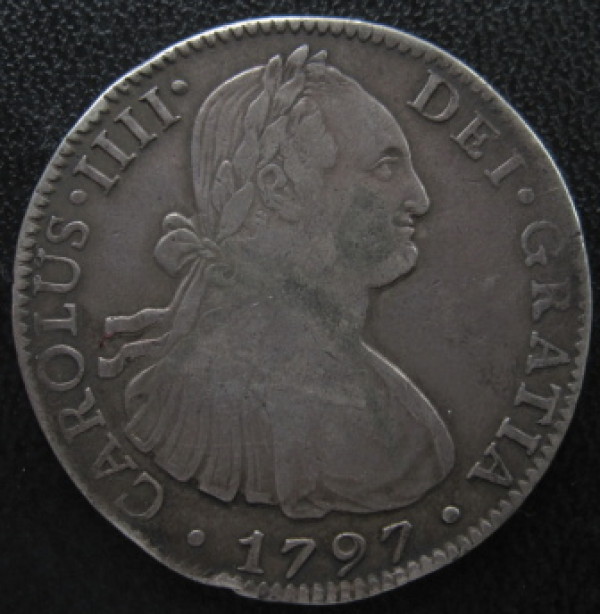 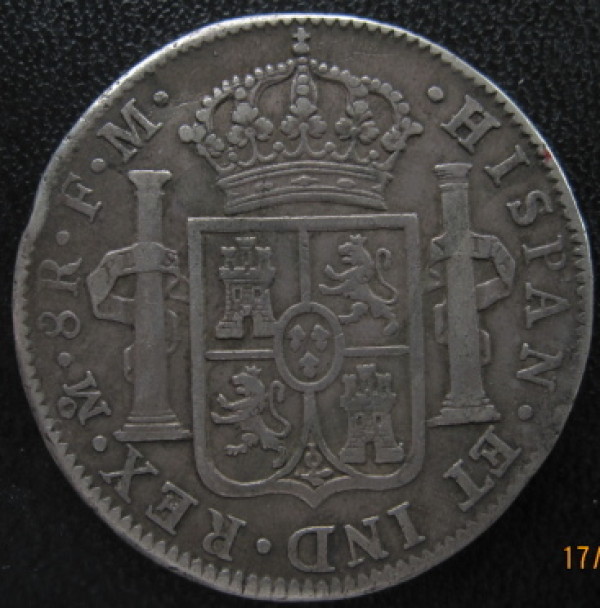 |
| |
Replies: 12 / Views: 2,496 |
|








 Posted 02/11/2012 05:20 am


