| Author |
 Replies: 20 / Views: 9,268 Replies: 20 / Views: 9,268 |
|
Pillar of the Community
France
1591 Posts |
Hi, Here is a very scarce 8 reales issued from a city in Mexico, Sombrerete, under General Fernando Vargas troops. With a complete design, including the 8 R denomination, and the superb colonial milled edge, this coin is even more scarce in that shape. This one is dedicated to TwoKopeiki - hope you like it :) (I saw you have a nice one in your set, although sitting in a plastic tomb without much visibility of the edge :p) 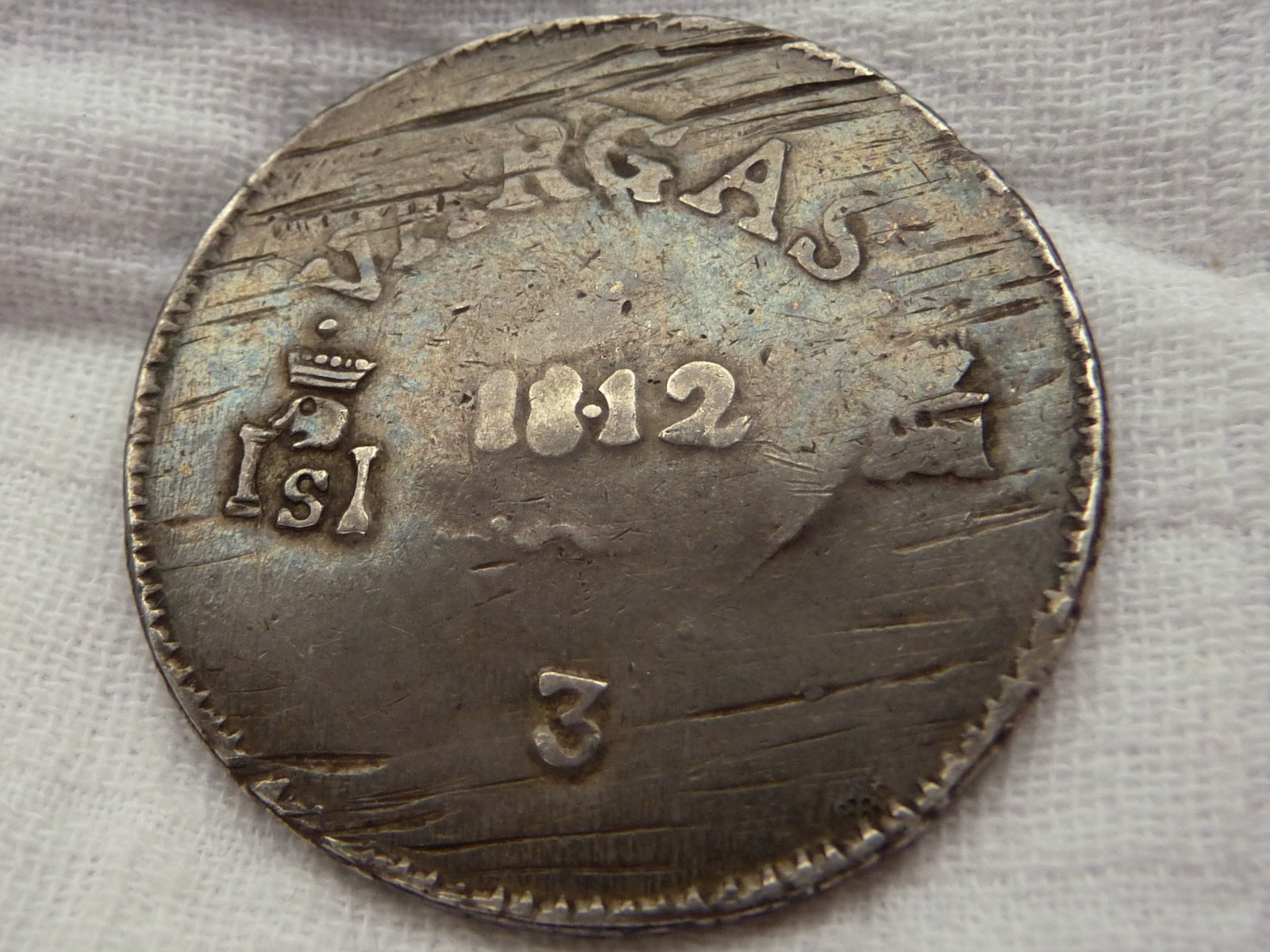 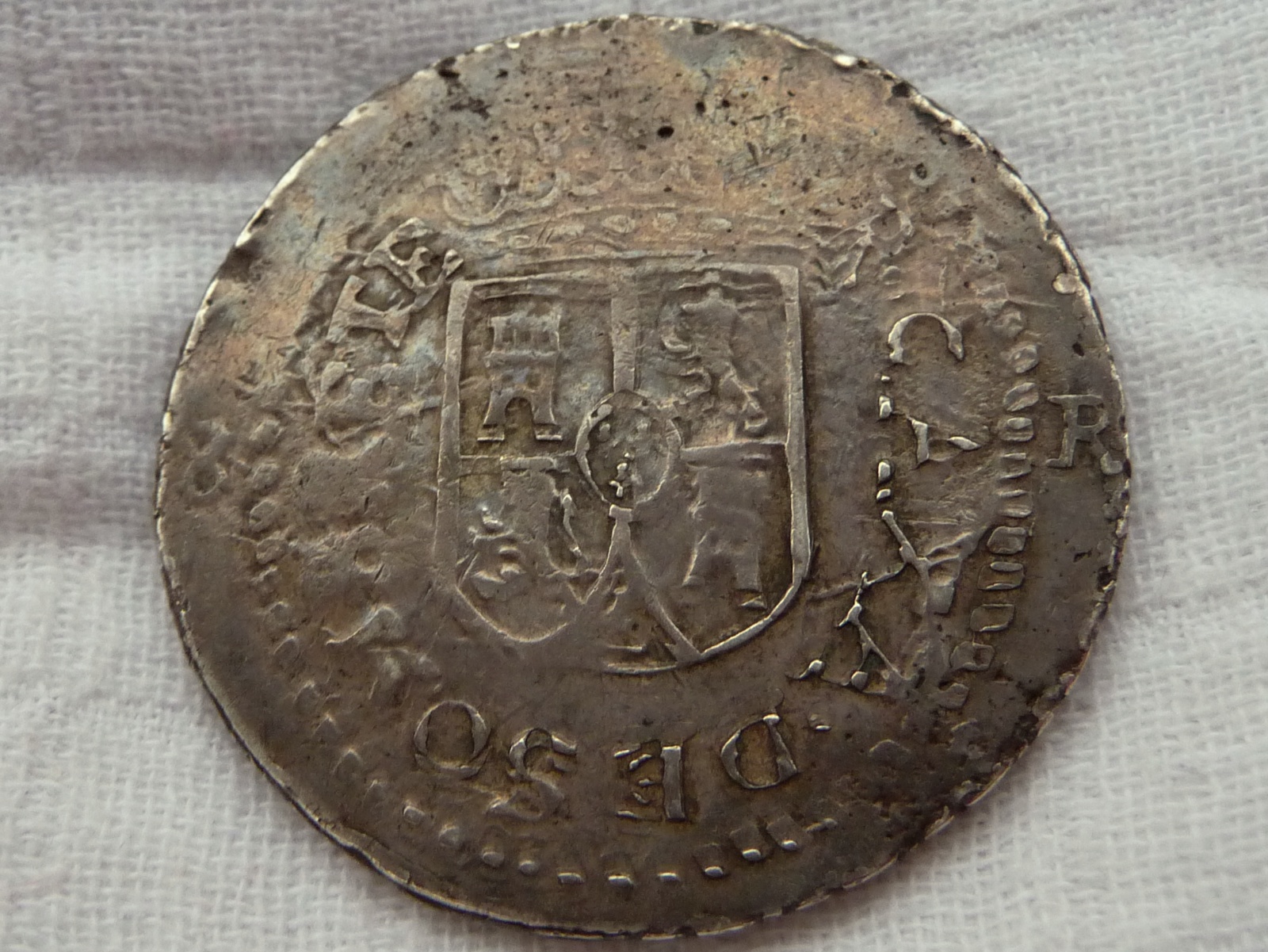 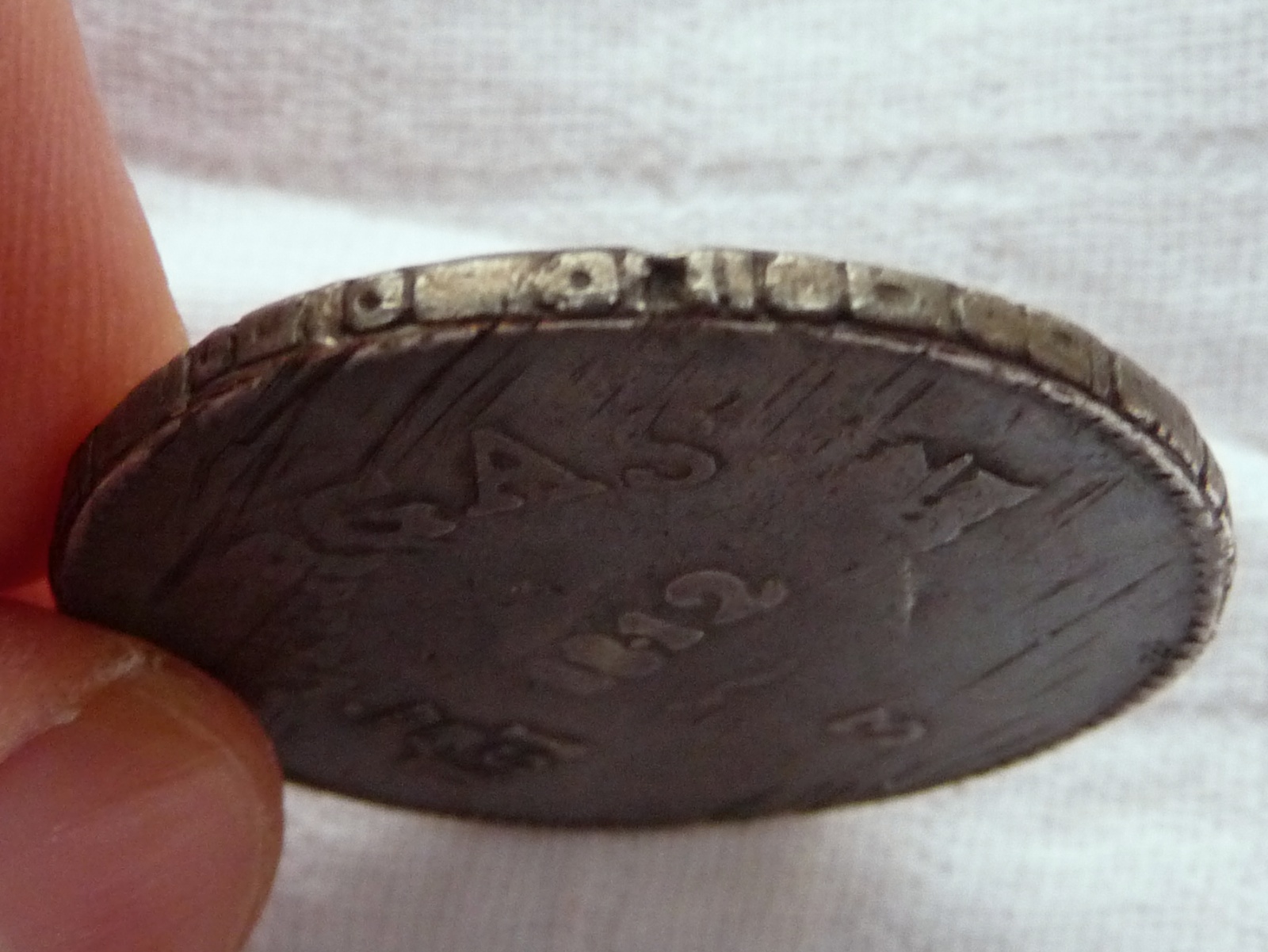 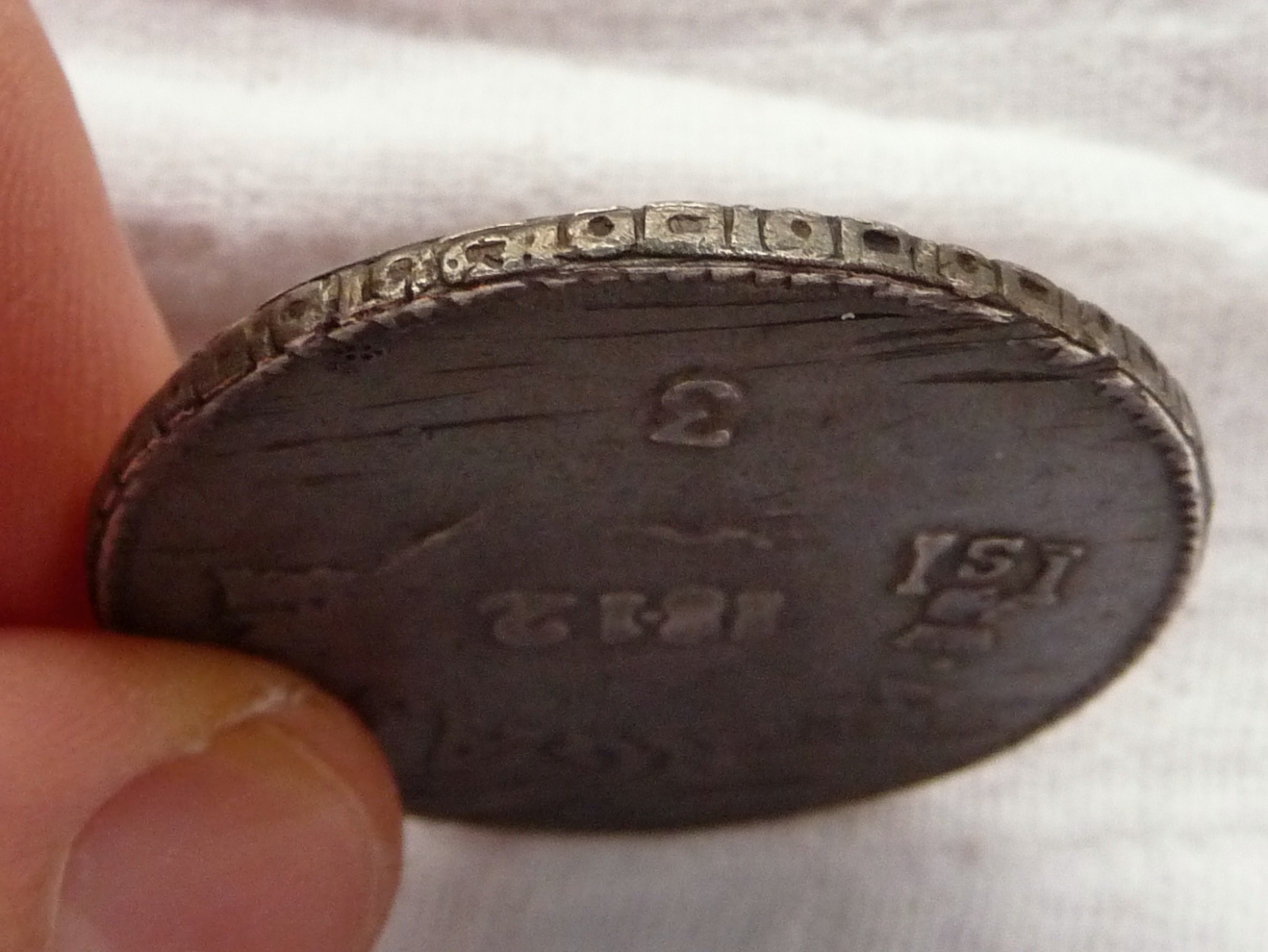 |
|
|
|
Pillar of the Community
United States
1761 Posts |
Nice lamination streaking add character and wonderful die chatter on the other side. A coin exhibiting its rugged production flavor. Only a MS65 type accumulator would not like this piece ... <BG>.
|
|
Pillar of the Community
 France
1591 Posts |
I didn't said anything about the quality of this one, as it's a war issue. I wonder how it would grade.
TK, do you have an idea ? (as you have a graded one in your set)
It can indeed only be appreciated by specialists - if I ask my wife I'm sure she will prefer a nice proof set to it :p
|
|
Valued Member
United States
172 Posts |
Imagine the stories that particular coin must have...I should read about that period in Mexican history...my dad had a weird "Army of the North " coin that appeared to be cast...yet I believe it was a genuine issue....
|
|
Pillar of the Community
France
1591 Posts |
There were cast coins during this period indeed, but I'm not sure which coin you could be referring to (maybe from a later period ?) I know SUD coins, which were either cast silver, struck silver or struck copper (we discussed about the cast / struck silver one in this topic : https://goccf.com/t/109327 ) It's indeed a very interesting period, where many local / emergency coins were made. I have to read more about it as well :) |
|
Pillar of the Community
United States
560 Posts |
Awesome coin. I really like the detail on the edge.
|
|
Pillar of the Community
Czech Republic
803 Posts |
Hey, you leave my plastic tombs alone :)
Nice Sombrerete piece, Mathieu. In terms of the history, I didn't think Vargas was a general, but a superintendent of the mines at the time.
|
|
Pillar of the Community
France
1591 Posts |
Well, that's from the description from Stack's auction :D I have to admit that I didn't to my research on that one ...
How does it compare to yours ?
NB : I broke my first plastic tomb yesterday, a PCGS slab ... what a pleasure to hold the coin ! :p
|
|
Pillar of the Community
United States
2605 Posts |
Since I'm a complete dilettante in Mexican coinage, could you guys educate me on what that "3" signifies?
|
|
Pillar of the Community
France
1591 Posts |
Edited by MathieuMa
02/16/2012 2:46 pm
|
|
Pillar of the Community
Czech Republic
803 Posts |
Hi Mathieu, Here's what Pradeau has to say about Sombrerete Provisional Mint: Quote:
The Sombrerete region, one of the richest districts of Mexico, was discovered by Juan de Tolosa in 1555. It has a large number of mines, and up to 1883 it was estimated that these mines had produced ores valued at not less than one hundred and fifty million dollars.
The Sombrerete mint began operations on October 18, 1810, was closed July 16, 1811, re-opened during 1812 and definitely closed at the end of that year because of the proximity of the Durango and Zacatecas mints. It was not really a mint in the true sense of the word, as the municipal treasurer ordered the coining of silver in the denominations from 8 reales to 1/2 real to meet the need of this mining center. A Spanish civilian, Don Fernando Vargas, superintendent of the mines, had charge of coining operations and used his name on all coins manufactured. These pieces are known as the "Vargas issue." There are two distinct types: (1) the planchets with several counterstamps; (2) those in which both sides were struck simultaneously with crudely made dies.
The first tpe was coined during 1810 and 1811 and consisted of 8 reales pieces only. The striking of these was apparently done in three stages: first, the stamping of a dentelated border on both sides, leaving the center blank; then, the striking of one side with the crowned arms of Spain and R CAXA DE SOMBRETE (sic) within a roped circle; and lastly, the impressing of five punch marks, all incuse panels, on the other side. These punches are: at top, VARGAS; at left, a crowned horse's head over an S between two columns; in center, the date 1810 or 1811; at right, a crowned S between two columns; and below, what appears to be the Arabic numeral 3 but which in some pieces resembles an 8. It is apparent that this side was punched last, as the design on the other side shows bruises from the blows of the several stamps.
The coins of the second type bear the dates of 1811 (rare) or 1812, and were struck from complete dies. The obverse shows a shield and inscription similar to those found on the coins of the first type but with 8-R at left and right, outside of a rope-like circle. The reverse is similar to the earlier type, but the five component parts are not in depressed areas. The word VARGAS appears in large letters and is curved.
There is a four reales piece dated 1812, with 4-R at sides. This also bears the figure 3, meaning of which is not understood. The one and the half-reales are alike in design and show on the obverse two hemispheres crowned; around, SOMBRERETE. (name correctly spelled) FERDIN VII. The reverse has above, VARGAS; in center, the Bourbon escutcheon in oval; below, palm branches; at sides, R-1 or 1/2-R; in exergue, date 1811 or 1812.
|
|
Pillar of the Community
United States
2605 Posts |
Quote:
This also bears the figure 3, meaning of which is not understood. That is weird, the 3 is very prominent, it had to mean something to the people who made it. Interesting that nobody seem to to have solved the mystery ... |
|
Valued Member
Germany
194 Posts |
Indeed, the meaning of the 3 remains an unsolved mystery until today. Great coin, the denomination outside of the shield is not always seen, so this can actually be considered a fully struck coin! Which, by the way, is ten times more important than the grade in these issues. I have seen a fake of these on ebay a long time back, unfortunately I didn't save the image. I remember the counterfeiter managed to misspell the legend, but I'm not sure if he wrote "Caxa s de Sombrete" or "Caxa de Somb erete". |
|
Pillar of the Community
France
1591 Posts |
I know such complete ones are very scarce :) It doesn't look that much circulated in fact (that's why I was asking), and the patina + edge are awesome. About fakes, I saw this one on sale quite recently, it looks like a cast one :  |
|
Pillar of the Community
Czech Republic
803 Posts |
I agree, it's pretty much as nice as these come.
|
|
Pillar of the Community
France
1591 Posts |
That coin just got a couple of friends :) Here is the 4 reales :    And here is the 1/2 reales :   The hunt continue for the 1 and 2 reales, as well as the scarcer earlier type :D |
| |
Replies: 20 / Views: 9,268 |








 Posted 02/16/2012 10:29 am


