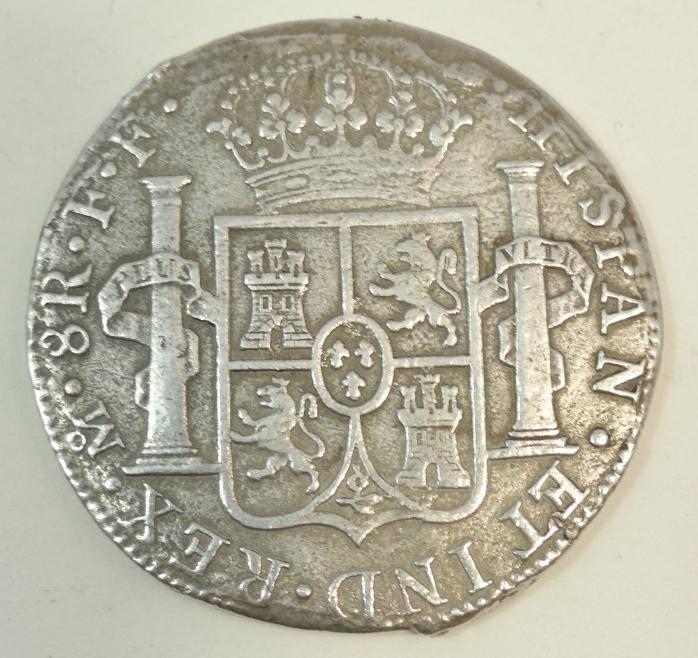
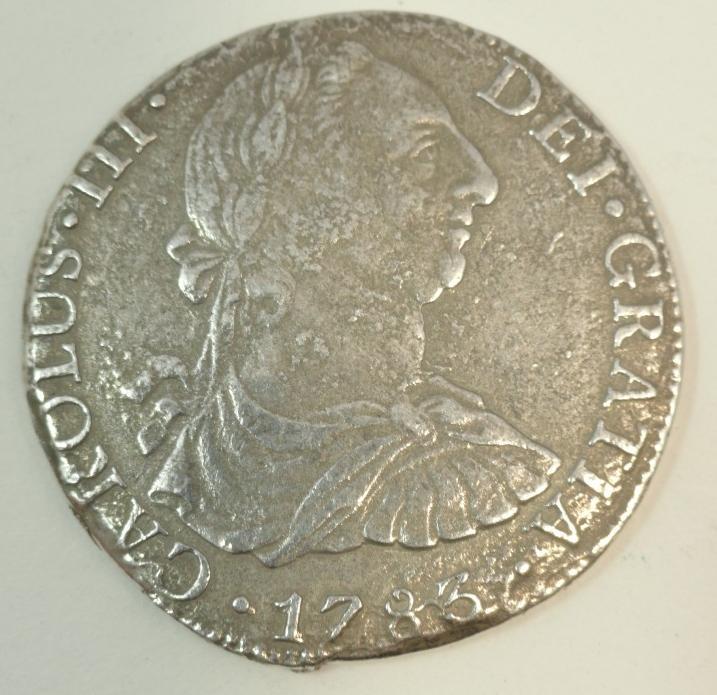
What is interesting on these shipwreck coins is the silver content is very high from XRF analysis on the surface silver readings normally being elevated to 98-99% silver. There is something called silver surface enrichment in which the silver makes its way to the surface and the inner core is usually lower in silver value giving you a false high reading particualry with 90% silver issued coins. With sea salvage coins the more oxidized metals like copper and zinc as compared to silver (less oxidized) are leached out of the coin due to salt water corrosion. This then yields these high silver values on the surface. So a normal 8R will read say 92-96% and a sea salvage coin 98-99% Ag for surficial silver. Sometimes high tin contemporary counterfeit 8 Reales are mistaken as sea slavage coins or cast coins. This example appears struck and legitimate due to its sharp motifs and we see an equal loss of silver "across" the coin. My guess is a legitimate sea salvage coin without XRF analysis which may suggest a high tin counterfeit alloy. This will be discussed in the new CC8R book next year via the ANS.
John Lorenzo
United States
Edited by colonialjohn
08/01/2012 11:23 am












 Posted 08/01/2012 08:51 am