| Author |
 Replies: 21 / Views: 2,240 Replies: 21 / Views: 2,240 |
|
Valued Member
United States
382 Posts |
Hi all, Since I have bought over graded coins in the past.It brings me to this question. I am interested what method or grading standards you guys use for your coins and purchases ? I use Photograde, I know some think it out dated I feel it the simplest way to grade coins accuratly and quickly. I am thinking about using a combination of ANA and photograde. I see the ANA book has color photo's. Thanks Tony  |
|
|
|
Valued Member
United States
69 Posts |
i wish I had a method =(. all these coins ive accumulated from circulation, and no idea as far as grading. I guess what I look for mainly is luster (the abilty to reflect light) lol. and overall detail in the coin. but putting it to numbers, boy I really struggle.
|
|
Pillar of the Community
United States
2335 Posts |
I really struggle with this myself. I use the ANA Grading Standards book from Whitman. I am able to figure out what general grade with the book based on the detail of the coin. By general grade I mean G, F, VF, etc.; when it get's into single point differences I'm lost. I'm also lost when the coin's details indicate one grade, but there is a problem with the coin that would lower the grade(cleaning, graffiti, spots, etc). I have adjusted my buying strategy because of my grading weakness. On raw coins I figure my general grade, and then try to buy at the next lower grade price. The only slabbed coins I buy are either PCGS or NGC. This tends to keep me out of making any serious mistakes. |
|
Pillar of the Community
United States
7123 Posts |
I have been struggling with grading Morgan dollars for quite sometime now,, everytime I think I have it figured out by the use of the grading standards someone will post a photo in the grading section and blow the basics out of the water. But I am seldom fooled on the series which I have the most experiance in Lincoln cents and Mercury dimes. My best advice on grading is to practice on your main interests ,, and then practice some more. Once you get some confidence in the coins that are the most interesting to you ,,then begin to apply some of the practice to other series ,, and keep up with the coins being offered for grading here ,, you will soon find out who has the handle on what coins and then follow what they say and apply that to those coins. You will find that your skills expand exponentially by the amount of time and practice that you put in. dont be afraid to guess at the grades with the rest of us ,, no one will poke fun at you for being wrong and will more than likely give some explaination of why the coin was different than your estimate if you ask . Metalman |
|
Valued Member
 United States
382 Posts |
Yes I guess different coins do have particular grading minutia. I am talking grades G to UNC myself. When a coin is above say 63 I am lost too. Number grading in high grades is not my cup of tea. Then again I have very few high grade coins in my collection except proofs and a few modern commems. Give me a coin that has traveled through thousands of hands anyday !  Tony |
|
Valued Member
United States
235 Posts |
I think that grading minutia for general grades under MS take the joy out of the hobby. I hate slabbed, sterile coins. A little wear here and a ding or two there gives a coin some history and character.
|
|
Valued Member
United States
382 Posts |
|
|
Pillar of the Community
United States
830 Posts |
Well, I was using ANA for circulated coinage, but after reading some information from Susan, I'm going to have to find something more accurate. I try to use EAC standards for early copper, but I'm lousy at it. For MS coins ... I have NO clue. I can't tell the difference between a 67 and a 69. Or between a 63 and a 64. Guess I'll have to go back to RedBook or Photograde. |
|
Pillar of the Community
United States
1203 Posts |
It's relatively easy AuldFartte, it's only a matter of who owns the coin. If you have the coin, it would be either the 67 in the first case, and the 63 in the second case.
You can bet that when the other person gets it, they will be graded 69 and 64 respectively.
|
|
Pillar of the Community
United States
1267 Posts |
I've always tried to follow the Red Book standards. That's what my dad taught me. Take Care Ben |
|
Valued Member
United States
382 Posts |
Yes RedBook is good too. I like Photograde as you can actually place the coin next to the photo and compare. What gets me is the dealers that overgrade everything in their cases !!!!!!!!!! Tony |
|
Pillar of the Community
Belgium
2078 Posts |
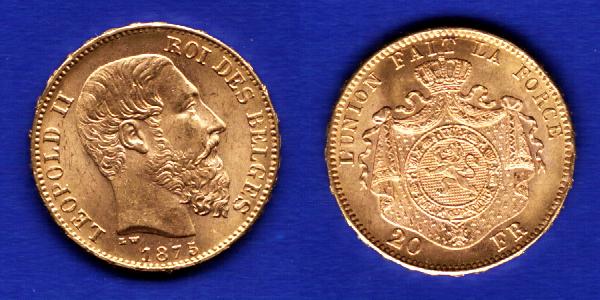
I have been learning to grade for three years now My intrest being AU to MS65 grades in goldcoins For photograding you need to know the high points of the coin and the allowance made by NGC for certain coins because that is were my friend submits A large number of european coins have been in collections glued to paper pages so that is one thing to look for , glue An even larger number have been cleaned at some time ; I have no problem with scans but overlighted photos still throw me off So my method is to play around with contrast , sharpness, colorbalance even go black and white and then use 3 years learning to give a grade If I have the coin in hand it is more simple I scan the coin and if the coinimage comes back dark it is cleaned  |
|
Pillar of the Community
Belgium
2078 Posts |
Coin cleaned 45 years ago I know I cleaned half of the coins and my scanner tells me which half 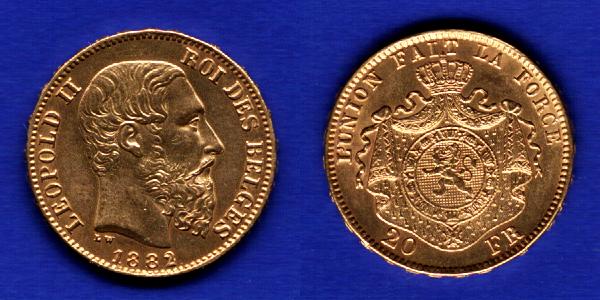 Image: Image:  Leopold II 1882.jpg Leopold II 1882.jpg45.18 KB |
|
Pillar of the Community
Belgium
2078 Posts |
Edited by ageka
03/07/2007 2:02 pm
|
|
Valued Member
United States
256 Posts |
I use the ANA book, Photograde book, "Making the Grade" book, Red Book and I still have trouble with many coins. My hardest part is distinguishing minor wear from weak strikes. |
|
Bedrock of the Community
United States
17884 Posts |
I need that piece, I like it, the price seems reasonable, I buy it.
|
| |
Replies: 21 / Views: 2,240 |










 Posted 03/06/2007 2:10 pm