| Author |
 Replies: 27 / Views: 16,479 Replies: 27 / Views: 16,479 |
|
New Member
United Kingdom
33 Posts |
I've got some African coins that have unsightly stains, perhaps tar or ink on them.
Is it possible to clean these stains off, please ?
Someone suggested using acetone - would that do the trick ?
|
|
|
|
Pillar of the Community
United States
2077 Posts |
Acetone and xylene are both solvents and should remove it.
|
|
Pillar of the Community
United Kingdom
2139 Posts |
What effect does acetone and xylene have on these metals, please: Bronze ? Silver ? Cupro-nickel ? Silver (bearing in mind that silver can be of differing purities) ? Here's a Southern Rhodesian penny with some gunk in the centre: 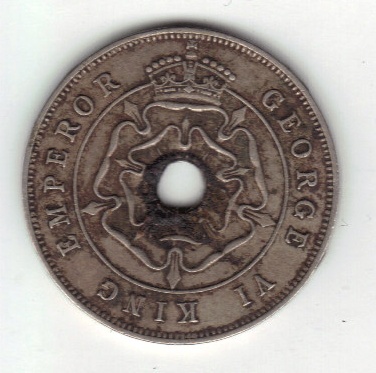 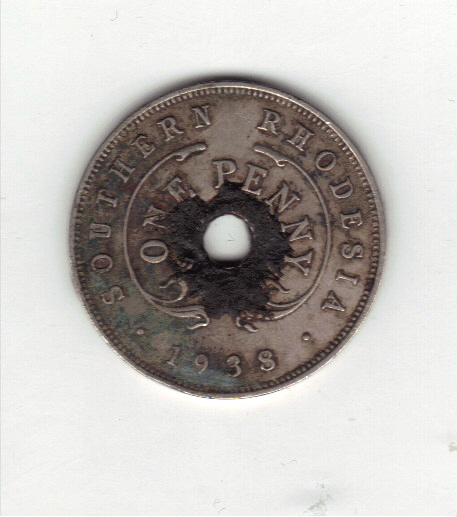 Which one would be better in this case ? |
|
Pillar of the Community
United Kingdom
2139 Posts |
I forgot to say that the Southern Rhodesian penny is cupro-nickel.
|
|
Pillar of the Community
United States
3546 Posts |
Boston, Welcome to the CCF clan.  Please do come back for more input from us at CCF anytime. I personally have never attempted to clean off tar or ink from a coin but acetone may not be the absolute best chemical to use for this purpose. However, because I feel reasonably sure that acetone will not destroy the patina of a coin, initially attempting to clean your coin with acetone should not in any way worsen your situation... But if it turns out that acetone fails to remove the ink and tar I personally would not hesitate using a cotton tipped Q-tip with a slight amount of lighter fluid on it. Attempt to apply this chemical only on the adversely affected surface areas while avoiding the unaffected areas. Even if this lighter fluid leaves a residue etc. it surely would be better that the current status. Once the tar and ink have been sufficiently removed, immediately immerse the coin in a solution of warm water having a bit liquid dish washing detergent(ie.: Dawn brand). This washing method combined with 'gentle' rubbing of the coin using a Q-tip should effectively remove any residual lighter fluid. Finally, rinse the coin with plain room temperature water. Obviously, when using lighter fluid avoid any nearby sparks or flames(ie cigarettes etc.) and use a fan to pull the vapors away from your work area. mdpmedia PS: Please let us know how the recommended cleaning methods turn out by attaching before and after cleaning photos of the referenced coin(s) if possible. |
|
New Member
 United Kingdom
33 Posts |
mdpmedia, Thanks for your detailed reply. Here's a 'before' picture 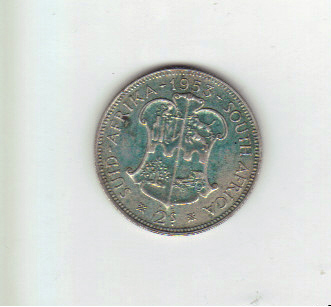 I'm not a smoker, so I'll have to wait until next week to buy some from a shop, when I'm in town. |
|
Pillar of the Community
Australia
4411 Posts |
Make sure you try acetone firs as it is completely harmless and wont affect the metal like lighter fluid may. If acetone doesn't work first then try the lighter fluid.
|
|
Moderator
 Australia
16964 Posts |
Quote:
What effect does acetone and xylene have on these metals, please:
Bronze ?
Silver ?
Cupro-nickel ?
Silver (bearing in mind that silver can be of differing purities) ? The answers to your questions for both of those chemicals are: nothing, nothing, nothing and nothing. Acetone and xylene are organic solvents; they do not react with raw metal, metal oxides, metal sulfides, metal chlorides, metal carbonates or any other inorganic metal compounds or corrosion products. I personally use acetone rather than xylene because it's less toxic (though more flammable). This does not necessarily mean that using them is completely "safe" or that there will be no unanticipated side-effects. The chemicals are, as I said, both toxic and flammable. You need to rinse the coin off quite thoroughly afterwards, otherwise the organic goo dissolved in the acetone will re-deposit back on the coin when the acetone evaporates off. And, of course, if the tar/ink/tape/goo has been sitting on the coin for several decades, removing it may leave a shiny un-oxidized patch where the goo used to be. Using acetone will also be futile if the stuff sitting on the coin is actually corrosion by-products or has itself reacted with the metal, rather than a foreign organic material just sitting stuck on the surface. A coin sitting in a nasty PVC plastic coin album for several decades and has turned green, for example: the acetone will remove the green goo but the surface underneath the goo is likely to have lost lustre or have a hazed appearance; there's nothing that can be done to fix that. There have been some reports of people using acetone on coins, particularly unc or near-unc copper/bronze, that have resulted in a drastic change in toning. I suspect what has really happened in such cases is either (a) the acetone has re-deposited a thin film of something onto the coin's surface, or (b) the coin had a fake patina applied to it by a previous owner, which the acetone washed off. Don't say "infinitely" when you mean "very"; otherwise, you'll have no word left when you want to talk about something really infinite. - C. S. Lewis
|
|
Bedrock of the Community
Australia
21789 Posts |
Never clean coins? Perhaps not in this case.
As Sap has indicated, there is always the risk that what is there now has caused some damage.
However, in my judgement, leaving that gunk there certainly won't help, and maybe is continuing to cause damage. For this PROBABLE reason, it is worth the risk to remove it, IN THIS CASE only.
Try:
water
detergent and rinsing immediately,
acetone and
physical removal,
in that order.
For physical removal try:
a pointed match,
old toothbrush,
bluntened needle using a loupe to see the deatil of your work
in that order.
Note: MOST ancient coins NEED to be cleaned after recovery from the soil.
|
|
Pillar of the Community
United States
3546 Posts |
Quote:
For physical removal try: May I also add porcupine quills to this list as a viable alternative to consider for the purpose of removing gunk without the risk of scratching the surface of the coin? I personally bought some of these quills from the following ebay vendor for $ 4 over three years ago: http://www.ebay.com/itm/ws/eBayISAP...170468841908These quills work great and I still have over 90% of them left over from this same purchase. Depending upon the particular quill I think they are stiffer and more effective than rose thorns that also are not supposed to scratch a coin's surface. They last a long time and are reusable until they eventually break... IMHO, mdpmedia |
|
Bedrock of the Community
Australia
21789 Posts |
Never thought of porcupine quills. I guess much superior to any of my suggestions.
How about echidna quills? May have to go to the local wildlife refuge near where I live to get a few. You never know, I may be able to get some for free!
|
|
Pillar of the Community
United States
8533 Posts |
Wouldn't regular old toothpicks work ? It doesn't seem like they would scratch.
Oregon coin geek.....*** GO BEAVS ! ! ! ***
|
|
Bedrock of the Community
Australia
21789 Posts |
Toothpicks are just fine; they just fall apart much more quickly.
|
|
Pillar of the Community
United States
1211 Posts |
Anyone else find it amusing as to the possible uses the ebay seller suggests for the quills? |
|
Bedrock of the Community
Australia
21789 Posts |
'Never clean coins! When it actually comes down to actually dealing with this problem, perhaps the use of porcupine (or echidna) quills MAY jerk my conscience!  |
|
New Member
United Kingdom
33 Posts |
sel_69l,
Presumably when a porcupine ejects a quill, it no longer needs it.
|
| |
Replies: 27 / Views: 16,479 |










 Posted 09/12/2012 6:11 pm


