| Author |
 Replies: 19 / Views: 5,983 Replies: 19 / Views: 5,983 |
|
Valued Member
United States
396 Posts |
I think I'm going to need a reference for Large Cent error coins. Red Book doesn't cover this one. Suggestions? What is going on around and through the date, especially the 7? 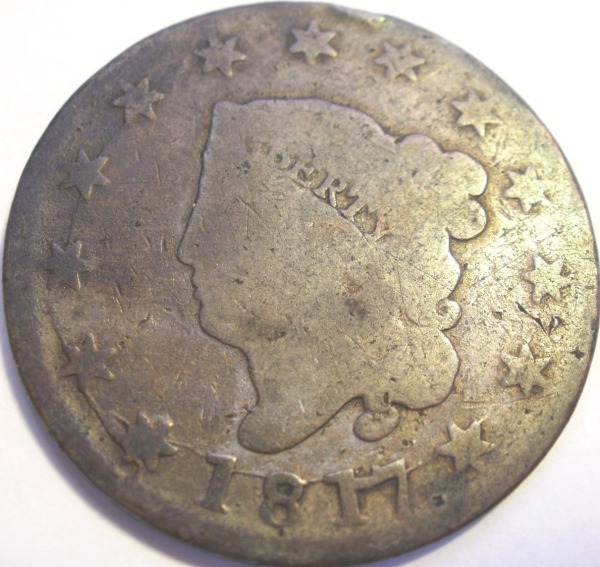 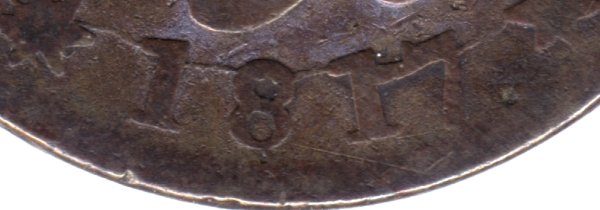  |
|
|
|
Bedrock of the Community
United States
17884 Posts |
N-12 late die stage with the die cracks through the date and encircling through all the stars. The crack through the top of the date is actually two cracks and a chunk of the die has fallen out between them joining the 1 and the 7 together. This is a slightly scarce variety but it is a popular one because it comes with many progressing stages of the cracks Here is a high grade example of about the same die stage 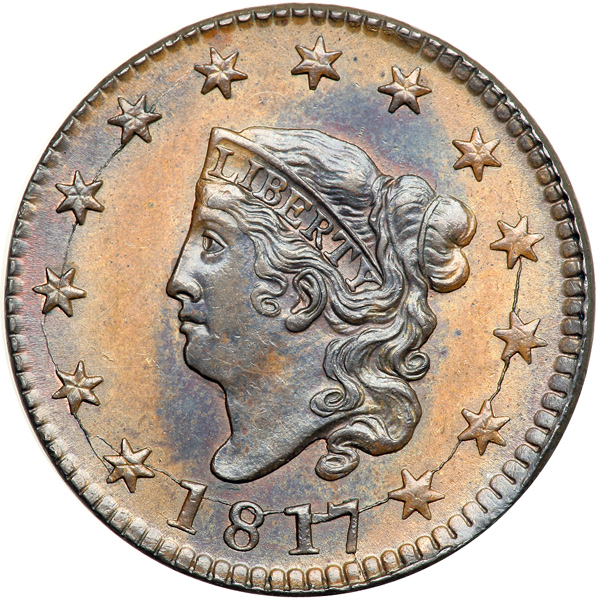 and here is the terminal die stage 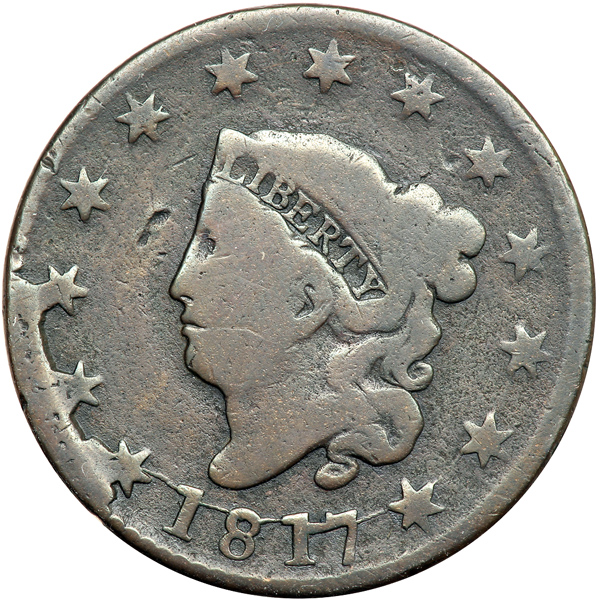 Edited by Conder101
02/22/2013 3:08 pm
|
|
Rest in Peace
United States
4078 Posts |
Conder101, fantastic contribution of large cents attributions.
BigApple.I'm still learning to learn. Good question on your coin.
|
|
Valued Member
 United States
396 Posts |
Quote:
bpoc1
Posted Today 1 Hr 27 Min ago
Conder101, fantastic contribution of large cents attributions.
BigApple.I'm still learning to learn. Good question on your coin. I'll say. Pretty fantastic how quickly he replied. Thank-you Conder101!! I just ordered a 1958 version of Sheldon's Penny Whimsey. I might have another interesting coin in a couple of days. |
|
Moderator
 United States
16694 Posts |
Nice one!
swcoin.ecrater.com
|
|
Moderator
United States
23522 Posts |
That Terminal state con is spectacular - so much metal is going into the void left by the Cud that it's actually affecting the strike on the other side - the right-side crack has disappeared for lack of metal to fill it. |
|
Pillar of the Community
United States
9810 Posts |
 a very cool variety with a lot of die errosion showing off on this one! I like it. "Buy the Book Before You Buy the Coin" - Aaron R. Feldman - "And read it" - Me 2013! ANA Life Member #3288 in good standing since 1981, ANS, Early American Coppers Member (EAC), Colonial Coin Collectors Club member (C4), Conder Token Collector Club member (CTCC), Civil War Token Society (CWTS) member, Liberty Seated Collectors Club (LSCC) & Numismatic Bibliomania Society member (NBS), USMex, Member in good standing, 2¢ variety collector. See my want page: http://goccf.com/t/140440 |
|
Bedrock of the Community
United States
17884 Posts |
Quote:
Pretty fantastic how quickly he replied. I just happened to stumble onto it right after it was posted. The N-12 variety is an instant arms length variety. One glance and you see that heavy break joining the 1 and 7 and you know it's the N-12. Then it was just a matter of linking the two images. |
|
Valued Member
United States
169 Posts |
really cool that they often used these dies till they got really bad
|
|
Pillar of the Community
 United States
5288 Posts |
Which cents do have this circular die crack through the stars?
Also, I don't understand what "N-12" means in the post by Condor101.
|
|
Bedrock of the Community
United States
94367 Posts |
|
|
Pillar of the Community
United States
4432 Posts |
Great example of a late stage die error, BigAppleBucky. I was long attracted to the 1817 cents, given the "errors" like this. The 15 star variety was long a favorite of mine. Here's an earlier stage 1817 die crack for comparison to yours .... 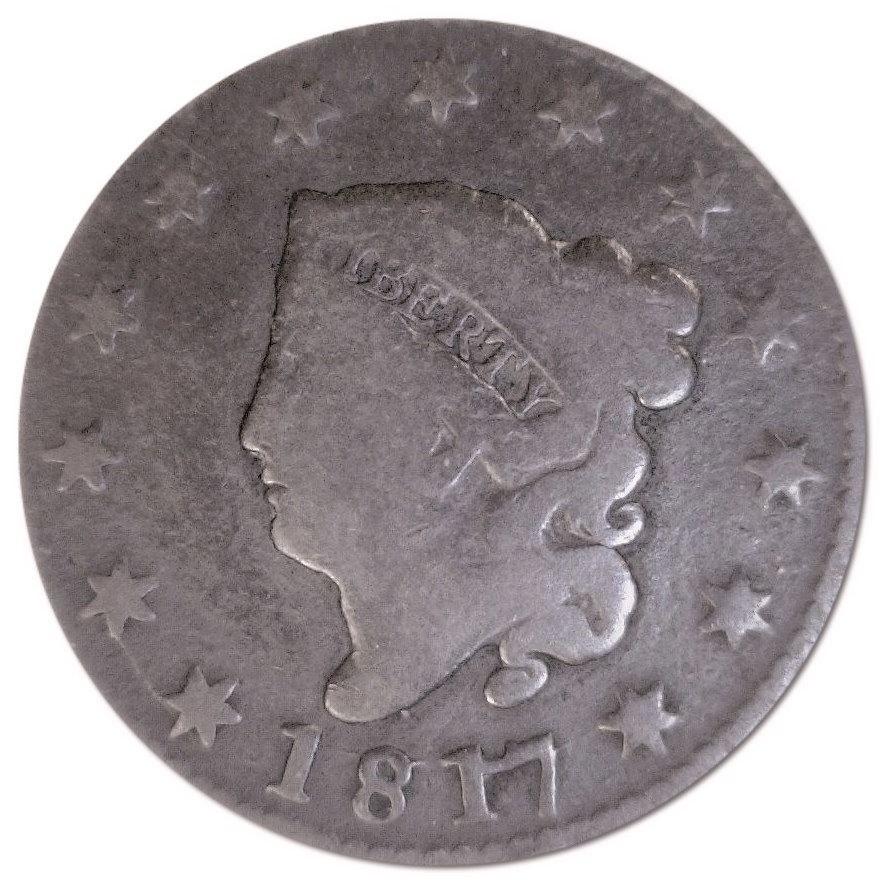 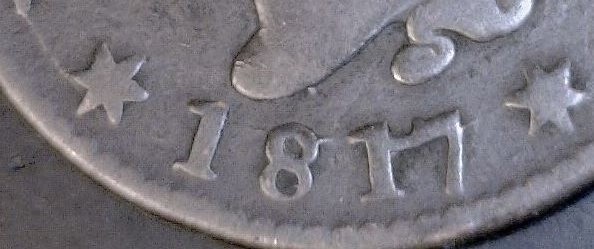 |
|
Bedrock of the Community
United States
17884 Posts |
Quote:
Also, I don't understand what "N-12" means in the post by Condor101. The different die marriages of the middle (1816 -1839) and late dates (1940 - 1857) were originally cataloged by Andrews in 1882 and he used A numbers. In the late 30s' early 40's Howard R Newcomb re-cataloged them and just before his death in 1944 his book cataloging them was published he used N numbers (But for the most part the A and N numbers are the same) Ever since then the varieties for the middle and late date cents have been collected by "Newcomb" or N numbers. 1817 N-12 is the twelfth of the seventeen known die marriages for that year. The 15 star variety that Exoguy mentioned is N-16. Edited by Conder101
12/27/2020 10:08 am
|
|
Pillar of the Community
United States
5288 Posts |
Edited by NumisEd
12/27/2020 12:00 pm
|
|
Pillar of the Community
United States
9810 Posts |
Here is the Newman Numismatic Portal's online page for Howard Newcomb's book. It is available for download in a PDF format if you so choose. John Wright's book "The Cent" is an even better and newer book with photographs rather than line drawings but Howard was the original, John just took off with an updated newer book. Howard Newcomb's Book: https://nnp.wustl.edu/library/book/564828John Wright's Book https://nnp.wustl.edu/library/book/530759"Buy the Book Before You Buy the Coin" - Aaron R. Feldman - "And read it" - Me 2013! ANA Life Member #3288 in good standing since 1981, ANS, Early American Coppers Member (EAC), Colonial Coin Collectors Club member (C4), Conder Token Collector Club member (CTCC), Civil War Token Society (CWTS) member, Liberty Seated Collectors Club (LSCC) & Numismatic Bibliomania Society member (NBS), USMex, Member in good standing, 2¢ variety collector. See my want page: http://goccf.com/t/140440 |
|
Bedrock of the Community
United States
17884 Posts |
Howard Newcomb's book wasn't the original either. His book was based On the book by Frank D Andrews (two editions, one 1882, one 1883) Quote:
So the number "N-12" has nothing to do with the circular die crack? The N-12 refers to the particular obv/rev dir pairing. (The obv is only used on N-12, the rev was used on both N-12 and N-15) Through the life of the obv die it goes through several different die stages from no cracks through heavily cracked with pieces falling out of the die. But MOST examples of N-12 do show at least some stage of the circular die crack. There are other middle date cents that show bold circular die cracks like this one. Two well known ones are 1818 N-10, and 1820 N-13. Edited by Conder101
12/29/2020 09:36 am
|
| |
Replies: 19 / Views: 5,983 |







 Posted 02/22/2013 4:18 pm





