| Author |
 Replies: 44 / Views: 5,928 Replies: 44 / Views: 5,928 |
|
Valued Member
United States
315 Posts |
When I say cleaning, I'm differentiating from polishing.
Now that I know the main goal is to preserve the outer layer of a coin, why can't I clean coins very, very carefully?
Here's a recent example:
Coin A: has some hair and oil on it, I dab it off with a q-tip.
Coin B: shows heavy hazing. Light swirling with a qtip removes most of it.
Coin C: has some tarnish within the letters of the engraving. I use a light mixture of silver polish in water, soak the coin, and dab it dry.
In all the examples above, the cleaning would not affect the grading, and except for B, probably would not be seen except under a microscope.
The reason is that in the case of B, the coin would otherwise be unsalable, and would decrease the value of a set. A would prevent worse damage from happening. C is essentially an acetone bath with a different chemical.
|
|
|
|
Pillar of the Community
United States
1247 Posts |
i have been warned away from using any kind of chemical to clean coins, other then acetone.
I have been know to run some warm water over some dirty coins to flush off the surface dirt, then rinse them in pure water to remove any stuff from the tap.
|
|
Pillar of the Community
 United States
4623 Posts |
You have no concept of how delicate the original mint state surface of the coin actually is.
-----Burton 50+ year / Life / Emeritus ANA member (joined 12/1/1973) Life member: Numismatics International, CONECA Member: TNA, FtWCC, NETCC, EveryCountry (online) coin club Owned by three cats and a wife of 40+ years (joined 1983) Author: 3rd Edition of the Sample Slabs book, https://www.sampleslabs.info/ |
|
Valued Member
United Kingdom
71 Posts |
You can clean coins but dont tell anyone here because they dont like it.
|
|
Valued Member
United Kingdom
71 Posts |
I did once clean coins before I was well educated on coins but now I dont I leave them in the natural way I found them.
|
|
Bedrock of the Community
Australia
21794 Posts |
The only coins that need cleaning are ancient ones that have been recovered from ground burial. The techniques for cleaning these are many and varied, and are best used by professional museum staff, unless you know what you are doing. Almost all modern coins can be easily identified as being cleaned, and TPG'ers will down grade them, or not even grade them at all. |
|
Pillar of the Community
Canada
2125 Posts |
Superhal: Try sending one of each type (A, B, C) to a grading company to see how they deal with it ...
|
|
Moderator
 Australia
17030 Posts |
A. "Hair" shouldn't stick to a coin unless there's something else stuck to it. "Oil" (such as fingerprint oil) can be removed using a solvent such as acetone before it reacts with the metal surface. Such action is not considered "cleaning" in the numismatically negative sense.
Take care using a dry Q-tip on a coin. While the Q-tip itself will not likely damage the coin, if the coin has dust grains mixed in with the oil, the dust can scratch the coin as it is dragged across the surface by the Q-tip. The same goes for tissues, microfibre cloth or anything else one might consider soft and fluffy and therefore harmless. This is why the recommendation is always "avoid rubbing or anything that resembles rubbing".
B. Depends what's caused the "hazing". If it's PVC hazing, then the surface is already damaged. Acetone or some similar treatment can remove the goo but the underlying surface damage will remain. The only way to "honestly" remove such hazing is to use it as a pocket coin, which of course reduces the grade.
C. Silver polish is NOT like acetone. They have completely different reactions to a coin. Specifically, polish reacts with the metal surface, acetone does not. Acetone is intended to remove substances that are foreign to the coin, physically but not chemically attached to the surface. Tarnish is chemically attached.
It's like oil and petrol in your car. They're both crude oil derivatives, but you can't simply mix and match them to your taste, because they have completely different chemical reactions inside a car. One is designed to explode, the other is not.
As for the basic philosophy against cleaning, the primary reason is that cleaning has no "undo" button. A cleaned coin cannot be dis-cleaned if you decide it looked better before the cleaning after all. As custodians of coins whose existence is likely to be longer than our own, it should be our goal to minimize any damage done to them while in our care.
Don't say "infinitely" when you mean "very"; otherwise, you'll have no word left when you want to talk about something really infinite. - C. S. Lewis
|
|
Bedrock of the Community
13014 Posts |
Cleaning the coin is bad because the current market and collectors dont like it if we really want to simplify it. There was a time when it was considered fine and one day that could be the case again.
The problem though is you can always clean an uncleaned coin, you cant unclean a cleaned one though.
Now if a coin is covered in gunk like an ancient one that was buried or something happened to it and it got covered in a bad substance cleaning there is is more of preservation than anything. Trying to improve the appearance though of an MS coin or get toning off doesn't really serve any preservation purpose.
You might be able to get away with A from those methods with TPGs, B and C though will get details grades a lot more often than not. Even A wouldnt be assured not to get a details label.
|
|
Pillar of the Community
Canada
2125 Posts |
|
|
Pillar of the Community
917 Posts |
Quote:
C is essentially an acetone bath with a different chemical.  |
|
Moderator
United States
23522 Posts |
Quote:
C is essentially an acetone bath with a different chemical. And that's why you don't already know the answer to this question. Acetone in one hand, silver polish in another. One is a benign compound which is physically incapable of reacting in any fashion with silver. The other is an acid, which does its' job by forever dissolving silver off the surface of the coin. And I guarantee you can't "swirl" the fields of a Mint State silver coin with a q-tip which I cannot then image to show you the marks you just left. Except, maybe, if you lubricate it with bearing grease but that has problems all its' own.  |
|
Valued Member
 United States
315 Posts |
I just q'tipped this coin, here are before and after pics: 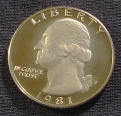 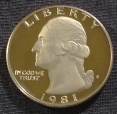 Imho, I believe if someone takes the care to preserve the coin, "cleaning" should not be a blanket excuse to dismiss a coin as having no numismatic value. I have polished my silverware 4+ times since I've gotten them. It doesn't affect their value in the slightest. ps. I did not touch any of the high points and used latex gloves. pps. This entire proof set looks like the before picture. I intend on q'tipping all of them. ppps. I'd like to take the grading challenge as stated above in post #7. If you would like me to send you a "cleaned" coin to see if any grading service detects it but you get the bulk discount, I would be happy to comply. As a non-dealer, I can't get the bulk discount. My coin would likely be a 71-89 proof coin that I have cleaned, and I would pay for the slab. Edited by Superhal
11/10/2013 12:02 am
|
|
Valued Member
United States
315 Posts |
My god, Susan B is a sexy, sexy woman. 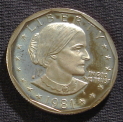 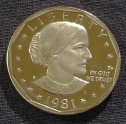 Could I have sold it in the original state? Maybe. Do I like it more in the "cleaned" state? Definitely. Edited by Superhal
11/10/2013 12:25 am
|
|
Moderator
United States
23522 Posts |
Those aren't "pictures." These are "pictures:"   Those are what I get from a lens designed to shoot entire coins at once; if you like, I'll show you what can be done with actual magnifying lenses. That's a moot point, though; I'm only showing you this to demonstrate the resolution at which the actions you're talking about become obvious. And just because you don't look that close doesn't mean we don't. We do, every single day. This is numismatics. This is what we're about. Quote:
Imho, I believe if someone takes the care to preserve the coin, "cleaning" should not be a blanket excuse to dismiss a coin as having no numismatic value.
That's not how it happens. A cleaned coin doesn't have "no" numismatic value; it merely has "drastically reduced" numismatic value. It doesn't matter what you believe; the entire rest of the numismatic community, every single knowledgeable member here, believes otherwise. And since we're the ones buying coins, I guess that's kinda definitive. Quote:
I have polished my silverware 4+ times since I've gotten them. It doesn't affect their value in the slightest.
If you're going to be successful in this hobby, you really need to learn the difference between silverware and a Proof Washington. It's important. Quote:
ppps. I'd like to take the grading challenge as stated above in post #7. If you would like me to send you a "cleaned" coin to see if any grading service detects it but you get the bulk discount, I would be happy to comply. As a non-dealer, I can't get the bulk discount. My coin would likely be a 71-89 proof coin that I have cleaned, and I would pay for the slab.
I'm just a guy. I don't get a discount. And I don't care what a TPG thinks; I trust my own judgments better than theirs, because I've done the homework - the learning, the experience - to bring me to the level of knowledge qualifying me to say what I'm saying here. Chances are any TPG will see it too, but (dirty little secret) they get roughly 6 seconds each to evaluate a coin. Y'think mistakes might happen? Trusting the coin and not the slab is yet another basic lesson you have to learn if you're going to avoid getting fleeced in this hobby. And that's why I'm being so aggressive here, not because I don't like you. If you believe the stuff you're spouting, there are a large number of people completely lacking in morals who will take you for every cent you have, and you'll never see it coming because you think cleaning and wiping bare Proof silver with q-tips is OK. It's my job here to keep that from happening to you if I can, but you're not learning fast enough. At least, please, stop cleaning things and stop buying stuff until you've taken a few days to digest what I and others are saying in this thread. Look back; I wasn't the first one to use the smiley here. Please. |
|
Valued Member
United States
315 Posts |
But, there is a point where numismatic value is overcome by damage. Regardless of whether a coin is cleaned or not, the value is affected. My argument is that careful cleaning would overcome environmental damage in terms of value, and that careful cleaning can and should enhance the value of coins.
Right now, I am very very sad at the environmental damage to one particular proof set I have. At 10x magnification, I can see pinholecorrosion that could have been prevented by a simple cleaning and moving it into a better holder. I wish I had the equipment to show you, but it looks exactly like bookworms burrowing into an old book.
The "no cleaning" advice, imho, is preventing the preservation of coins that could be saved from further damage.
Whether anyone agrees with me or not, I feel that if you see a coin in danger, you should save it.
Rather than say "no cleaning," I would say "careful cleaning." As a newbie, I admit to knowing nothing. But in grading videos and articles I have seen, I cant see why careful cleaning methods can't be used, cute emotes be damned.
Edit: I'd just like to remind folks in this discussion that I also think polishing coins is prohibited.
Edited by Superhal
11/10/2013 01:08 am
|
| |
Replies: 44 / Views: 5,928 |







 Posted 11/09/2013 5:56 pm


