| Author |
 Replies: 36 / Views: 6,307 Replies: 36 / Views: 6,307 |
|
Valued Member
United States
136 Posts |
I had this coin for more than 20 years. Thinking that; there were many simply scratches. But then now. You can call those "ARTISTIC SCRATCHES" o "ARTISTIC LINES". The only problem now is to identify if there is a portion of the Right Wing, o the Left wing. Thank a lot for your comments. 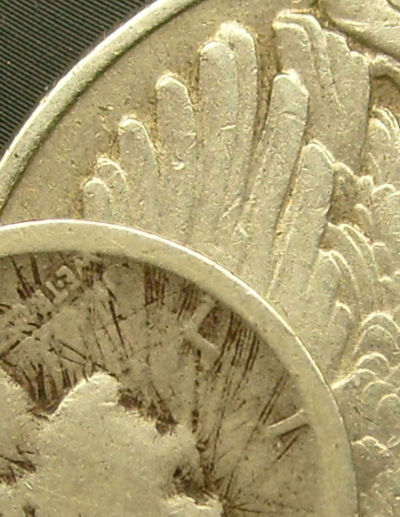 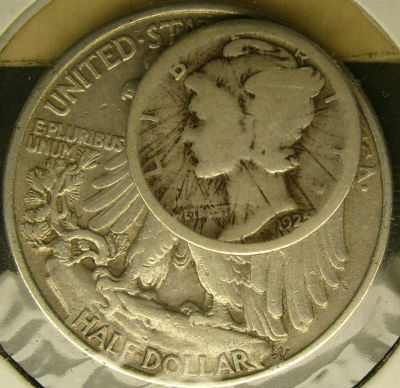 Edited by Carlos arriaga
12/13/2013 11:31 am
|
|
|
|
Rest in Peace
United States
1943 Posts |
I see old scratches. They were also on the high points of the coin (the head and the rim). Then the coin circulated heavily and wore off of the high points just leaving the lines in the field. They are not from a die clash.
|
|
Valued Member
 United States
136 Posts |
For many years this dime pass for thousands of hands. And every body saw those lines like simple scratches. I still working on laying one transparency image on the other coin. But all ready I identify three things. The left wing, the left leg and the inverted V of the split of the legs. In the weekend I will make more layouts. 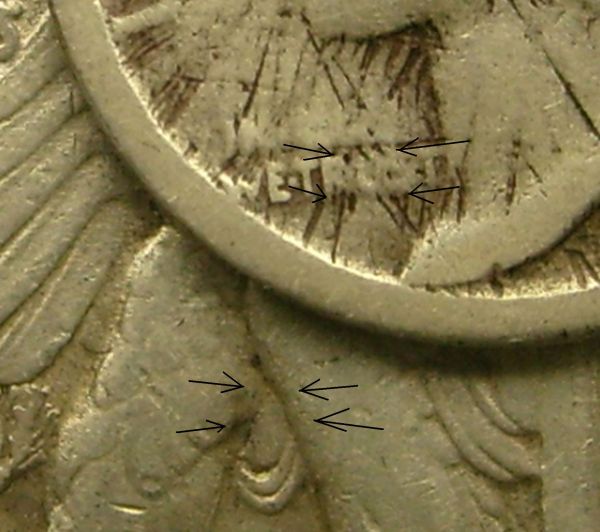 |
|
Pillar of the Community
United States
2563 Posts |
But you are comparing a Merc to a Walker, Mercs don't have an eagle on the reverse.
|
|
Pillar of the Community
United States
9807 Posts |
Multi denominational clashes happen - this isn't one of them, a coin that worn will show almost no evidence of the clash, and clash marks do not look at all like that they are very subtle raised lines, not cut into the surface. Here is a very nice example on another posting here at CCF that shows what die clashes should look like and how subtle they are even when very strongly clashed; https://goccf.com/t/163633"Buy the Book Before You Buy the Coin" - Aaron R. Feldman - "And read it" - Me 2013! ANA Life Member #3288 in good standing since 1981, ANS, Early American Coppers Member (EAC), Colonial Coin Collectors Club member (C4), Conder Token Collector Club member (CTCC), Civil War Token Society (CWTS) member, Liberty Seated Collectors Club (LSCC) & Numismatic Bibliomania Society member (NBS), USMex, Member in good standing, 2¢ variety collector. See my want page: http://goccf.com/t/140440Edited by westcoin
12/13/2013 11:27 pm
|
|
Valued Member
United States
225 Posts |
I think it is all post mint damage. There wouldn't be clashes from another denomination, and if there was a clash on the Mercury dime it would normally be seen in front of Miss Liberty's forehead. |
|
Valued Member
United States
136 Posts |
Those artistic lines. what you call scratches were made by Mr Adolph A Weinman. The reason I started thinking about this relation was, because IT'S THE SAME TYPE OF LINES YOU SEE ON THE SKIRT OF LADY LIBERTY on the oberse of half dollars of that year 1925. I did all ready a lay out with the help of transparency plastic, and there's what I found. 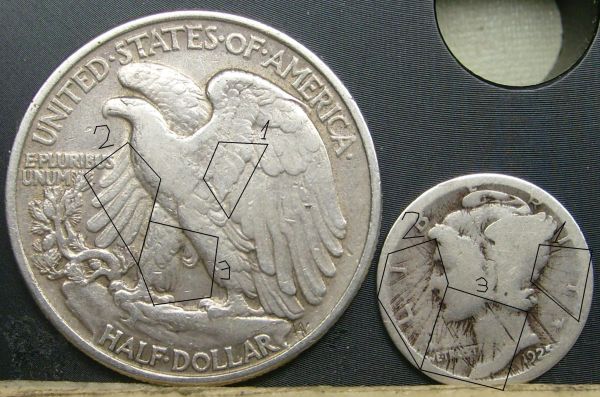 |
|
Valued Member
United States
136 Posts |
Mr. WESTCOIN, Thank a lot for your help. Your statement give me the answer. Why? I can't match some lines with the Original Design. There's the answer (THE HIGHER LINES ON THE ORIGINAL DESIGN ARE THE INCUSE LINES "what you call scratches" ON THE DIME). The way Mr. Weinman used to make his designs is like that. A normal Line, a higher line, a normal line, a higher line. Thank again.
|
|
Valued Member
United States
136 Posts |
This is what I found this morning with the help of some transparent sheets. (I am no so good in Photoshop). When I aligned the skirt of lady liberty with the "Artistic scratches" on the dime. Remember that ALL THOSE LINES ARE INCUSE. Those three sections of the scarf filled up the other three sections on the Mercury dime. 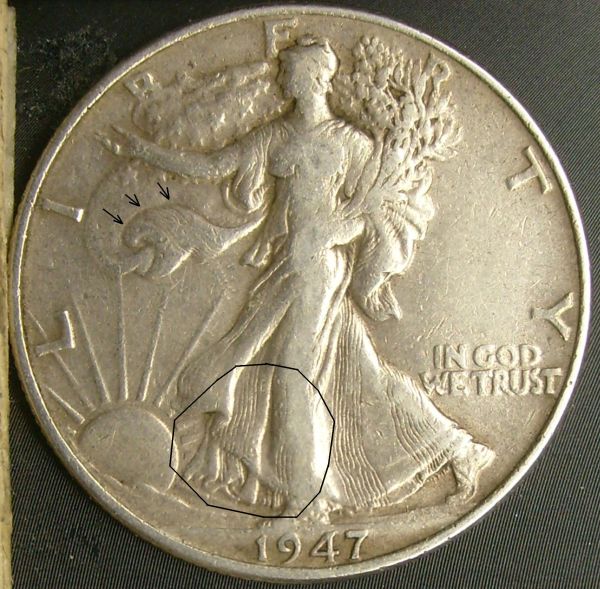 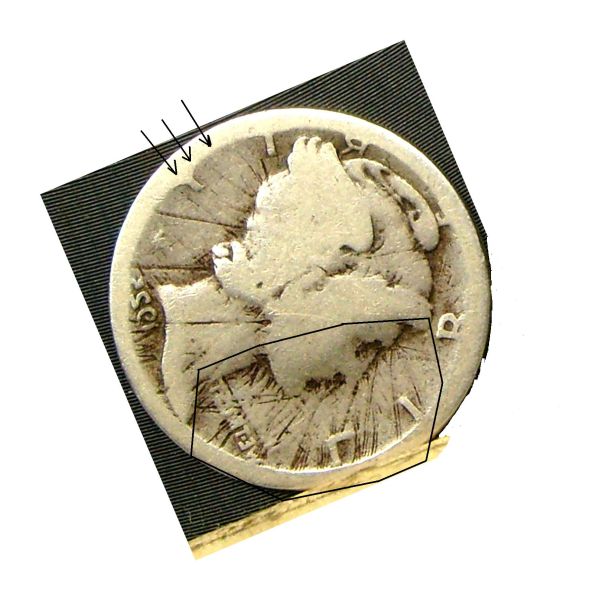 |
|
Moderator
 United States
23522 Posts |
Quote:
Remember that ALL THOSE LINES ARE INCUSE. Which is proof positive that it couldn't possibly be the result of a clash. |
|
Valued Member
United States
136 Posts |
This 1994 P is mine also. It's a "Die clash" and all the lines are INCUSE. 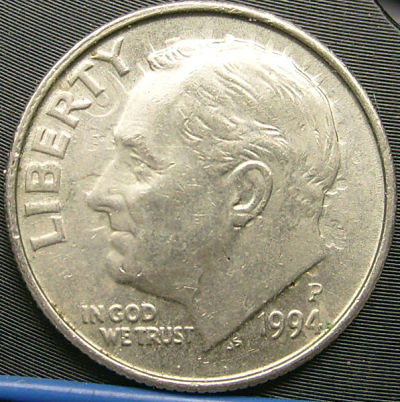 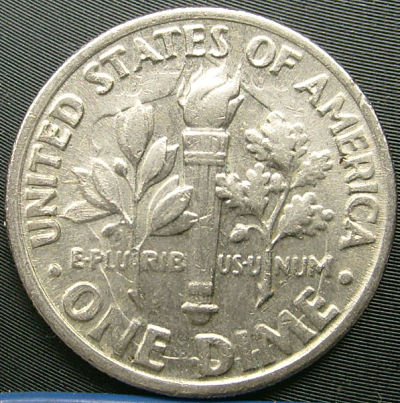 |
|
Moderator
United States
23522 Posts |
That 1994 is a glorious clash. What it has, which your Mercury does not, is something more than just lines. A clash includes the accompanying field, so an area is depressed and not just lines. That's the point - since it's only incuse lines, it can't be a clash.
|
|
Valued Member
United States
136 Posts |
SsuperDdave. The incuse lines depend on the Design itself. In some Die clash you see only depressed fields, in others you see shapes o lines. Like this Reverse Lincoln; in that one there are 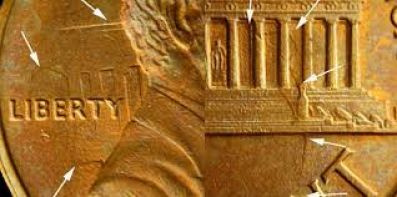 Depressed fields plus shape o lines. |
|
Valued Member
United States
225 Posts |
If you really firmly believe it is die clashing, send it off to ANACS for certification. I would think it will just come back as PMD, but then you would know for sure. |
|
Pillar of the Community
United States
3453 Posts |
I have a general clashing question based on this thread. Isn't a clash created when dies hit each other without a planchet in between them? If that is the case, how could a clash occur from different dies, especially from different denominations? In this case, a Mercury dime die obverse die would have had to hit a walker half and I cannot envision this occurring.  |
|
Moderator
United States
23522 Posts |
Quote:If that is the case, how could a clash occur from different dies, especially from different denominations? In this case, a Mercury dime die obverse die would have had to hit a walker half and I cannot envision this occurring. Yet, it does happen. There are (to my knowledge) 6 cases known for coins minted prior to 1900; I don't know about after that. The most "famous" (thanks to Rick Snow) are the FE Cent/Seated Half and FE Cent/Double Eagle(!) examples. They're considered deliberate, unofficial creations. So, although I quite disagree with the validity of the coin presented here, the concept is not impossible. |
| |
Replies: 36 / Views: 6,307 |










 Posted 12/13/2013 1:34 pm


