| Author |
 Replies: 12 / Views: 2,194 Replies: 12 / Views: 2,194 |
|
|
Valued Member
294 Posts |
that's what I've been wondering, since lately I've been seeing quite an amount of british coins with no easily discernible wear, despite them being from decades to at least 2 centuries old. I'm talking about farthings that date as far back as to Victoria, maybe even George the IV. I've a few examples that although tarnished with age and handling perhaps, they don't show obvious wear that'd be expected of coins that were still legal tender and possibly circulating after decades. I'm thinking that perhaps it could be due to unpopularity or lack of necessity of this denomination, but I'm not sure.
I've got some pre-decimal pennies, pre Elizabeth II in particular, that are AU or even BU, although I'm not discounting the possibility that they could really have avoided circulation due to their size, heft and relatively small denomination unlike the silvers of pre-post WWII UK. What I'm wondering is is this a relatively common occurrence, to find well preserved pennies like these mentioned?
on top of that, are well preserved, common date silver coins from Queen Victoria easy to obtain for a fraction of catalogue value? I've managed to get 2 1887 shillings, an 1887 sixpence and an 1887 1/2 crown for quite a good deal individually and they don't show obvious wear as well. I paid 6 pounds for one of the 1887 shillings for example and I observe no wear with my naked eye.
long questions, I know... hope this hasn't already been asked before
|
|
|
|
Pillar of the Community
Canada
1823 Posts |
|
|
Pillar of the Community
Canada
1046 Posts |
from what I think I've read lately sg93 King G 111 began cracking down on counterfeiters circa 1772 on the halfpenny at least cheers 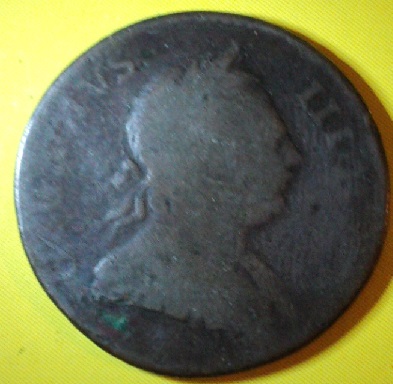 |
|
Moderator
 Australia
17007 Posts |
Quote:
What I'm wondering is is this a relatively common occurrence, to find well preserved pennies like these mentioned? Yes. Post-1816 coins, in particular, are very commonly encountered in uncirculated condition (or at least in the condition the Americans are happy to call "uncirculated"). You have to remember that, during this time, Britain was one of the wealthiest countries on Earth. The aristocracy, and especially the ever-expanding middle classes, had plenty of spare money and could afford to indulge in the rather luxurious hobby of collecting coins. Quote:
are well preserved, common date silver coins from Queen Victoria easy to obtain for a fraction of catalogue value? 1887 was a Jubilee year of Queen Victoria, and the general population went crazy buying all kinds of souvenirs and trinkets to commemorate the event. The coins were commemorative as well, with new designs put out in that year (even thought they don't specifically say "royal jubilee" on them). Keeping a set of these coins aside seems to have been a common practice. As a result, 1887 coins are relatively common in high grades, even the scarcer ones in the series such as the Shield sixpence. Don't say "infinitely" when you mean "very"; otherwise, you'll have no word left when you want to talk about something really infinite. - C. S. Lewis
|
|
Pillar of the Community
United Kingdom
1351 Posts |
The majority of cu conterfeits were G111 from 1770-1775 very little after.
At one time the majority of Cu coins circulating in Scotland were dodgy.
Bramah's book of pre 1860 cu coins makes a good read.
|
|
Valued Member
 294 Posts |
thanks for all the links! it has helped lots, I just spotted a definite counterfeit 1775 1/2 penny on ebay a week ago but unfortunately I didn't take further note of it. now, to store my coins nicely and display them proudly |
|
Pillar of the Community
United States
1962 Posts |
A differentiation should be made here... The original post is primarily about whether it's legitimate that there are so many high grade Brit. pieces from the 1800s out there... as opposed to being numismatic fakes, correct? As Sap said, there are plenty of genuine high-grade 1800s Brit pieces out there, at least of the non-scarce dates - though of course, like with any series of coinage, there are numismatic fakes, especially spilling out China over the last decade (1849 Gothic crown, anyone?)
The counterfeit 1770-75 halfpennies are a different animal - CONTEMPORARY counterfeits means to pass for the actual coins when then were still in circulation. Most today are found well-worn, but some of them can also be found in high grade, of course... along with the actual REGAL 1770-75 1/2d (and farthings).
|
|
Valued Member
294 Posts |
thanks realeswatcher, that's exactly what I meant. I wouldn't be too concerned with the contemporary counterfeits of 1770-'75, since they are technically numismatic pieces for the ardent collector.
by the way, is there any explanation for a small circular mound of metal on the obverse, because my 1884 farthing has such a mound on queen Victoria's forehead, about 1 1/2 mm wide.
|
|
Pillar of the Community
United States
1962 Posts |
Sounds like a solder point, formerly used as jewelry or a button maybe? Show a pic...
|
|
Bedrock of the Community
United Kingdom
18955 Posts |
Some historic buildings like ruined abbeys and castles in the UK sell replica coins in their gift shops. These range from Roman to Victorian - I've even seen a replica Victoria veiled head penny, which was selling for far more than LCS would charge for a genuine VG or Fine specimen of the same coin! These replicas look as though they are cast, and are fairly crude, but I daresay they could confuse a collector not familiar with the originals...  Edited by NumisRob
01/17/2014 03:35 am
|
|
Valued Member
294 Posts |
@NumisRob are you aware of the dates of these souvenir replicas? I can confidently say I don't have one though, not that I've ever been to those places or the UK.
@realeswatcher i'll get a pic up as soon as I can.
|
|
Bedrock of the Community
United Kingdom
18955 Posts |
Hi sg93 - I've never checked the dates, but next time I see any on sale I'll make a list of them!
|
|
Pillar of the Community
United States
1768 Posts |
A recent dealer sold a 1761 Irish GII Irish CC 1/2d for $700 on E-Bay. I told him he could get $2,000-3,000 for it if sent to Stacks/Bowers and placed in the November 2014 C4 Sale rather than keep it on E-Bay since it was one of the rarest Irish CC 1/2d currently cataloged by us Yanks. See Stacks/Bowers website under the Americana Sale of 2008 - the Mike Ringo Collection - I bought the rarest Canadian Blacksmith from that collection a Wood 38-a (Finest Known) for $3,000 which was mis-catalouged. There complex - and the English dealers - all they know is Crude is big $$$ - which is true - and tomorrow is another day --- <BG>. The reason the Yanks are exporting all these CC's as told to me from several English dealers is England does not have youth or copper collecting programs for the young/old like EAC or C4 so collectors in England stick with gold and silver and leave the coppers basically alone and are valued there strictly on their regal values. In MANY cases CC's are worth MULTIPLES of regals in terms of $$$. BTW of course 1775 is the most common CC 1/2d date. Enjoy ---
John Lorenzo
United States
C4 Member
|
| |
Replies: 12 / Views: 2,194 |
|










 Posted 12/19/2013 7:11 pm


