| Author |
 Replies: 105 / Views: 20,009 Replies: 105 / Views: 20,009 |
|
|
|
Pillar of the Community
 Spain
2752 Posts |
Very interesting thread! Quote:. Hint: the edge is the decoding factor. Does anyone see what is amiss and how that would effect the age o this coin? Quote:
I seem to recall reading somewhere that the circles are slightly squared off and Spanish minting equipment at the time was unable to produce this?  |
|
Pillar of the Community
United States
1156 Posts |
Thank you for your analysis on the 1756 Mo MM, swamperbob. I bought this from colonialjohn on one of his ebay auctions as a CC but he refunded me and let me keep the coin after realeswatcher contacted him and provided evidence of more recent numismatic forgery. I now have a coin with detailed XRF alloy composition to use as a benchmark for testing my skills at calculating specific gravity. |
|
Bedrock of the Community
Canada
24885 Posts |
|
|
Pillar of the Community
United States
5362 Posts |
Dorado Another Numismatic Forgery made only to fool collectors that should not be referred to as a Counterfeit. These sold at one time in Hong Kong for $1 each and as little as 10 cents in large (over 1000) coin orders.
jgenn It is good to hear that John refunded your money because a Numismatic Forgery IMO is worth at most $5 over melt value. At one time, John viewed NF types as collectable on a lower level, but worth collecting. We had several discussions about that topic since my position has long been that they are nearly worthless. I do however have thousands of examples.
My answer about the "sculpted" coin is that I believe it is more than likely a modern copy (Numismatic Forgery) made to satisfy a small collector market that developed in the 1970's after Calbetto published his "Compendium of the Eight Reales". Calbetto was one of the first to display a picture of these carved coins.
Many collectors are intrigued by these alterations (like I am) and the market developed to a point where fakes could be made at a profit. Instead of being treated as culls (as they were at one time), the prices rose to where a nicely carved piece will bring in excess of $100. In my opinion several of the more recent examples to hit the market do not show genuine traits.
Initially I was of the opinion that thee caricatures were always carved on non-Mexican coins (Peruvian seem common). However, I have seen examples of significant age carved into genuine Mexican 8Rs as well as Bolivian and Peruvian so apparently all mints were targeted.
Here the problem as I see it is the age of the host coin. As was point out correctly above the edge is wrong for a genuine 8R in the early 1800's. I believe it is likely a Class 2 Silver Counterfeit meant to circulate in China.
The problem with that is the most likely origin for the coins was as a protest arising from the replacement of Charles IV with Ferdinand VII in 1808 by Napoleon. If that belief is correct then there was no point in making these coins after the 1820's. The silver counterfeits were all made after that point in time.
So I would suggest a test of the host coin using XRF (handheld gun type is OK) to see if there is enough gold present in the host coin to suggest a date before 1850.
If you notice there is a gap 1820 -1850. That gap can not at this point in time be closed. There were Class 2 silver counterfeits made in England from 1820 to 1850 but these contain natural gold as well. What a no gold reading would prove is that the host was made after 1850 and possibly in the US. Those were shipped to China where there was no incentive to carve a new head on the coin.
I hope that is clear to people reading this post. As always ask any questions to make sure you understand the discussion.
|
|
Bedrock of the Community
Canada
24885 Posts |
Quote:
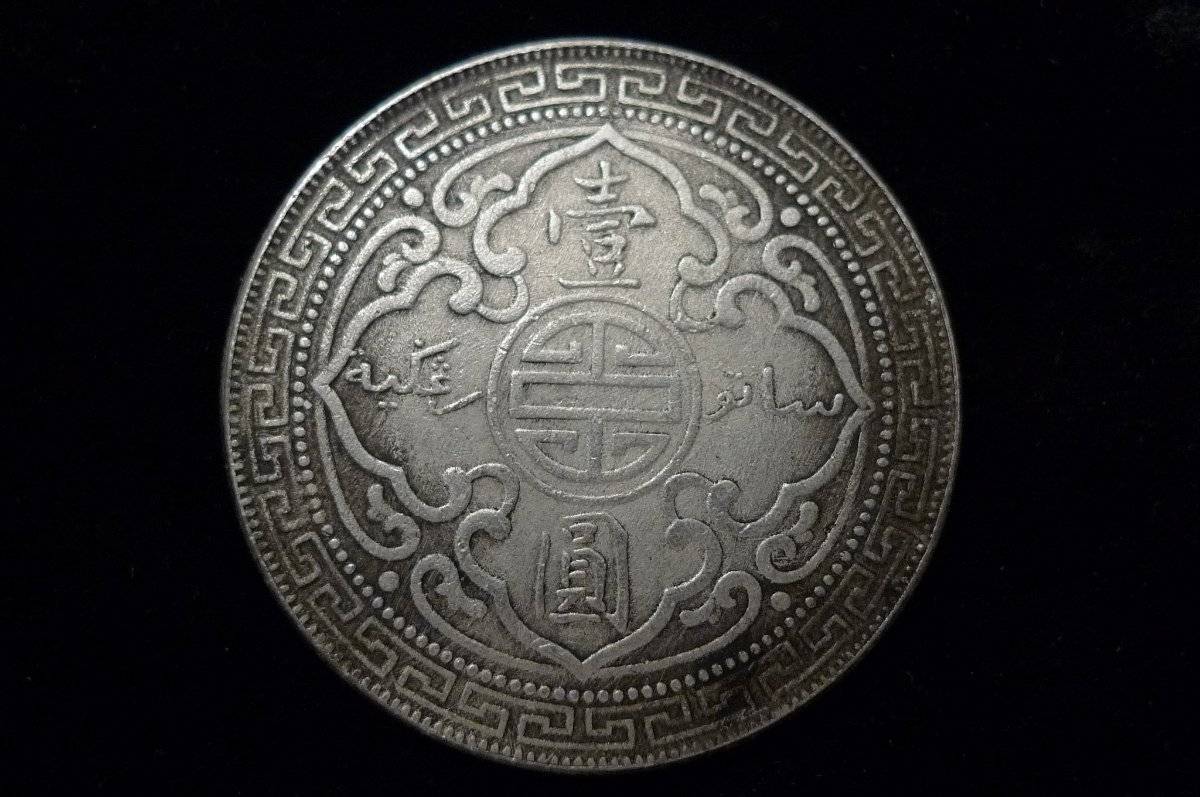
Dorado The coin you have posted is a very common Numismatic Forgery (NF) made in China. It has the typical artificial black toning around the rim. Get to know that and be suspicious of any coin toned in a similar fashion - including US and other world coins. There are thousands of types that have been copied in China and they all pose a threat to the hobby.
Is your example magnetic? Many are and it is important to realize that there is no alloy of silver (above 400 fine) that exhibits magnetic characteristics using a standard magnet. So any silver coin that is magnetic can be considered fake.
Is your example magnetic? No . |
|
Bedrock of the Community
Canada
24885 Posts |
1862 US. One dollar.   No explanation is necessary , I bought those fake coins to see the way they are made.(from China) |
|
Pillar of the Community
United States
5362 Posts |
Dorado - The earlier types were often made of nickel which is magnetic. More recently the Chinese turned to a non-magnetic copper-nickel as a replacement. You can also use some of these bad Numismatic Forgeries to run experiments of your own to see what they look like when they are chemically cleaned and artificially worn to lower grades.
|
|
Bedrock of the Community
Canada
24885 Posts |
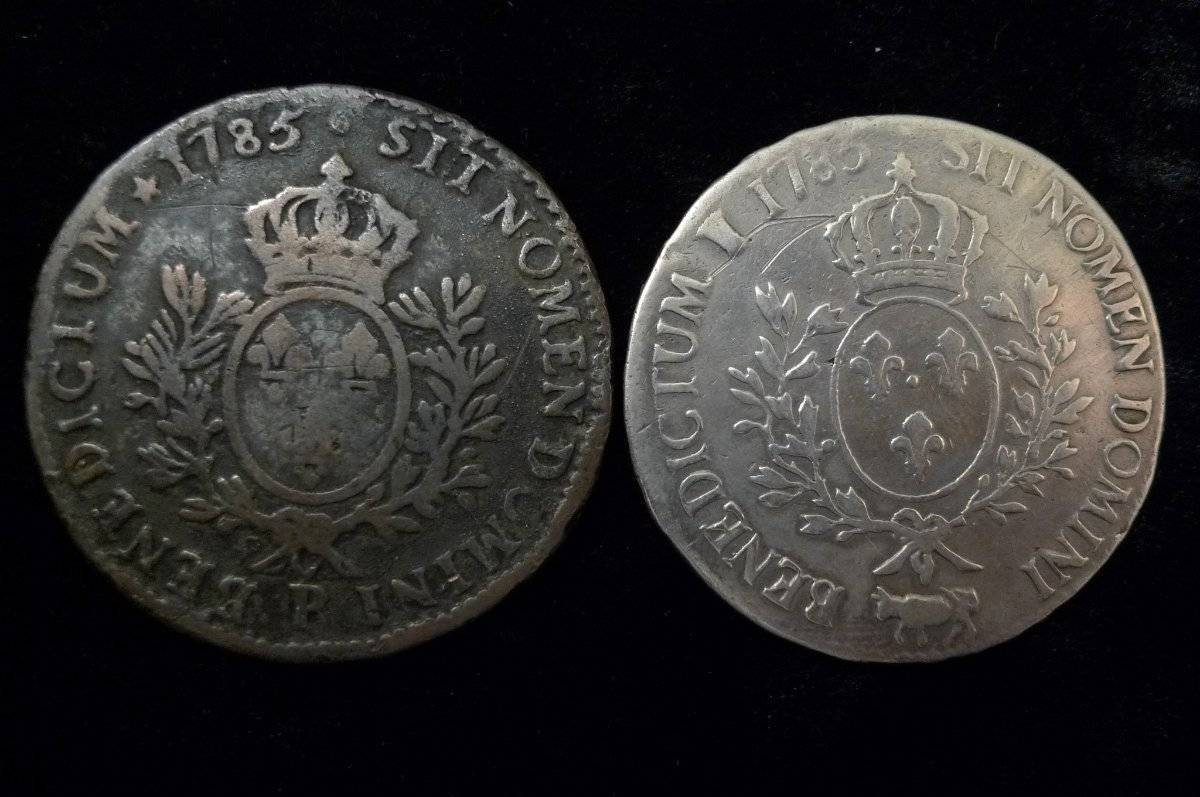
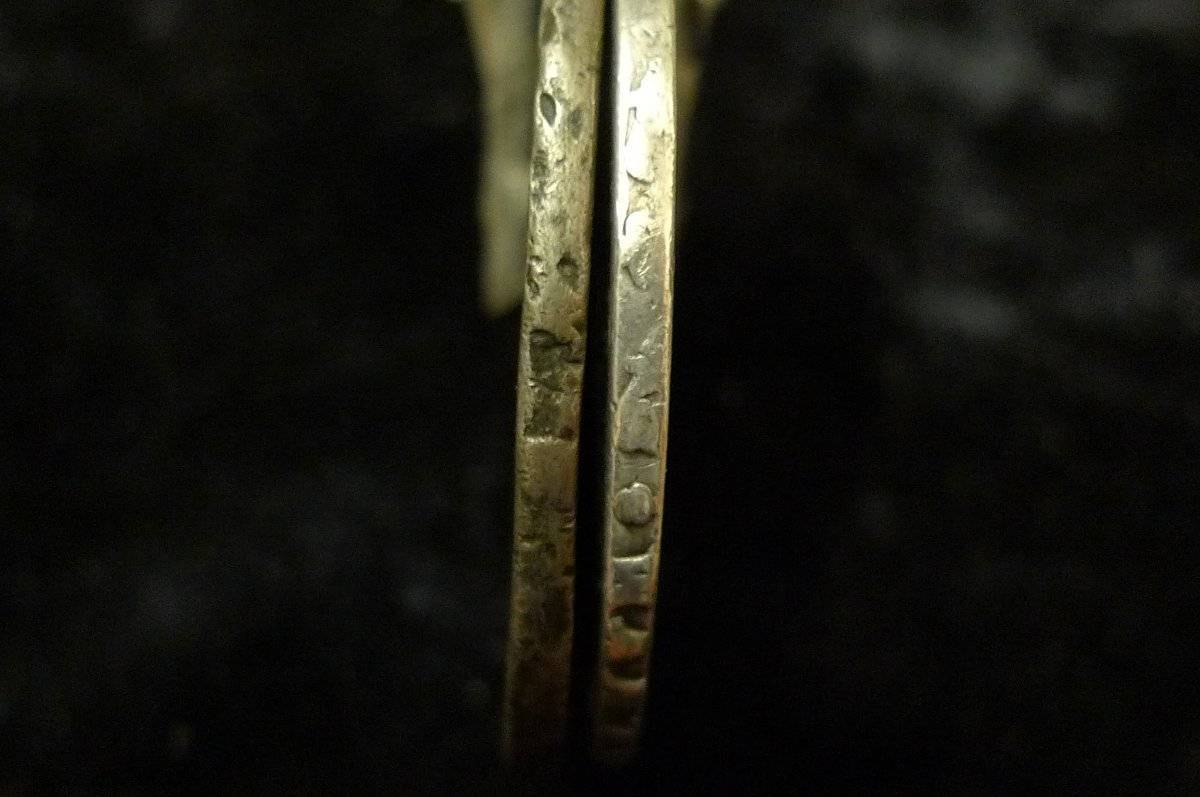
Rare currency Louis XVI shield 1785 R Orleans, vintage fake rare (Rare monnaie Louis XVI ecu 1785 R Orleans, faux d'epoque rare) What is your opinion about this one ? 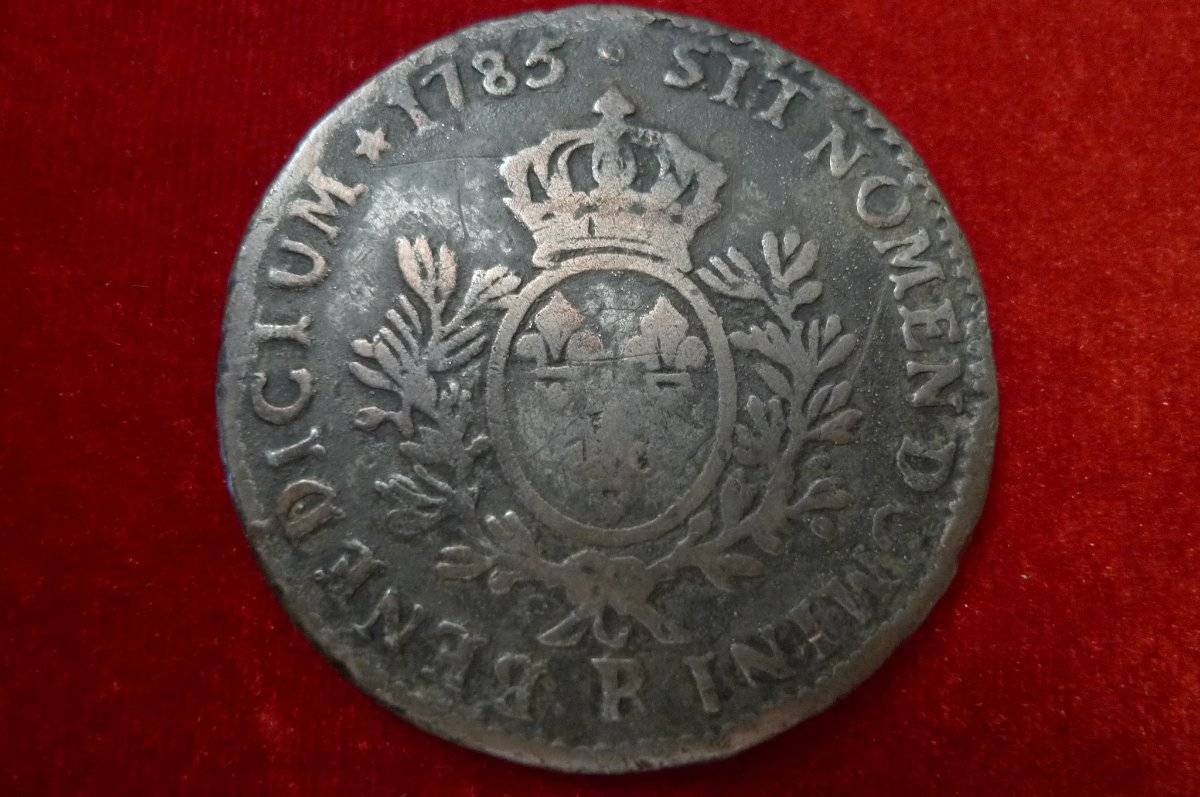  On the right side, the original coin 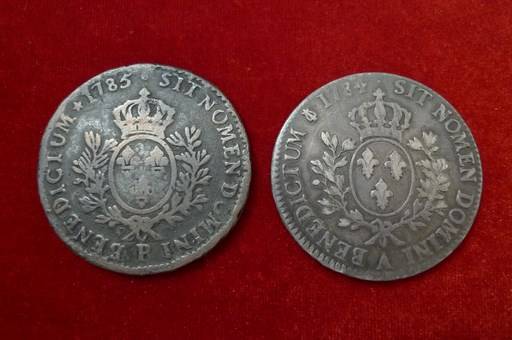 - 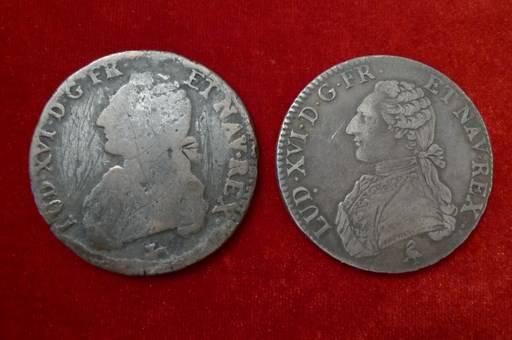 Edited by Dorado
11/14/2018 1:06 pm
|
|
Pillar of the Community
United States
797 Posts |
I will try to post my Seated dime Contemporary Counterfeit later tonight. Its a Lead core, with copper layer, and silver ontop of that. Using this so I can remember this thread after work. |
|
Pillar of the Community
 United States
3363 Posts |
Great ecu Dorado! They've managed to make the olive branches look like kelp.
It looks like plated copper. How much does it weigh?
"Two minutes ago I would have sold my chances for a tired dime." Fred Astaire
|
|
Pillar of the Community
United States
5362 Posts |
The counterfeits of the Ecu make an interesting series. I have a few of those mostly Louis XVI. None are very common but I would not classify them as "rare". They are about as scarce as the Charles III counterfeits of Mexico but not as common as Charles IV.
I believe I have one like yours - I recall the odd leaves.
|
|
Bedrock of the Community
Canada
24885 Posts |
Quote:
It looks like plated copper. How much does it weigh? 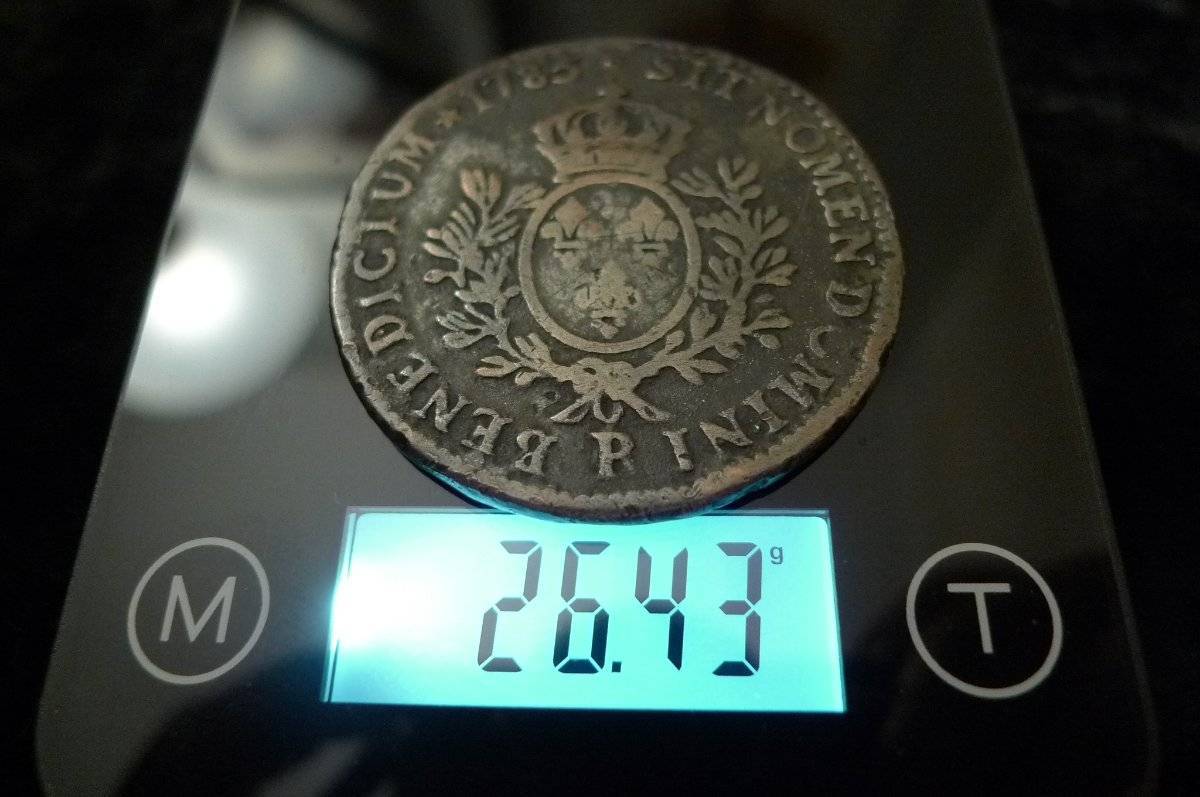 |
|
Pillar of the Community
United States
5362 Posts |
To make up for the lower density, the coin must have a greater volume so I would suspect that the planchet must be thicker than genuine. A different diameter would be too noticeable.
|
|
Bedrock of the Community
Canada
24885 Posts |
|
|
Pillar of the Community
Belgium
1185 Posts |
Very interesting thread! About one year ago was looking for help to characterize a strange pair of 8R and was glad to see so much expertise on CCF (thread "an odd pair of eight reales" ; details of photo's posted in http://goccf.com/t/304129&whichpage=2#2627454 ) Below is a counterfeited type 1b leeuwendaalder which is rare today but which was a very common large silver piece in Holland around time of production. The States of Holland urgently needed to raise taxes to support the revolt against Spain in a close to desperate phase. The resolution of 25 august 1575 of the States of Holland approved the coinage of a large silver piece with face value of 32 stuivers in which silver content was only 29 stuivers. By melting the then standard Philipsdaalders and Bourgondische kruisdaalders (90% silver) and reconverting those into leeuwendaalders a 10% tax was taken. The estimation of the total income of this operation is approximately 1 million guilders which was substantial. The upper piece is an example of a genuine type 1b leeuwendaalder with characteristic die elements Delmonte 830, R1 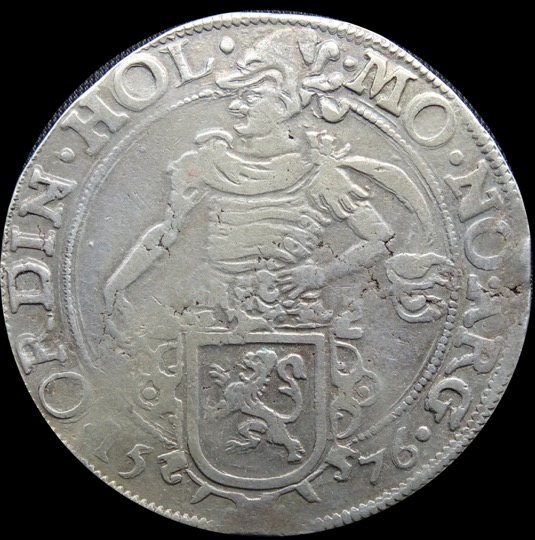 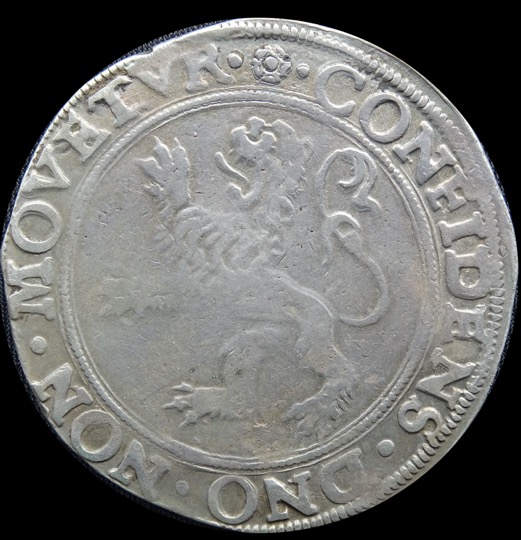 The lower piece has a copper-like surface, and a legend error: CONFIDES DNO NON MOVETUR instead of CONFIDENS  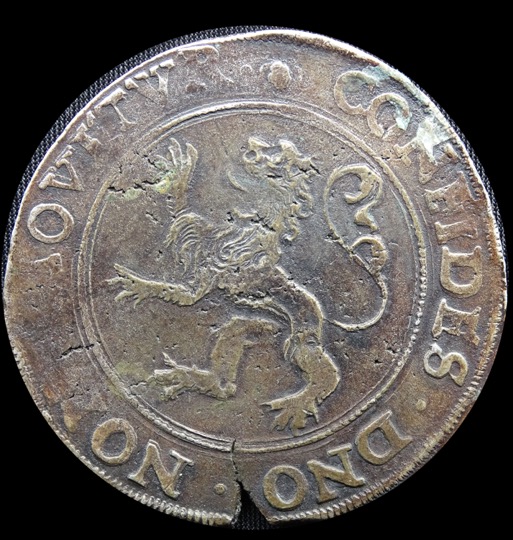 |
| |
Replies: 105 / Views: 20,009 |








 First Page
 Previous Page


 Posted 11/04/2018 5:13 pm