| Author |
 Replies: 14 / Views: 2,285 Replies: 14 / Views: 2,285 |
|
|
New Member
United States
2 Posts |
I found this dime in a coinstar reject slot. I think it's a clamshell error, but I'm not really a collector. Do you guys know if it's real or just damaged? 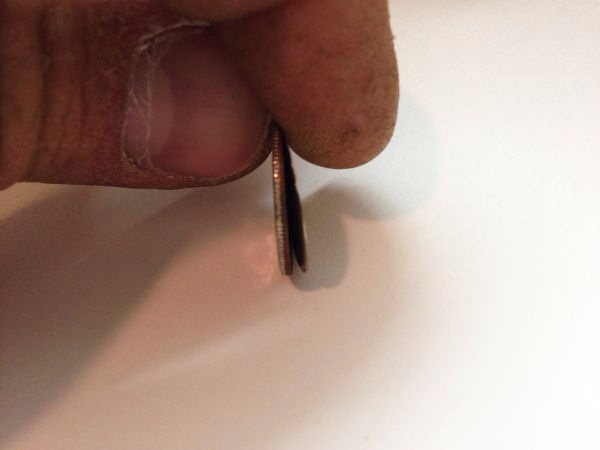 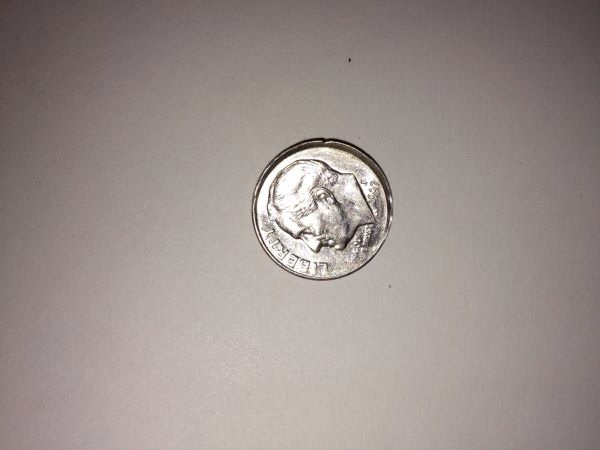 |
|
|
|
Pillar of the Community
United States
1003 Posts |
That is cool, but I'm not an expert. I bet an expert will come soon.
|
|
Pillar of the Community
United States
2651 Posts |
I'd be willing to bet better pictures are needed to get a good answer. Could be damage, could be a defective planchet, could be a huge lamination...etc etc...but closer images are needed. Close ups of the reeding, the obverse and reverse would help.
|
|
Pillar of the Community
United States
8534 Posts |
Sure looks like a clamshell.
Oregon coin geek.....*** GO BEAVS ! ! ! ***
|
|
Bedrock of the Community
United States
62064 Posts |
Looks like the cladding separated. Still a keeper though.
|
|
Pillar of the Community
United States
1054 Posts |
I would have to agree it would be a clamshell. A standard lamination usually only affects a section and not the whole obverse face. However, it's more rare to find clamshells for coins such as copper cents and 90% silver. Because the clad coins have multiple layers, it's easier to have the bad annealing and therefore easier to split.
|
|
Pillar of the Community
743 Posts |
I agree with it being a separating clad layer. I had a completely separated reverse clad layer to a dime at one time. I sold it on ebay for about $30. |
|
Bedrock of the Community
United States
62064 Posts |
Here is an image of a clamshell: 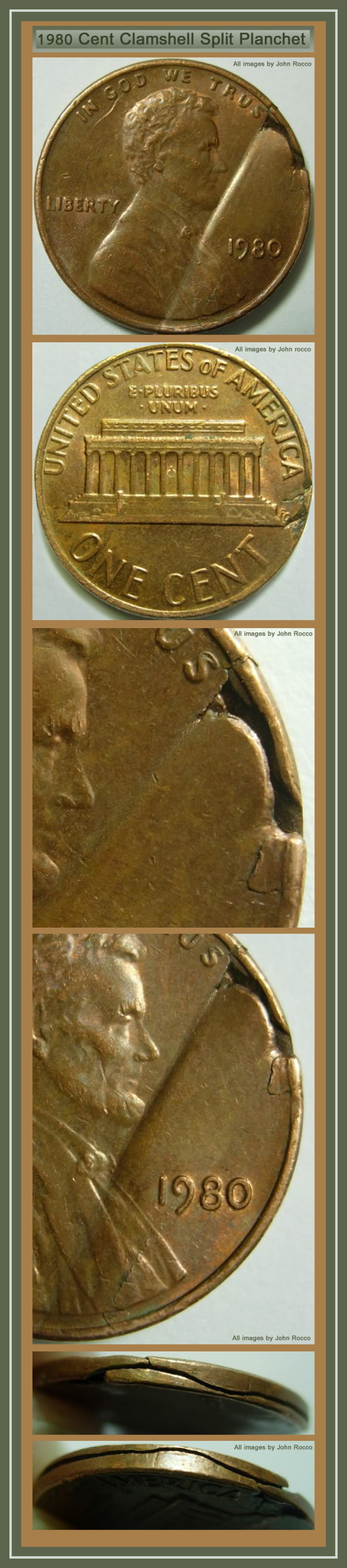 See how the rim looks like a clamshell. |
|
New Member
 United States
2 Posts |
So what is the estimated value of a clad layer separation?
|
|
Pillar of the Community
743 Posts |
I would think it is more than just having a separated layer. If you really want to know put it on ebay otherwise just keep it and label it as a partially separated clad layer error. If I had to guess I would say $50-$75. |
|
Pillar of the Community
743 Posts |
If you were to sell it though, you would need better pictures so people could determine the grade and error for themselves.
|
|
Pillar of the Community
United States
2651 Posts |
So everyone here can tell from the pictures provided that this is a "clamshell" error?
|
|
Pillar of the Community
743 Posts |
I believe Coop and I are the only ones that have stated it is a partial separated clad layer. A Clamshell error is completely different and I am not sure that they even occur on clad coins. It looks fairly obvious from the photo that the clad layer has separated because the reeding is intact. Here is an article pertaining to clamshell errors and I do not believe the OP's coin to fit the description. http://www.coinworld.com/articles/c...tions-are-un I will say I would never even know what a separated clad layer was if I would have never shown my clad layer to John Roberts of Anacs. I took it with me to a coin show and he explained it to me. |
|
Pillar of the Community
743 Posts |
Gemini343, does the dime look normal under the clad layer? Can you take a photo of the inside without damaging the coin?
|
|
Pillar of the Community
743 Posts |
|
| |
Replies: 14 / Views: 2,285 |
|










 Posted 01/20/2014 7:54 pm


