| Author |
 Replies: 68 / Views: 13,355 Replies: 68 / Views: 13,355 |
|
Pillar of the Community
United States
6370 Posts |
I'm new here and this is my first post, so bear with me. I would like an opinion on this coin. Yesterday, I bought a lot of 3 large cents, dated 1797, 1798, and 1800, at an auction at my coin club for $15. The 1797 was in FA-02 condition, the 1798 was AG-03, and the 1800 was AG details with a hole. I sold my dad the 1798 for $5 (which we later determined to be an S-184 valued at about $50 or so). I got an offer of $15 for the 1800 after the auction, but I declined thinking it had a rare overdate (not the case, but it was the S-197 variety that had a die chip in the first 0, giving the illusion of an overdate.). Then, this morning, I decided to research the 1797's variety. The first diagnostic was the reverse of 1796, so I went from there. Then I looked at the date, which had the numbers close together and evenly spaced. The last diagnostic was the edge, which was plain and had no gripping (which is somewhat like reeding). All told, I figured out that this was the S-121a variety. When I tried to research price, there was nothing to compare it to, save one example here: http://larrybriggsrarecoins.com/ind...duct_id=1182 . It is comparable to my coin's condition. This variety has a rarity rating of R7-, meaning fewer than 20 are known to exist! With the highest grade being a VG-10. I still need it to be checked out, but I think this may be a $2000 coin! Needless to say, I'm stoked!! I'm trying to prove that it is not the 121a, but I'm not having any success in doing so. As of right now, I am 95% sure this is the real deal. I just hope this doesn't turn into a disappointment... Here's a reference: [url]http://www.NGCcoin.com/vp-variety.aspx?coinid=307 Here's my coin: 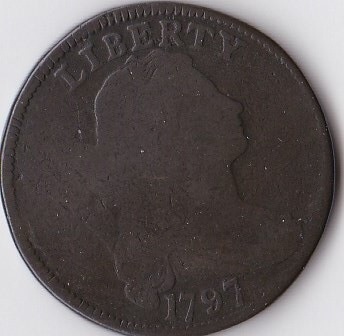 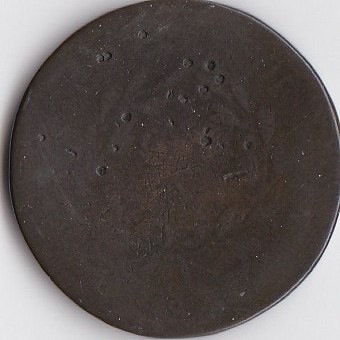 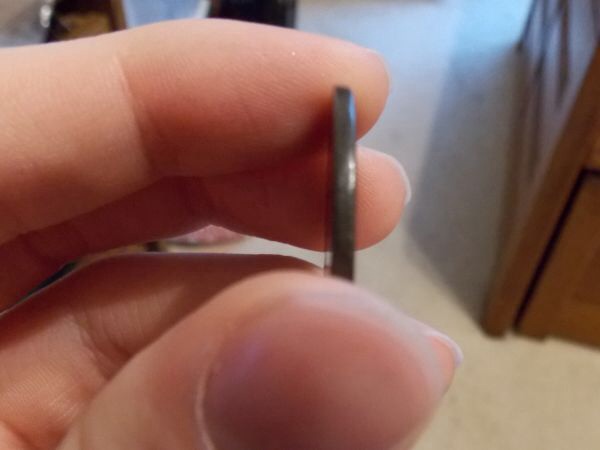 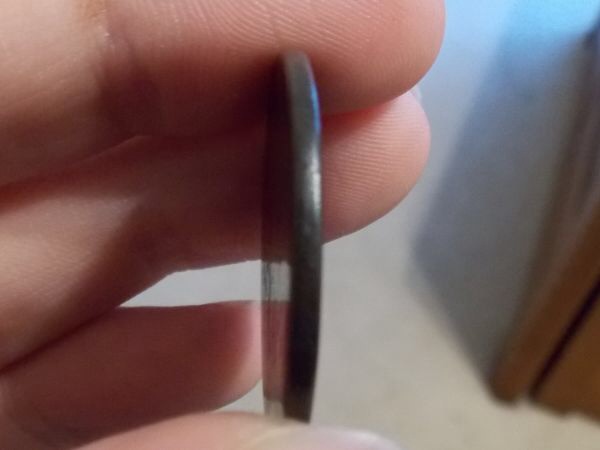 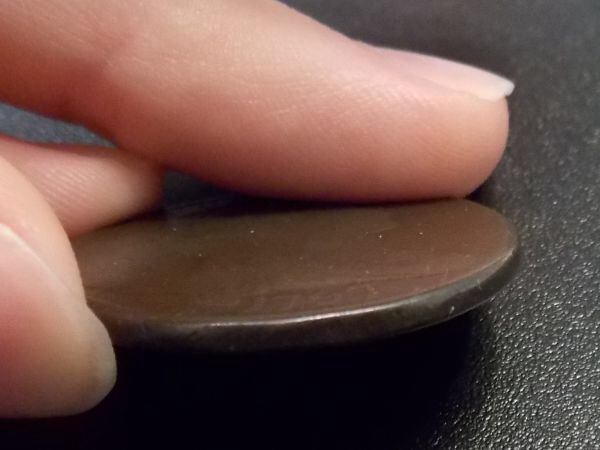 If you look closely to the left side of the obverse, you might be able to see a more worn/ raised area. This was a huge die break that is a diagnostic for the die pair. It is rather obvious on the coin in hand, but you could compare it to the coin in the NGC link above. Here is a reverse of 1796 (1795) (the rare one): 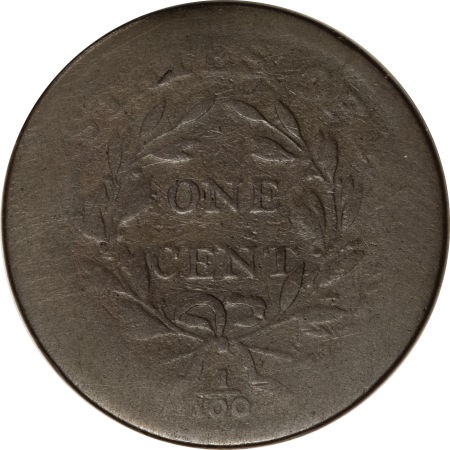 Here is a reverse of 1797: 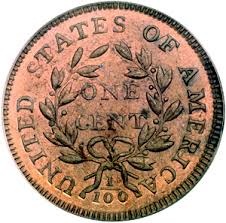 Here is an obverse of a 121a: 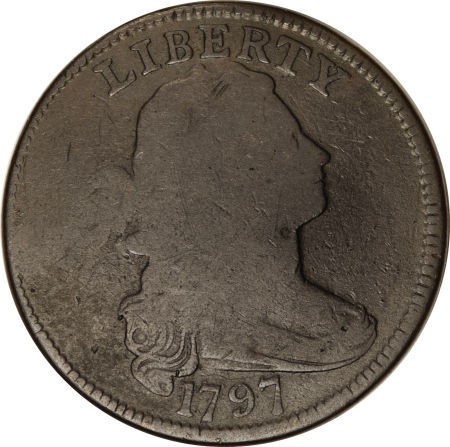 Here is an obverse of a 120a: 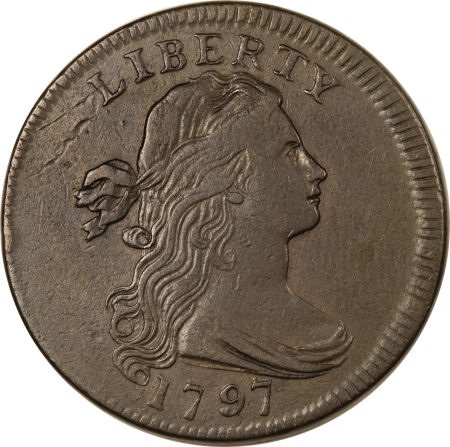 And here is an example of a "gripped" edge, which is the more common variety: 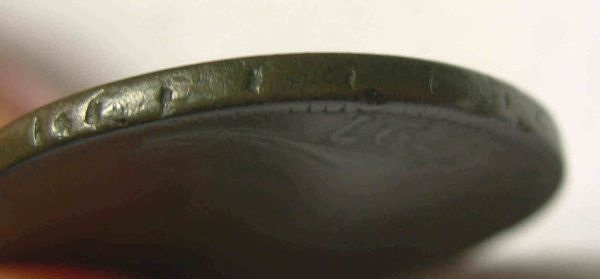 The edge of my coin is completely smooth, except for rim bumps, which is the rare variety. Thanks for you time for looking and evaluating! Your help is greatly appreciated! Key #7: My SAT score was 2230. Edited by TypeCoin971793
02/18/2014 6:22 pm
|
|
|
|
Pillar of the Community
United States
9810 Posts |
"Buy the Book Before You Buy the Coin" - Aaron R. Feldman - "And read it" - Me 2013! ANA Life Member #3288 in good standing since 1981, ANS, Early American Coppers Member (EAC), Colonial Coin Collectors Club member (C4), Conder Token Collector Club member (CTCC), Civil War Token Society (CWTS) member, Liberty Seated Collectors Club (LSCC) & Numismatic Bibliomania Society member (NBS), USMex, Member in good standing, 2¢ variety collector. See my want page: http://goccf.com/t/140440 |
|
Pillar of the Community
 United States
6370 Posts |
"It looks like a die break is visible on the obverse, but we need much better photos to tell with certainty. The reverse looks pretty gone, and I can't really tell how much die break is on the obverse, are there also breaks in the "Liberty"?"
A better picture of the die break will come, but my hard drive is misbehaving, so it may take awhile (I'm on a tablet). I know the reverse is terrible, and I could barely tell that it is a reverse of 1795, but there are the viarous diagnostics: the top four leaves (two on each side) are in bunces of one, the ribbon bows are smaller, and the stems are higher and longer. The obverse die break is a huge bulge. As for the die breaks in Liberty, I can't destinguish between the coin and dirt.
|
|
Pillar of the Community
United States
1211 Posts |
Awaiting input from Conder on this one...
|
|
Pillar of the Community
United States
4897 Posts |
  Been looking to help. Cannot deny your conclusions. Better pics may help. |
|
Pillar of the Community
United States
3253 Posts |
The easiest leaves to make out on the reverse are the two above the E in ONE; they really have the look of the '95 reverse. Seems the real problem with attributing this subtype is proving that edge gripping hasn't just been worn away, whether deliberately, or due to honest wear.
|
|
Pillar of the Community
United States
6370 Posts |
I took more pictures of the coin this morning (those will be uploaded soon) and I measured the coin with a slide rule (I don't have a more accurate device to do this measurement). The diameter is 28.575mm (36/32 in). The coin is upposed to have a diameter of 29mm, so the edge was worn down about 0.2mm. Would that be enough to wear away any trace of gripping, because there is no trace of it. From my research, those notches are very deep and would expect to some if not all of them to show up.
|
|
Moderator
 United States
23522 Posts |
Welcome to Coin Community. Nice to have a new member who did due diligence first, and chose to ask more questions as a result.  I'm in no way qualified to judge the coin - not in the sense of philadelphian and amida17, as well as others who will be attracted by your thread title - but I'm thinking your diameter measurement does not sufficiently account for the total absence of gripping. Consider newer coinage, which retains reeding into basal-state wear; coins just don't wear on the edge too drastically. Preliminary research offered me conflicting evidence as to which is the rarer, though, the gripped one or the smooth one. Information is scare about this variety. |
|
Pillar of the Community
United States
1554 Posts |
I'm hoping for you that it a 121a, but, the one thing I know about this variety is that there are many, many low grade altered/fakes.
|
|
Pillar of the Community
United States
6370 Posts |
"I'm hoping for you that it a 121a, but, the one thing I know about this variety is that there are many, many low grade altered/fakes."
I bought this from an older gentleman at my coin club who bought them from an elderly gentleman some time before for $80. I doubt it would be fake. By the way, where did you find the information to say that there are many fakes of this variety? Just curious.
|
|
Pillar of the Community
United States
1554 Posts |
It is well known in EAC and "old coppers" collectors circles and stated as such in CQR by Jack Robinson.
|
|
Moderator
United States
16694 Posts |
It is easier to alter lower grade coins as they hide the alterations better. I can't see any attributable features that will denote this coin as 121a.
I hope it turns out to be one though :-)
swcoin.ecrater.com
|
|
Bedrock of the Community
United States
17884 Posts |
It does appear to be a 121, whether it is a or b I can't say from the pictures. The 29 mm figure for the diameter is really an "average" or "typical" figure it is not an absolute. These coins were struck without restraining collars and the planchet would expand by varying amounts depending on the hardness of the planchet and the strength of the strike.
The "grip marks" do tend to be deep but can be very weak on well worn coins.
Edited by Conder101
02/18/2014 7:15 pm
|
|
Pillar of the Community
United States
6370 Posts |
I was wondering about that for the diameter; there was less of a quality control in the early days of the US mint. Would it be possible to weigh it to determine how much metal is worn off, or is that an average as well?
Would better pictures of the edge prove useful, or is looking at the coin in hand the only way to determine the edge variety? When I looked at the edge under a 7X magnifying loupe, I saw no immediate signs of filing, and there was only one relatively large circular dig (smaller than the ones on the reverse) in the most worn area of the edge and a small number of small, circular ticks in various places around the edge. There is absolutely nothing else save for slight rim bumps. This sort of thing is a bit out of my expertise.
|
|
Pillar of the Community
United States
1211 Posts |
Sadly, I think that if those who have contributed above cannot verify it then you have your answer. You may wish to show this coin to some well respected EAC folks at a major coin show; Bob Grellman, Tom Reynolds, among others.
|
|
Pillar of the Community
United States
9810 Posts |
You don't have your location in your profile, but the EAC convention is coming up this May in Colorado Springs if you are near there, I'd head to it. Or contact one of the big dealers like Tom Reynolds, Shaun Yauncey, Bob Grellman etc. see about sending the coin to them for attribution.
"Buy the Book Before You Buy the Coin" - Aaron R. Feldman - "And read it" - Me 2013! ANA Life Member #3288 in good standing since 1981, ANS, Early American Coppers Member (EAC), Colonial Coin Collectors Club member (C4), Conder Token Collector Club member (CTCC), Civil War Token Society (CWTS) member, Liberty Seated Collectors Club (LSCC) & Numismatic Bibliomania Society member (NBS), USMex, Member in good standing, 2¢ variety collector. See my want page: http://goccf.com/t/140440 |
| |
Replies: 68 / Views: 13,355 |








 That is a cool coin regardless! It looks like a die break is visible on the obverse, but we need much better photos to tell with certainty. The reverse looks pretty gone, and I can't really tell how much die break is on the obverse, are there also breaks in the "Liberty"?
 Posted 02/18/2014 04:47 am


