| Author |
 Replies: 11 / Views: 1,221 Replies: 11 / Views: 1,221 |
|
|
Valued Member
United Kingdom
287 Posts |
Another one here, unsure what it is, doesn't look roman to me but I cant quite make out what the detail is, although it is good detail. Any Ideas? 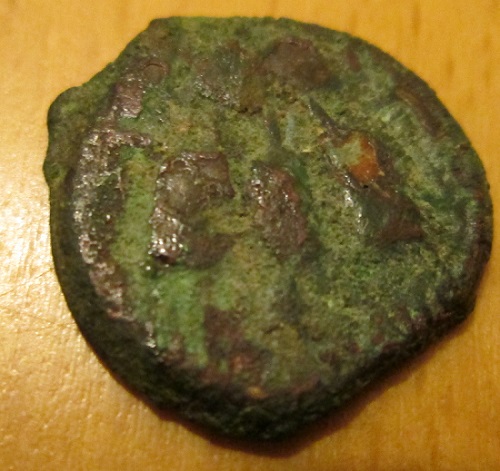 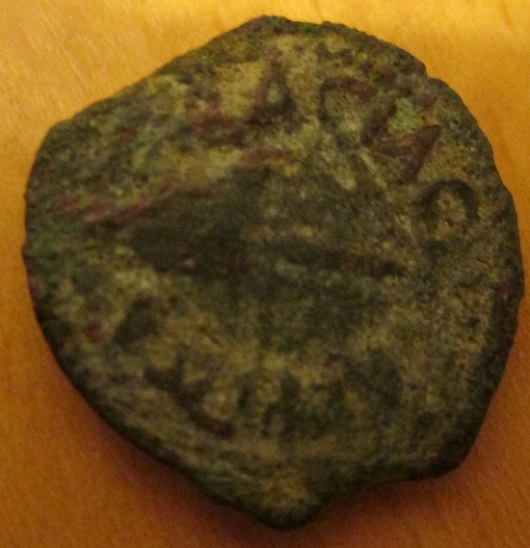 |
|
|
|
Valued Member
United States
121 Posts |
|
|
Pillar of the Community
United Kingdom
4208 Posts |
I know what that is...is Jewish. The first picture is upside down, thats something like 3 ears of corn of wheat. I couldnt say who it is (only got the 1 jewish coin). Probably listed under 'Prutah'.
(just took a quick look, its Agrippa I - these came with year markings, you might want to try and work out which year its from).
|
|
Moderator
 United States
23731 Posts |
|
|
Pillar of the Community
Canada
937 Posts |
I think I have to agree with Ben -- in the bottom photo inscription you can see "CIAC" which I believe is part of the Greek word for Caesar used on those old Jewish coppers in the first century AD.
|
|
Pillar of the Community
 United States
3098 Posts |
|
|
Valued Member
 United Kingdom
287 Posts |
Thanks guys, interesting coin.
I had a read up, wasn't aware of ancient Jewish coins.
Does this coin look like it would benefit for a clean, it seems to have nice patina, not sure if the surface dirt helps bring out the design or if it will be covering more than its highlighting.
Also, the rusty coloured part of the first picture, is that where the patina is removed? That scares me if so as I don't want to chip off more patina. but I can always brush gently all bar that area if it will be beneficial
|
|
Valued Member
United States
87 Posts |
The grandson of Herod the Great and called Herod (Agrippa) in the Acts of the Apostles. He ruled over much of Israel until his death in 44 AD. Another example of one of his Prutahs- 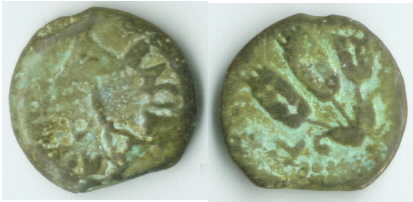 Agrippa I. AE Prutah. Hendin 75. Obv: Umbrella or canopy with fringes, inscription around. Rev: Three ears of barley growing between two leaves, flanked by date LS. Struck 42/43 CE. |
|
Valued Member
United Kingdom
287 Posts |
Is this coin classed as Roman at all? Sorry for the possibly stupid question, but whilst researching Agrippa I, it seems to mention roman a lot, or is this just because its from the 'roman times'?
|
|
Pillar of the Community
United Kingdom
4208 Posts |
Judaea was Roman at the time, but these tend to be referred to as Jewish. Other coins in the Jewish series are the rebellion issues - thats the only one I've got, supposedly found in England.
As to cleaning, a good long soak in olive oil with the occasional brush could turn out a very nice coin - but that green might resist. If you dont already have one, set up a pot of oil in a dark place, with a lid, and chuck culls and coins like this in it. Leave it, never retrieve stuff from it and then, yearly, poke through the soup and change the oil (I recommend sifting through it every new year's day - you'd be suprised how much detail survives in some culls). Most of the coins in it wont change at all, some will turn out with some ghost details but occasionally a really good coin could come out where the encrustation was both resilient and indistinguishable from patina.
|
|
Valued Member
United States
87 Posts |
Agrippa I had close ties with Rome, and ruled under Roman authority. I wouldn't call his coinage Roman; I think that would be selling it short. Calling it Judaean, Herodian, or maybe Roman Provincial seems to fit it better. Agrippa struck coins with his own image in regions other than Jerusalem, but he did not put graven images on this local coinage. He used the canopy as a sign of royalty and instead of a god or goddess on the reverse, it shows grain ears, a local staple of the population. The obverse inscription is Greek and translates to "King Agrippa".
|
|
Pillar of the Community
United States
5010 Posts |
i don't think that one will improve any really. here's mine!   |
| |
Replies: 11 / Views: 1,221 |
|










 Posted 03/09/2014 3:56 pm


