| Author |
 Replies: 23 / Views: 8,112 Replies: 23 / Views: 8,112 |
|
Pillar of the Community
United States
1031 Posts |
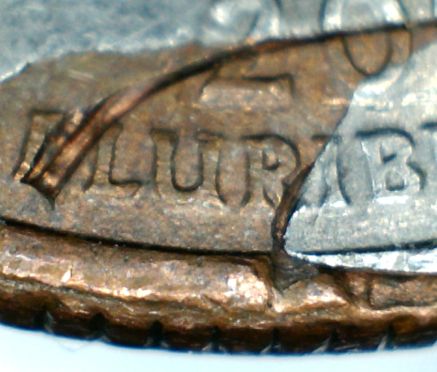
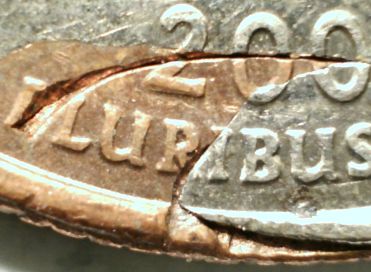
I was wondering if this was PMD, an error or a combination of both? Thanks in advance for your thoughts! 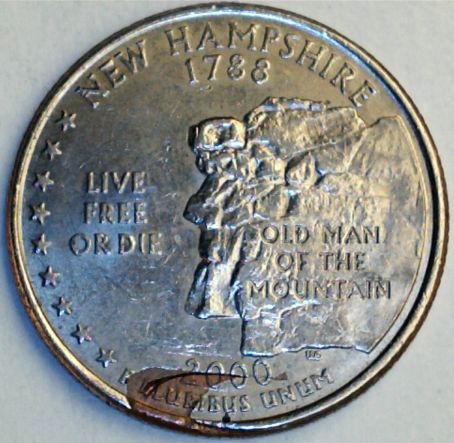 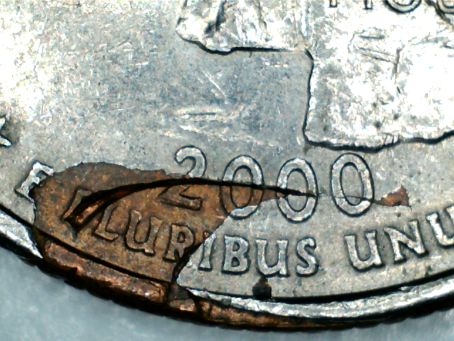 |
|
|
|
Valued Member
United States
107 Posts |
|
|
Pillar of the Community
 United States
1031 Posts |
It looks like it could be lamination but I was concerned with the crack or gouge that goes through the P and 2000. There is also a crack or gouge that goes between RI in PLURIBUS to the rim. Could that be PMD that caused the coating to flake off? |
|
Bedrock of the Community
United States
12437 Posts |
I believe that the planchet was damaged pre-strike, all of the edges are too flat and smooth for it to be PMD. |
|
Pillar of the Community
United States
1804 Posts |
docsfishn............. Quote:I was wondering if this was PMD, an error or a combination of both? Thanks in advance for your thoughts! Do not believe it is a pure PMD. |
|
Pillar of the Community
917 Posts |
Quote:Do not believe it is a pure PMD. So it is only part PMD? What do you mean? |
|
Pillar of the Community
872 Posts |
It looks like the planchet was probably broken when it was punched out of the sheet metal. Then, it went through the minting process, and was hammered. Over time and circulation, the plating looks like it was chipped away. Part of it may have even been torn away when the coin was struck. Its really tough to say what happened, since the coin has been heavily circulated.
I think it would be considered a planchet issue, but one has to assume that something had to be wrong with the planchet before the strike. The area where the "crack" is, appears to be unlevel, and makes me wonder how the metal could be evenly torn off like that. Again, there are too many variables here since the coin was placed in circulation and ran amuck for nearly 14 years.
In the end it "looks" like damage. Its kind of unique, but I don't believe it holds any type of premium.
Edited by Collector-Corner
03/27/2014 11:23 pm
|
|
Pillar of the Community
Canada
2632 Posts |
It would be nice to see the flip side as well. Looks like PMD to me that coin took a hit. IMO Edited by Alexer
03/28/2014 12:55 am
|
|
Pillar of the Community
United States
3640 Posts |
These coins are clad and not plated. A partial missing clad layer on this one. Possible PMD besides. |
|
Pillar of the Community
743 Posts |
I vote partial missing clad layer. I highly doubt it is PMD because it would be very hard to separate the clad layer. |
|
Pillar of the Community
Canada
2632 Posts |
I cant look at this and not think its PMD. Looks like it got jammed in a machine. IMO 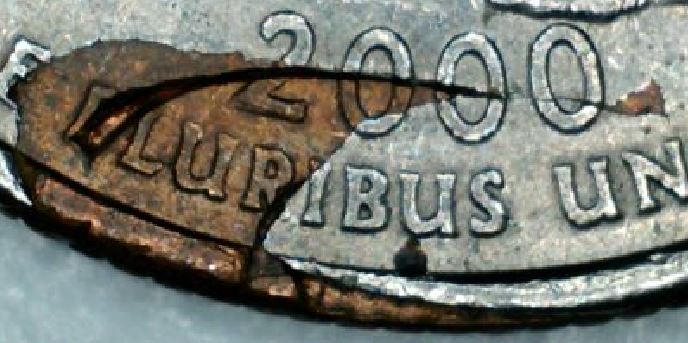 Edited by Alexer
03/28/2014 02:46 am
|
|
Bedrock of the Community
United States
12437 Posts |
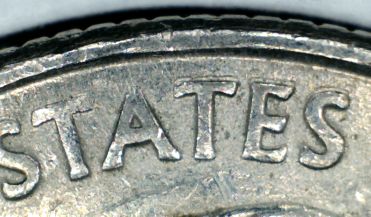
A machine jam will not typically break off a thick clad layer, this is not a thin layer of plating. Even if it did somehow manage to break off, you would see rough upturned edges on the cladding where it was sheared. The devices would also be mushy and indistinct if the cladding was separated post-strike. The appearance is entirely consistent with a pre-strike event. Look at coop's image and take note of the distinct difference in appearance between pre- and post-strike separation: 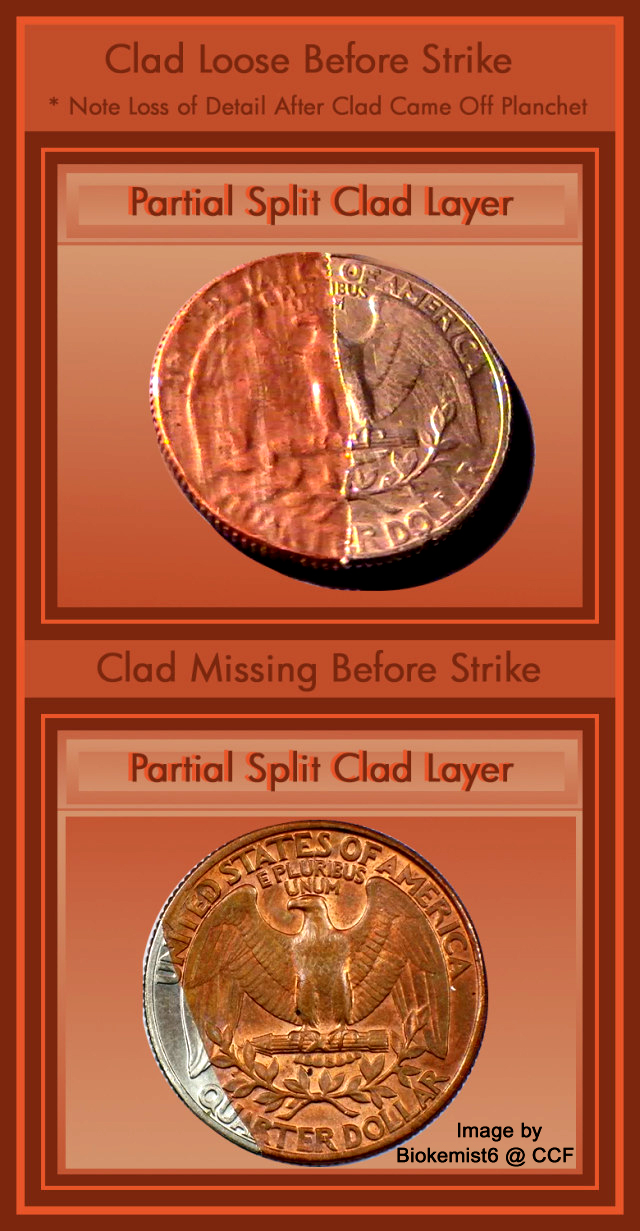 Edited by biokemist6
03/28/2014 11:57 am
|
|
Bedrock of the Community
United States
62064 Posts |
I agree. The clincher for me was the strength of the devices on the clad missing area. Good job everyone.
|
|
Pillar of the Community
United States
1031 Posts |
|
|
Bedrock of the Community
United States
12437 Posts |
I think it is a nifty little error, not a huge premium but it certainly has value  |
|
Pillar of the Community
Canada
2632 Posts |
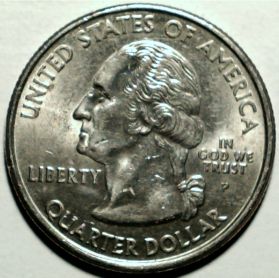
I totally respect everyone's opinions here that's what makes this a great forum. But now that I've seen the obverse I'm still not convinced its an error. I have several good questions as to why..how? But I must be the only one, sorry bout that.  |
| |
Replies: 23 / Views: 8,112 |










 Posted 03/27/2014 10:14 pm