| Author |
 Replies: 17 / Views: 6,340 Replies: 17 / Views: 6,340 |
|
New Member
Australia
15 Posts |
Hi, Picked up this coin last week on an auction, I'm suspecting it to be fake as it weighs only 26.6g instead of 27.1g, I can't see any wear that'd justify .5 gram weight difference. Any thoughts guys ?   Cheers |
|
|
|
Pillar of the Community
Hong Kong
1270 Posts |
Welcome Platypus, though the weight is lower than standard, I don't think this coin is fake. 0.5 gram of error is allowable I suppose. Are you sure your scale is absolutely accurate? Henry
|
|
Pillar of the Community
United States
1761 Posts |
Realize that with Ag/Cu alloy specimens with ~90% Ag and ~5% Cu === copper with the principles of selective corrosion will migrate to the surface. As an example sometimes when I am forced to buy a cleaned silver coin that is pale white - I will stick it in a toaster oven at 400-450*F for an hour or so - it comes out copper/blue in its toning - not the best toning effect but better than cleaned - white - not saying this coin is cleaned but copper toning should not be a concern - unless this picture is all messed up ... I agree a +/- 0.5 Weight Tolerance is fine ... in our new GNL/ANS book we talk about this in length ... coming out in early 2015 ... John Lorenzo United States Edited by colonialjohn
04/19/2014 10:50 am
|
|
New Member
 Australia
15 Posts |
Thanks guys for the comments, it's reassuring to hear that 0.5g is within the tolerance range.
|
|
Pillar of the Community
United States
3229 Posts |
Nice!  |
|
Valued Member
United States
462 Posts |
colonialjohn, are you serious with the toaster oven toning ? I have couple of badly dipped coins that I would like to experiment provided they dont get worse :)
|
|
Pillar of the Community
United States
1761 Posts |
Totally serious ... but it brings the copper to the surface ... so it will have a NATURAL tan look ... it can in some respects even GIVE BACK some of the cartwheel effect ... I did say some ... works very well on DIPPED COINS ... use it only for silver alloy coins that have been dipped and are pale silver ... use 400*F for one hour ... to increase the effect uniformly ... wrap the coin in aluminum foil ... view after one hour intervals until amount of toning is to your desire ... you are simply expediting the oxidation process ... for a cleaned copper coin ... what do you do? Put it in a sulfur coin flip for a DECADE! ... I did that with my New Jersey Copper Maris 10-G that brought $6,000-7,000 at Stacks Americana Sale in 2008 ... that process was more sensitive after the orange surface was stripped down and I used this very slow and natural retoning process on the Dr. Harold Bareford example === I also have formulated a new COIN Care product better than the old ... but don't worry about that for now ... <BG>. With silver - you can be MORE AGGRESSIVE - besides - with dipped silver - you have nothing to LOSE?
John Lorenzo
United States
Edited by colonialjohn
04/19/2014 2:02 pm
|
|
Pillar of the Community
United States
4883 Posts |
A couple things about this coin do make me suspicious. First, am I seeing a few small raised specks in the fields, especially on the reverse? One looks to be above the back of the right griffin's head, for instance. Such could be indicative of a casting. Also, in the vicinity where the legend reads "MAXIMILLANO", there looks to be a broadening of the area between the denticles and the rim.
While 410 grains is a smidgen too light for comfort, the test I'd perform at this point would be to determine its specific gravity. However, if it's a modern counterfeit, the metal composition may be up to par.
Colligo ergo sum
|
|
Pillar of the Community
United States
5362 Posts |
If this coin appeared on ebay and was reported as a violation I would vote for removal. I believe this is simply a well made numismatic forgery. Why? Because the forger blundered the die at the intersection of the dentil arc with the high rim (collar rim) in the area between the S in Peso and the mint mark. Take a close look at the formation of the edge in this area and explain HOW that effect can be produced on a genuine die? That is absolutely NOT a collar seam since the middle arc varies in width. Remember the original dies were not produced at a local standard. They were considered to be far better than normal Mexican coinage. Maximilian was brother of Franz-Joseph of Austria and the partner of Napoleon III in attempting to establish French rule in Mexico. The dies are apparently products of a matrix set of European likely French origin. |
|
Pillar of the Community
United States
1761 Posts |
Yep - that effect CAN NOT be explained by a vertical, horizontal or dual-mislaignment type error since on the reverse at K-12 its basically perfect and the corresponding area of the obverse has NO signs of weakness.
I am always too hung up on improper alloy mixes, coin color than striking error causes - I wonder why? <BG>
JPL
|
|
Pillar of the Community
United States
5362 Posts |
John you are not "hung up" but focused. When I learned about Counterfeit Detection in the 1970s my mentor was similarly focused on mechanical processes - so I am "hung up" on errors that are unexplainable in terms of how a coin was made. That is why I look at the edge first. In reality they are just different approaches. - Think of them as favorite personal starting points. What we all need to learn to do is to keep going and use all of the different techniques available to us. Of all of the approaches, I view science as the needed focus which many collectors seem to shy away from. We need to use simple definable methods that can be replicated by people that lack decades of experience with coins. We all use rulers and scales, but we should all learn to determine Specific Gravity as the next logical step. More than any other single test SG determination will give an answer as to the actual density of the coin and with it an answer as to whether or not the coin was a FRAUD. But enough digression. |
|
Pillar of the Community
Hong Kong
1270 Posts |
Forgive my worthless idea because I have zero knowledge about the actual minting of a coin. But I find a coin (on ebay) with similar edge error striking. By the picture, I am sure it is genuine. See: 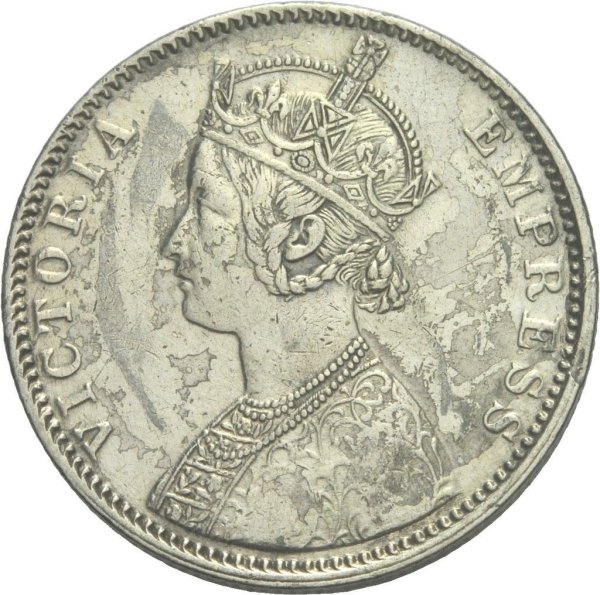 On the other hand, the reign of Maximilian was very short, he landed Mexico on May 1864 and this was also the new currency (Peso) of the Empire. I don't think why the die was not produced in Mexico rather than shipped from France. Remember the date of this coin is 1866, it was too near to 1864. Platypus, will you show the edge pictures of your coin? If you show, I will show my 1867 picture for you for comparison. Henry |
|
Valued Member
United States
55 Posts |
Navalon was the designer for the Maximilan coin. You can see his name in the small ribbon under the main portrait: "Ocampo, Navalon.Spiritu." (along with the engraver names)
Navalon was Mexican, and chief employee of the Mexico Mint.
Now, while the design was done in Mexico, and the style itself is very similar to contemporary French coins, its unknown to me if the dies themselves may have been manufactured abroad.
|
|
Valued Member
United States
55 Posts |
I havent got through the details, but there is this book on Mexican Imperial coins that may have more detail (historic and numismatic) of interest to you. I believe can be downloaded free as an ebook, or reviewed online http://books.google.com/books?id=E5...ge&q&f=false |
|
Pillar of the Community
United States
5362 Posts |
NewSpainLearner I have read that book. It does not cover die preparation in any detail. The design may very well be Mexican - but it is based on the French style rather closely. All that would have to be shipped from France was a Matrix block with the engraved details included. But something else is missing and that relates to the techniques employed by the die setters (the gravers).
Do you know where Navalon was trained? Could he have traveled to France? If he was a chief engraver at the mint during what period was that?
I just find it difficult to reconcile the Modern appearance of the Maximilian dies when they are compared to the crude Mexican products that came out of the Mexico City die shop in the years immediately before and after. They are light years apart in die making techniques. Die surface preparation is superior - alignment and orientation of punches is night and day - absolutely uniform setting depths - every facet of the die setters art is superior in the Maximilian coins to anything that Mexico City produced until at least 1-2 decades later. Even the book you cite clearly states that inference but then supplies NO answer as to why that happened.
I did some research of my own and Navalon appears to have been Chief designer at the Mexico City mint only during the reign of Maximilian. The engravers were Ocampo and Spiritu. He was chiefly a medalist and was listed in 1907 in Spink's Numismatist as one of the world's greatest medalists. These men were not involved with the mint before or after the reign of the French Emperor.
Needs a lot more work. The earliest reference is Betts 1899 and nothing comes up biographically.
|
|
Valued Member
United States
55 Posts |
Need to find the reference, but if memory serves correctly, Navalon continued working at the Mexico Mint after the Maximilian Empire, but at a minimal capacity. While the mint is supposed to be somewhat independent from the people/government in power, reality is that the Republican Government, once taking power back from the temporary "irruption", wasnt giving any good opportunities to people who served to the Empire regime.
|
| |
Replies: 17 / Views: 6,340 |










 Posted 04/19/2014 10:27 am


