| Author |
 Replies: 30 / Views: 5,669 Replies: 30 / Views: 5,669 |
|
|
|
Valued Member
United States
450 Posts |
|
|
Pillar of the Community
United States
940 Posts |
|
|
Pillar of the Community
 United States
1028 Posts |
|
|
Bedrock of the Community
United States
10045 Posts |
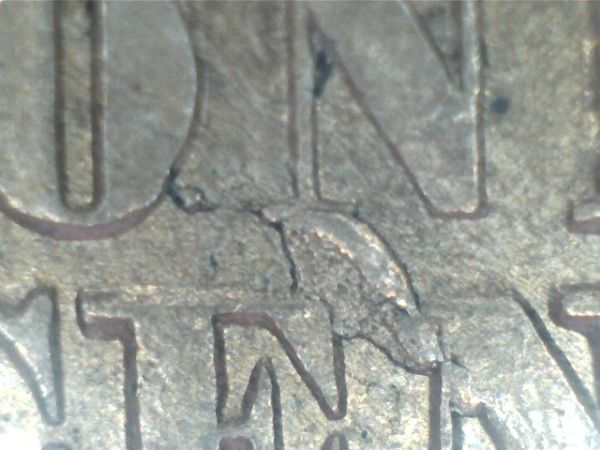
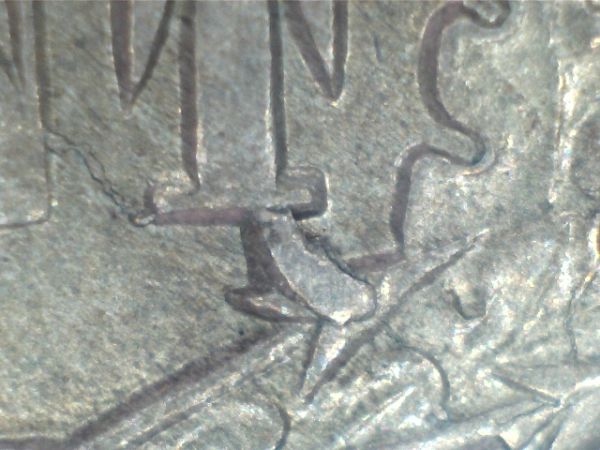
Wow--I like that one! Perhaps the lumps are shards of the die that pushed in due to strike pressure, leaving raised areas on the coin? --just a guess.  |
|
Pillar of the Community
United States
1028 Posts |
Yeah, I'm having a tough time figuring out how this happened. It looks like too much extra metal to be die breaks.
It appears that the metal is above the design elements, not through them. Your theory might explain why the reverse die broke as well. With that kind or pressure, the dies were exposed to stress that could not maintain the integrity of the dies.
Edited by RedRaider
04/24/2014 11:12 pm
|
|
Pillar of the Community
872 Posts |
probably die chips, shards that get hammered onto the planchet. They are popular on the Lincolns, and if there is an issue with the die(s) typically any extra metal within them will fall out eventually. And Cuds usually hug the rim, others are called die chips, die cracks, etc; I just don't like the look of that "N" in CENT. Who know for sure =\ Edited by Collector-Corner
04/24/2014 11:57 pm
|
|
Pillar of the Community
United States
3552 Posts |
Hello,
Keeping in line with the original title of this thread, could anyone recommend any on-line sites which serve as an attribution guide for the LHC?
I would like to find a site that lists the ‘S' numbers along with corresponding close-up photos showing the particular feature associated with each variety etc.
Thanks for the assistance,
mdpmedia
|
|
Valued Member
United States
70 Posts |
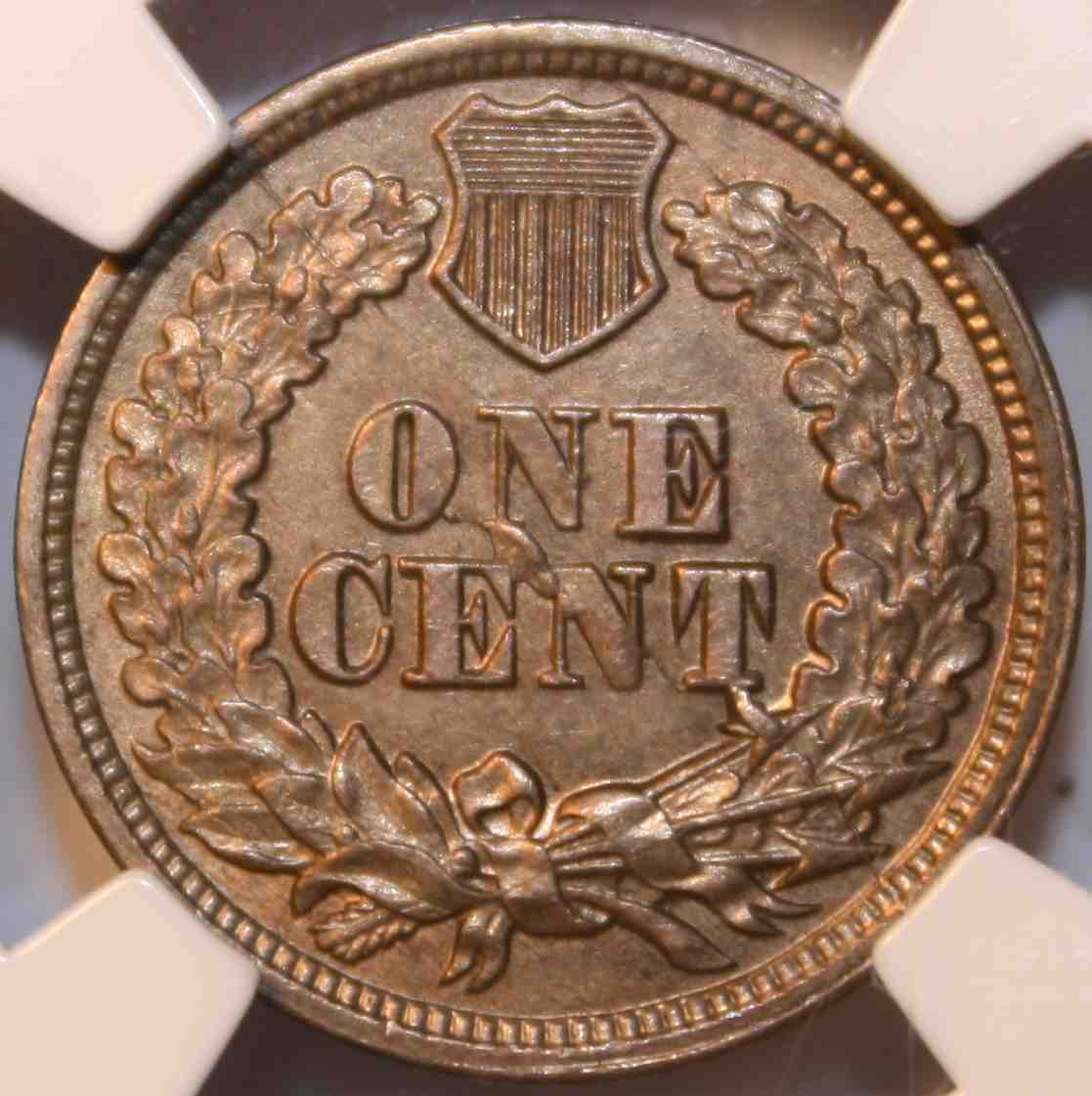
Hello RedRaider! What did NGC grade your 1863 Indian cent? |
|
Valued Member
United States
70 Posts |
|
|
Pillar of the Community
United States
3552 Posts |
Quote:
...on-line sites which serve as an attribution guide for the LHC? I noticed that I made a typo.in my previous request; I meant to type IHC ( Indian Head cent) and not LHC. |
|
Pillar of the Community
United States
3552 Posts |
Now that indiancentvarieties has disclosed the existence of an on-line list of these IHC varieties, I would like some additional clarification for this site: http://indiancentvarieties.com.fqdn...variety.htmlI do not want to make an expensive mistake by intentionally not searching for any IHC variety printed in black on this page. After looking at this particular page 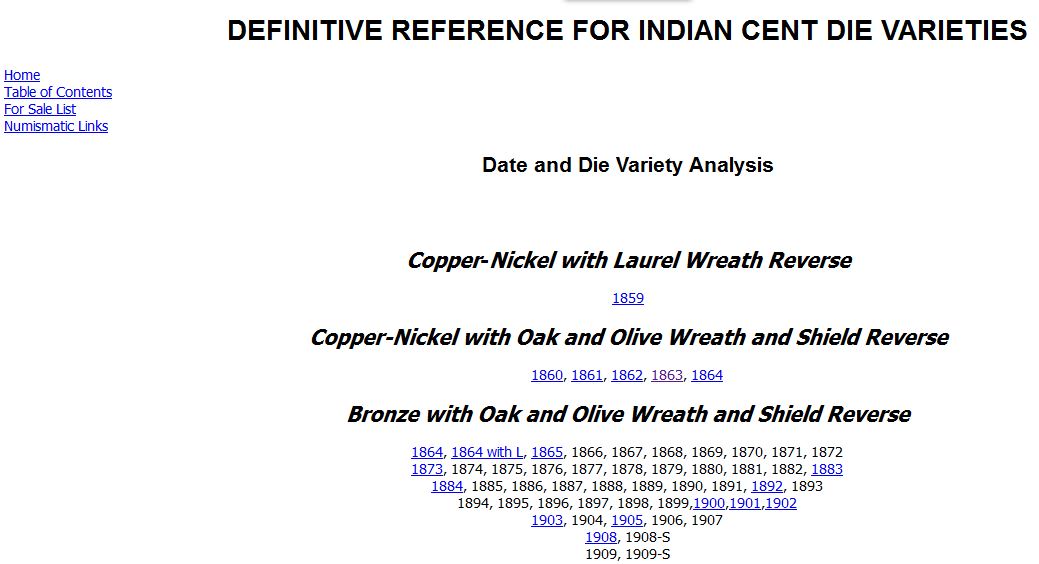 would it be correct to assume that no other additional and significant IHC varieties exist? In other words has someone else possibly established another equally recognizable compilation of updated or corrected IHC varieties outside of this referred-to URL containing the 1866 data, for example? |
|
Valued Member
United States
70 Posts |
It is my site and it is currently a work in progress, as I only started in late April of last year.
|
|
Pillar of the Community
United States
1028 Posts |
Very cool, thanks for posting. I figured there had to be at least a few others floating around out there. It is interesting to see the exact same die state as the example I found. It will be interesting to see if other examples come up with cracks that are not as dramatic. If you need pictures of IHC varieties, a number of members can probably help you out. |
|
Pillar of the Community
United States
9811 Posts |
Not seeing this in Rick Snow's latest 2 volume set. I don't have my Thurman Cud book at hand to see if it is listed in that reference. Very cool cud/break/die crack. "Buy the Book Before You Buy the Coin" - Aaron R. Feldman - "And read it" - Me 2013! ANA Life Member #3288 in good standing since 1981, ANS, Early American Coppers Member (EAC), Colonial Coin Collectors Club member (C4), Conder Token Collector Club member (CTCC), Civil War Token Society (CWTS) member, Liberty Seated Collectors Club (LSCC) & Numismatic Bibliomania Society member (NBS), USMex, Member in good standing, 2¢ variety collector. See my want page: http://goccf.com/t/140440 |
|
Bedrock of the Community
United States
17884 Posts |
The die has cracked and now pieces are chipping away along the edges of the crack. The chips go down deeper into the die than the recesses of the letters so the resulting "lumps" appear to be on top of the letters.
|
| |
Replies: 30 / Views: 5,669 |






 First Page


 Posted 04/23/2014 2:55 pm