| Author |
 Replies: 13 / Views: 2,996 Replies: 13 / Views: 2,996 |
|
|
New Member
Australia
34 Posts |
G'day, After reading as many of Nealeffendi's reply's as possible, I am still no closer to being able to identify whether these 2 pennies are FBL, or CBL. What am I actually looking for? I assume that if they are CBL's they are dot below, not no dots. I even compared them to a double dot but can not pick the difference. Thanks, Rastis. 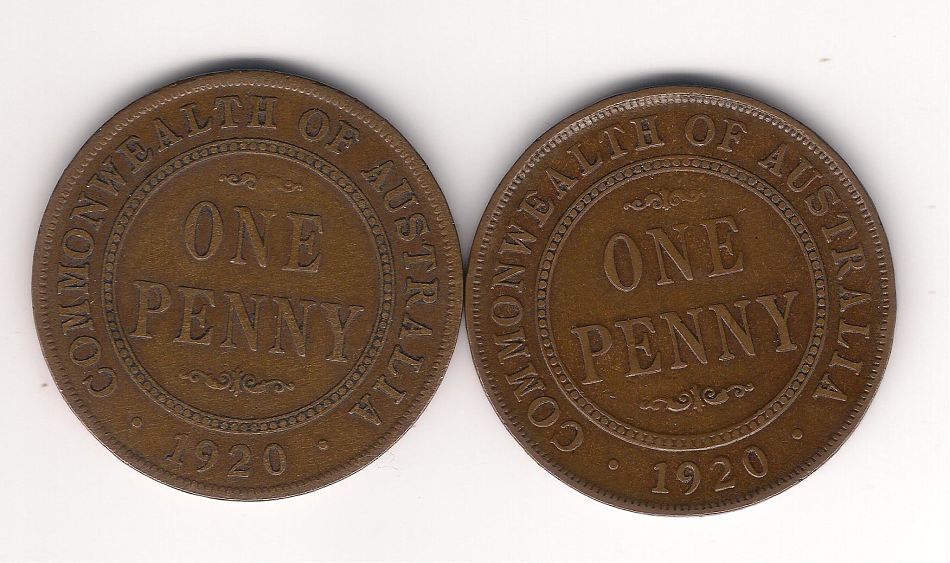 |
|
|
|
New Member
 Australia
34 Posts |
G'day, Here's the Pennies I compared them with. Rastis. 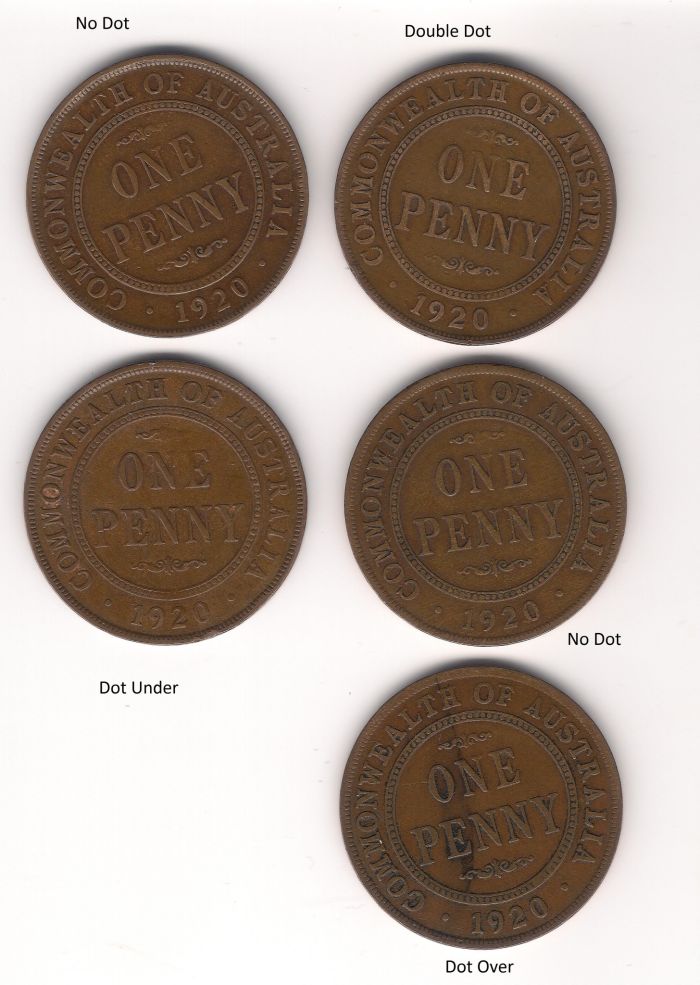 |
|
Pillar of the Community
Australia
852 Posts |
The first coin appears to be a Dot Above (although I cannot see the dot, which is unusual,I can see it has the flat rims characteristic of Sydney Mint). The specific working die appears to be the most common one,it has a small Cud to the left of the fork of Y and a small Cud to the lower right of 20,if it is that die then this coin is a very early striking as most coins from that die exhibit progressive deterioration of the inner ring around the 5 O' clock mark. The 2nd coin is a Dot Below FBL with a small Cud under the loupe of P. |
|
New Member
Australia
34 Posts |
G'day, Here's a close up view of the Y and 20 on the dot above with no dot. Could you indicate with arrows the Cuds as I have looked and looked, but am not sure what you are seeing. I apologise for my stupidity, most people who know me make allowances for it. Thanks, Rastis 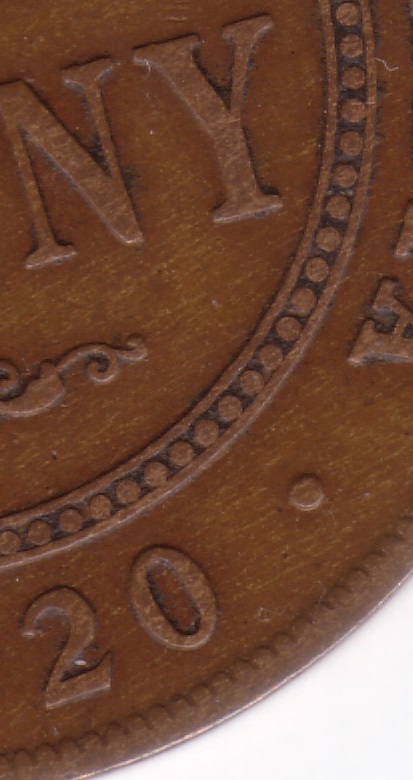 |
|
Pillar of the Community
Australia
852 Posts |
With the larger image I can see that the slight marks that I thought were small Cuds are not. This coin is perplexing me. Could you show larger images of both the obverse and reverse? |
|
New Member
Australia
34 Posts |
G'day, How's this. I used a better scanner. Rastis 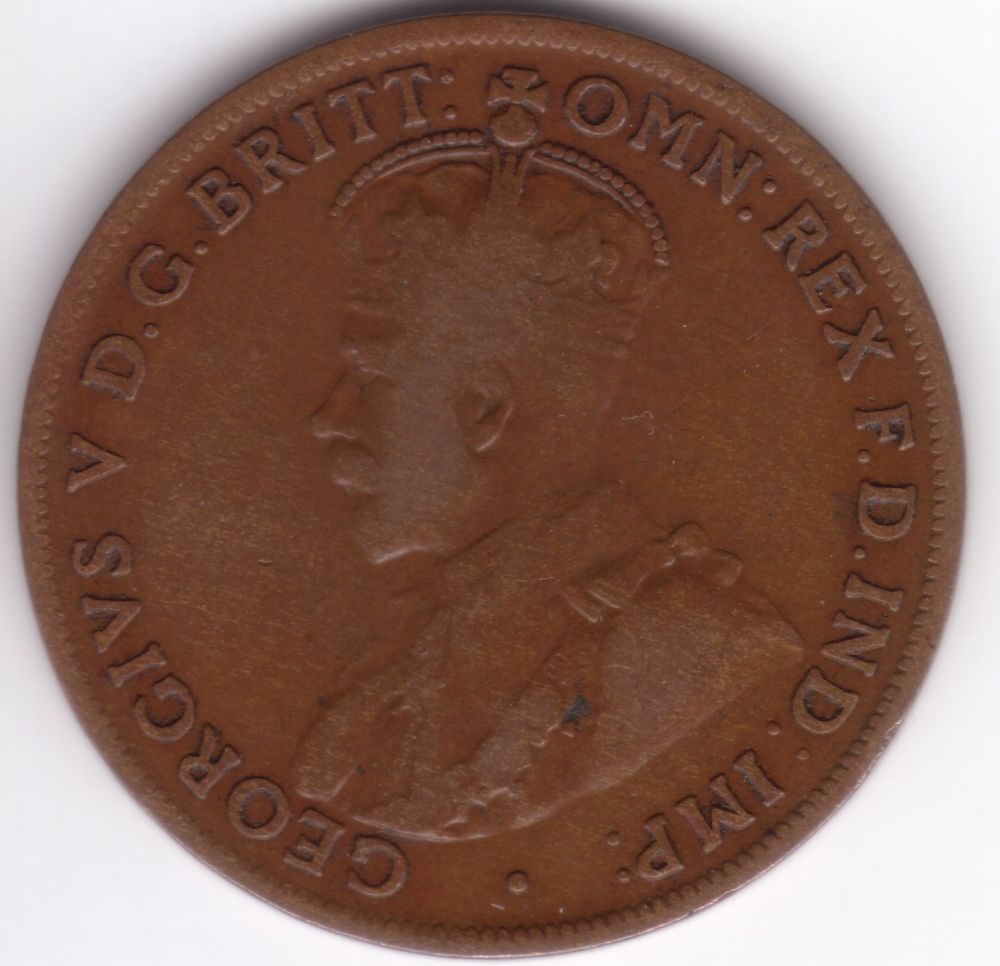 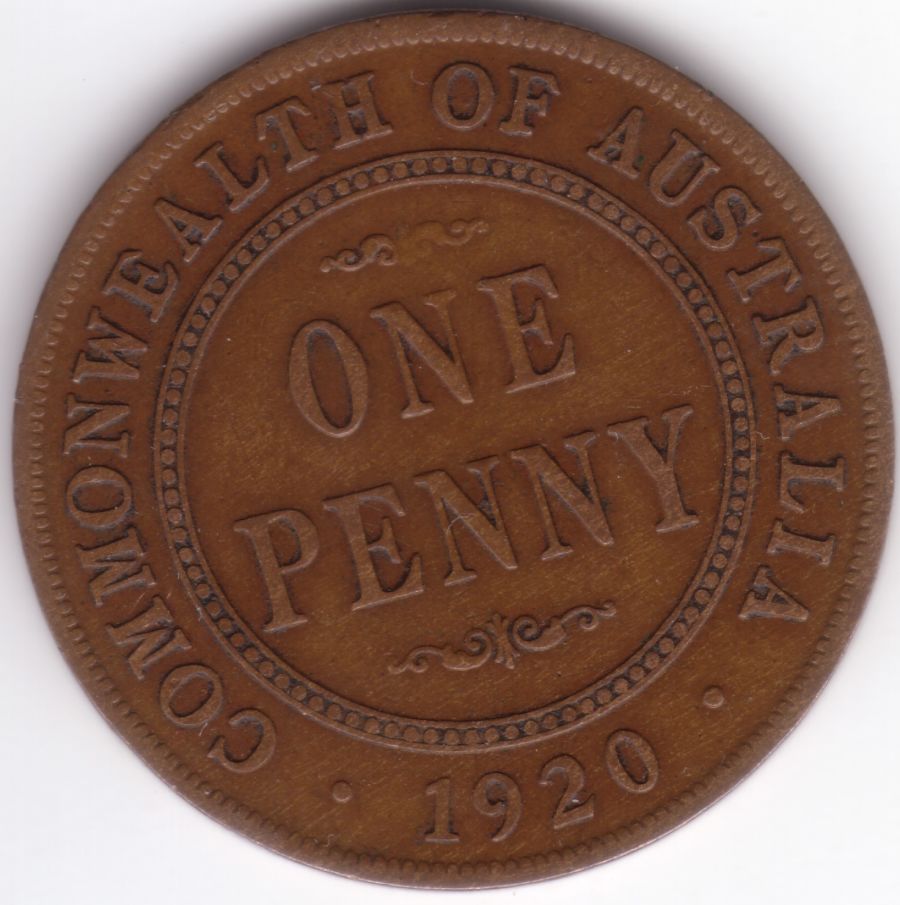 |
|
Pillar of the Community
Australia
852 Posts |
I think I can just make out a small dot high up between DG on the obverse (closer to the D than the G). That die pair has a slight filling on the denticles above N in NW (you need to rotate the coin under a light in most cases to see it).
Still can't spot any sign of the dot above the scroll, but only Dot aboves have flat rims.
|
|
New Member
Australia
34 Posts |
Awesome,
A super rare no dot, dot above. Must be worth a zillion.
Rastis.
|
|
New Member
Australia
34 Posts |
Nealeffendi,
If you have the time and the inclination, could you do up a sticky on what are the common tell tales for picking a no dot 1920 penny. Pictures would be great for us numb skulls.
Thanks,
Rastis.
|
|
Valued Member
Australia
271 Posts |
You could always search for his posts, and cut and post them in a notepad!
It is easier to understand the subtle variances if you have pics to reference to, and easier again if you have them "in the hand".
|
|
Pillar of the Community
Australia
852 Posts |
Coin and Banknote Magazine (CAB), April 2014 issue, pages 44-47 has an article on identifying the 1920 No Dots.
|
|
New Member
Australia
34 Posts |
|
|
New Member
Australia
34 Posts |
G'day,
I bought my good magnifier home from work and I believe I can see the faint dot above. Great pick. The wife got me a copy of the Coin and banknote magazine from the library today.
Again thanks for everything.
Rastis
|
|
Pillar of the Community
Australia
852 Posts |
Your welcome Rastis.
A minor update to the CAB articles. I mentioned in the No Dot article that there were 5 probable and one possible No Dot dies known to me. As of last night I can confirm that the possible is now not a No Dot but a Dot Below. Went through another 300+ 1920 pennies and found one from the uncertain die with a dot. The other 5 die pairs still remain probable No Dots.
|
| |
Replies: 13 / Views: 2,996 |
|









 Posted 06/14/2014 12:27 pm


