| Author |
 Replies: 8 / Views: 2,350 Replies: 8 / Views: 2,350 |
|
|
Pillar of the Community
United States
4233 Posts |
I've been sitting on this for months but I suppose it's time for other expert opinions. My 1948 dollar seems to have a "shoulder fold" on the Voyageur, near the armpit. Certainly the immediate speculation will be bag mark / PMD. It's pretty obvious to me that it was minted this way, but I'm no expert. I've looked at hundreds of images of this coin on Heritage, ebay, etc, and come up with a handful of other examples with a similar feature, yet no "smoking gun". I also have a 1946 dollar where this feature is evident, although much more subdued; more like a depression/dent than an actual "fold". I've found examples from other years - 1950, 1962, 1963. I've noticed that there is quite a bit of variety in the arm/shoulder area of the voyageur as far as smoothness versus mottled appearance, etc, so perhaps it's just the way it was for these reverse dies. Does anyone have another KG VI or early Elizabeth that looks similar? 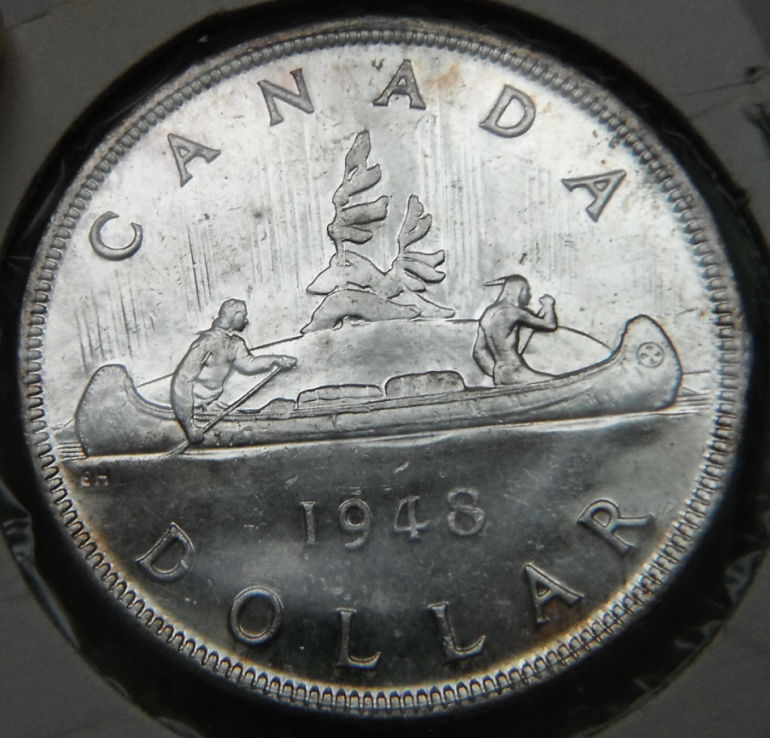 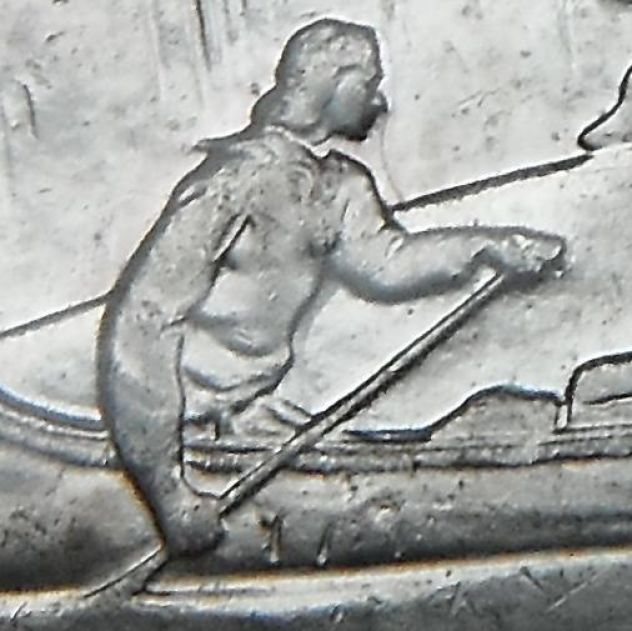 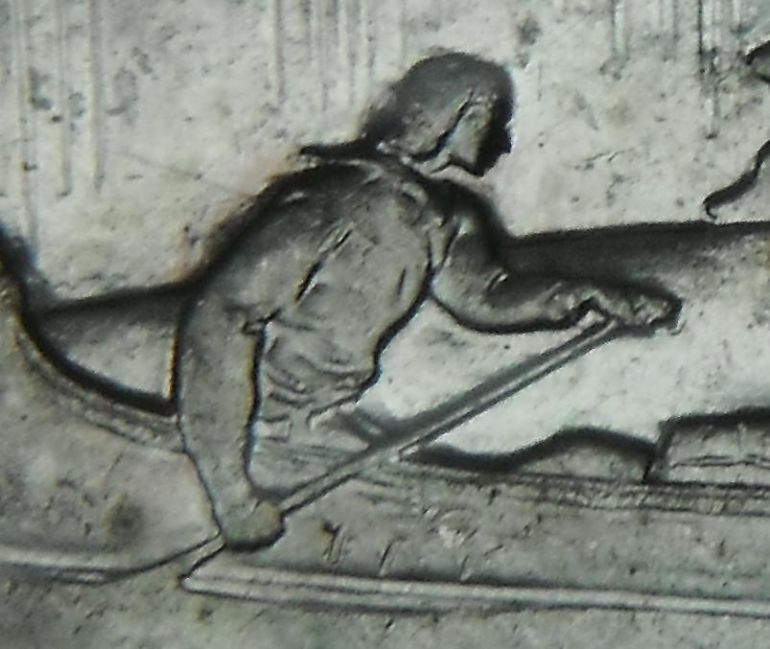 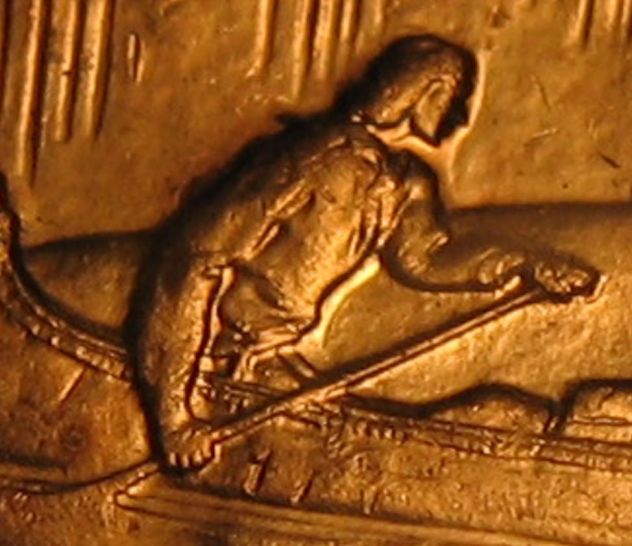 |
|
|
|
Pillar of the Community
 Canada
2361 Posts |
Sorry for the late reply, I have checked all my dollars and didn't see any irregular armpit folds.
|
|
Pillar of the Community
 United States
4233 Posts |
Thank you for checking your dollars, SilverDon. I figured I'd just let this sit for a while. Almost 400 views and only one reply - I guess that should tell me something, but not sure what. Maybe because I saw something similar on my 1946 I've been off on a wild goose chase. My 1946 (which is also a die clash + SWL) 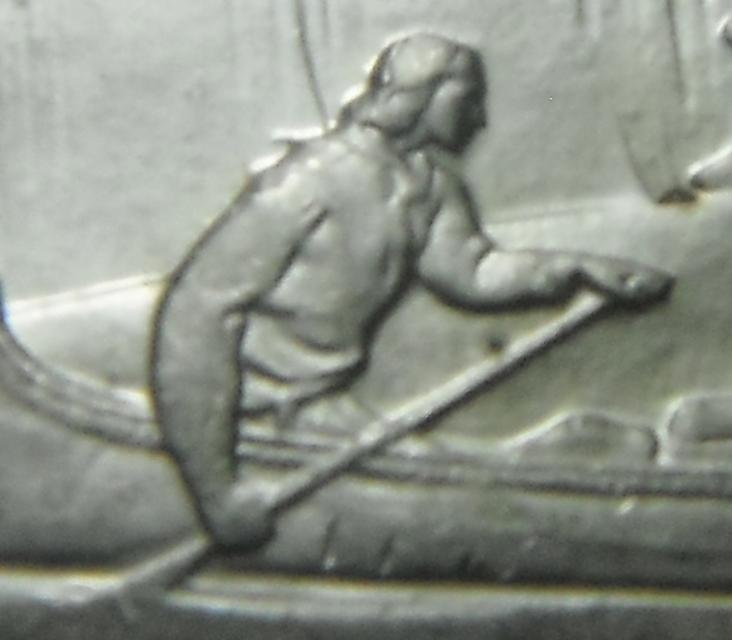 My 1946 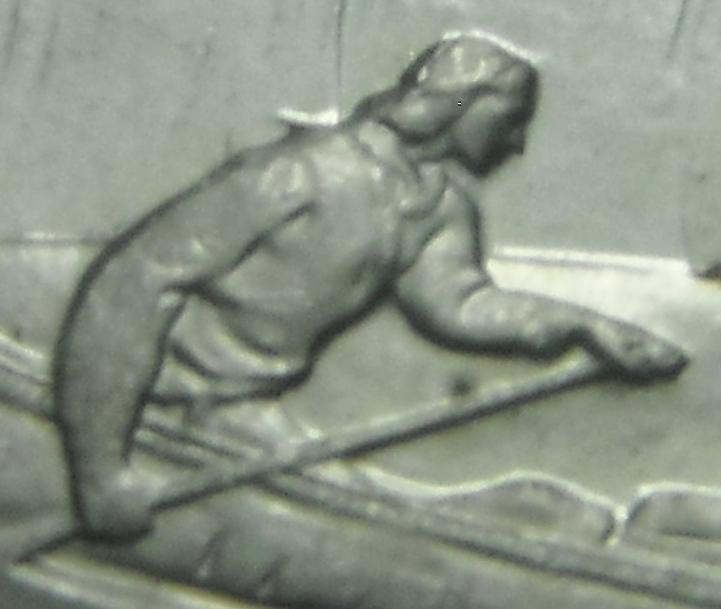 1948 on ebay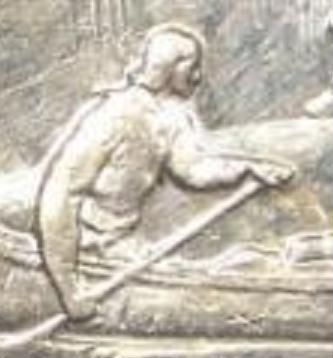 1946 on ha.com 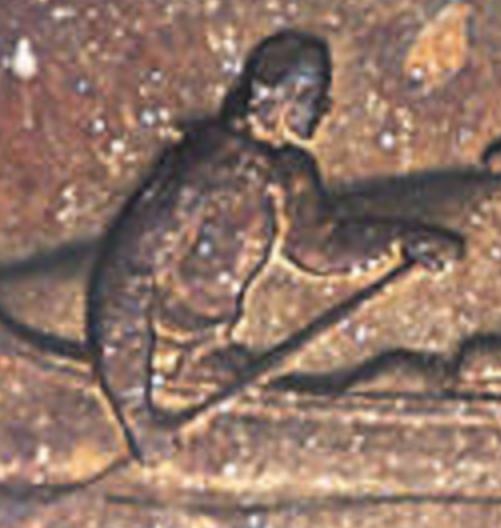 1946 on ha.com 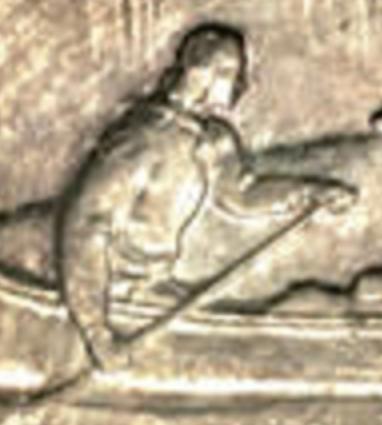 1946 on ha.com 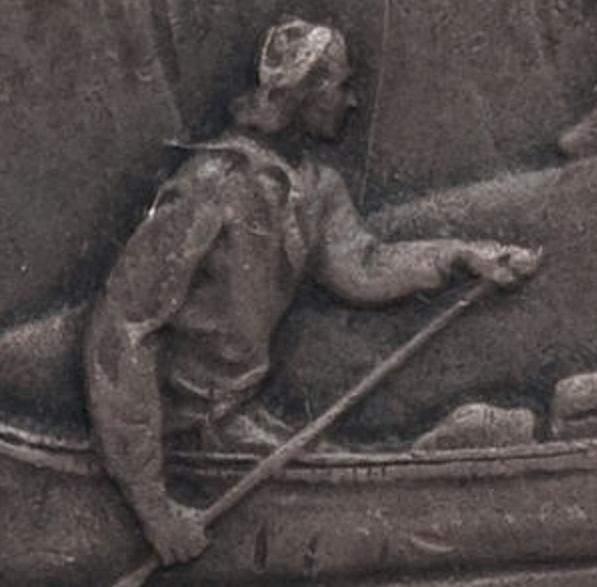 My 1947 ML also has an extra line running down the back of the arm (triceps) from the normal "dent" at the rear of the shoulder almost to the elbow, which I've seen hints of on other internet images. Perhaps there's just a lot of variety in the dies for the reverse in this shoulder area, or perhaps it's just exposed to random PMD and I've just been picking out the ones that happen to resemble the coins I have. |
|
Pillar of the Community
Canada
3234 Posts |
If I had to guess,..and looking at the blowup in your 2nd pic, I would say that there are some signs of die clash when looking at the line from the tip of the nose down to the surface of the island.
I feel that the deepest parts of the coin are at the field in front of the nose and also behind the natives head at the front of the canoe.
This is also where we often look for the Arrowhead variety dollar.
|
|
Pillar of the Community
Canada
9904 Posts |
Interesting. That it occurs in multiple years seems to indicate that it's not a die problem. The fold is opposite to where the edge of the back of George's head crosses. I'll go out on a limb and suggest that this is caused by not enough metal or pressure to fill the die at that very thick point.
"Dipping" is not considered cleaning...
-from PCGS website
|
|
Pillar of the Community
Canada
1505 Posts |
thank you for bringing this to light. Will have to check my tucked away dollars now.
|
|
Pillar of the Community
United States
4233 Posts |
DEVLEC - my 1946 is definitely the die clash variety, here is the full reverse if you think it aids the discussion. It's a poor photo since I was trying to focus on the shoulder dent, which only shows up at the right angle. Plus having to shoot through the ICCS holder (ICCS gave it MS60 and did not attribute either the die clash or the SWL). 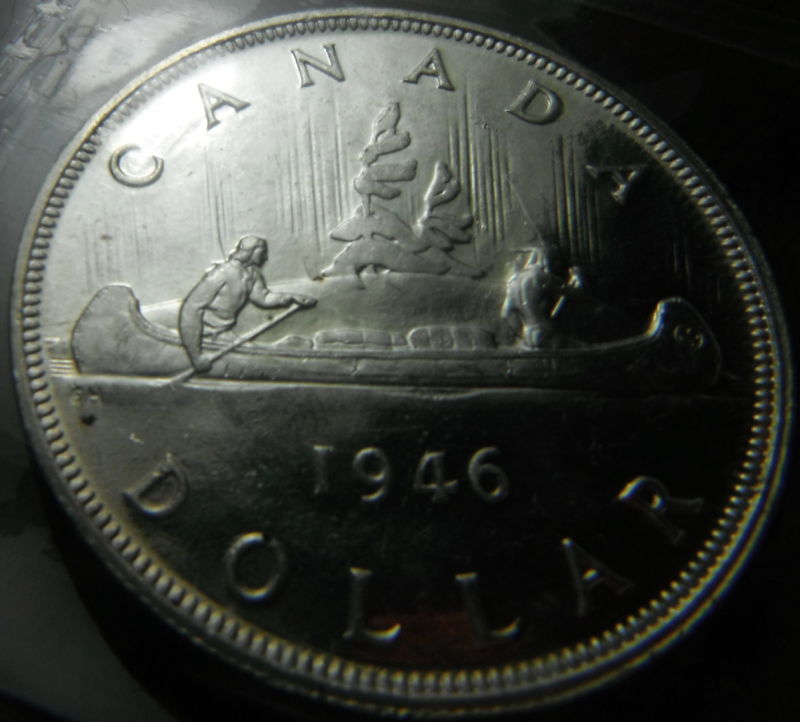 I'm not convinced that the 1946 isn't just a bag mark, but the fact that the dent/fold originates right at the vest line intrigued me, particularly seeing a similar thing on my 1948. All my other dollars have very round, smooth shoulders going into the armpit. As someone else said, maybe it's just too little metal in this area, or maybe as a high point it just gets more dings and some of them just randomly create this "fold" effect. On the 1948 every time I convince myself that it's just a random ding, I pull it out and look at it for the 100th time, and the metal is just so smoothly rounded on both sides of the fold (see my first post), and lacking the jagged "torn" appearance of the other large dings on the coin, that I go back to thinking it was minted like this. But do we really need a new rare variety of the rarest dollar? And how could it be hiding in plain sight for so long? I've had the 48 for over 40 years and I only noticed it about 6 months ago, but I've never been one to be searching for varieties either. And like I said maybe it's all just random damage. |
|
Pillar of the Community
Canada
3234 Posts |
That last pic really shows a nice clash through the rays from both sides. Thanks..
It is an interesting mark or shoulder fold. Probably needs a to be seen through a microscope to see the surface better.
|
|
Valued Member
Canada
284 Posts |
I don't have a 1948, so I can't help you with that, but I also have a 1946 SWL with a nice clash. I don't see the mark yours has on the shoulder though. 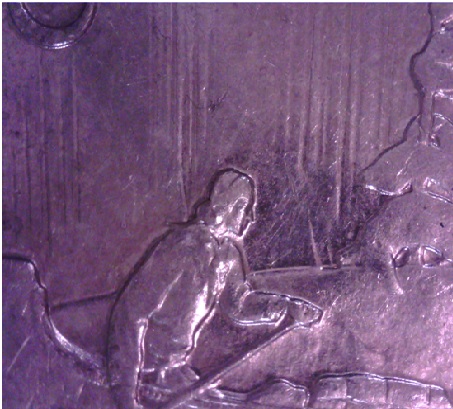 |
| |
Replies: 8 / Views: 2,350 |
|








 Posted 11/17/2014 01:03 am


