| Author |
 Replies: 9 / Views: 8,874 Replies: 9 / Views: 8,874 |
|
|
Pillar of the Community
United States
522 Posts |
Hello, I have repeatedly heard the term tooling. I have heard it mentioned in conjunction with smoothing hairlines and defining devices. I have also seen it on TPG capsules. Could anyone explain what tooling is, how it is done, and how it can be detected, so I can avoid it? |
|
|
|
Moderator
 United States
14463 Posts |
That term in the the CCF Glossary.  This link to the Glossary is in the menu on the left. |
|
Pillar of the Community
 United States
522 Posts |
Ok, thanks. So, what does it look like? Are there abrasions around the devices? Are these usually only detected with magnification? Or can they be seen with the naked eye?
|
|
Pillar of the Community
3772 Posts |
That depends how skilled the tooling was done.
Btw, tooling can accidentely occur when in the process of cleaning a coin with a harsh tool some design features are enhanced.
Sometimes tooling is used to improve the grade of coin, which should not be done and can be criminal in intend.
The worst form of tooling is to 'create' a rarer version or type of the coin, which is done to defraud unsuspecting buyers and is a criminal activity.
|
|
Pillar of the Community
United Kingdom
856 Posts |
Put simply, you have a coin where the details don't stand out very well. But by scraping away some of the field (background) with an implement (tool) you can make the details more prominent. Or you have a scrape that can similarly be made less obvious. That's tooling. It can be done well, in which case a good lens and looking at the coin carefully will be the only way to tell. Or it can be done badly, like this: 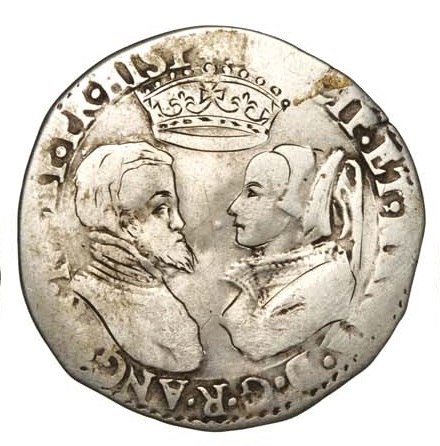 Where someone has literally just scraped an outline with a sharp object! I don't know about where you are but I know a few coins from old collections that were tooled and have sold in the UK. "Lightly tooled in fields" is a phrase occasionally used. If the coin is scarce, the tooling well done and was done many years ago (such as in the late 1800s) people accept it. If it were done today, perhaps not. And as Medieval says, it is possible to use tools to alter a coin too. That's a No-No! . Edited by Tom Goodheart
11/16/2014 05:45 am
|
|
Valued Member
United States
300 Posts |
|
|
Moderator
Australia
16963 Posts |
Tooling, at its worst, is a numismatic crime second only to outright counterfeiting. Like counterfeiting, it is intended to deceive; specifically, the goal is to fool a collector into thinking a coin is rarer, higher grade or otherwise more desirable and valuable than it should have been. The only difference between tooling and counterfeiting is that the counterfeiter begins with a fake coin; a tooler begins with a genuine coin.
An excellent example of a modern American coin vulnerable to tooling is the "Mercury" dime; a high premium can be paid for one with "fully split bands". An unscrupulous person might attempt to take a low-value un-split dime, and with a sharp knife and steady hand attempt to carve fake "split bands" onto the coin.
Don't say "infinitely" when you mean "very"; otherwise, you'll have no word left when you want to talk about something really infinite. - C. S. Lewis
|
|
Bedrock of the Community
Australia
21789 Posts |
In some instances, tooling can be judged a bit too harshly with ancient coins.
When an ancient coin is recovered from burial, the gunk that is sticking to it may be so hard and resistant to removal, that the tool that may be used to enhance the details on a worn or corroded coin, is the same one that could be used to remove that hard difficult to remove gunk that was NOT part of the original coin.
Most ancient coins recovered from direct soil burial need SOME cleaning. How far do you go before the cleaning to enhance the details becomes carving into the coin to enhance those details.
Judgement is not only required by the buyer, but also by the cleaner.
|
|
Bedrock of the Community
United States
20753 Posts |
Quote:
An excellent example of a modern American coin vulnerable to tooling is the "Mercury" dime; a high premium can be paid for one with "fully split bands". An unscrupulous person might attempt to take a low-value un-split dime, and with a sharp knife and steady hand attempt to carve fake "split bands" onto the coin. And as SAP said this is really a lousy thing done to cheat. One of the examples he noted is done with the 1945 Mercury dime. Although one of the largest mintags in the series, the middle bands came out only about 1% or 2% of the time. This makes that coin selling for many, many thousands of dollars. Tooling a line in that middle band raises the price from about $5 or $10 to thousands of dollars. AND how can you tell it's been done? Not easy. |
|
Bedrock of the Community
United States
10045 Posts |
For some levity, I'll just post the worst tooled ancient coin I've seen...  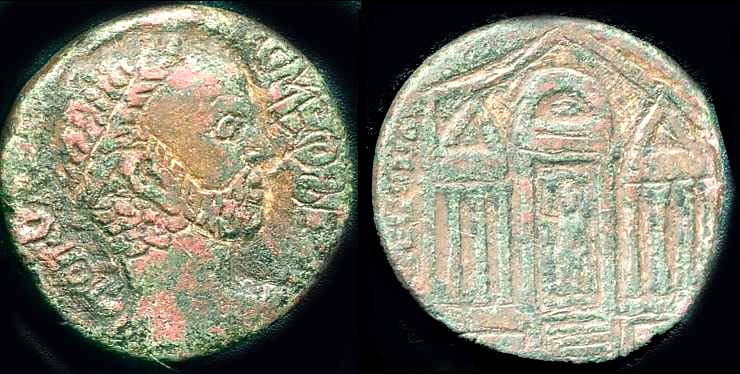 Edited by DVCollector
11/17/2014 12:43 am
|
| |
Replies: 9 / Views: 8,874 |
|







 Posted 11/16/2014 02:26 am





