| Author |
 Replies: 6 / Views: 1,833 Replies: 6 / Views: 1,833 |
|
|
Pillar of the Community
United States
4233 Posts |
I first learned here that all subject coins are 7/7/7. SilverDon's grading thread ( https://goccf.com/t/194508) inspired me to look again at my one coin, which perhaps is well and early struck. What I find, or perhaps imagine I find, is that there is doubling everywhere in the legends. My questions are: 1. am I imagining? Is this simply the way the dies were "punched" to make the legends pop out? At some angles the doubling is almost invisible, but the E in REX is obvious. 2. if it is doubling/repunching, are they all like this? There was only one die pair for the straight 7. Obverse - E and R 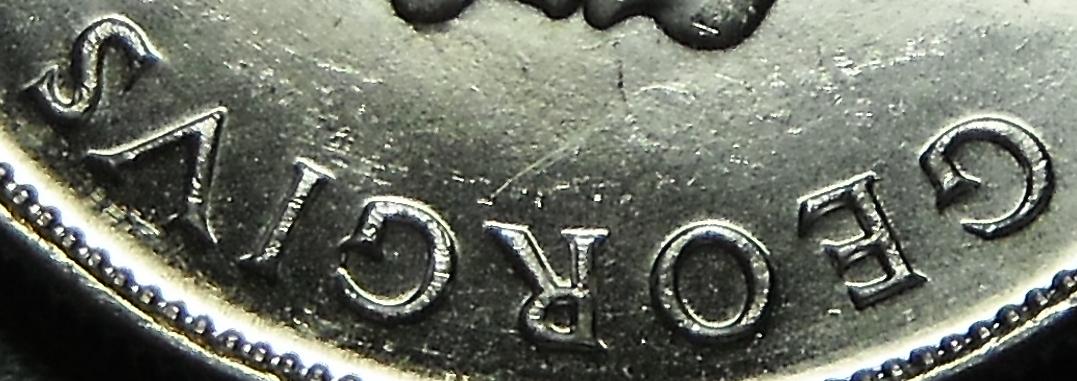 Obverse - M and P 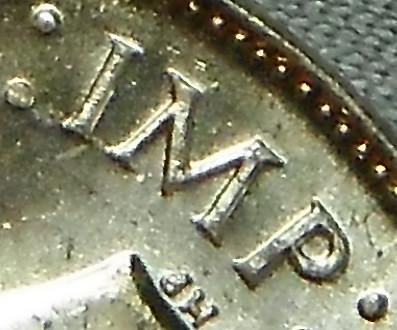 Obverse - R, E, E 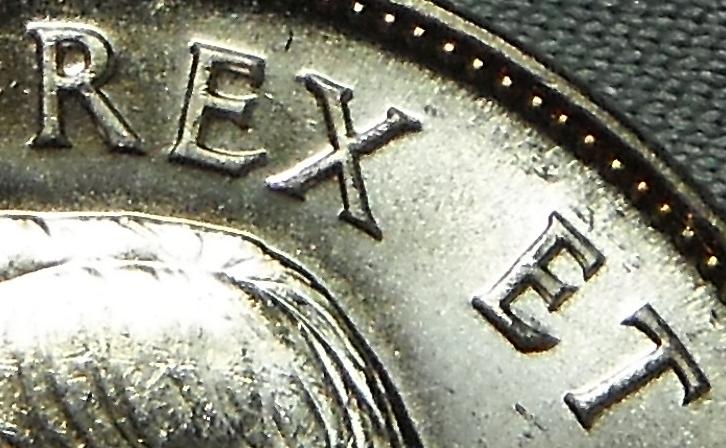 Reverse - 1 and 9 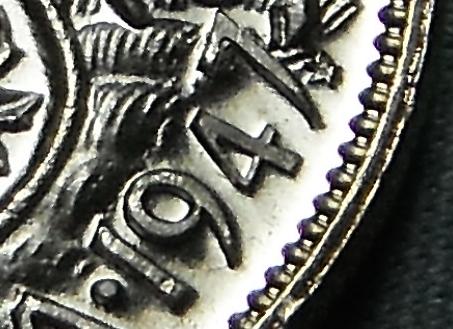 Reverse - A and D, 1 and 9 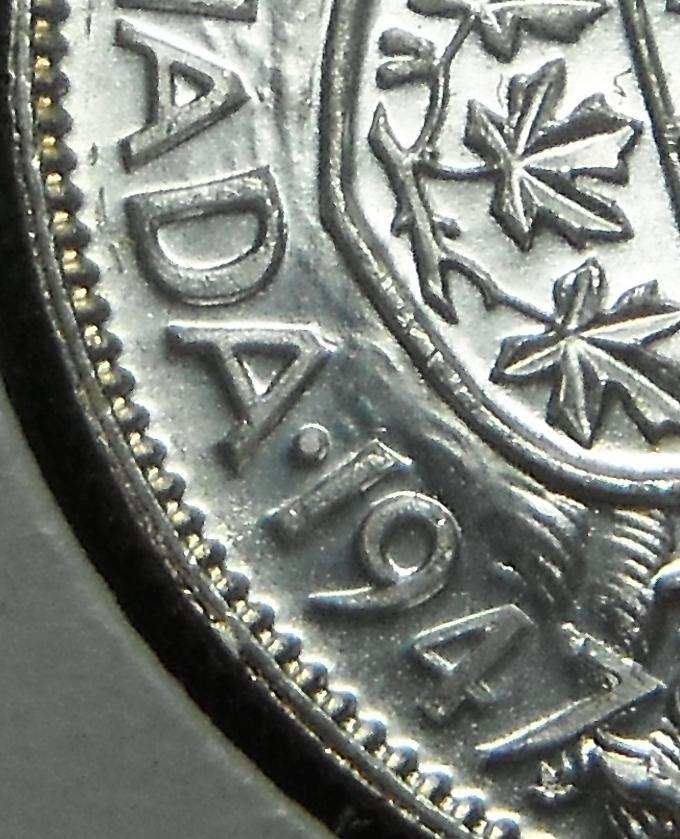 Reverse - certain light and angles, basically everything looks repunched 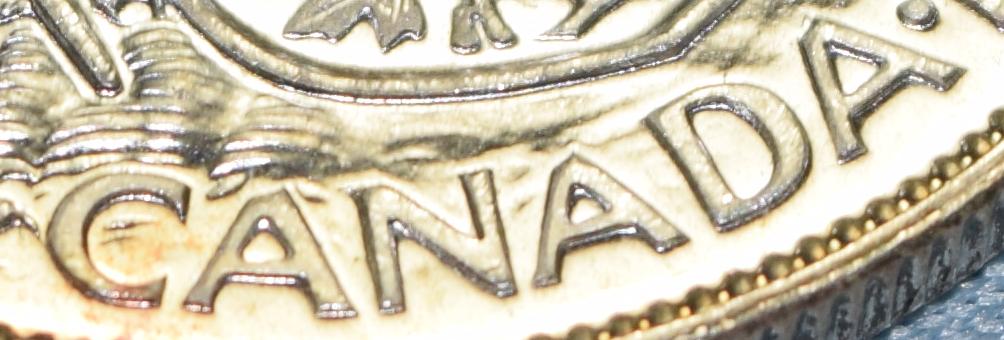 Reverse - inside the red boxes, I see tripling here very similar to the 7/7/7 tripling documented for all these coins. I can't get a good image of it. 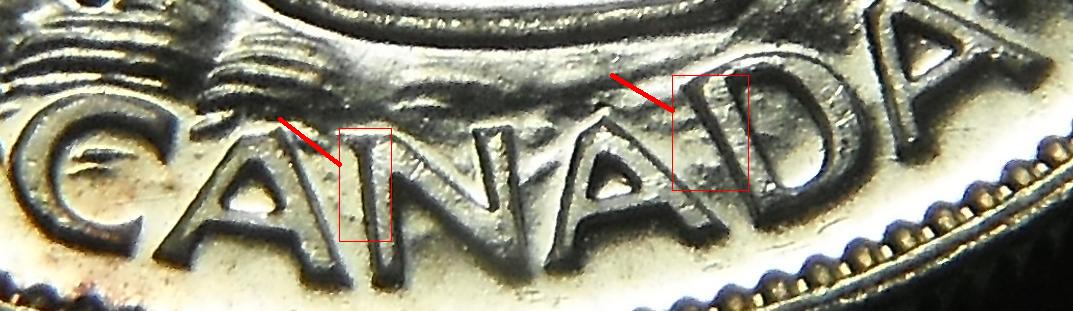 |
|
|
|
Pillar of the Community
 Canada
2361 Posts |
Looking at the second last photo, I see a step, at the base of each letter in CANADA and bars, especially A's, on the base of the bead between Canada and the date, as a result of the glare in the light reflected back. It is a thin line, but also noticeable under the crest outline with the three maple leaves and the bottom of the flag pole held by the lion, there is a gleam under those horizontal lines, is it a step? I think the die state for this strike we figured would be early stage in the die's life from the other thread, because your strike shows fresh 7/7/7 in the date, so Die Deterioration Doubling is not an option, possibly Machine Doubling then. On my 1947 S7 ML 50 Cent coin, I see no doubling in the legends only in the 7, and it is weak due to die wear. With the doubling being exhibited on both sides of the coin pictured, it makes me think of machine or ejection doubling. Any doubling on the base of the 1 or inside the top of the 9 in the date? Thanks for posting, kbbpll. Hoping an error expert or pginrh can clarify. http://www.error-ref.com/machine-doubling/http://www.error-ref.com/multiple-m...e-direction/Edited by SilverDon
01/10/2015 11:11 am
|
|
Pillar of the Community
 United States
4233 Posts |
I shouldn't have started a thread after beer. :) I should not have included the second to last photo - it was the only one where the flash went off. You are correct that this is just caused by reflection. Machine Doubling is a possibility, and some of it is probably an illusion. However, the RE in REX, the D in CANADA, and the 9 all appear to have different shapes at the top than at the bottom. Since I have no idea how they might have "freshened" a worn die to put it back into service, I started thinking maybe they went around repunching the characters. Perhaps a stupid notion, since the dies originated at The Royal Mint. Maybe it's just how the dies were produced - didn't I read somewhere here that they punched them three times and then some kind of heating/cooling process in between? My 1948 and 1949 seemed to have the same things on the reverses (D, 9), but not the obverses. I'll take another look at the coins. I feel kind of dumb bringing it up, but feeling dumb has never stopped me in the past. :) |
|
Valued Member
Canada
497 Posts |
 , light reflection/ glare can give a false perception of doubling, try repositioning and adjusting the intensity of your light source, or using a different type of light source. I use a LED digital magnifier, not really the best for pictures but it's quick and easy, most of my pictures are taken with the LED light turned off and an external light used. I believe the only repunching / re-entering of devices was on the last 2 digits of the date. The doubling could be from Die Deterioration or hub doubling since the mint did make master hub and matrix dies from the original master( see page 293 in Charlton 68th edition). kbbpll - feeling dumb has never stopped me in the past. welcome to the club, you are not alone.  |
|
Valued Member
Canada
456 Posts |
Looked at my 1947 Straight 7 Maple Leaf coins... They have the partially filled top of the 4. I cannot see any repunch or Mechanical Doubling... the letters mentioned have a pretty fair bevel on them which, dependent on the angle of the illumination, might create the an appearance of doubling. |
|
Pillar of the Community
United States
4233 Posts |
Thank you @pginrh. I think I have also found an answer in Charlton 2014 (did you write that?). Page 301: Quote:
Starting in 1943, approximately half of the dies were chrome plated to increase die life. The appearance of the coins changed from having a satiny finish to a more polished appearance for those from chrome-plated dies. The chrome-plating in early years had a tendency to peel, leaving a 'mortar set' or shelf around the sharp edges of letters or numbers. Is that the same as "pretty fair bevel"? My 1940 (MS61) however has some pretty strong "shelves" on the NAD of CANADA and 19, pretty much exactly like the photos of the 47ML above. So that makes me think it's not the chrome-plated dies answer. The other answer generally is "they all have it". My 1940 has the same split/beveled appearance of the D in CANADA as my 5th picture, as does my 1943 and 1945. 1940 and 43 have the bevels on the right of 1 and 9. 1940 and 45 have the splits/bevels in the RE of REX seen in 3rd picture, and is very well-defined in my 1945. The 45 "S" in GEORGIVS also has very strong "doubled" appearance. The best way I can describe it for these various characters is that the shape at the surface of the coin is different than at the "top" of the letter, and a strong line delineates the two. I guess it's just how the dies are. Well, at least this has helped me explore the actual varieties. The 1943 is one of the 3/3 types, the 1945 is blunt 5. My 1948 has such strong shelving on the entire date that I'm not sure whether it's the 4/4 on Charlton pg 325 plus an unlisted 8/8, or if it's just the same illusion. But I'll save that for another thread... |
|
Valued Member
Canada
456 Posts |
Guilty as charged.... I did write that item about peeled chrome plating on the dies, and the apparent doubling is definiteley not that.... (1943 is very prone and the years following but you do not see it in years previous to 1943)
A supposition on my part would be that the shape of the edge of the characters on the die is beveled/shaped to minimize a really sharp edge. A sharp transition on a die would be prone to breaking with the continued stress of punching many coins... just look at the 1946 with the numerous die chips in the 6. (Just my thoughts !!)
On the 1948, there has been some speculation that the 8 is double punched, but not enough to catalogue.
|
| |
Replies: 6 / Views: 1,833 |
|










 Posted 01/10/2015 12:19 pm


