| Author |
 Replies: 44 / Views: 8,005 Replies: 44 / Views: 8,005 |
|
|
|
New Member
 United States
7 Posts |
Thank you all for the responses. It's currently at PCGS getting graded....I'll let you Know in a month..
|
|
Pillar of the Community
United States
1566 Posts |
I've got to ask Caballo66, what's the story behind this piece? Was it bought at a coin shop or some other retail shop or was it say inherited? This is such an awesome piece it must have some sort of provenance. |
|
New Member
United States
7 Posts |
I buy generally foreign coins. I pay 2 dollars a pound...I bought three pounds and the coin was in it. That's why I needed help. I've never seen it...
|
|
Pillar of the Community
United States
8535 Posts |
Wow  Oregon coin geek.....*** GO BEAVS ! ! ! ***
|
|
Bedrock of the Community
United States
17884 Posts |
Here is a similar piece form the third Dan Holmes sale. This is an 1834 and it is described as a double struck off-center/off-center brockage maker. (Translation: the coin was struck once then struck again off-center on top of another planchet making a partial brockage in the other coin and distorting the portion of the first strike that was forced into the other planchet.) It sold for $633. This was in Sept 2010. http://images.goldbergauctions.com/...e=60&lot=515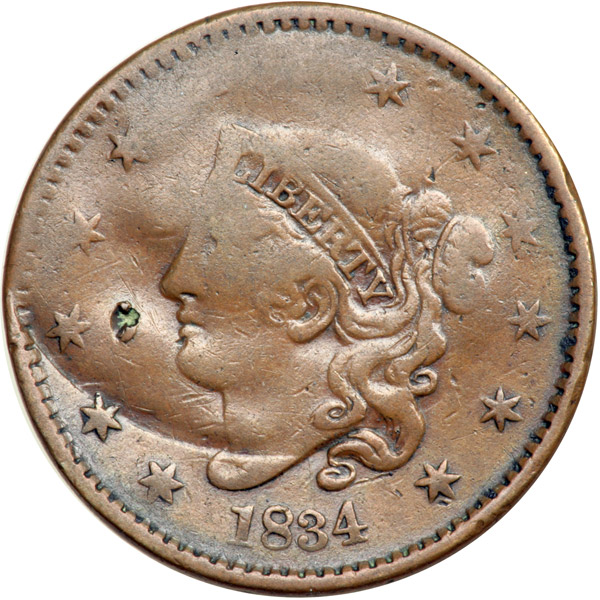 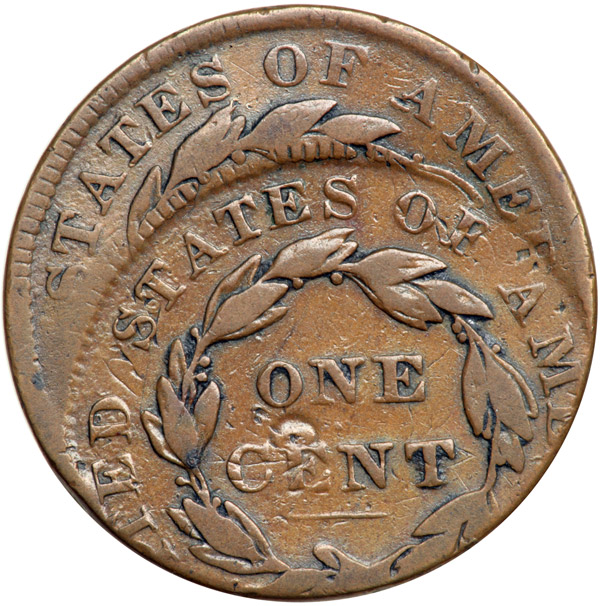 |
|
Moderator
 United States
16697 Posts |
My buddy buys World lots and finds some very cool early US coins all the time. swcoin.ecrater.com
|
|
Pillar of the Community
United States
1566 Posts |
This is a once in a lifetime find. Wow.
|
|
Pillar of the Community
United States
1393 Posts |
Nice find! I'm anxious to find out what it grades.
|
|
Pillar of the Community
United States
4707 Posts |
I like it.
Thanks for posting.
|
|
Pillar of the Community
United States
6447 Posts |
Quote:
Maybe I'm wrong but it appears to have been struck with another planchet on the obverse die. Ah, that makes sense. If the struck coin is impacted by a blank planchet the design on that side would presumably not be obliterated but rather just blunted somewhat over the area covered by the planchet. The second planchet would have a partial (off-center) inverse impression from the first coin and a normal strike on the other side. If no blank planchet is present during a second strike both dies would contact the coin directly, imparting full details to the overstruck areas on both sides. Then you get something like this: 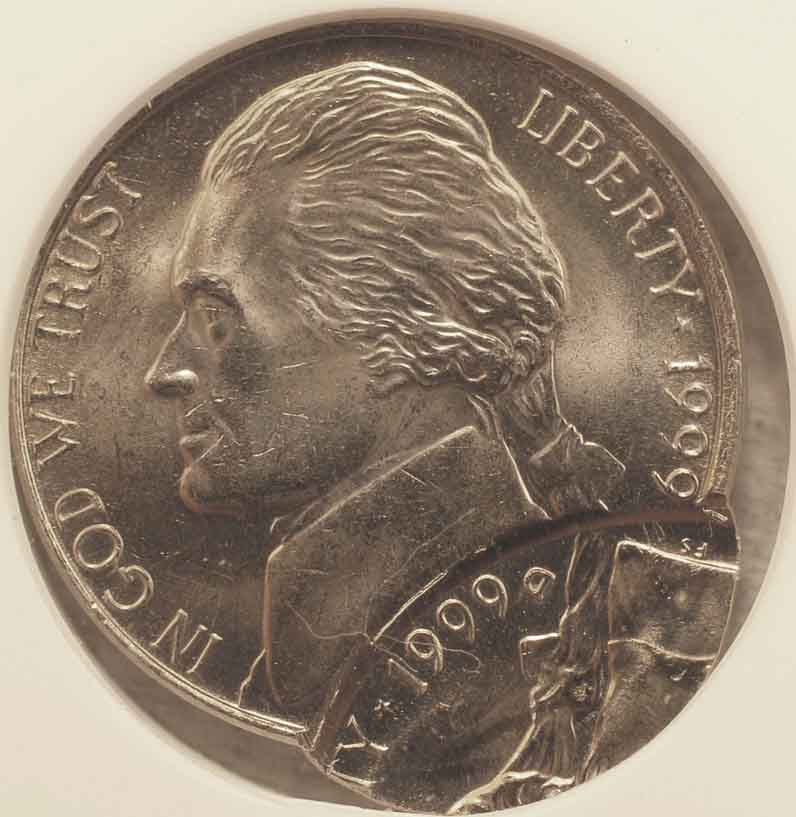 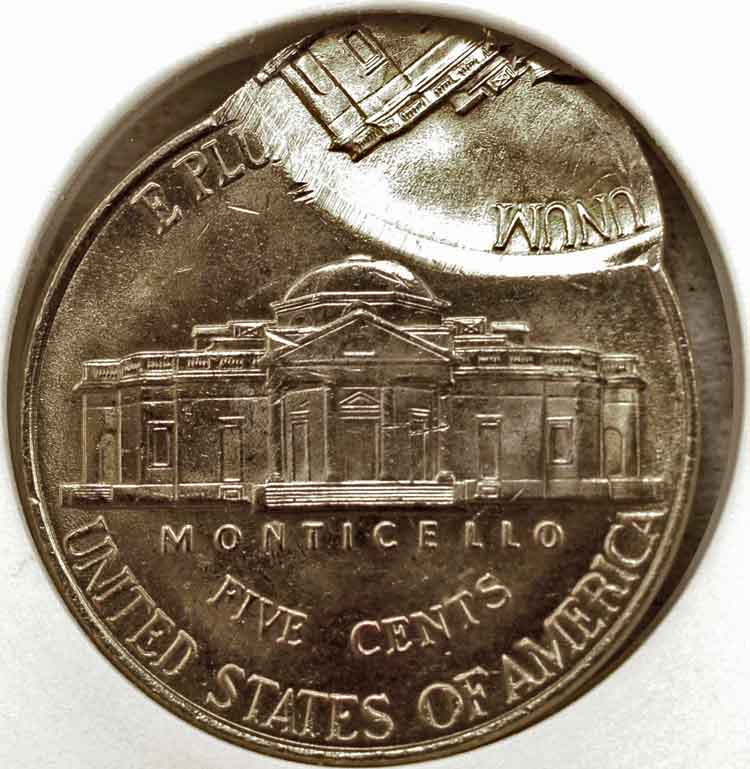 |
|
Pillar of the Community
United States
1760 Posts |
Should have a significant premium to it, as double struck coins from the hand screw press days of the mint are much rarer. The mint workers handled each planchet individually, so they were able to sort out errors more efficiently with the hand screw presses.
Edited by DoubleEagle20
01/24/2015 5:56 pm
|
|
Bedrock of the Community
United States
17884 Posts |
Quote:
The mint workers handled each planchet individually, so they were able to sort out errors more efficiently with the hand screw presses. They developed an automatic feeder mechanism for the press back in the 1790's so the planchets were not individually handled. Edited by Conder101
01/25/2015 04:11 am
|
|
Pillar of the Community
United States
2077 Posts |
If I saw this for sale in a shop for $200 I can guarantee it wouldn't be there by the time I left.
|
|
Pillar of the Community
United States
1699 Posts |
|
|
New Member
United States
7 Posts |
Here it is: 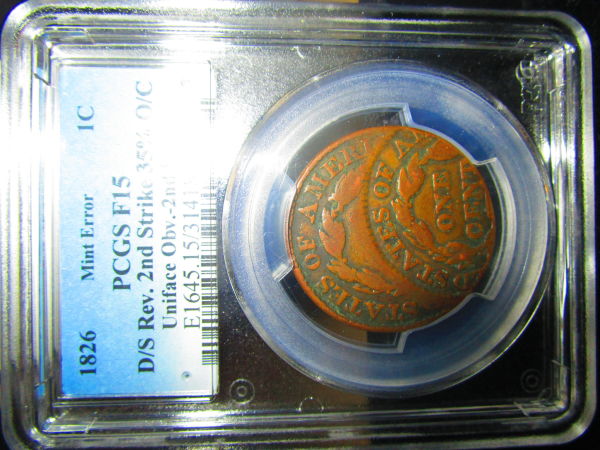 |
| |
Replies: 44 / Views: 8,005 |








 First Page


 Posted 01/22/2015 11:48 am


