| Author |
 Replies: 10 / Views: 3,476 Replies: 10 / Views: 3,476 |
|
|
Pillar of the Community
United States
6429 Posts |
This coin showed up in a teller's tray at a Los Angeles Wells Fargo. It appeared to be a relatively high-grade 1923-S Walking Liberty half dollar which would have been an excellent bank find, despite what looks like light corrosion. However, the mintmark appears to be a D rather than an S and the weight is only 9.93 grams (12.5 would be normal). The details actually seem very accurate although the edge reeding is a little softer than what I'd expect from a genuine piece with comparable wear. If the weight and mintmark were normal I'd nevertheless believe this was a genuine US Mint product. The Red Book mentions that counterfeit 1928 Walkers are known but I've never heard of a counterfeit 1923. Has anyone seen these before? Would this piece be of interest to counterfeit collectors? 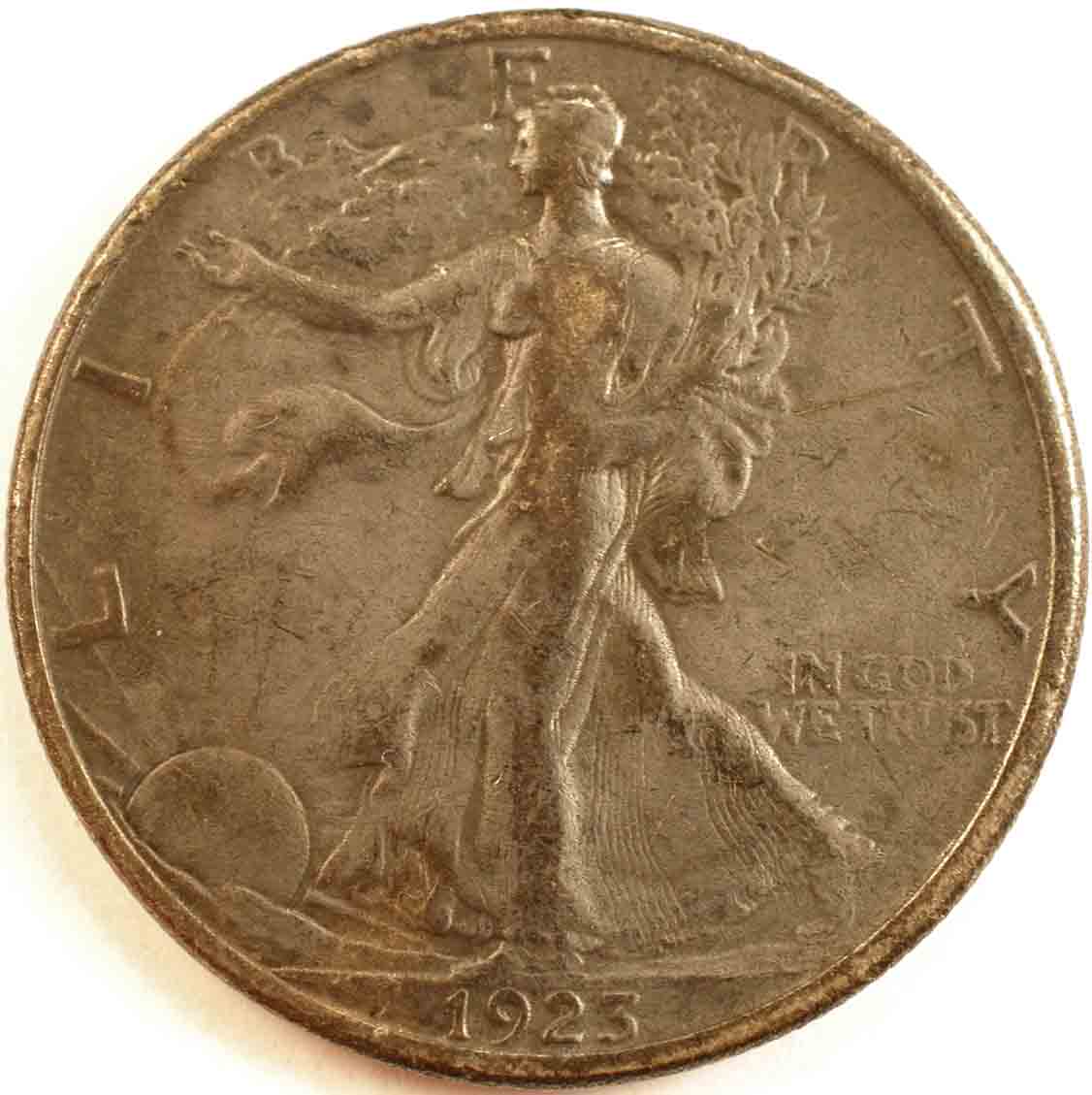 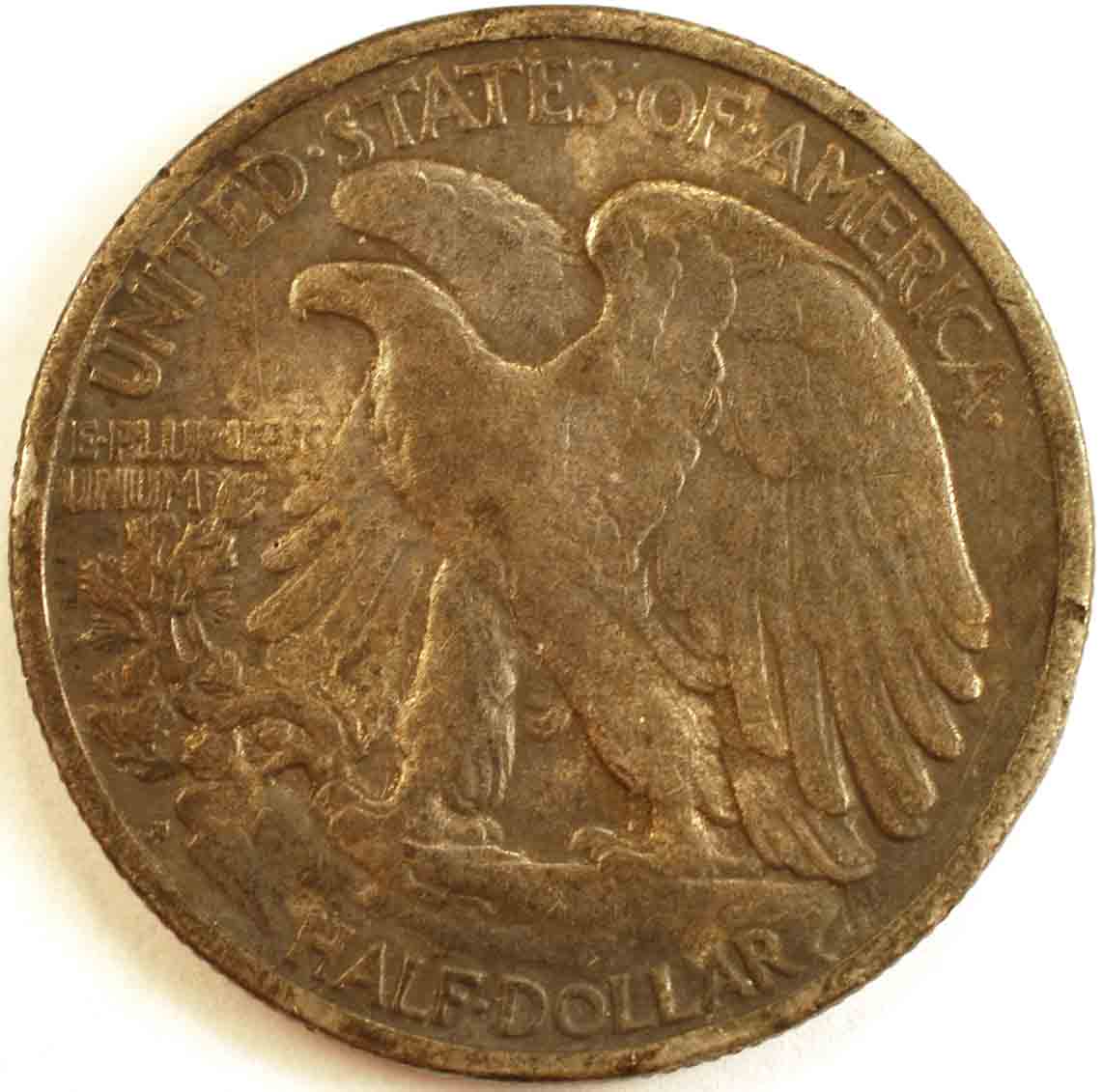 |
|
|
|
Pillar of the Community
United States
6370 Posts |
Looks like a contemporary counterfeit.
|
|
Pillar of the Community
United States
1796 Posts |
Never trust Red Book on what counterfeits are out there. In short:  Where it could certainly be a contemporary, I can't tell that from the photos. However, a D mint mark would make me lean towards its purpose being to fool collectors, and therefore could also certainly be modern. In any case, this is a piece that would greatly interest counterfeit collectors, such as myself. It's a nice counterfeit, and that it was found in the wild at a bank means it's passed for genuine at *least* once. :-) |
|
Pillar of the Community
United States
4703 Posts |
If the bank gave this out in change, could there be trouble for them by distributing a counterfeit? Not that I would really anticipate this happening not really care, just wondering for the sake of conversation. OP, thanks for posting.
|
|
Pillar of the Community
United States
1796 Posts |
There could be for them, but very few banks are trained to recognize counterfeit coins. Two years ago I picked up a counterfeit Sacagawea dollar from my Credit Union, and when I mentioned it to them the next time I was in the same teller who helped me before nearly panicked, saying that they were *only* trained to detect fake bills. She was quite relieved that I was a counterfeit collector and wasn't going to report her or anything silly. In the end I was able to show her, her co-workers, and her manager one of The Black Cabinet's binders of specimens so they have a better idea of what to look out for. It was a fun day. :-) Edited by SteveCaruso
02/01/2015 4:13 pm
|
|
Pillar of the Community
United States
4703 Posts |
Steve, that's interesting, however ignorance is not an excuse. Interesting if you contacted the FBI. Again, I'm just using this thread for conversation, as to wondering what potential problems could exist for banks if they give out counterfeit money. Individuals can go to jail for distributing counterfeit money, what is the liability for banks?
Edited by jimbucks
02/01/2015 4:14 pm
|
|
Pillar of the Community
United States
1796 Posts |
One would need to contact your local Secret Service branch (not FBI) and report criminal activity. Since this was a fluke occurrence and the coin was passed without intent to defraud, no actual crime has been committed. (In my case, they still technically owed me a dollar, but the counterfeit Sac was one of the South American counterfeits which is actually worth more than a dollar among counterfeit collectors, so I called it even. :-) )
If one were to notice this sort of thing being recurring or common at a particular bank, then one *needs* contact the SS, as something funny could be going on some step beyond any ignorant tellers (whether it's someone feeding bad cash to the bank on the inside our out).
The liability to the banks is, again, based upon the volume of fake cash passed and the intent.
For small amounts, most banks have implemented a CYA policy that states all delinquencies are the responsibility of the teller who dealt them out and can as a result have their pay docked to make up the difference or dismissal and charges filed against them to retrieve the full amount; however, a teller is supposed to be given a requisite level training against fakery by their employer that -- if their training didn't cover it -- may shield them from fitting the bill and push responsibility back to corporate.
Edited by SteveCaruso
02/01/2015 4:43 pm
|
|
Bedrock of the Community
United States
17884 Posts |
Quote:
However, a D mint mark would make me lean towards its purpose being to fool collectors, and therefore could also certainly be modern. Why? There are 1923 D and 1930 D counterfeit Mercury dimes an they were intended for circulation. If it was a 23 S then I might believe it was to fool collectors. |
|
Pillar of the Community
United States
1796 Posts |
Honestly, it could be either way. A large genre of counterfeits produced from the 1970s onward were fantasy dates intended to intrigue collectors into making a sale on the chance it's an unheard-of rarity (and if it's a bust, they only spent X amount of money on it, no loss -- or at least that was the psychology to press for a sale).
|
|
Pillar of the Community
United States
1450 Posts |
|
|
Pillar of the Community
 United States
6429 Posts |
Quote:I have not seen a Mercury dime, Liberty Walking half dollar or any silver coin "in the wild" in a decade at least or longer counterfeit or otherwise. Ah, but check the JFK Roll Hunting thread to find many instances of recent Walker finds in half dollar rolls. They do turn up occasionally if you ask enough tellers! |
| |
Replies: 10 / Views: 3,476 |
|








 Posted 02/01/2015 3:54 pm


