I got this strange little item as part of a lot.
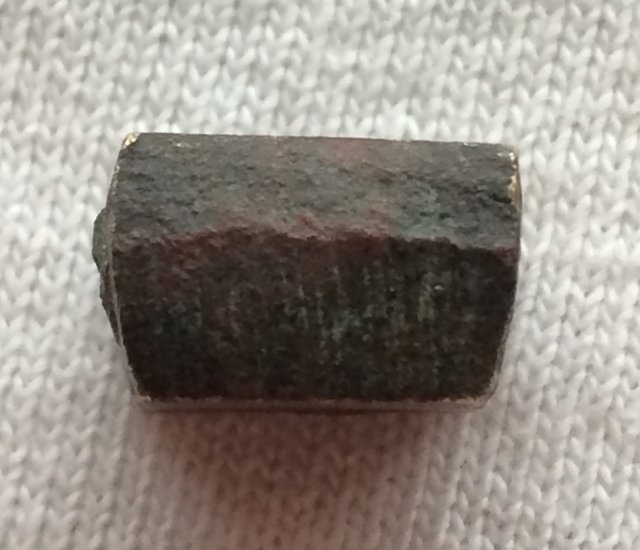
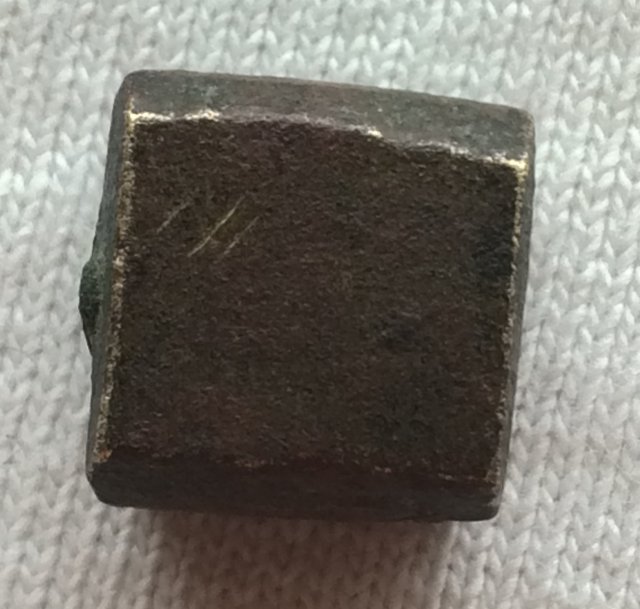
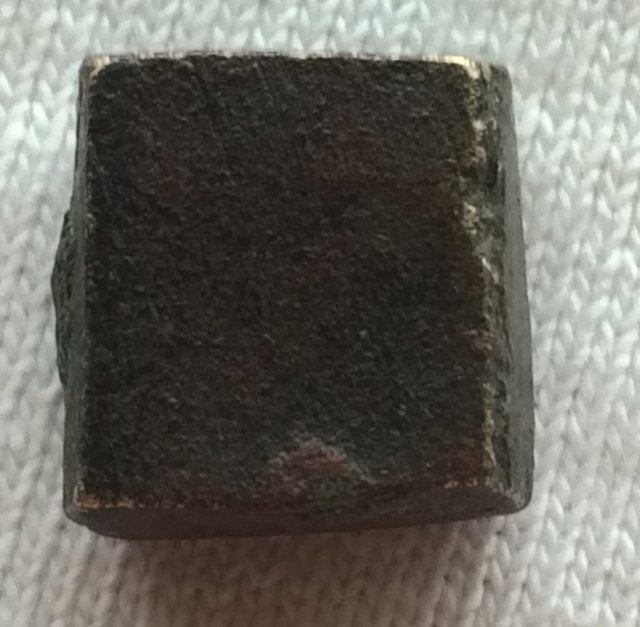
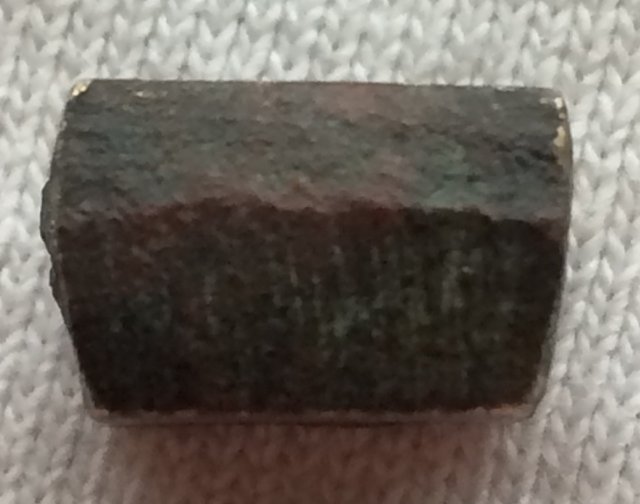
Appears to be copper.
Weight: 8 grams
Dimensions: 10 mm x 5-6 mm
Out of the lot so far I have identified a coin of Manadeva from the ancient Licchavi Kingdom (in modern day Nepal). A 1787 copper hammered 1 Paisa of Rana Bahadur from Nepal. A c. 1890 Tibetan 1 Tangka in immaculate condition. A 1/4 Anna of Umaid Singh under George VI from Jodhpur. An Imitative Kushan Empire coin of Huvishka (with no legends). Plus five other coins that I have not identified yet but are hammered copper. At least two of them I think are Indian States. Two others might have Arabic writing on them. In the box was also what I believe to be an other Kushan coin but it was broken in half so I did not get it.
I asked about the providence of the coins, but they have been at the coin store so long (over a decade or more) that no one remembers where they came from or even what they were. I think they were part of a larger collection and the items that couldn't be identified were put aside.
I asked about this copper piece and one guy thought it could be Roman but did not know specifically. I pressed him on why he though this and he said he read somewhere that Romans used bits of iron bars as change at one time.
Honestly at first I didn't think this was an item of any numismatic value what so ever. But given the company that this ingot was keeping, I am inclined to think it is more from the Indian/Nepal/Tibet area, as everything I have identified so far is from that part of the world. If nothing else the original owner must have thought it was something of numismatic interest to be in with the coins.
With this information I started searching and found references to small bits of copper being used in Nepal to make change. One was the Bhutwaliya paise:
Quote:
"Besides the machine made paisa two other kinds are in general use. One, the Bhutwaliya paisa is made at Teusan the Palpa district and consists of a square lump of pure copper with a rough stamp on it."
The fact that it has a stamp and was pure copper seem to rule it out for my piece, as there is no indication that there was ever a stamp. The other, though is more interesting:
Quote:
The other, the Lohiya paisa, is also a rough square lump of copper but is much adulterated with iron. It is chiefly used in the eastern districts.
So the Lohiya Paisa was not pure copper and doesn't seem to have been stamped in any way (based of the references I have found). You may be able to see the rust of the ingot I have, so it appears to have some iron in it also.
The weights I have seen given for the Lohiya 1 Paise are between 8 to 12 grams. I presume that the weight range is because of the impurities in the copper of the Eastern regions. My piece is at 8 grams, making it at the lower end of the scale but in range. There is some wear on mine too, indicating it may have weighed (slightly) more at one point.
Of note on my piece is that there are filing or cuts marks on the edges. I have tried to photograph them but I am not sure how well they show up. There is also a lump of corrosion on the side, as seen in some of the photographs.
In conclusion

, I have tentativly identified this piece as a Lohiya 1 Paise from Eastern Nepal. Does anyone agree or disagree, or have any knowledge on this piece?
Thanks.







 Posted 03/16/2015 11:52 am





