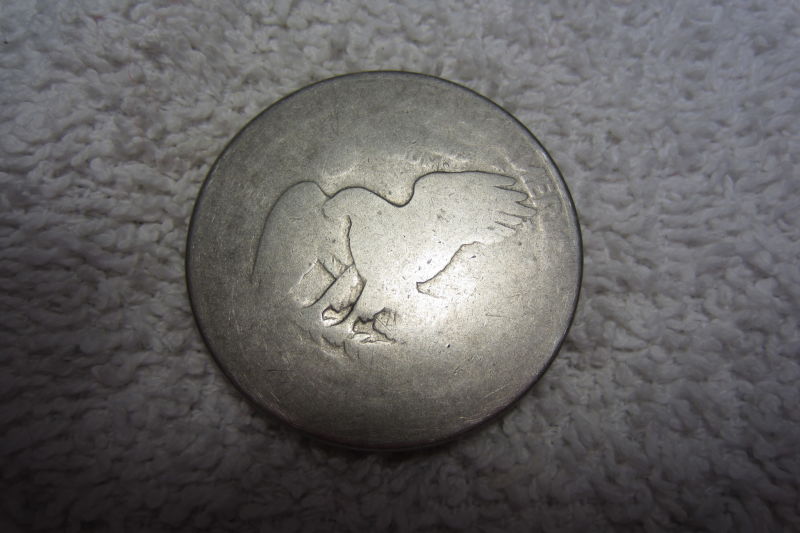
| Author |
 Replies: 23 / Views: 4,751 Replies: 23 / Views: 4,751 |
|
Pillar of the Community
United States
2245 Posts |
I just realized in my 40+ years of collecting that I've never seen a "Good" or "Very Good" grade of the 1965 or newer dime, quarter or half. I'd be hard-pressed to even think of a "Fine", too.
Obviously copper-clad coins don't wear down the way silver coins do.
Is this correct or just a figment of my imagination? I'm trying to picture in my mind's eye, for example, what a 1965 dime--which has now been in circulation for 50 years--would look like in "Good" condition--and I can't.
Because of the different wear factors, perhaps the post-silver coins should have different grading system than pre-1965?
|
|
|
|
Pillar of the Community
United States
807 Posts |
The clad coins certainly do wear more slowly. On the other hand, I tend to think that they are withdrawn more zealously, so that the specimens you see are survivors precisely because they are in such good shape. Think of old nickels — you've certainly seen a Buffalo or a Liberty worn as smooth as any silver piece, after enough circulation, & the surfaces of clad coins are of the same material.
They probably are more likely, piece for piece, to get mutilated, simply because they do last longer in circulation, & the cupronickel does corrode more readily ; and the considerably lower value means that more are lost or discarded.
|
|
Pillar of the Community
United States
1804 Posts |
|
|
Pillar of the Community
United States
807 Posts |
Sure, but no way that's circulation wear. I've got late-date Kennedy halves which look as though they've been in heavy use for 120 years, leading me to believe they have been roughly handled by some kind of machine. |
|
Moderator
 United States
23522 Posts |
Nickel is, if anything, an even harder metal than the clad and we see them in low grades all the time. I believe publius has hit on it with the early withdrawal from circulation. I would suspect they'd worry about eventually wearing through the cladding. I saw plenty of heavily-worn Quarters during my time living in Atlantic City, directly attributable to slot machines of course, but pulled by me from circulation. So the system won't be perfect, but I'll bet people are working to that end. Had I thought about it, I'd have pulled some and worked on a Lowball set. Bet that set isn't easy.  |
|
Pillar of the Community
United States
1804 Posts |
publius Quote:
Sure, but no way that's circulation wear..... Begging to disagree ~`~`~` some. If this is 100% true, then PCGS and all the other TPGers, (along with the collectors) are living in a PARTIAL nut factory world. They do PO-01 and FR-02 and other low grades. And make a big deal of the whole show. And let's not forget the money to grade it, be in the REGISTRY, yearly dues etc. The low ball I posted is a 1974 IKE. (Best guess on the date) That is 41 years in this world. May I please ask you to share pictures of your late-date Kennedy half dollars? With all respects Domain555 PS: If a TPGer world take and grade say, a 2012 Kennedy, as PO-01 then we would all know for sure that low balls are a cruel hoax. |
|
Pillar of the Community
United States
807 Posts |
What I mean is, to get that kind of wear on an Ike, it must have been put under a buffing wheel or something (deliberately or accidentally). It wouldn't get like that in ordinary circulation over 40 years. How can I say that with such confidence? Well, that's a degree of wear at least equal to that observed on silver crowns of William III circa 1800, as you may read in Ruding's Annals. Unlike the shillings & sixpences, which were worn smooth, the devices of the crowns were still clearly distinguishable
My Kennedies are spending money, but if you feel that strongly about it, once I get set up on the Photo Gallery system here, I'll pull out the worst ones when I come across them, & put up pictures.
It occurs to me that wear on a clad coin, by altering the balance between cupronickel & copper, would change the electromagnetic properties, eventually causing them to be rejected by coin mechanisms. It is perhaps this which leads to their withdrawal from circulation.
Edited by publius
04/15/2015 1:10 pm
|
|
Moderator
United States
23522 Posts |
Having lived in a casino town I have no problem believing P01 Ikes, but the mechanism of their arrival at that point is almost a moral question for a numismatist because there's no doubt whatsoever that there are mechanical reasons for the wear. But those mechanical reasons are a direct result of what happens to a random coin in circulation. If your coin wore down by repeated use in a Coke machine, is that "circulation wear?"
|
|
Pillar of the Community
United States
1804 Posts |
SsupperDdave Quote:
Having lived in a casino town I have no problem believing P01 Ikes, but the mechanism of their arrival at that point is almost a moral question for a numismatist because there's no doubt whatsoever that there are mechanical reasons for the wear. But those mechanical reasons are a direct result of what happens to a random coin in circulation. If your coin wore down by repeated use in a Coke machine, is that "circulation wear?" One way to discuss this, (or look at this) is to look at what is graded, or is rejected by a TPDer. Then compare the coin in question to a PO-01 (or FR-02) graded IKE. |
|
Pillar of the Community
United States
1804 Posts |
publius Quote:
My Kennedies are spending money, but if you feel that strongly about it, once I get set up on the Photo Gallery system here, I'll pull out the worst ones when I come across them, & put up pictures. Please do so.  Thanks, Domain555 |
|
Moderator
United States
23522 Posts |
I know how coins wear, and it would be trivial for me to sand off 95% of that and do the last 5% in my pocket to hide the evidence. A TPG would never know how it got there. |
|
Moderator
United States
194606 Posts |
I agree. It is no different than hiding cleaning with pocket wear. Now, do not get me wrong, I like how he looks. Never met an Eisenhower dollar that I did not like.  |
|
Pillar of the Community
United States
1804 Posts |
Quote:I know how coins wear, and it would be trivial for me to sand off 95% of that and do the last 5% in my pocket to hide the evidence. A TPG would never know how it got there. Quote:
I agree. It is no different than hiding cleaning with pocket wear. This is what I needed to settle my mind about the various ways an IKE can be a graded or be a RAW low ball. Now for the rest of my question. How would one go about taking off the first 95% of an IKE? Naturally one would start with ONLY a really used-messed-up coin. Maybe some thing like this one. 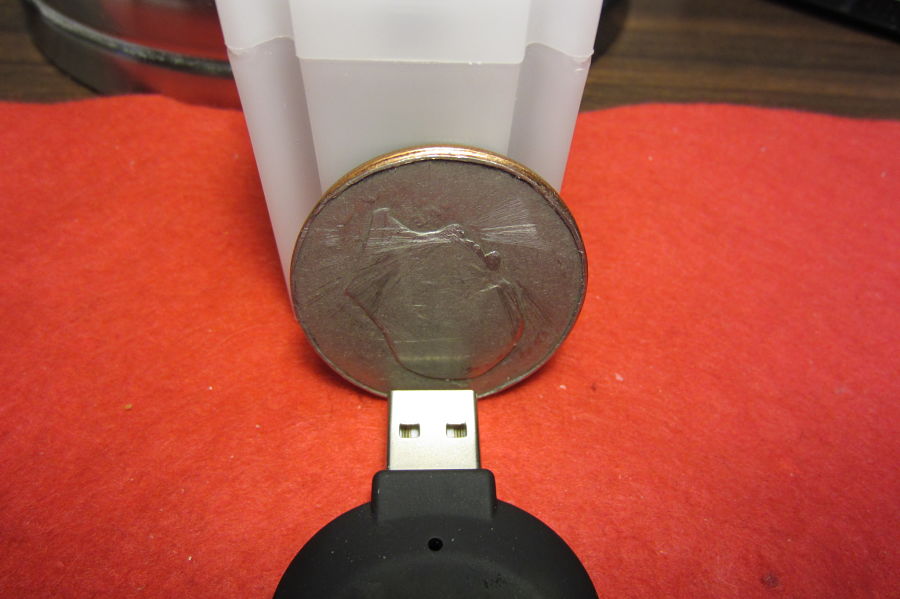 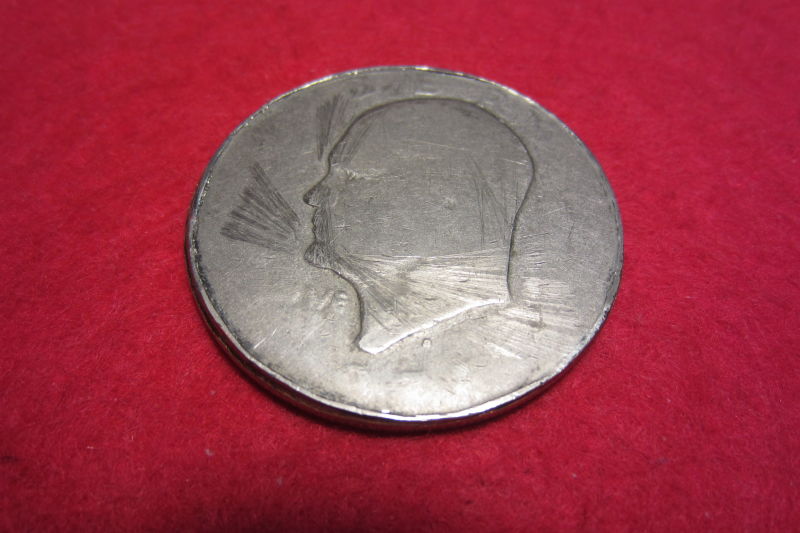 |
|
Valued Member
United States
204 Posts |
I've seen some lower-grade clad coins but not a whole lot.
|
|
Moderator
United States
23522 Posts |
That one's already beyond grading. The date would be gone completely by the time you wore off the scratches. Better to start with a fresh one.
|
|
Moderator
United States
194606 Posts |
I agree. But to answer the question, a belt sander maybe? By the way, I must protest this project.  I think we managed to hijack this thread and I must offer my apology to jpsned. For what it is worth, I think publius has the best explanation. A combination of a more wear resistant composition plus a higher rate of withdrawal. |
| |
Replies: 23 / Views: 4,751 |







 Posted 04/15/2015 04:42 am