999fine,
First, Doubled Die is spelled with a "d" at the end of Doubled -- not Double.
After 35 years specializing in errors and varieties, my examination of the known die states/stages of United States doubled dies and RPMs of typical strength from the 20th/21st century (where applies), strongly suggests to me that there is/was zero attempt by the Mint to remove from service the vast majority of dies with RPMs or Doubled Dies.
They run them to the end just like any other die. And just like any other die, they are subject to die failure anytime from the first strike through hundreds of thousands or even millions of strikes. If a die fails after one-thousand strikes and it contains a doubled die, it will be deemed rare since most will never get into collectors' hands.
What does happen is that major doubled dies (such as the 1955, 1969-S, 1972 cents) and possibly some RPMs were/are taken out of service at the time they were caught -- if caught. Note: there were no RPMs after 1989.
If you've ever looked at the magnifying glasses that the Mint uses and how quick dies are inspected, (and I don't mean the way they inspect them in youtube videos where they spend more time on an exam to make it look good) it becomes obvious that there is a level of latitude in what is acceptable and what is not.
My experience suggests that 99% of the doubled dies produced are undoubtedly deemed acceptable to a level that they don't even look for them. I can't tell you how many times doubled dies have been sent to the Mint in recent years and they indicate that they don't even see them. Bottom line is they are too minor for them to care about.
When it comes to mintage you also need to consider that most varieties fade with time and it has to be assumed that some fade to the point they are absent from later die stages. I once saw a very late die state of the 1955 1c DDO-002 that was found in a roll of the so-called "poor man's double dies" (
Die Deterioration Doubling [
DDD]) that for the life of me I had to twist and turn in all directions before I could see it. The hub doubling of the date was completely obliterated by the
DDD and all that could be seen was very faint traces of the doubling on IGWT. Most doubled dies are not this strong and can be masked by
DDD.
If an RPM or doubled die is no longer discernible after a given number of strikes for whatever reason the die will still be in use but the variety, for all practical purposes, is gone.
There are a few statements you may hear about varieties. One that is oft repeated in descriptions goes something like this: "Stage C shows abrasion around the Mintmark in an attempt to remove the RPM." Hogwash! Dies are routinely dress out to remove clash marks and superficial die cracks to extend their life. It's that simple over 99% of the time.
Your'll also hear that a variety is on the die during its manufacture and that die will repeat itself in producing whatever variety may have been on it, identically over and over again for the life of the die. Again, hogwash! Varieties can occur anytime during use. For example, clashed die varieties such as the "E" Reverse
Morgan dollar did not get created with the clashed E on the die from the time the die was manufactured. That "E Reverse developed sometime after the die was put into service. There are varying opinions on what a variety is or isn't. I side with the majority in accepting any changes that can occur to a die during its manufacture, use, and even storage; such as those listed in the
CherryPickers' Guide To Rare Die Varieties as being varieties.
You asked about a double strike. I assume you mean double strike in collar with little rotation between strikes.
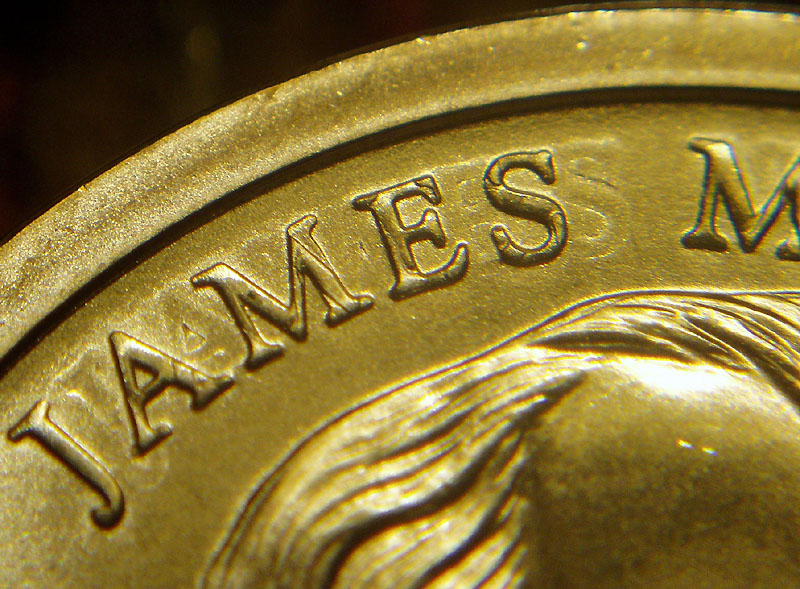
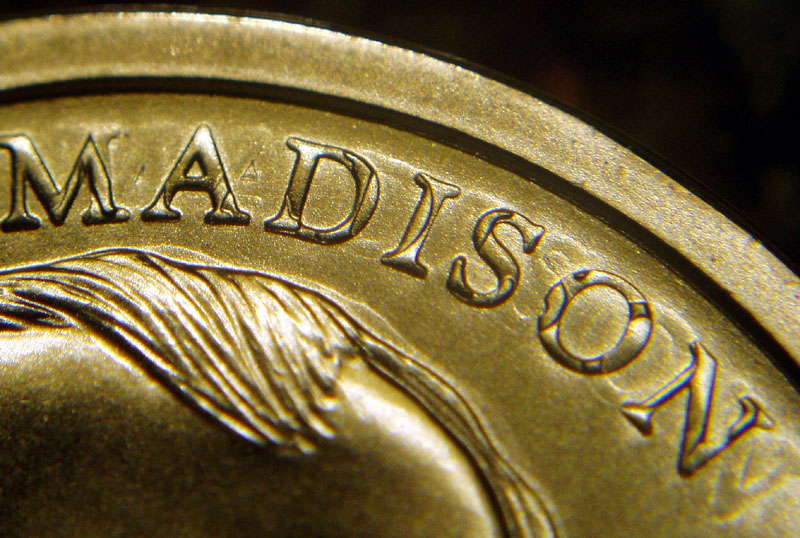
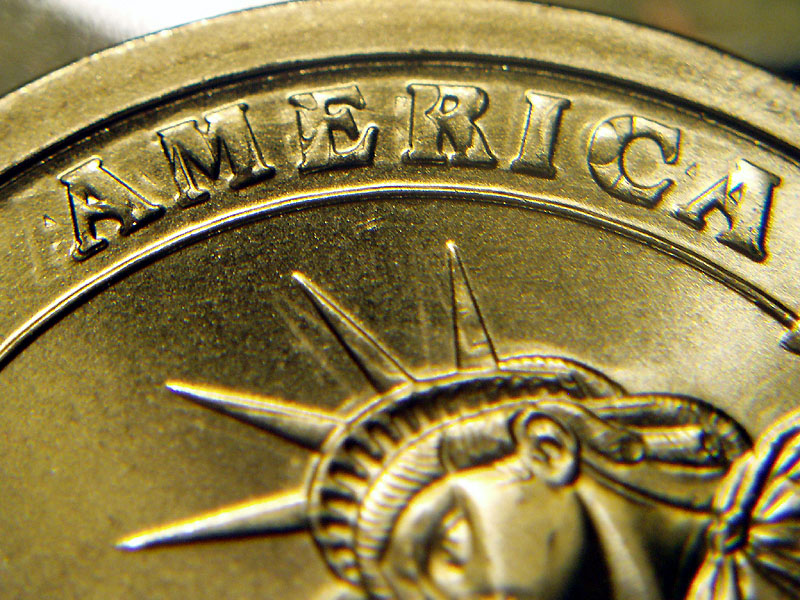
Here is a 2007-P James Madison
Presidential dollar found in a 2007 Uncirculated dollar set. You'll notice that it is double struck on both the obverse and reverse to the same degree of rotation.
Click Images To Enlarge









 Posted 05/08/2015 11:11 am



 Thanks again guys.


