| Author |
 Replies: 36 / Views: 6,283 Replies: 36 / Views: 6,283 |
|
|
|
Pillar of the Community
Canada
2632 Posts |
Quote:would have to be a HUGE Rim Fin to produce that much metal for that strip What metal for what strip? I haven't said anything about this coin yet other than it looks folded over after strike or are you referring to another coin? |
|
Pillar of the Community
  United States
2000 Posts |
Sorry about delayed reply... day job. The diameter measures 21.19 to 21.20mm. The thickness is 1.86 to 2.02mm. I don't know accepted tolerances for this coin
|
|
Pillar of the Community
United States
3363 Posts |
pennyman, if you would read the thread, you would find references to finning.
|
|
Pillar of the Community
United States
1781 Posts |
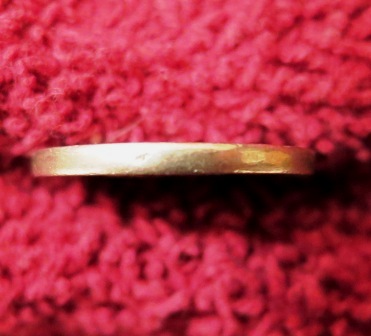
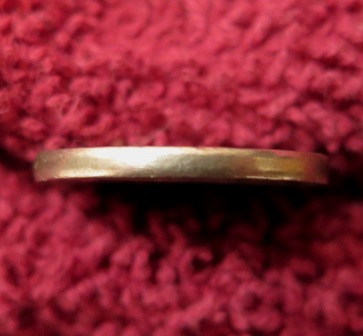
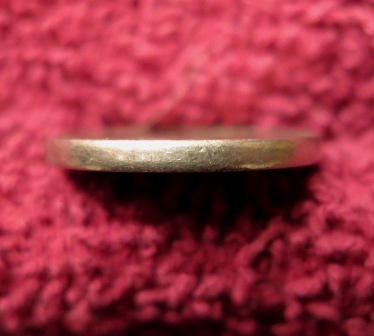
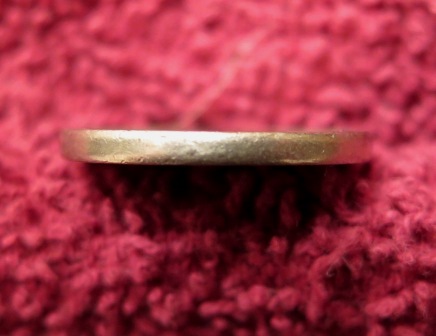
Diameter seems right for a normal Jefferson 5c. Can we get a look at the edge of the coin?
Pete, yes it would have to be a rater high wire-edge but considering it is restricted to the right side of the obverse, a slightly tilted die with a strong strike could account for this -- maybe? Lets put it this way. I wouldn't rule it out yet.
|
|
Pillar of the Community
United States
3363 Posts |
Quote:
yes it would have to be a rater high wire-edge but considering it is restricted to the right side of the obverse, a slightly tilted die with a strong strike could account for this -- maybe? Lets put it this way. I wouldn't rule it out yet.  Well I certainly had not thought of that - thanks! I know so little about all of this and appreciate these kind of explanations.  |
|
Pillar of the Community
United States
2000 Posts |
|
|
Pillar of the Community
United States
2752 Posts |
This is a very common form of post-strike damage, and it's not predicated on the presence of a fin beforehand. Percussive impacts along the edge and rim generate a thin apron of metal that migrates over the die-struck design elements. You see this all the time on Dryer Coins, but it's not restricted to Dryer Coins. Error coin writer and researcher.
|
|
Pillar of the Community
United States
5964 Posts |
It was here, Pennyman, my Blanking Burr. 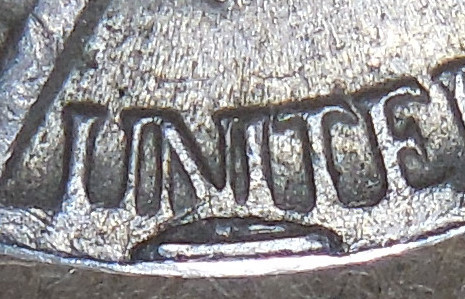 |
|
Pillar of the Community
United States
1781 Posts |
The rim is rounded and obviously "worked" indicating it was spun in some kind of rotational devise.
Edited by koinpro
05/11/2015 10:38 pm
|
|
Pillar of the Community
United States
1781 Posts |
Mike, After seeing the images of the edge it's clear this not from a wire-edge (what I call finning) being flattened down, but please explain why it is restricted primarily to the right side of the obverse, why it's only on the obverse and why the coin is still of normal diameter. I still want to believe PMD from a rotational devise but I no longer believe from a dryer as I'd expect the effect to be nondiscriminatory as to the obv/rev or right or left side. You have studied these in far greater detail than I have. I haven't even measured the diameter of one b4. In any event, please offer a more detailed analysis. Edited by koinpro
05/11/2015 10:45 pm
|
|
Pillar of the Community
United States
2752 Posts |
I can't offer a more detailed analysis because I've never seen the process that generates the damage. It's certainly conceivable that the metal was relocated as the coin was rolled and squeezed in a mechanical device. In the end it really doesn't matter as it's clearly post-strike damage. It's important to note, however, that the same sort of damage can occur on blanks and planchets before the strike. But in those cases the thin apron has well-struck letters on top of it and the apron is flattened to the level of the field (except in those cases when it lifts up after the strike). I've reported on several cases in Coin World. http://editions.amospublishing.com/...ing%20damageError coin writer and researcher.
Edited by mikediamond
05/11/2015 11:09 pm
|
|
Pillar of the Community
United States
1781 Posts |
Mike, it's clear that it is PMD but I was just hoping you could clarify a bit more on the specifics as they apply to this coin -- if you had any other ideas. I'm curious. Anyway, the answer may just unfold at some point down the road. A friend of mine has a planchet with the upset rim like this. It can occur to a planchet when the rimmer is set to tight (as I'm sure you know). You can also see a similar effect on some of the Adams dollars that were run through the edge lettering machine set too tight. You may know that the edge lettering machines the Mint uses can also upset rims. If Mint is on a budget they are used for both operations but can only do one operation at a time. The edge inscriptions are applied after the coin is struck at the US Mint but that that is not the way the manufacturer recommends edge lettering be applied. You may find this of interest: http://koinpro.tripod.com/Articles/...brochure.pdf |
|
Pillar of the Community
Canada
2632 Posts |
|
|
Pillar of the Community
United States
1781 Posts |
|
|
Pillar of the Community
United States
2000 Posts |
Thanks everyone for the responses and education. I am going to hold on to this example for future reference
|
| |
Replies: 36 / Views: 6,283 |







 First Page


 Posted 05/11/2015 8:02 pm