Recently greysheet had a 2-part article about proof reverse quarters from 1956 - 1964. I hadn't heard of these before, and of course my brain first read "reverse proof" instead of "proof reverse."
You can find some better info online, but the short story is that from 1956 through 1964 the Philadelphia mint finished out their annual orders by using proof dies on business strike coins. It seems the mint figured it was a way to get by while ordering fewer dies. There are a few diagnostics to pick out the proof reverse die (or the Type II reverse or the Type B reverse).
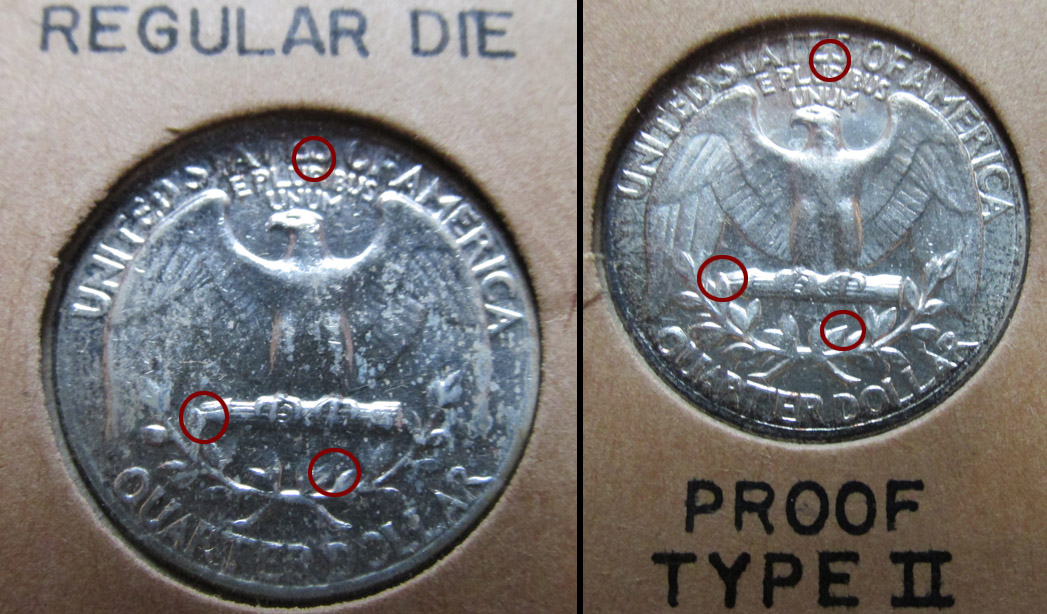
The point of the arrows on the eagle's perch are much sharper and the leaf is raised above the arrowhead. The leaves below the perch have the proof definition. The easiest diagnostic is the space between E and S in "STATES". In the regular die, E and S touch, in the proof version, there is a gap between the letters.
After reading the article, I started keeping an eye out for the Type B reverses. I bought a 1964 Type B reverse in a PCGS holder graded MS-64. 1964 is one of the more common years (and there are websites that track the relative rarity and value). I was toying with the idea of putting together a set at some point.
Then at the LCS appeared a Wayte Raymond board displaying the Type I and Type II Reverses.
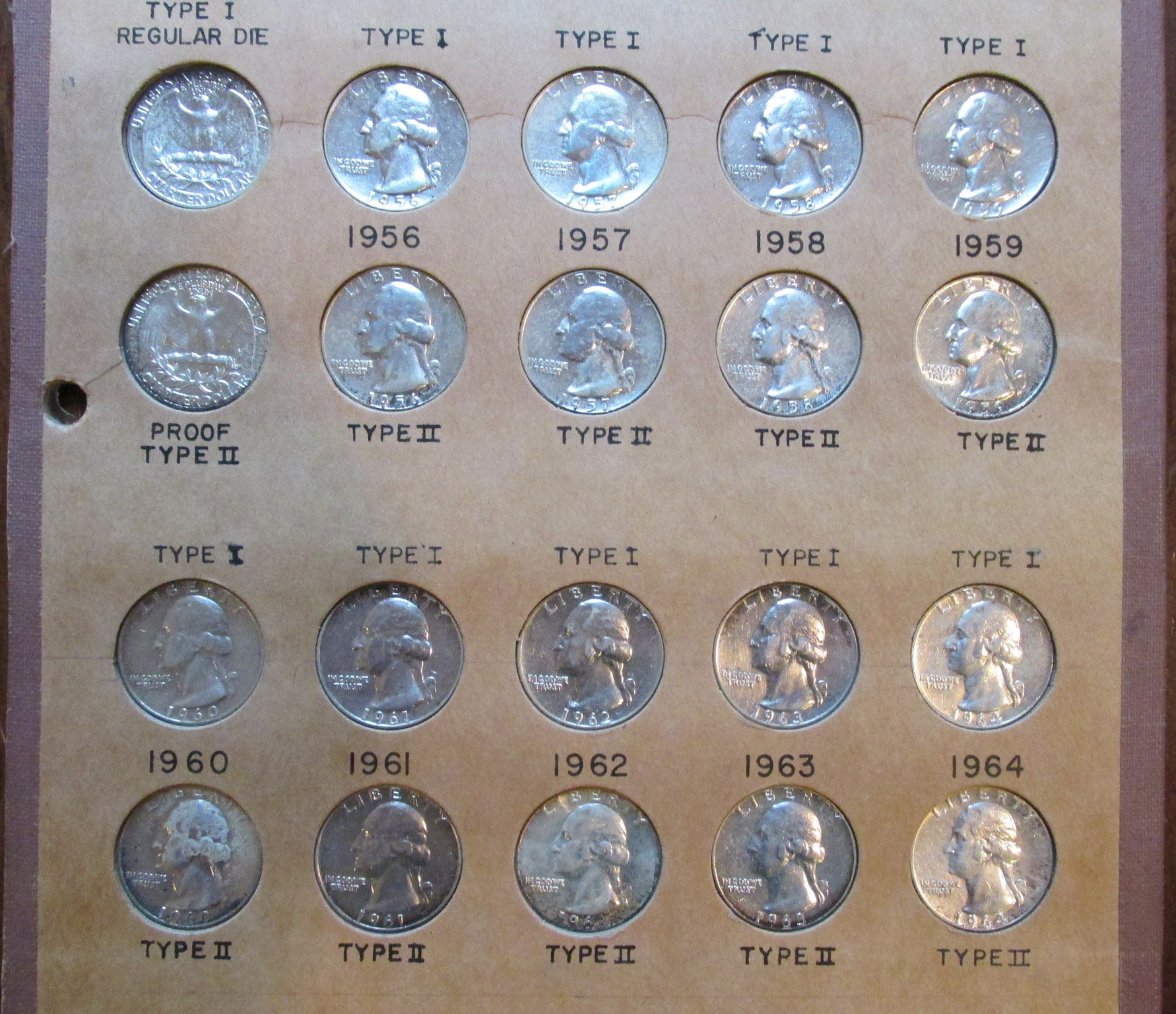
The board featured a sample of each reverse, then a complete set of quarters with each reverse for each year (1956-1964). When I saw the set, I was skeptical and quickly check the reverses to make sure everything was accurate as labeled.
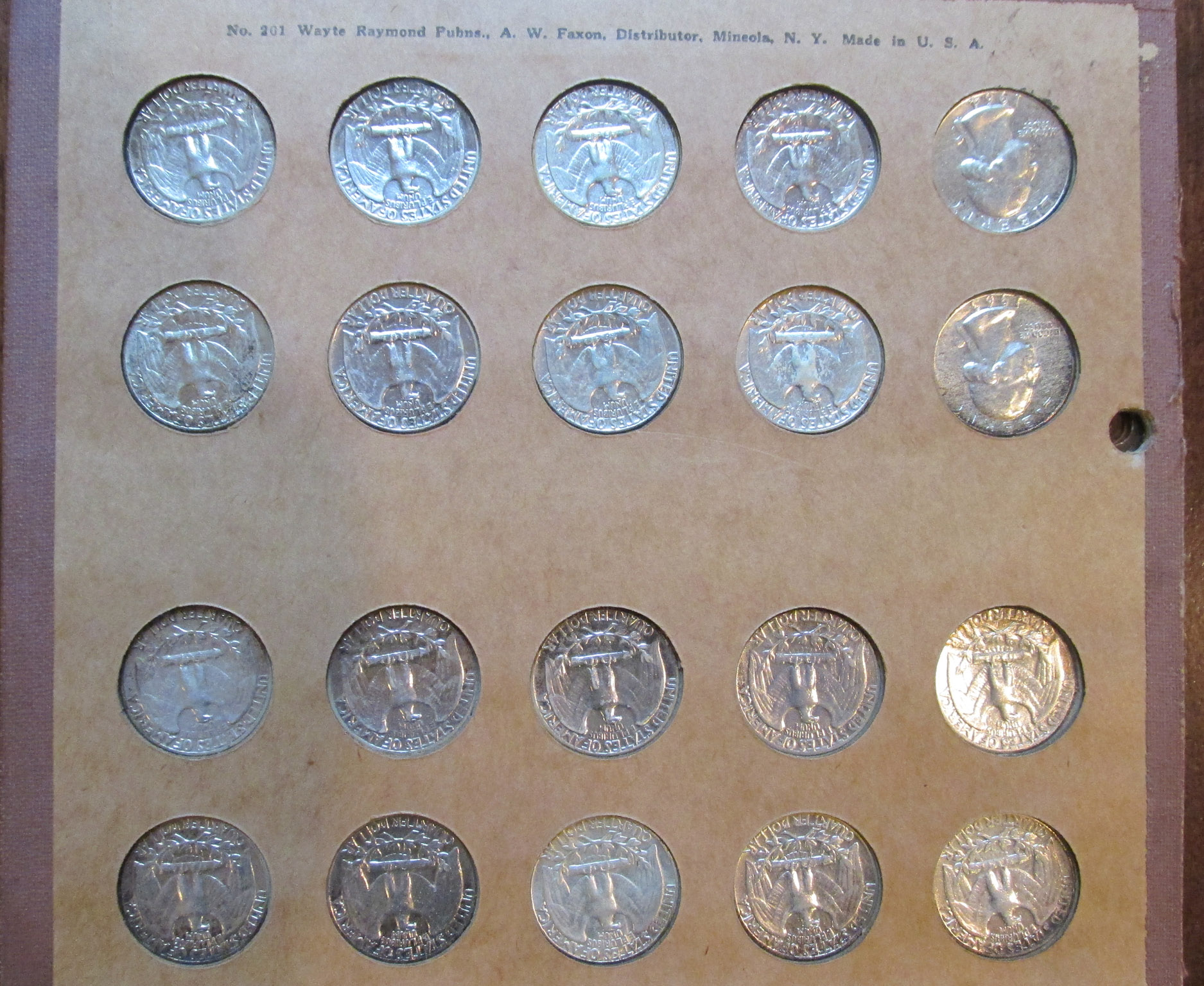
And it was! A complete set in a neat vintage holder - what a find. Plus, it liberated me from assembling this set I was toying with. I could pick this up and move on to other pursuits.
Now, you may be looking at those pictures, and you notice that, unfortunately, some of those quarters are the victims of old cleaning. And that's true. But I forgot to tell you something...
The board actually has TWO complete sets of 1956-1964 quarters Type I and Type II!
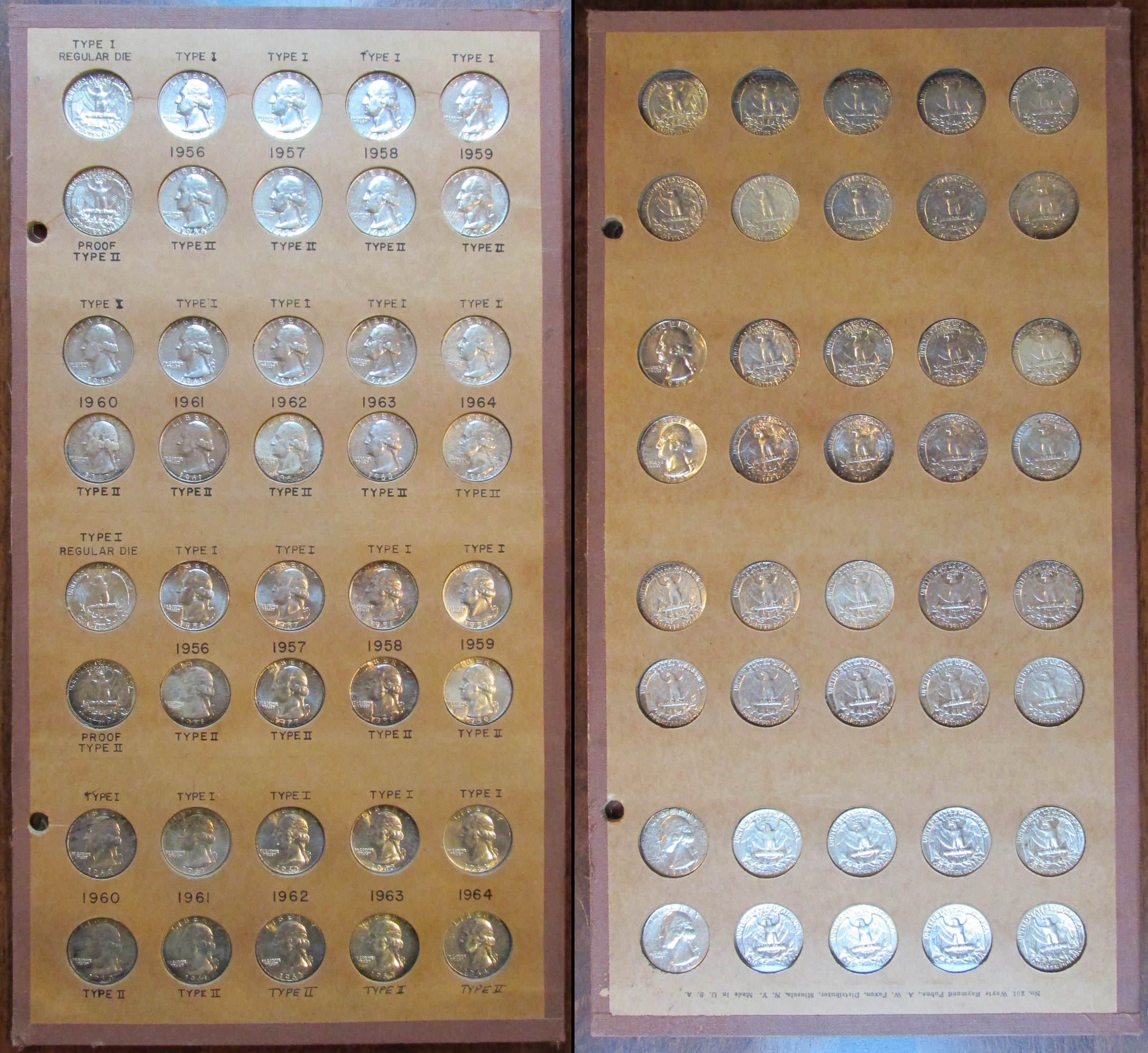
The second set is in much better condition. What a winner! The folks at the LCS found this piece intriguing because they didn't think Wayte Raymond kept producing boards up to 1964. The lettering in the lower right seems to be done by hand instead of printed. The provenance is a mystery.




 Posted 06/22/2015 11:23 pm





